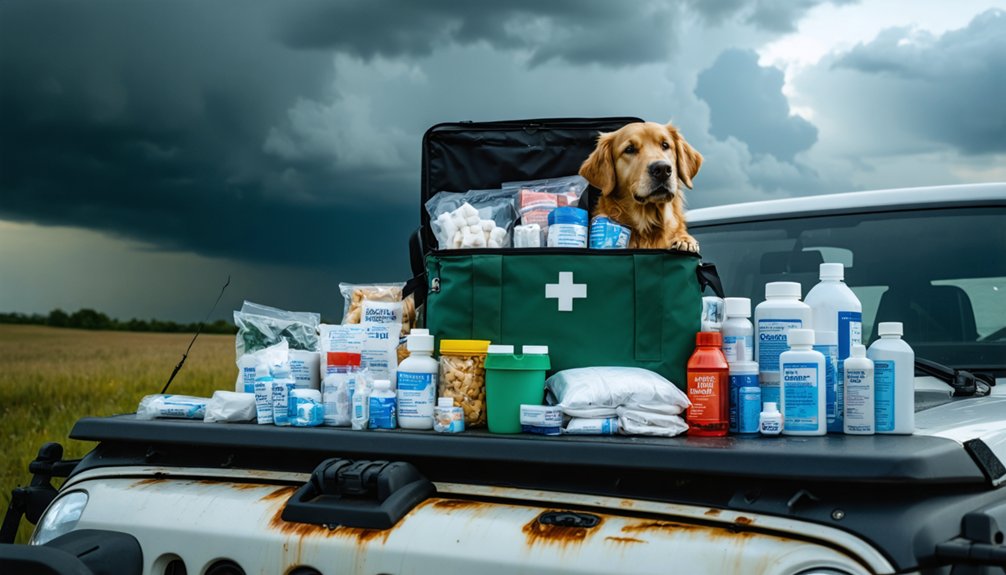
You’ll need a first aid kit with trauma-specific components including tourniquets, hemostatic dressings, and chest seals for penetrating injuries from hail or debris. Prioritize kits containing sterile wound management supplies, antiseptic protocols, emergency medications like antihistamines and ibuprofen, plus N95 masks and nitrile gloves for environmental protection. Essential additions include emergency blankets, splints, prescription medications for 7+ days, and portable water purification systems. Your kit should address hypothermia prevention, lightning strike response, and vehicular accident trauma—capabilities that standard consumer kits lack but storm-specific scenarios demand.
Key Takeaways
- Include trauma-specific supplies like tourniquets, sterile dressings, and hemorrhage control accessories for severe weather-related injuries.
- Pack antiseptic wipes, hydrogen peroxide, ibuprofen, antihistamines, and a 7-day prescription medication supply for comprehensive medical coverage.
- Ensure personal protective equipment includes nitrile gloves, N95 masks, and emergency blankets for contamination prevention and hypothermia management.
- Add essential wound care items: adhesive bandages, gauze pads, roller bandages, and splints for immediate injury stabilization.
- Equip kit with thermometer, flashlight, first-aid manual, and emergency medications for effective trauma response in remote locations.
Essential Medical Supplies Every Storm Chaser Needs
When severe weather strikes, a detailed first aid kit becomes your primary defense against medical emergencies in remote locations where professional help may be hours away. You’ll need adhesive bandages, gauze pads, and roller bandages for wound care techniques covering cuts to severe lacerations. Antiseptic wipes and hydrogen peroxide enable immediate sterilization protocols. Pack ibuprofen for trauma-induced inflammation and antihistamines for environmental allergic responses.
Your kit must include trauma supplies: tourniquets for arterial bleeding, splints for fracture stabilization, and emergency blankets for shock management. Master proper bandage application before deployment—pressure dressings require specific tension levels for hemorrhage control. Include nitrile gloves, N95 masks for debris protection, and a seven-day prescription medication supply. These evidence-based components guarantee you’re equipped to handle medical situations independently.
Specialized Gear for Severe Weather Situations
Beyond standard first aid supplies, you’ll need weather-specific protection equipment that addresses hazards unique to storm chasing operations. Your safety protocol must include hail protection gear like specialized goggles and helmets, particularly during night pursuits or when visibility drops below operational thresholds.
High-visibility apparel such as ANSI-certified reflective vests becomes critical when you’re positioned on high-traffic roadways during active weather events.
Storm Chaser Safety Equipment
Storm chasers face unique hazards that demand specialized safety equipment beyond standard emergency supplies. You’ll need ANSI-compliant reflective vests for low-visibility operations and sturdy helmets when traversing high-traffic zones with blind curves. Hail goggles protect against large hail cores, while work gloves enable debris removal during search and rescue missions.
Your vehicle backup systems must include spare tires, fix-a-flat, air pumps, and road flares. Maintain window repair kits with clear plastic film and tape to preserve drivability after glass damage. Traction-optimized tires are critical for suboptimal road conditions.
Mobile weather monitoring requires GPS navigation for route optimization and RadarScope for high-resolution radar data. Deploy cellular boosters in rural areas and utilize GPS tracking systems like Chaser Location for real-time position monitoring during active pursuits.
Weather-Specific Protection Tools
Severe weather conditions require layered protection systems that address both immediate environmental threats and prolonged exposure scenarios. You’ll need waterproofing fabrics like those in the Marmot PreCip Eco Jacket, which combines durability with breathability during heavy precipitation.
Moisture wicking materials such as TenCate Coolderm synthetics accelerate evaporation, preventing hypothermia from prolonged wetness.
Your core gear should include insulated layers like Patagonia’s Nano Puff for warmth without mobility restriction, plus emergency shelter options—the SOL Escape Lite Bivvy reflects body heat efficiently. Don’t overlook high-visibility rain gear with reflective details for evacuation scenarios.
Post-storm operations demand sturdy work boots, gloves, and safety equipment for traversing debris fields. Water-repellent finishes maintain effectiveness through repeated use, while technical rescue gear offers superior mobility compared to structural alternatives during active weather pursuit.
Building a Comprehensive Emergency First Aid Kit
When assembling a first aid kit for storm chasing or emergency response, you’ll need to prioritize supplies that address both common injuries and life-threatening trauma. Your kit must include multiform sterile dressings ranging from 3×3-inch gauze pads to 5×9-inch absorbent compress dressings for versatile wound management. Hemorrhage control accessories like elastic bandages and medical tape guarantee proper pressure application during critical bleeding scenarios.
Essential components include:
- Trauma response tools: CPR breathing barrier, splints, triangular bandages, and instant cold packs for immediate stabilization
- Wound management supplies: Antiseptic wipes, antibiotic ointment packets, and adhesive bandages in multiple sizes
- Personal protection equipment: Non-latex gloves, medical scissors, and tweezers for contamination prevention
- Emergency medications: Acetaminophen, ibuprofen, aspirin, hydrocortisone ointment, and calamine lotion
Include a thermometer, emergency blanket, flashlight, and current first-aid manual for complete preparedness.
Water Purification and Hydration Solutions
Clean water becomes critical within 72 hours of an emergency, making purification methods essential components of your storm chasing kit.
You’ll need reliable bleach-based disinfection protocols (8 drops of unscented 5-6% bleach per gallon for clear water, 16 for cloudy), portable filtration systems that remove bacteria and protozoa, and adequate hydration storage to maintain a minimum three-day water supply.
These three elements work synergistically—storage containers hold your supply, filtration removes particulates and organisms, and chemical treatment provides backup disinfection when thermal purification isn’t feasible.
Bleach-Based Water Treatment
During emergency situations where commercial water purification tablets aren’t available, regular household bleach containing 5.25-6% sodium hypochlorite provides a reliable disinfection method for storm chasers and field responders.
Treatment Protocol:
- Add 8 drops (1/8 teaspoon) per gallon of clear water; double to 16 drops for cloudy or cold water
- Stir thoroughly, cover, and maintain 30-minute contact time before consumption
- Verify slight chlorine odor post-treatment; retreat if absent after 15 minutes
- Filter turbid water through clean cloth before bleach application to maximize pathogen kill rates
Bleach storage guidelines require room-temperature storage under one year for maintained efficacy. While bleach alternatives for water treatment exist, avoid non-chlorine, scented, or color-safe varieties—they lack disinfection capability. One gallon treats 3,800 gallons during emergencies. Remember: boiling remains superior when feasible.
Portable Filtration Systems
Storm chasers operating in contaminated watersheds require field-deployable filtration that doesn’t depend on infrastructure—portable systems deliver pathogen-free water from questionable sources through gravity-fed or manual mechanisms. Gravity-powered filtration units remove 99.99% of viruses, bacteria, parasites, and microplastics without electricity, plumbing, or tools. You’ll find compact designs that fit inside 5-gallon buckets, enabling rapid transport across flooded zones or collapsed roadways. Systems scale from individual-use models to community-capacity units serving shelters and medical facilities.
Field-proven performance in desert heat, jungle humidity, and freezing conditions meets WHO and EPA drinkable water standards. Disaster relief applications include boil-water crises, hurricane aftermath, and wildfire evacuations where you’ll purify creek water, rainwater, or municipal supplies compromised by sewage overflow. Stainless-steel construction guarantees durability during repeated deployments.
Hydration Storage Solutions
- WaterBob/AquaPod systems: Deploy in bathtubs for 100-gallon shelter-in-place capacity during imminent threat windows
- IcePlate carriers: Stack in tactical configurations—wearable, plate carrier compatible, nearly indestructible for mobile operations
- Food-grade containers: Sanitize using 1 teaspoon unscented bleach per quart, 30-second contact time before deployment
- Temperature regulation methods: Position storage in cool, dark locations preventing algae proliferation and container degradation
Execute sanitization procedures quarterly. Rotate tap water supplies every six months. Label all containers with fill dates. Chemical purification backup: 3-5 drops bleach per quart, 15-minute contact time. Neutralize residual chlorine with sodium ascorbate for extended consumption scenarios.
Tools and Equipment for Storm-Related Injuries
When pursuing severe weather systems, specialized protective equipment serves as your primary defense against impact trauma, lacerations, and environmental exposure. Your kit must include scissors and tweezers for precision debris removal and wound decontamination procedures. An oral thermometer enables rapid hypothermia prevention assessment during extended field operations.
Pain management supplies—aspirin, ibuprofen, or acetaminophen—address moderate trauma while maintaining operational mobility. Instant cold packs reduce soft tissue swelling from hail strikes or blunt impacts. Triangular bandages function as slings for shoulder dislocations or limb immobilization during evacuation.
Non-latex medical gloves protect you during patient contact while preventing cross-contamination. This equipment configuration guarantees autonomous medical response capability when professional services remain inaccessible during active storm situations.
Prescription Medications and Personal Health Items
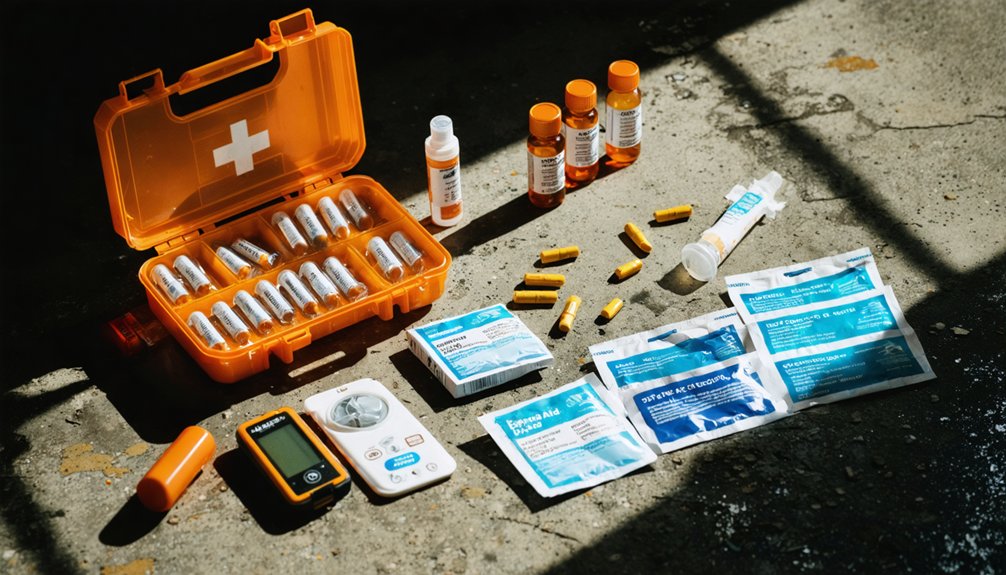
Beyond basic wound care supplies, your first aid kit requires pharmaceutical interventions that address life-threatening medical emergencies in remote storm-chasing environments. Your personalized prescription items should include injectable epinephrine for anaphylaxis, naloxone for opioid reversal, and ondansetron for severe nausea.
Life-threatening emergencies in remote locations demand immediate pharmaceutical interventions including epinephrine, naloxone, and prescription antiemetics beyond standard first aid supplies.
Consider specialized antibiotics like ciprofloxacin and amoxicillin-clavulanate for treating infections when you’re days from definitive care.
Essential pharmaceutical components:
- Reversal agents: Injectable diazepam for intractable seizures and naloxone spray for narcotic overdose management
- Pain management protocols: Hydrocodone-acetaminophen combinations for moderate-to-severe trauma pain and codeine for cough suppression
- Infection treatment: Metronidazole and targeted antibiotics based on your medical history
- Remote health monitoring tools: Point-of-care testing devices enabling real-time diagnostic capabilities without cellular connectivity
WorldClinic and Jase Case systems offer pre-configured prescription packages specifically designed for extended field operations.
Food Storage and Power Backup Essentials
Storm chasers who venture into severe weather environments for extended periods must lock down their nutritional autonomy through strategic food storage protocols that function independently of refrigeration and commercial power grids. Deploy Mylar bags paired with moisture absorber strategies to preserve dried staples like rice, beans, and oats for 10-20 years.
Nitrogen based gas preservation extends powdered milk viability to 24 months at standard temperatures. You’ll maintain operational freedom with freeze-dried meals requiring only water rehydration—no cooking power essential.
Stack 5-gallon food-grade buckets containing wheat, corn, and white rice for indefinite storage capacity. Integrate MREs and survival tabs offering 25-year shelf life alongside vacuum-sealed proteins.
Store one gallon of water per person daily in BPA-free containers, rotating bottled reserves every 6-12 months to guarantee hydration security during grid failures.
Pet Safety and Family Preparedness Considerations
How effectively can you execute emergency protocols when your family’s most vulnerable members—children, elderly dependents, and pets—face immediate danger during severe weather events? Your autonomy during crises depends on documented medical records, evacuation-ready supplies, and practiced family communication strategies.
Critical preparedness protocols include:
- Pet evacuation planning: Maintain current vaccination records, ID photos, carriers, and 72-hour food/water supplies for each animal
- Medical documentation: Secure waterproof copies of prescriptions, device serial numbers (pacemakers, insulin pumps), and insurance cards
- Communication protocols: Assign emergency contact cards to children; establish external family meeting points
- Skill-based training: Complete CPR certification; teach utility shutoff procedures; conduct biannual evacuation drills
Independence requires preparation, not luck. Document everything. Train everyone. Practice relentlessly.
Frequently Asked Questions
How Often Should First Aid Kit Supplies Be Replaced or Updated?
You’ll need to conduct inventory checks monthly in high-risk situations or every six months otherwise. Replace items immediately after use, verify expiry dates annually, and update supplies when packaging’s compromised or your emergency scenarios change drastically.
What Is the Ideal Storage Temperature for Emergency First Aid Supplies?
Store your emergency supplies at the ideal temperature range of 59-77°F (15-25°C) with humidity control considerations including desiccants. You’ll maintain medication potency and material integrity by avoiding extreme heat, freezing conditions, and moisture exposure.
Are Pre-Assembled First Aid Kits Better Than Building Your Own Custom Kit?
Your kit customization needs and individual medical requirements determine the answer—pre-assembled kits offer speed and compliance, while custom builds provide precise hazard coverage. You’ll gain ideal preparedness by strategically combining both approaches based on your specific operational risks.
How Do You Maintain Sterility of Medical Supplies During Storm Chasing Activities?
You’ll maintain sterility by storing supplies in waterproof packaging with vacuum-sealed barriers and desiccants. For reprocessing, you can use portable sterilization methods like VHP generators, though pre-sterilized disposables offer maximum reliability without infrastructure constraints.
What Certifications Should Storm Chasers Have for Administering Emergency First Aid?
You’ll need current CPR/AED certification and basic life support training from recognized providers like Red Cross. First aid training meeting OSHA 29 CFR 1910.151 standards is essential. Consider Wilderness First Aid certification for remote scenarios where you’re operating independently.