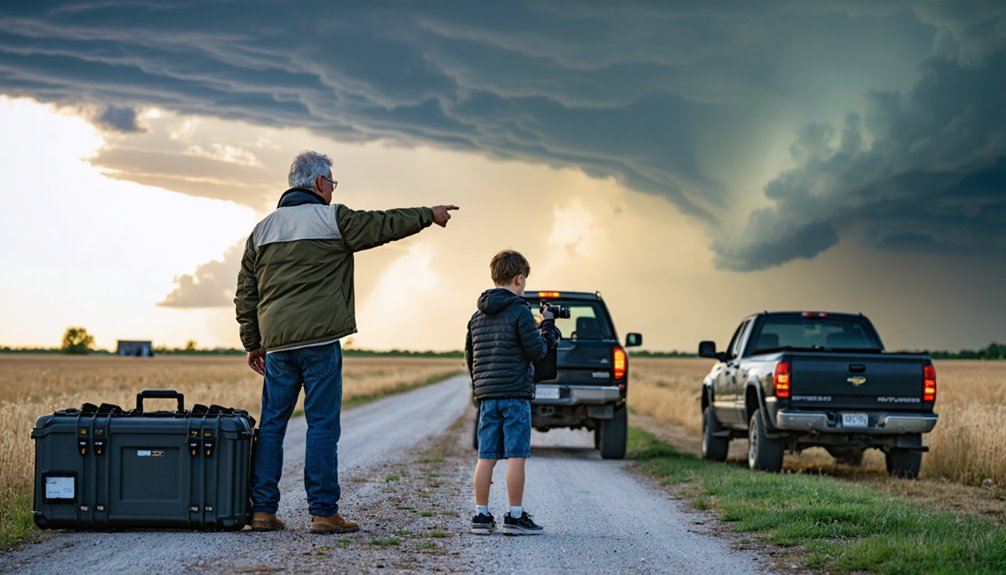
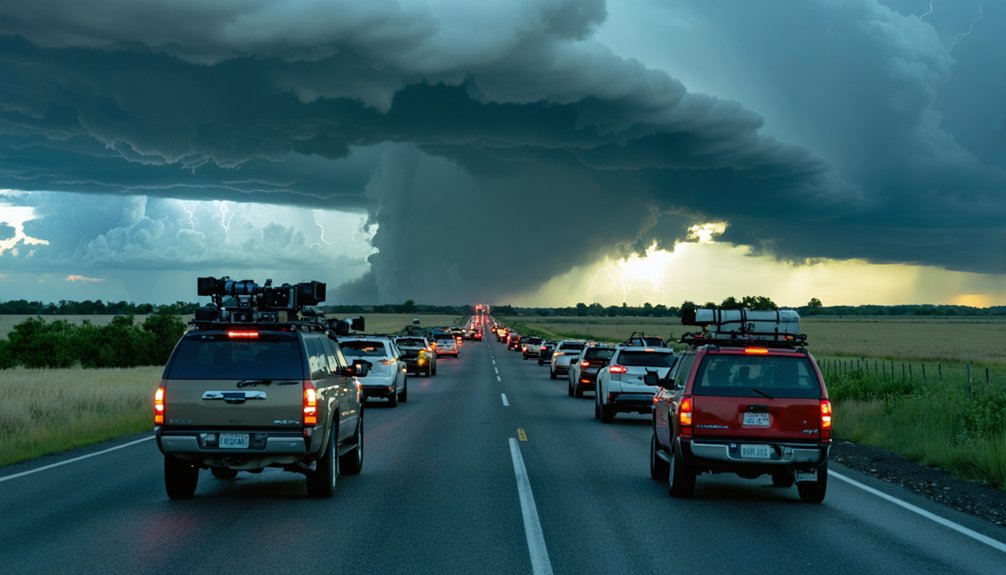
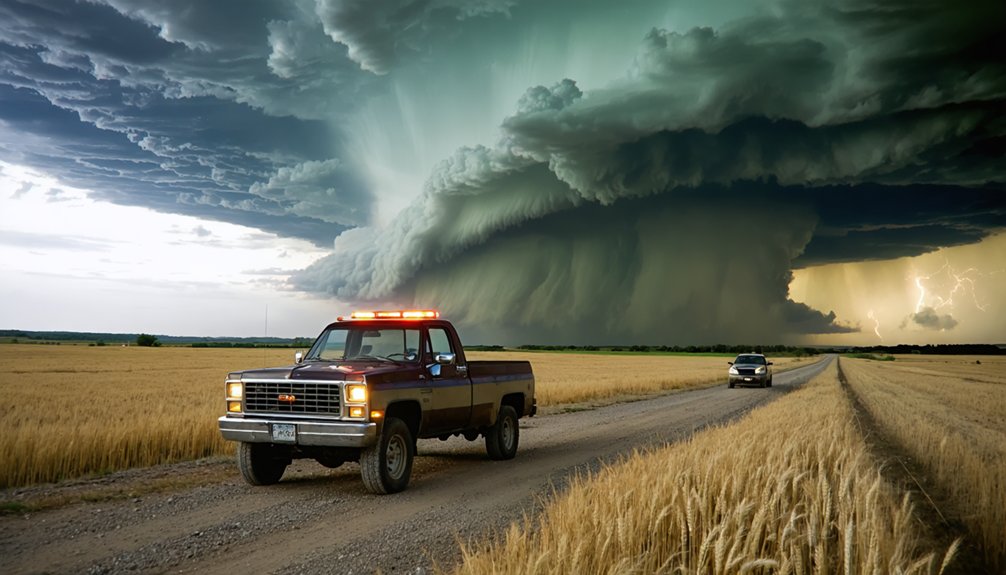
Your storm chasing consent form must detail specific hazards like lightning strikes, flash flooding, and debris-blocked roadways while documenting participants’ voluntary acknowledgment. You’ll need clear opt-out provisions with designated withdrawal points, behavioral standards requiring safety belt usage and core punching avoidance, and mandatory emergency protocols for primary threats. Include thorough data usage rights and media ownership clauses to protect your operations legally. These five practices form the foundation, though implementing them correctly requires understanding the critical nuances that separate adequate protection from potential criminal negligence exposure.
Key Takeaways
- Provide comprehensive risk disclosure covering lightning strikes, flash flooding, hydroplaning, near-zero visibility, and debris-blocked roadways with hazard acknowledgment.
- Include voluntary opt-out provisions with documented withdrawal procedures, designated exit points, and timestamped consent withdrawal communication methods.
- Establish clear behavioral standards requiring safety belt usage, legal compliance, safe distances, designated escape routes, and no core punching.
- Mandate safety protocols for primary hazards including lightning response, tornado shelter procedures, CPR-trained personnel, and post-event reporting obligations.
- Implement legal framework addressing data usage rights, copyright compliance, original authorship documentation, and media distribution contractual language.
Comprehensive Risk Disclosure and Hazard Acknowledgment
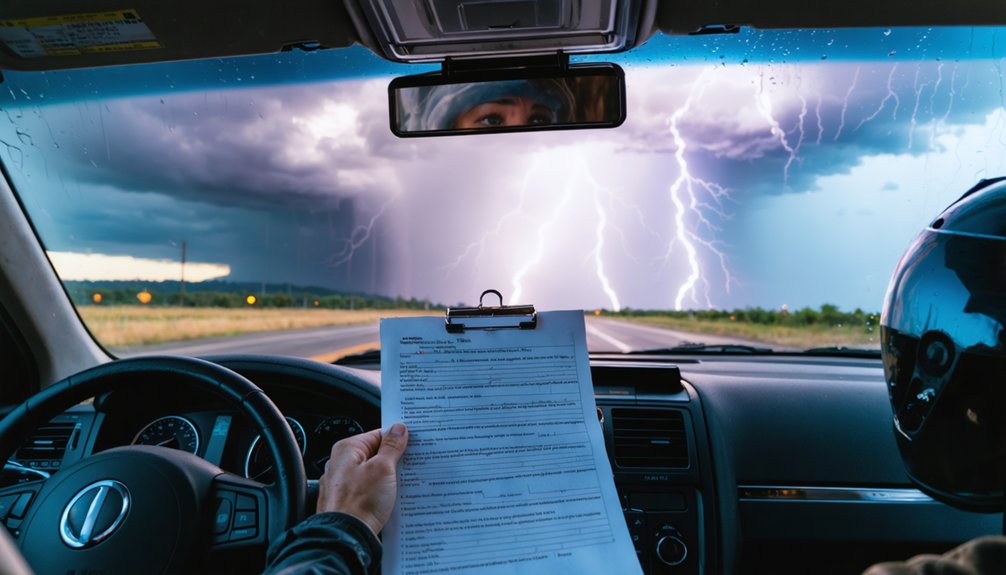
Before you venture on a storm chasing expedition, you’ll need to complete a detailed waiver that documents your full understanding and acceptance of the inherent risks involved. This isn’t just paperwork—it’s your opportunity to comprehend the real hazards you’ll face, from lightning strikes and flash flooding to downed power lines and debris-blocked roadways.
You’ll acknowledge dangers like hydroplaning on water-covered roads, near-zero visibility during torrential rainfall, and environmental obstacles including animals and construction zones. The waiver process includes time to address your concerns and questions, ensuring you’re making an informed choice. Your safety depends on grasping both the hazards and risk minimization methods before departure.
Thorough safety checks and careful review of risk descriptions help correct any misconceptions about storm chasing’s realities.
Structured Informed Consent With Opt-Out Provisions
Understanding storm chasing hazards represents only the first step in your consent process. Effective consent forms must include voluntary exit options that empower you to withdraw from dangerous situations without penalty or pressure. Your consent shouldn’t lock you into continued participation when conditions deteriorate beyond acceptable thresholds.
Structure your forms to clearly outline documented consent withdrawal procedures. Specify exactly how you can communicate your decision to exit—whether verbally, through hand signals, or written notification. Include designated withdrawal points during the chase where you can safely separate from the group.
This approach respects your autonomy while protecting operators legally. Document all withdrawal instances with timestamps and signatures. Your freedom to make real-time safety decisions based on evolving conditions shouldn’t be compromised by initial consent. True informed consent includes ongoing choice.
Clear Participant Obligations and Behavioral Standards
While informed consent addresses your rights to withdraw, it must equally define your responsibilities as an active participant in storm chasing operations. Your consent form should explicitly outline behavioral expectations including legal compliance with trespassing laws, maintaining safe distances from storms, and avoiding interference with emergency responders. You’re required to wear safety belts, follow designated escape routes, and refrain from core punching maneuvers that compromise visibility.
These standards protect both individual liberty and community partnerships that enable chase access. Your obligations extend to environmental stewardship through zero-trace practices and professional conduct that enhances storm chasing’s reputation. When touring, you’ll influence future chasers through demonstrated responsibility.
Clear documentation of these duties verifies you understand that freedom to chase demands corresponding accountability for safety and ethical behavior.
Mandatory Safety Protocols and Emergency Procedures
Your consent form must document specific safety protocols that protect you from the three primary storm chasing hazards: lightning strikes, tornadoes, and core punching scenarios. Detail thorough safety training requirements, including the 30-30 Rule for lightning detection and immediate shelter protocols when warnings activate. Your document should mandate periodic safety assessments ensuring participants demonstrate proper response capabilities.
Storm chasing consent forms must establish rigorous safety protocols addressing lightning, tornadoes, and core punching while mandating comprehensive training and periodic competency assessments.
Essential emergency procedures include:
- Lightning response: Isolating yourself from ground contact by kneeling or squatting, maintaining distance from metal objects and electrical equipment
- Tornado shelter: Relocating to interior rooms on lowest floors, using sturdy furniture for cover while protecting head and neck
- Core punching avoidance: Positioning vehicles strategically to eliminate driving through precipitation cores that risk hail damage and tornado encounters
Require CPR-trained team members and establish clear post-event reporting obligations for all participants.
Legal Framework for Data Usage and Media Rights
Implement copyright compliance strategies by documenting original authorship and maintaining case precedent databases for potential infringement disputes. While Oklahoma’s proposed licensing regulations focus on road access rather than media rights, no federal framework currently governs storm chaser data usage. You’re responsible for protecting your creative work through clear contractual language that prevents unauthorized distribution while preserving your freedom to monetize valuable storm documentation.
Frequently Asked Questions
What Insurance Coverage Is Required for Storm Chasing Tour Operators?
You’ll need minimum $1 million general liability insurance requirements, commercial auto coverage with $30,000 personal injury protection, workers compensation, and weather-related cancellation policies. High-risk chasing demands $2-5 million limits for ultimate protection and operational freedom.
How Are Minors Handled Differently in Consent Forms?
You’ll need separate parental consent requirements for minors, clearly documenting guardian authorization before tours. While age restrictions vary by operator, you must guarantee enhanced risk disclosures emphasize storm hazards to parents, protecting everyone’s freedom and safety.
What Happens if a Participant Is Injured During the Chase?
You’ll face absolutely catastrophic consequences without proper coverage—your consent form must clearly outline medical liability protocols and emergency response procedures. Participant safety depends on pre-established evacuation plans, immediate medical access, and all-encompassing insurance protecting both parties from storm-related injuries.
Are Refunds Available if Weather Conditions Cancel the Tour?
Refunds depend on each operator’s cancellation policies. If the provider cancels due to weather, you’ll typically receive partial refunds or credits. However, liability waivers often exclude participant-initiated cancellations, protecting operators from weather unpredictability beyond their control.
Who Owns Photos Taken by Participants During the Storm Chase?
You’ll typically retain ownership of your photos, but tour operators often require liability waivers addressing image rights. Review consent forms carefully before signing—they’ll clarify whether you’re granting usage permissions while protecting everyone’s interests and freedoms.