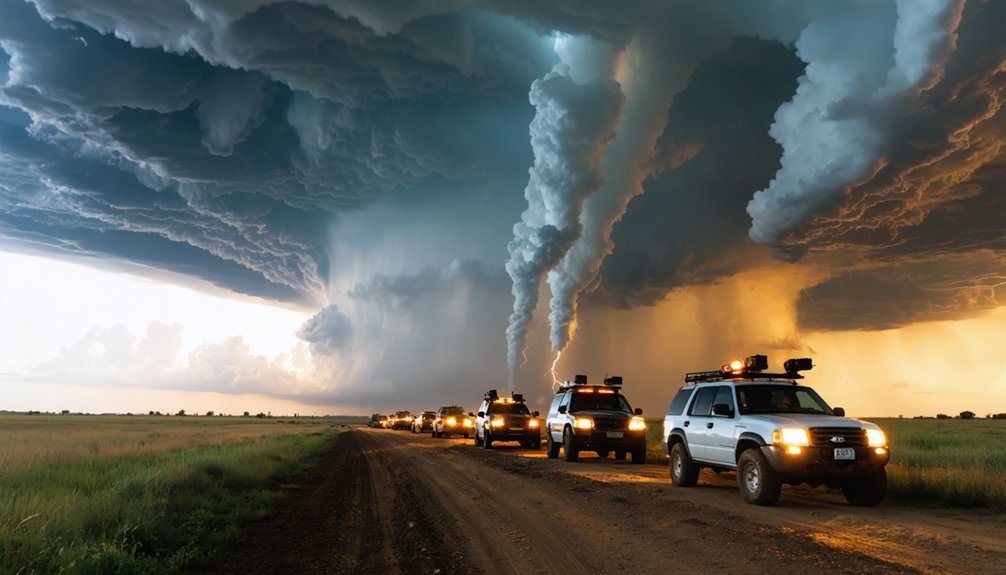
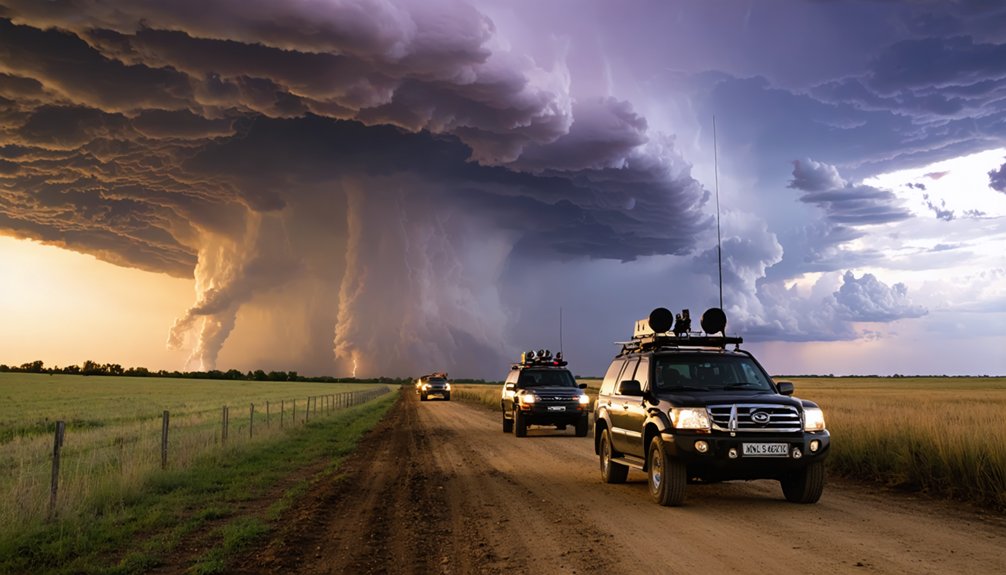
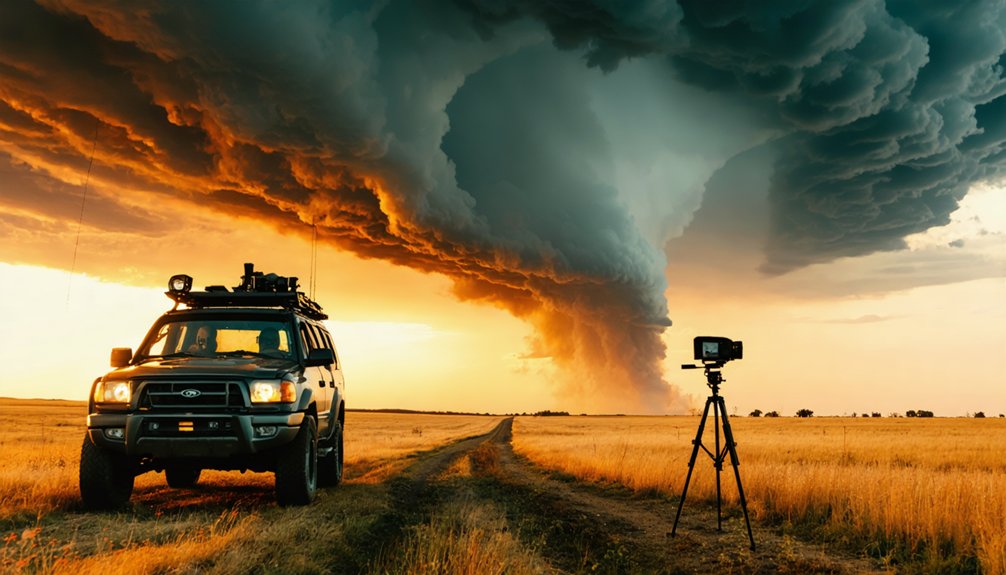
Book your 2026 storm chasing tour between December 2025 and February 2026 to secure early-bird discounts of $700-$1,000 and guarantee spots during May’s statistical peak when 22% of annual tornadoes occur. You’ll want to target mid-May departures, particularly May 17-22, as this week captures 6% of yearly tornado reports. Deposits typically run $500-$1,000, with final payments due by March. Longer 10-14 day tours substantially boost your intercept odds, and our guide below reveals how veteran meteorologists maximize your success rate.
Key Takeaways
- Book by December 2025 to secure early registration discounts with $700-$1,000 deposits and best availability for peak season dates.
- Final balance payments due March 1-15, 2026, with mid-May tours showing critical shortages by January-February 2026.
- Target May 17-22 tours for statistical peak tornado activity, when 6% of annual tornado reports occur in one week.
- Consider 10-14 day tours departing mid-May for maximum tornado intercept opportunities during the highest-probability weather window.
- April tours starting April 11 offer immediate availability at $2,999, while premium May dates require earlier commitment.
Understanding Peak Tornado Season Windows
When planning your 2026 storm chasing adventure, understanding tornado seasonality isn’t just helpful—it’s essential for maximizing your chances of witnessing nature’s most powerful phenomenon. Historical data trends reveal May 25 as the statistical peak, with the week of May 19-26 capturing 6% of all tornado reports.
May 25 marks the statistical peak of tornado season, with the surrounding week capturing 6% of all annual tornado reports.
You’ll find May accounts for 22% of yearly tornado activity, averaging 269 tornadoes—making it the busiest month nationwide. Over half of all U.S. tornado reports occur in just three months: April, May, and June.
Regional geography impacts your timing remarkably. The Southern Plains experience peak conditions May through early June, while Gulf Coast states see earlier spring activity. If you’re targeting Alabama, March through May offers ideal opportunities. Texas leads the nation with 133 tornadoes annually, making it a prime destination for storm chasers.
Understanding these windows lets you chase storms where they’re most likely to form, giving you the freedom to experience nature’s raw power safely.
Strategic Booking Timeline for 2026 Tours
While tornado season peaks in May, your booking window opens far earlier—and waiting could cost you the chase of a lifetime. Tours fill months in advance, with mid-May slots already full and June departures down to 2-3 seats.
Here’s your strategic timeline:
- Now through December 2025: Secure early registration discounts with $700-$1,000 deposits for guaranteed bookings on prime April-June tours
- January-February 2026: Last chance for limited availability on peak season dates before operators sell out
- March 1-15, 2026: Final balance payments due; missed deadlines forfeit deposits and seats
Early April tours starting April 11 offer immediate availability, while high-probability mid-May windows show critical shortages. Your deposit locks transport, lodging, and expert guidance—essentials you can’t improvise when supercells form. All tours include individual and group photographs captured by experienced storm chasers, ensuring you leave with professional documentation of your chase experience. Booking multiple weeks provides additional savings, with $300 off each week when you reserve consecutive tour dates. Book early, chase freely.
Tour Duration Options and Their Advantages
You’ll need to match your tour duration to both your schedule and storm-chasing goals, as each option offers distinct trade-offs between cost, tornado probability, and time investment. Shorter 1-6 day tours work well for first-timers testing the experience, while 10-14 day options statistically increase your chances of witnessing significant tornadoes during peak May-June conditions.
Your budget considerations shift dramatically too—longer tours deliver better value per day and more intercept opportunities, but they require greater upfront investment and time away from work or family. Tours covering 10 or more days provide superior tornado-spotting odds by allowing your group to adapt across broader geographic regions as weather patterns shift throughout your expedition. The company’s veteran professional Meteorologists enhance your chances of success by leveraging over 50 years of combined storm chasing experience to make strategic positioning decisions throughout your tour.
Short Vs Long Tours
Tour duration shapes your entire storm chasing experience, from the number of supercells you’ll witness to how much road fatigue you’ll endure. Your chasing strategy depends on balancing opportunity against physical demands.
Short tours (5-7 days) work best when you’re:
- Testing storm chasing before committing to longer expeditions
- Working with limited vacation time or budget constraints
- Targeting early or late season when activity patterns are concentrated
Long tours (8-14 days) dramatically increase your tornado encounter odds through sustained mobility. You’ll track evolving systems from Southern to Central Plains, capturing multi-day storm cycles that shorter tours miss. Experienced forecasting combined with mobility becomes more critical to success than simply choosing the highest frequency month. Tour flexibility becomes essential—some companies let you combine segments for 16-day expeditions during peak mid-May through mid-June windows, maximizing your presence during nature’s most volatile atmospheric conditions. Extended tours like Tour 5A’s ten-day itinerary consistently sell out yearly because they offer the greatest opportunities to achieve serious storm chasing goals during the late May to early June prime season.
Maximizing Tornado Encounter Probability
Beyond choosing your tour length, understanding how duration directly affects your tornado encounter odds helps you make data-backed booking decisions. A 10-day tour positions you in severe weather corridors long enough to intercept multiple storm systems, with documented success rates showing nearly perfect tornado sighting records across seasons.
Successful storm spotting techniques rely on mobility—you’ll chase across four states if necessary, covering up to 6,000 miles while adjusting routes based on 48-hour forecasts and real-time Doppler data. Ideal storm chasing strategies emerge when you commit to at least six days, giving meteorologists multiple opportunities to position your team ahead of developing supercells.
Tours running 6-10 days balance freedom with probability. You’re not rushing—you’re leveraging technology, regional expertise, and weather pattern knowledge to intercept nature’s most powerful phenomena safely. Storm chasing remains remarkably safe, with only 3 deaths since the 1950s, making it one of the safest extreme weather activities when conducted with professional guides. Your guides will review safety protocols each morning before setting off, ensuring everyone understands best practices for observing severe weather throughout the day’s chase.
Budget and Time Considerations
Tour budgets reflect significant equipment considerations:
- Five-day tours ($1,000 deposit) offer brief introductions but limit chase opportunities
- Six-day formats balance affordability with adequate storm exposure for newcomers
- Ten-day expeditions (£2,595) maximize encounter probability for serious enthusiasts
Couples enjoy $100–$400 discounts per person when sharing rooms. Remember deposits are non-refundable, and balances come due March 15, 2026. Tours fill months ahead, so you’ll need to commit early to secure your preferred dates and preserve that freedom to roam tornado alley.
Prime Departure Cities Across Tornado Alley
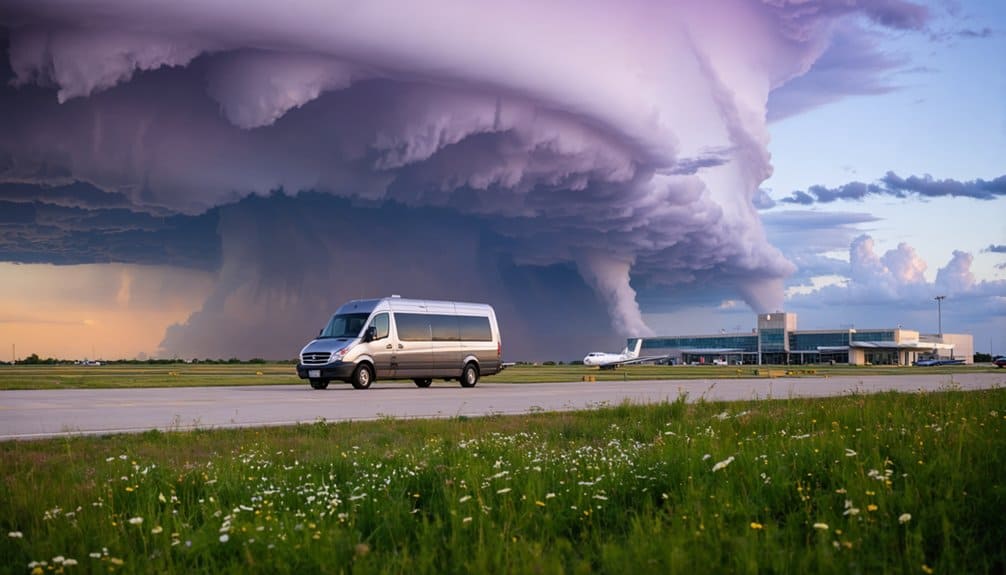
When planning your 2026 storm chasing adventure, selecting the right departure city directly impacts your access to prime tornado corridors and peak weather windows. Oklahoma City stands as the ultimate hub for Southern Plains tours, offering seven-day expeditions through Texas, Oklahoma, and Kansas during May’s peak activity.
Denver serves dual-season chasers with ten-day tours covering Wyoming, Montana, and the Dakotas from June through late season. Wichita positions you centrally for multi-state intercepts during statistical tornado peaks, while Amarillo opens Texas Panhandle supercell zones for early-season five-day sprints. Lincoln extends your reach into Nebraska’s Northern Plains for late-June pursuits.
These preferred arrival hubs and destination highlights guarantee you’re positioned where nature’s most powerful storms develop, maximizing your intercept opportunities across Tornado Alley’s diverse terrain.
Pricing Breakdown by Tour Length and Season
Storm chasing budgets vary dramatically based on your available vacation days and preferred chase window, with 2026 tours ranging from compact single-day experiences at $3,480 to extensive 10-day expeditions reaching $5,050. You’ll find the most competitive pricing differences in mid-length tours, where strategic booking opens up significant value.
Tour length pricing tiers break down as follows:
- 4-6 day tours ($1,999-$3,600) – Best value per chase day, with couple savings of $200-$300
- 7-day tours ($2,600-$3,275) – Premium positioning during peak tornado season
- 10-day tours ($3,975-$5,050) – Maximum storm intercept opportunities across multiple systems
Double occupancy consistently reduces costs by $200-$300 per couple regardless of tour length. Deposits run $500-$1,000 with full payment due eight weeks before departure, so early commitment secures your preferred chase window.
Early Bird Tours in April
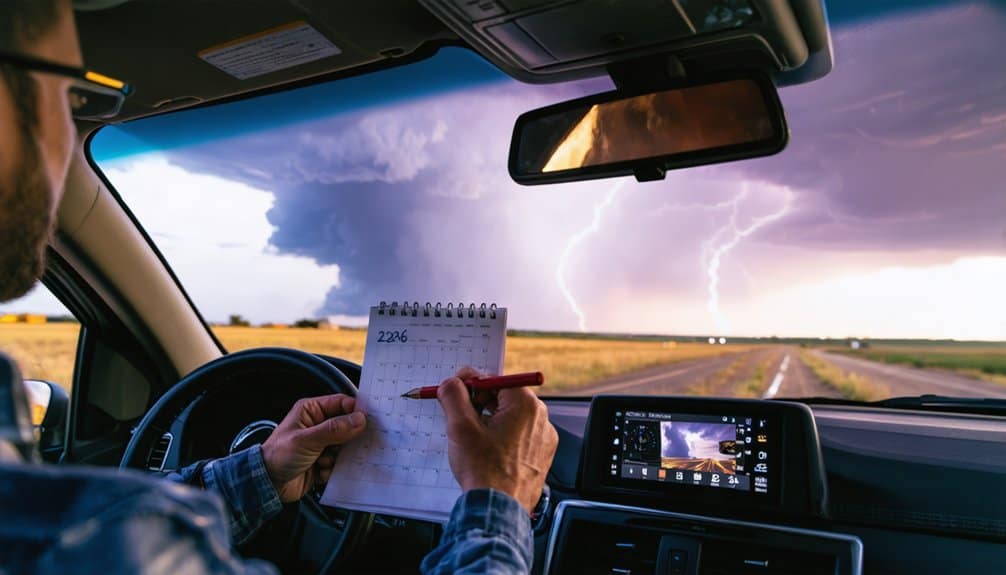
April’s early bird tours target the start of severe weather season when availability drops fast—several 2026 tours already show limited seats or sold-out status. You’ll find most operators running 6-7 day chases between April 11-26, with bases in Wichita, Oklahoma City, and DFW positioning you near initial tornado activity.
Booking now secures your spot during this pre-peak window, though weather variability means April’s storm potential matches later months despite the “early bird” timing.
Limited Availability and Spots
Several tour operators have already marked their April 2026 departures with “limited availability” warnings, signaling that early bird slots are disappearing fast. You’re facing real early booking pressure as prime April dates sell out months in advance. High demand awareness means understanding that seats aren’t just scarce—they’re vanishing.
Here’s what you’ll encounter:
- Single seat availability on multiple April tours priced at $2,999, requiring immediate deposits
- $750-$1,000 non-refundable deposits to secure your spot before final balances hit March 15, 2026
- Complete sellouts like Tempest Tours’ “Awesome April” small group departure already unavailable
Silver Lining Tours reports over 50% capacity sold for April Tour 1. Your freedom to chase comes from decisive action—hesitation means watching opportunities evaporate while you’re stuck behind a desk.
Initial Severe Weather Peaks
When La Niña collapses and polar vortex disruptions collide with an active jet stream, you’re looking at the atmospheric trifecta that transforms April into prime chase season. Weather pattern analytics confirm the Mississippi River Valley becomes ground zero as ENSO-neutral conditions take hold right when tornado activity historically peaks.
You’ll find the most consequential setups tracking from the Gulf States through the Tennessee and Ohio Valleys, where accessible cold air meets exceptional Gulf warmth. Statistical forecast accuracy points to slower-moving systems this year, extending your window for intercepting significant tornadoes.
Early Bird tours capitalize on this March-April corridor when atmospheric drivers align perfectly, giving you freedom to chase multiple high-end events before the threat disperses northward into May’s broader, less predictable patterns.
Mid-May Statistical Peak Period
According to decades of climatological data, the last two weeks of May represent the statistical sweet spot for Central Plains tornado activity. Seasonal climatology shows tornado probabilities follow a bell-shaped curve peaking from late May through early June, with May 17-22 marking the most active period for multiple sightings.
Mid-to-late May represents the statistical peak for Central Plains tornadoes, with May 17-22 showing the highest concentration of multi-tornado events.
Mid-May advantages based on statistical patterns:
- Jet stream positioning favors the Texas Panhandle and central Oklahoma for explosive supercell development
- Gulf moisture surges combine with atmospheric instability creating ideal tornado conditions
- Equal daily outbreak potential from March through mid-June, but mid-May concentrates activity in accessible chase territories
Tours targeting this window ($2,700-$4,900) often sell out months ahead. You’ll find operators scheduling 5-10 day expeditions specifically around May 15-24, maximizing your chances for witnessing nature’s most powerful phenomenon.
Late Season Opportunities in June and July
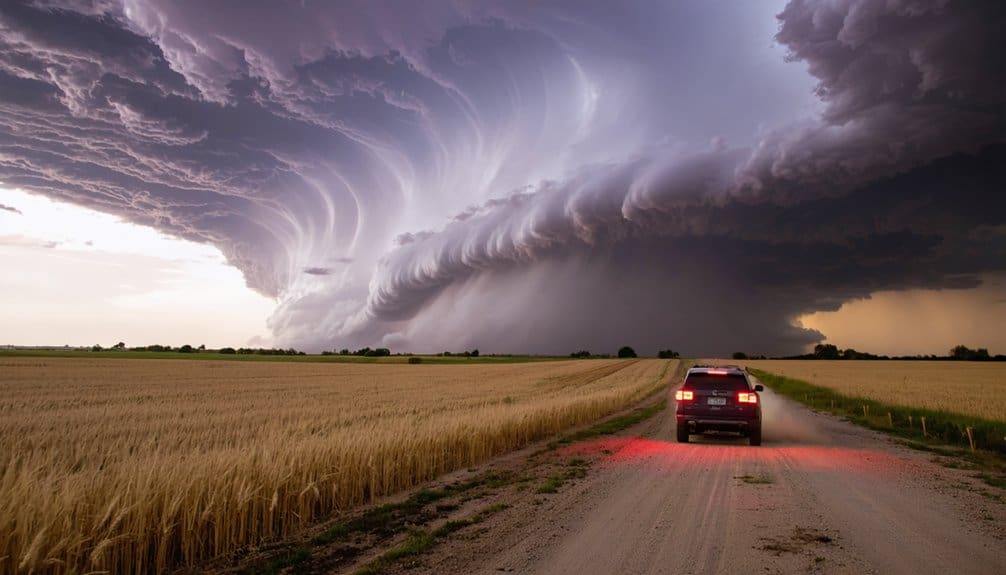
You’ll find excellent storm chasing value extending your booking window into late June and July, when tours shift focus toward Colorado’s upslope supercells and the Dakotas’ photogenic storm structures. Tours like the Silver Lining Badlands Photo Tour (June 27th-July 4th) and the Great North Tornado Hunt Minitour (starting July 10th) offer 4-8 day options at competitive pricing while targeting documented supercell activity in regions like Edgemont, South Dakota and Hyannis, Nebraska.
These late-season opportunities typically maintain the $2,500-$3,000 pricing range with better availability than peak-season tours, though you’re trading tornado frequency for dramatic lightning, mammatus clouds, and sunset storm photography.
Colorado and Dakota Targets
Why do seasoned storm chasers often target late-season tours through Colorado and the Dakotas? The jetstream’s northward retreat creates explosive storm conditions across these high-latitude regions when Southern Plains activity diminishes.
Your June and early July chase window exposes three strategic advantages:
- Extended daylight hours from summer solstice provide maximum pursuit time across vast open territories
- Nebraska targets and Dakotas focal areas deliver photogenic supercells against stunning backdrops with minimal terrain obstacles
- Denver’s central position enables rapid deployment from eastern Colorado through Wyoming to Montana
Tours like Tempest 7 (June 13-20) and Tempest 9 (June 28-July 4) position you where the action intensifies. You’ll intercept isolated, well-structured supercells while others head home. Historical data confirms: late-season northern tours consistently document multiple significant tornado encounters.
Extended Season Pricing Options
When May tours sell out or your schedule demands flexibility, June’s extended season delivers compelling value across both pricing and storm potential. You’ll find Wichita-based six-day packages starting at $2,600 single occupancy with complete lodging inclusion, while ten-day Northern Plains pursuits run $4,700-$4,900.
WeatherHolidays’ Denver-based tours offer budget friendly pricing at £2,595 covering flights, shuttles, and accommodation through June 18-29.
Double occupancy consistently saves $100-$200 per person across operators. Memorial Day Sale codes can slash another $400 off qualifying bookings. Most operators require $500-$1,000 deposits with final payments due March-April 2026, giving you ample planning time.
July dedicated tours remain rare industry-wide, though late-June departures targeting Northern Plains sometimes capture early-July setups. WeatherHolidays’ Tour 5 holds just three remaining spaces for this prime window.
Deposit Requirements and Payment Deadlines
Before you commit to a 2026 storm chasing tour, understanding deposit structures and payment deadlines will protect your budget and secure your spot. Nonrefundable deposit policies vary noticeably across operators, ranging from $500 to $1,000 per person, while Storm Chaser Tours requires 50% upfront.
Critical booking cutoff dates for 2026 tours:
- Stormchasing.com stops accepting deposits after February 1st, requiring full payment for later bookings
- Tempest Tours enforces a March 1st deadline for deposit options
- Twisted Sky Tours extends deposit availability until April 15th
You’ll forfeit your deposit if final payment isn’t received by specified deadlines—February 1st for Silver Lining Tours and Stormchasing.com, March 1st for Tempest Tours and Tornadic Expeditions, or April 15th for Twisted Sky Tours. Book early to maximize payment flexibility.
Maximizing Your Tornado Intercept Success Rate
Securing your spot on a tour means nothing if you don’t align your booking with the meteorological realities of 2026. Target March through May when consistent severe weather patterns develop across the eastern Plains to mid-Mississippi Valley. You’ll maximize intercept opportunities by choosing operators with 60+ years combined experience who utilize advanced storm monitoring techniques during peak activity windows.
Focus your booking on tours covering the Southern Plains through Deep South corridor, where tornado density remains highest. Operators emphasizing small group settings provide superior positioning flexibility when rapid deployment becomes critical. Their ideal risk assessment capabilities separate successful intercepts from missed opportunities. Don’t settle for crowded chases that compromise your freedom to maneuver. Experience-driven teams understand that 2026’s reduced tornado count demands strategic positioning in high-probability zones during historically proven peak periods.
Frequently Asked Questions
What Weather Tracking Equipment Do Tour Operators Provide to Guests?
Tour operators equip you with detailed weather radar displays and real-time storm tracking technology through onboard systems. You’ll access professional-grade radar apps, GPS navigation, and atmospheric instruments while guides interpret data, ensuring you’re informed and protected throughout your chase.
Are Storm Chasing Tours Safe for Children or Elderly Participants?
Storm chasing tours aren’t recommended for young children or elderly participants due to potential health concerns and extended travel demands. You’ll need appropriate supervision, stamina for long vehicle hours, and ability to follow rapid emergency instructions during severe weather situations.
What Happens if Severe Weather Cancels Multiple Chase Days During Tour?
Ironically, you’re *chasing* storms that might cancel chases! Tour operators maintain repositioning strategies and accommodations for disruptions, ensuring you’ll intercept severe-warned storms. They offer alternative transportation options across Tornado Alley, maximizing your freedom to experience nature’s fury safely.
Do Tours Offer Refunds if No Tornadoes Are Spotted?
Most tours don’t offer tornado-specific refunds—you’re accepting nature’s unpredictability. Only StormTours guarantees $300 back if their forecasting fails. Tour cancellation policies and participant liability waivers clearly state weather outcomes aren’t guaranteed, protecting operators while you chase freedom.
What Physical Fitness Level Is Required for Storm Chasing Tours?
While you don’t need athlete-level fitness, you’ll require endurance for 6-8 hour van sessions and quick movements during chases. Required safety precautions include sturdy footwear and layered clothing, plus gear recommendations like waterproof jackets for unpredictable conditions.
References
- https://stormchasing.com/book-a-tour/
- https://www.tempesttours.com/storm-chasing-tours
- http://extremechasetours.com/schedule/
- https://extremetornadotours.com/product/tour4-2026/
- https://www.tornadicexpeditions.com/2026-tour-schedule
- https://stormchasing.com
- https://www.silverliningtours.com/2026-storm-chase-tour-schedule/
- https://extremetornadotours.com
- https://www.accuweather.com/en/severe-weather/this-day-is-historically-the-peak-of-tornado-season/1175030
- https://www.weatherbug.com/news/Tornado-Statistics-By-State