You’ll survive extreme storm chasing by preparing your vehicle with functional TPMS and backup communication systems, then reducing speed 30-40% on compromised surfaces where stopping distances extend ten times normal length. Position yourself east or southeast of supercells to maintain escape routes, never cross flooded roadways or approach from the north. Cooperate with all roadblocks and monitor NOAA radio continuously. Recognize dark-green skies, freight train sounds, and wall cloud formations as immediate evacuation triggers requiring basement shelter or ditch abandonment, techniques that prove essential when atmospheric conditions deteriorate.
Key Takeaways
- Prepare vehicle with proper tires, emergency supplies, communication equipment, and full fuel before entering storm chase operations.
- Reduce speed significantly on wet roads, increase following distance, and understand stopping distances extend dramatically in winter conditions.
- Position east or southeast of supercells for safe escape routes while maintaining visibility of storm features and avoiding debris.
- Never cross flooded roads, respect roadblocks, monitor NOAA radio continuously, and stay clear of downed power lines.
- Recognize tornado warning signs like green skies and freight train sounds, then immediately seek sturdy shelter or lie flat in ditches.
Prepare Your Vehicle and Equipment Before Every Chase
Before you pursue any severe weather system, your vehicle requires systematic inspection across five critical areas: tires, mechanical systems, communication equipment, documentation tools, and emergency supplies. Start with tire assessment—verify tread depth, rotation alignment, and TPMS functionality.
Test battery capacity to support extended operations and multiple devices. Maintenance protocols include checking fluid levels: oil, coolant, and windshield washer reservoirs.
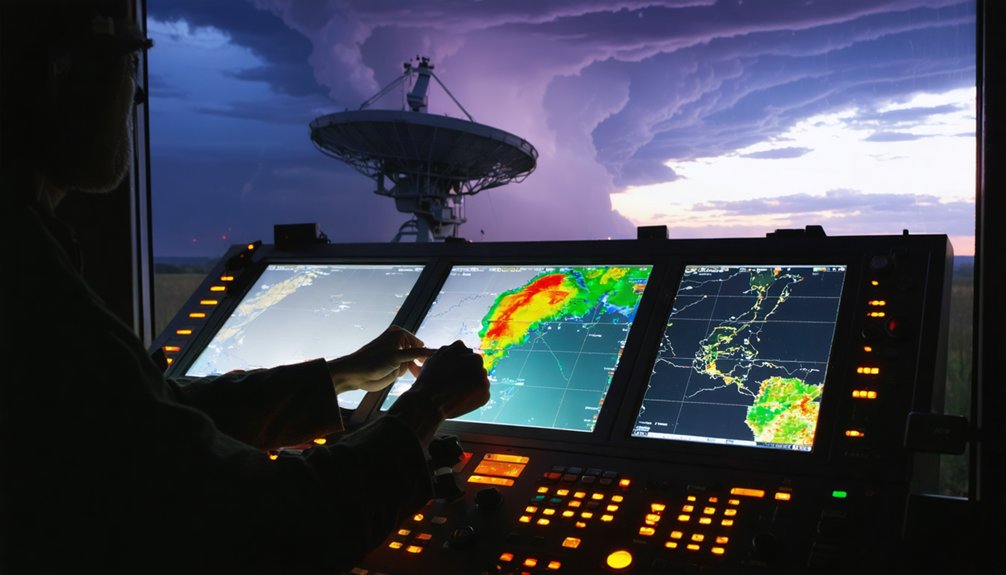
Communication equipment testing demands verification of your NOAA weather radio, cellular boosters, and satellite systems. Install backup systems like prepaid phones to maintain connectivity when primary networks fail. Mount anemometers and camera systems for data collection and live streaming capabilities.
Stock emergency supplies: first aid kits, tire repair equipment, tool boxes, and fire extinguishers. Maintain full fuel capacity and carry emergency cash for areas without digital payment infrastructure.
Master Defensive Driving in Severe Weather Conditions
Equipment preparation means nothing if you can’t navigate safely through the severe weather you’re chasing. Reduce your speed by 30-40% on slushy pavement and understand that stopping distances extend 10 times longer on snowy roads. Monitor real-time weather data to anticipate hydroplaning risks, as wet pavement accounts for 75% of weather-related crashes.
Double your following distance minimum—icy conditions contribute to 156,164 crashes annually with 1,836 deaths. Heavy snow reduces freeway speeds by 5-64%, requiring constant adjustment. Exercise enhanced vehicle control skills while predicting other drivers’ errors.
Weather-related crashes represent 22% of six million yearly accidents, but you’ll maintain your autonomy by respecting physics. Your freedom to chase depends on disciplined speed management and relentless situational awareness.
Position Yourself Strategically Around Storm Systems
Strategic positioning determines whether you’ll capture compelling storm footage or face life-threatening danger, with your location relative to the storm system accounting for 80% of chase success outcomes. Arrive one hour before storm initiation to monitor storm movement patterns and adjust for boundary shifts.
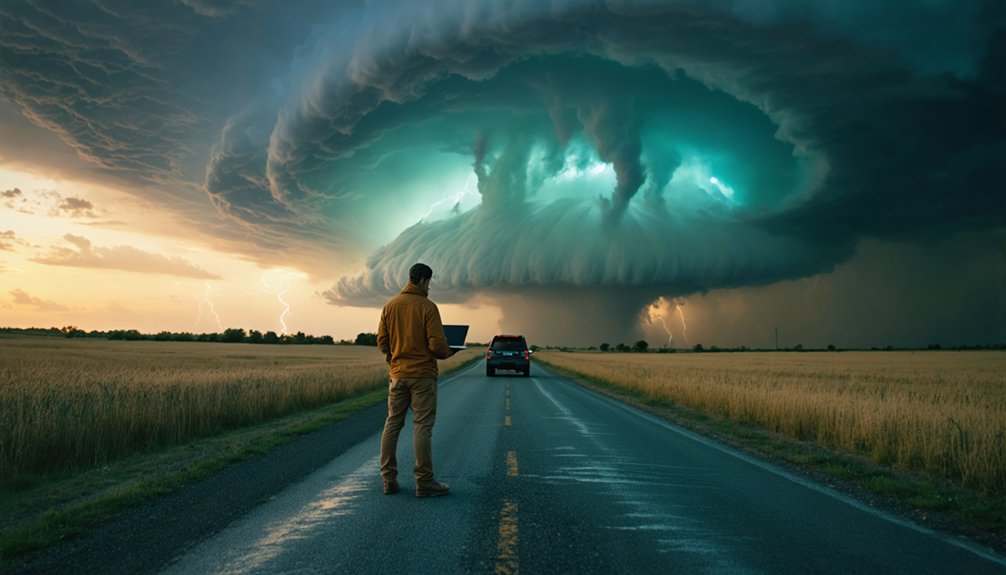
Position yourself right of the supercell’s motion vector—typically east or southeast—maintaining clear air for escape routes. Never approach from the north or cross in front of tornadic storms. The southeast quadrant offers ideal visibility of wall clouds while shielding you from rain cores.
Pre-scout terrain and road networks using satellite imagery, particularly in areas with limited access. Always evaluate shelter opportunities and plan multiple escape routes before deployment, ensuring freedom to reposition without navigational constraints.
Respect Emergency Personnel and Traffic Safety Protocols
When emergency personnel establish roadblocks during severe storm events, you’ll compromise both rescue operations and your own safety by attempting unauthorized passage. Your presence in restricted zones diverts critical resources from actual victims. Cooperate with public safety officials by backing off immediately when denied access—your documentation isn’t worth impeding relief efforts.
Traffic protocols demand heightened vigilance: never traverse flooded roadways, avoid bridges during active storm systems, and maintain seat belt usage when driving to shelter. If caught in debris fields while mobile, drop below window level and shield yourself with available materials.
Monitor NOAA weather radio continuously and adhere to all clear signals before resuming chase operations. Post-event, stay clear of downed power lines and practice proper accountability procedures. Your freedom to chase depends entirely on respecting these operational boundaries.
Know When to Evacuate During Hail and Tornado Threats
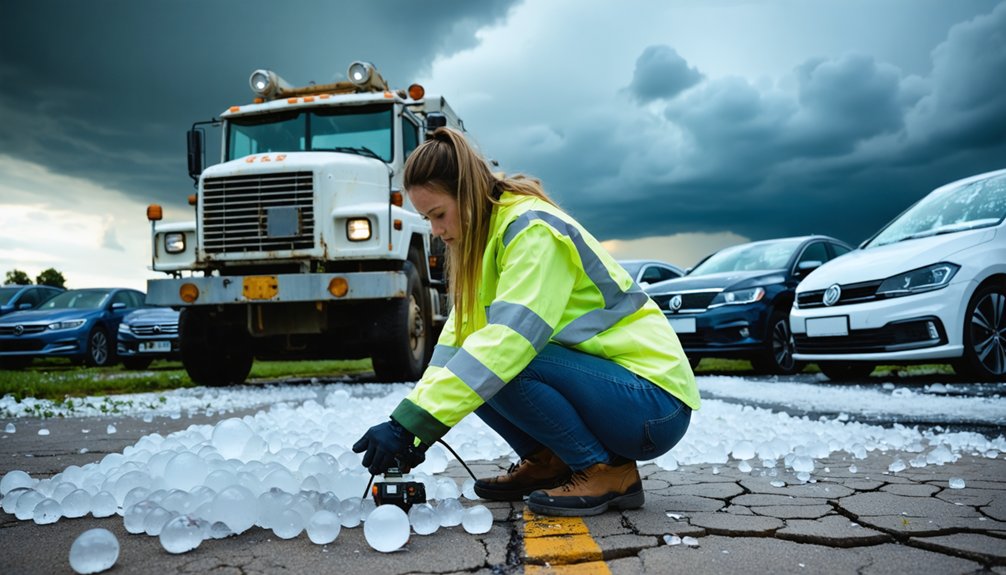
Your survival during storm chasing operations depends on recognizing five critical tornado warning triggers that demand immediate evacuation. Warning sign recognition includes dark-green skies, low-lying clouds, large hail, and freight train-like roaring sounds. These indicators require instant shelter identification decisions.
Execute these evacuation protocols based on your position:
- Vehicle Operations – Drive immediately to sturdy shelter when debris impacts your vehicle. If shelter’s unreachable, park with seatbelt fastened or evacuate to ditches below road level.
- Mobile Home Occupancy – Abandon mobile homes instantly for secure buildings. Without nearby options, lie flat in ditches covering your head.
- Optimal Protection Zones – Prioritize basements or lowest-floor interior rooms. Position yourself under heavy furniture, away from windows, with helmet protection covering your head.
Frequently Asked Questions
What Insurance Coverage Is Recommended for Storm Chasers and Their Vehicles?
You’ll need extensive vehicle insurance policies with collision coverage—70% of drivers carry this combination. Storm damage coverage protects against hail, debris, and wind damage. Add rental reimbursement, towing, and higher liability limits for complete protection during chase operations.
How Do I Obtain Proper Training or Certification for Storm Chasing?
You’ll obtain certification through SKYWARN’s free 2-hour training covering storm structure and severe weather identification. For chasing, you’ll need advanced meteorology training and proper equipment selection knowledge. Contact your local National Weather Service office to register today.
What Are the Best Communication Methods When Cellular Networks Fail?
When towers crumble, you’ll need satellite phone rentals for global reach and HAM radios tuned to emergency radio frequencies. Two-way radios keep your team connected locally, while scanners monitor official channels—ensuring you’re never truly isolated in the field.
How Much Does a Typical Storm Chasing Season Cost per Year?
Your storm chasing budget averages $7,000 annually, though costs range from $2,000 to over $10,000 depending on activity. This seasonal costs overview includes fuel, equipment, lodging, meals, and communications—essential investments for your independent pursuit.
What Psychological Factors Should Chasers Consider Before Pursuing Dangerous Storms?
Don’t chase storms like you’re invincible—assess your mental preparedness first. Evaluate your risk assessment skills, stress tolerance, and support systems. Consider sensation-seeking tendencies, trauma history, and coping mechanisms. Your psychological resilience determines whether you’ll thrive or burn out.