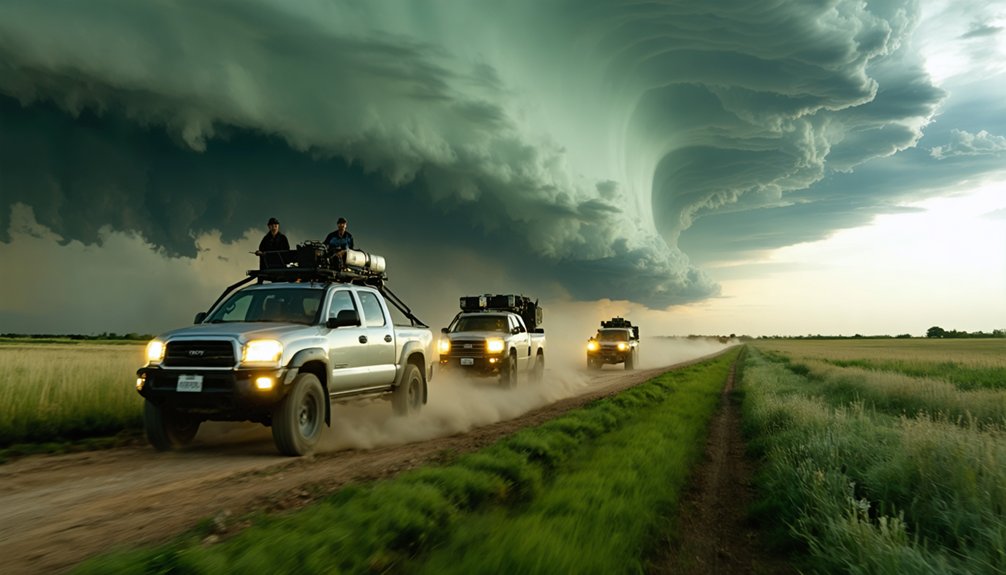
You’ll find qualified storm chasing partners through specialized platforms like StormTrack.org’s meteorologist forums and SpotterNetwork.org’s SKYWARN coordination channels. Monitor professional teams’ social media accounts—Reed Timmer’s 1.4M Facebook following and Live Storms Media’s YouTube channel showcase proper safety protocols and occasionally post recruitment opportunities. Storm tracking apps like RadarScope reveal active chasers’ real-time positions during deployments, enabling tactical communication exchanges. Tour operators like Tempest Tours connect you with experienced meteorologists while demonstrating field protocols that’ll prepare you for independent operations.
Key Takeaways
- Join specialized forums like StormTrack.org and TalkWeather to connect with experienced meteorologists and veteran chasers in dedicated communities.
- Follow professional teams on social media platforms and engage with their content to demonstrate meteorological knowledge and build credibility.
- Participate in storm chasing tours with reputable operators to network with fellow enthusiasts and learn from certified meteorologists.
- Use storm tracking apps like RadarScope and SevereStudios to identify active chasers nearby and communicate during live weather events.
- Monitor SKYWARN and SpotterNetwork.org for tactical coordination opportunities with trained volunteers and local chaser networks.
Join Storm Chasing Forums and Community Platforms
Finding qualified storm chasing partners requires vetting communities where experienced chasers actively share forecasts, coordinate deployments, and enforce safety protocols. StormTrack.org’s Advanced Weather & Chasing section restricts access to meteorologists and veterans, ensuring you’ll engage with credible professionals discussing real-time CAPE data and deployment strategies. Monitor forum sponsorships like TalkWeather’s Storm Mapping app partnerships to identify trusted tools and active contributors. The Southwestern US Monsoon 2025 thread‘s 6K views demonstrate where serious chasers congregate.
SpotterNetwork.org coordinates spotters through support@spotternetwork.org, integrating with SKYWARN volunteers for tactical communication. GMRS Radio Forums facilitate regional connections—explore regional chaser meetups in areas like Upstate SC where mobile communications are being established. These platforms enforce quality through moderator approval, filtering out unreliable participants and maintaining operational standards you’ll depend on during severe weather deployments.
Connect Through Tour Operator Networks and Group Experiences
When selecting a storm chasing tour operator, you’ll need to evaluate their safety protocols, meteorological credentials, and operational track record before committing to multi-day deployments. Operators like Tempest Tours and StormChasing.com maintain 100% safety records through cutting-edge radar technology and insurance-approved drivers. You’ll find experienced guides with National Weather Service backgrounds and documented intercepts exceeding 700 tornadoes across Tornado Alley operations.
Most tour operators facilitate social media networking among participants, creating lasting connections beyond the 5-10 day deployments. You can convert these relationships into local chase clubs after your tour concludes.
Smaller group sizes—typically 6-7 passengers—enable direct interaction with meteorologists during daily briefings. This structure provides freedom to develop autonomous chasing capabilities while maintaining professional safety standards throughout severe weather encounters.
Follow Professional Storm Chasing Teams on Social Media
You’ll find established storm chasing teams maintain active social media accounts across YouTube, Facebook, Twitter, and Instagram where they regularly post documentation and operational updates.
Follow professional operations like Reed Timmer (1.4M Facebook followers), Live Storms Media (401K YouTube subscribers), and Basehunters Chasing to observe their chase protocols, equipment setups, and safety procedures in real-time.
Monitor these accounts specifically for recruitment announcements, training opportunities, and team expansion posts that signal openings for qualified chase partners.
Identify Active Team Accounts
Professional storm chasing teams maintain robust social media presences that serve dual purposes: real-time weather documentation and safety communication networks. When you identify verified profiles, you’ll access critical field intelligence from seasoned professionals. Start by analyzing engagement metrics to differentiate active operators from dormant accounts.
Focus on these operational indicators:
- Multi-platform consistency: Live Storms Media (401K YouTube, 47.5K Facebook) and Reed Timmer (234K YouTube, 1.4M Facebook) demonstrate sustained activity across channels since 2009-2011
- Documented experience: Extreme Tornado Tours Team collectively tracked over 690 tornadoes with Red Cross certification
- Real-time deployment: Teams like Basehunters Chasing and Tornado Titans actively post severe weather updates during active chase operations
Cross-reference follower counts with posting frequency and technical content quality. This vetting process guarantees you’re connecting with legitimate field operators rather than hobbyists.
Engage With Their Content
Once you’ve identified legitimate storm chasing accounts, strategic engagement establishes your credibility within the operational community. You’ll build subscriber engagement by contributing meaningful technical observations on footage from teams like Live Storms Media and Basehunters Chasing, who’ve documented severe weather since 2011. Comment on storm structure, intercept positioning, or safety protocols showcased in their content.
When Reed Timmer shares tornado documentation or Mike Oblinski posts time-lapse sequences, analyze meteorological conditions rather than posting generic praise. You’ll foster community interaction by sharing relevant radar data, discussing chase routes, or asking protocol-specific questions. This illustrates operational knowledge to teams like Tornado Titans, who’ve intercepted nearly 400 tornadoes. Authentic technical dialogue separates legitimate chasers from spectators, opening partnership opportunities.
Monitor Recruitment Announcements
When established teams expand operations or replace departing members, social media platforms become primary recruitment channels for time-sensitive positions. You’ll discover opportunities by monitoring professional accounts that utilize job postings to announce vacancies requiring specific certifications and field experience. These announcements often detail equipment requirements, deployment protocols, and safety credentials needed.
To maximize your recruitment monitoring:
- Set notification alerts for teams posting chase openings during pre-season periods
- Track team pages that regularly seek out industry events where recruitment occurs
- Monitor engagement metrics on posts to gauge response rates and application timelines
Professional teams leverage platforms like YouTube and Twitter to reach active chasers quickly, particularly for urgent storm season deployments. You’ll gain competitive advantage by responding promptly to these time-sensitive postings while demonstrating protocol adherence and technical competency.
Use Storm Tracking Apps to Meet Active Chasers
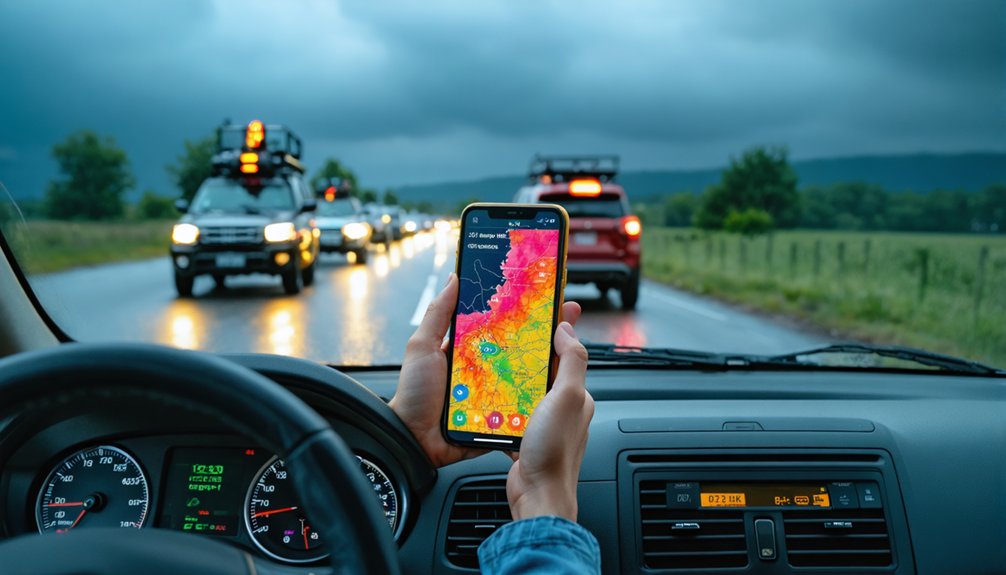
You’ll find that many storm tracking apps now include features that reveal other chasers’ real-time positions during active weather events, enabling you to identify nearby teams and assess their storm intercept strategies.
Through integrated live-streaming capabilities, you can monitor professional chasers’ feeds to evaluate road conditions, visibility constraints, and developing tornado signatures before committing to a chase position.
During significant outbreak scenarios, app-based discussion forums allow you to exchange critical data with active chasers, including hail core locations, rotation reports, and road closure alerts that directly impact your safety protocols.
Real-Time Chaser Location Tracking
Consider these essential tracking platforms:
- StormWindow displays 24-hour position data with integrated social media updates and photo documentation from active events
- RadarScope combines professional-grade NEXRAD data with chaser position overlays for tactical coordination
- SevereStudios operates interactive mapping with live video feeds from active chasers
You’ll find zoom functionality and road mapping features critical for identifying chaser concentrations during severe weather outbreaks, enabling strategic partner coordination while maintaining operational awareness.
Connect Through Live Streams
Live streaming platforms transform passive storm observation into active networking opportunities with experienced chasers in the field. You’ll watch live storm chase footage through SevereStudios, Live Storms Media, and Highways & Hailstones, connecting directly with chasers during active pursuits. These platforms let you discuss streaming platform features in real-time chat, asking questions about storm structure, positioning strategies, and safety protocols while events unfold.
Mobile apps on Android and iOS give you freedom to monitor multiple streams simultaneously, tracking chasers on interactive maps as they navigate supercells. StormCenter’s 24-hour rewind function lets you analyze previous chases and positioning decisions. You’re not just watching—you’re building relationships with active chasers who share your passion. Comment sections and direct messaging establish connections that shift from digital observation to potential partnership openings.
Join Active Outbreak Discussions
When severe weather outbreaks develop, storm tracking apps become essential coordination tools that connect you with active chasers monitoring the same systems. You’ll find real-time engagement opportunities that let you coordinate through niche meteorology forums while leveraging local weather enthusiast groups during active events.
Key apps for connecting with chasers:
- WeatherBug enables radar image sharing and community discussions through integrated social features, perfect for outbreak coordination.
- The Weather Channel supports real-time conversations with customizable tracking views across multiple locations simultaneously.
- Storm Shield delivers location-based alerts with voice notifications, facilitating immediate chaser meetups during severe weather.
These platforms transform solo pursuits into collaborative operations. Share data layers, discuss storm cell movements, and coordinate safe positioning strategies with experienced chasers already deployed in target areas.
Participate in Online Photography and Weather Report Discussions
Online photography and weather report discussions serve as your primary gateway to storm chasing networks, where technical expertise and safety protocols are exchanged alongside striking imagery. Weather photography forums like StormtrackForums maintain dedicated threads where you’ll connect with experienced chasers through shared storm structure analyses and chase reports.
Cloud photography communities on platforms like Backcountory Gallery enable you to demonstrate your technical capabilities while learning forecast methodologies from veterans. You’ll find documentary photographers and newcomers actively seeking chase partners in tagged sections, creating opportunities for collaboration.
These discussions aren’t just about capturing spectacular shots—they’re where you’ll absorb critical safety protocols, communication standards, and watch/warning interpretation skills. Your engagement in these technical exchanges establishes credibility and builds relationships that progress from digital networks to real-world chase teams.
Book Adventure Tours to Build Lasting Partnerships
Storm chasing adventure tours accelerate your partnership development through structured multi-day deployments where safety protocols and forecasting methodologies become shared learning experiences. Six to eleven-day formats from operators departing Oklahoma City, Denver, Kansas City, and Rapid City maximize opportunities for building unique chasing partnerships during March through August peak season.
Professional meteorologists facilitate technical discussions in small 6-7 passenger van configurations, creating environments where serious enthusiasts connect through:
- Daily weather briefings establishing collaborative forecasting dialogue
- Multi-night hotel accommodations enabling extended technical exchanges
- Shared chase days developing synchronized observation protocols
Leveraging tour experiences transforms casual participants into dedicated partners through sustained field interaction. These all-inclusive packages eliminate logistical barriers, letting you focus on identifying collaborators with compatible risk assessment approaches and meteorological expertise levels for future independent deployments.
Frequently Asked Questions
What Safety Certifications Should I Verify Before Partnering With Online Storm Chasers?
Before trusting someone behind the wheel into nature’s fury, you’ll want verified SKYWARN certification, current first aid credentials, advanced meteorology training, and demonstrated storm forecasting expertise. These protocols guarantee your partner won’t compromise your safety when chasing freedom.
How Do I Handle Liability Insurance When Chasing With Partners Met Online?
You’ll need separate liability coverage requirements for storm chasing activities. Verify each partner carries adequate policies before departing. Document insurance claim procedures beforehand, understanding most standard plans exclude storm chasing. Consider specialized adventure sports insurance protecting your freedom responsibly.
What Background Checks Are Recommended Before Meeting Storm Chasing Partners in Person?
Trust but verify—you’ll want online background verification of criminal history, driving records, and storm chasing credentials. Build mutual trust establishment through meteorologist endorsements, documented chase experience, and verified social media presence before that first in-person meetup.
Should Partnership Agreements Be Written When Sharing Vehicle and Fuel Costs?
Yes, you’ll need written agreements covering vehicle maintenance requirements and fuel cost distribution. Document everything—mileage splits, repair responsibilities, and emergency protocols. It’s your financial protection and guarantees you’re both accountable while maintaining the freedom to chase safely.
How Do I Exit a Chase Partnership That Feels Unsafe?
Don’t anchor yourself to dangerous decisions. Immediately communicate concerns to your partner, express discomfort with specific unsafe behaviors, and establish your exit timeline. You’re free to prioritize your safety—document issues, then pursue independent chasing opportunities.