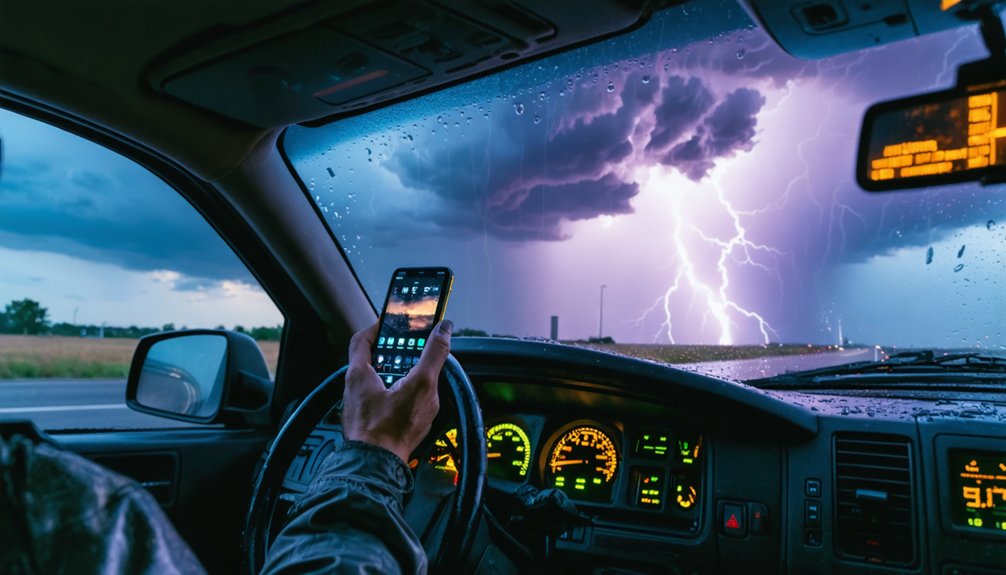
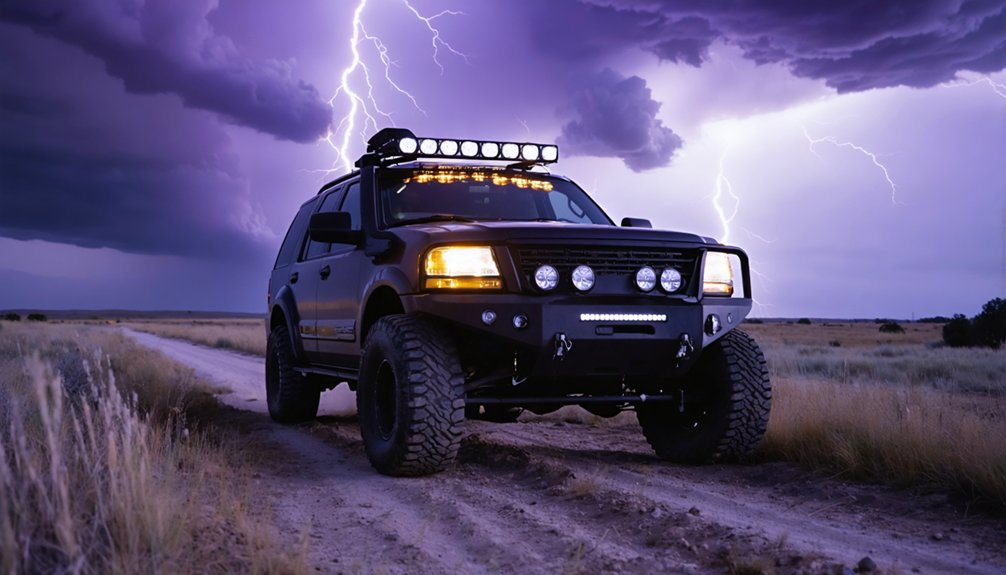
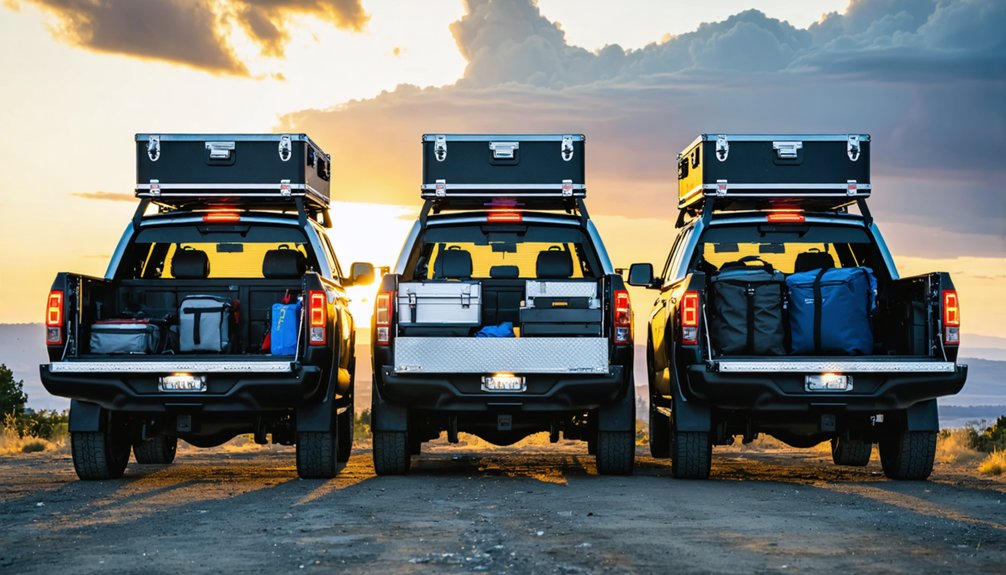
You’ll find excellent budget-friendly storm chasing vehicles starting with used 2012 Subaru Foresters around $5,197, offering reliable all-wheel drive for unpaved routes. Front-wheel-drive sedans like Honda Civics deliver 39 mpg highway efficiency for paved-road chasers, while minivans save you $5,000-7,000 compared to SUVs and provide expansive equipment space. For serious off-road capability, consider the Jeep Compass Trailhawk at $34,390 with selectable terrain modes. Your choice depends on whether you’re targeting paved highways or remote rural intercepts, and the thorough equipment modifications you’ll need for safe operations.
Key Takeaways
- Front-wheel-drive sedans like the Hyundai Sonata N Line offer speed and fuel efficiency for paved-route storm chasing.
- Minivans save $5,000-7,000 compared to SUVs while providing spacious interiors for equipment and achieving 20 mpg.
- Budget SUVs like Jeep Compass Trailhawk ($34,390) balance off-road capability with affordability and selectable terrain modes.
- Used 2012 Subaru Foresters ($5,197) deliver reliable all-wheel-drive performance at minimal cost for entry-level storm chasers.
- Modified trucks with reinforced windows and armor provide extreme weather protection, especially when sourced from military surplus.
Front-Wheel-Drive Sedans for Solo Storm Chasers
Front-wheel-drive sedans have proven themselves as legitimate storm chasing platforms for solo chasers operating primarily on paved roads. You’ll achieve up to 39 mpg highway in four-cylinder Hondas while maintaining quick acceleration for repositioning under developing storms.
Models like the 2021 Hyundai Sonata N Line deliver 290 hp with 0-60 times of 5.0 seconds, while the Honda Civic Type R reaches 60 mph in 4.9 seconds. These vehicles excel at high-speed highway passing and offer ample interior space for camera equipment and visibility enhancing light bars.
However, you must avoid muddy roads and flooded areas due to limited ground clearance. Unlike SUVs with rear mounted spare tires for off-road recovery, sedans require strict adherence to paved routes for safe deployment.
Minivans as Cost-Effective Alternatives
While sedans excel at fuel efficiency, minivans deliver superior value when you’re outfitting a multi-person chase team on a limited budget. You’ll save $5,000-7,000 compared to SUVs while gaining seven-passenger capacity and removable rear seats for equipment racks. Front-wheel-drive models achieve 20 mpg, and widespread parts availability keeps maintenance costs down.
Passenger comfort becomes critical during twelve-hour pursuits. Minivans provide smoother rides than SUVs, with individual reclining seats that eliminate bench crowding. You’ll appreciate the steeper windshield rake for improved sightlines during intense intercepts.
Interior workspace configuration adapts easily to your operational needs. The expansive cabin accommodates custom consoles, overhead LCD monitors, and workstations while maintaining crew accessibility. Though all-wheel-drive options remain rare, front-wheel-drive delivers predictable handling on slick pavement without fishtailing.
Sport Utility Vehicles for Off-Road Capabilities
Storm chasers targeting unpaved rural roads and muddy field access need vehicles that deliver genuine ground clearance and four-wheel-drive systems. The Jeep Wrangler Sport 2-Door ($34,090) provides proven trail capability with factory 4WD and compact maneuverability.
Both Subaru Crosstrek Wilderness ($34,780) and Forester Wilderness ($37,705) offer 9.3 inches ground clearance with X-Mode torque vectoring for technical terrain. The Jeep Compass Trailhawk ($34,390) balances affordability with selectable terrain modes.
For maximum budget flexibility, a used 2012 Subaru Forester ($5,197) delivers reliable all-wheel-drive performance. These platforms accept lifted suspension setups and offroad tire and wheel options for enhanced capability. Each vehicle combines affordable entry pricing with documented durability in demanding conditions where paved roads end.
Modified Trucks for Extreme Weather Conditions
When tornadoes shift from scientific interest to professional filming or research missions, heavily modified pickup trucks and SUVs replace conventional chase vehicles. You’ll find Chevrolet Tahoes, Suburbans, and Ford F-350s serving as platforms for extreme weather intercepts.
These builds incorporate bulletproof polycarbonate windows, steel plate armor, and LINE-X coating against hail damage. Hydraulic systems deploy ground-anchoring spikes and body skirts to combat 200+ mph winds.
While Dominator and TIV vehicles represent professional-grade conversions, you can adapt this technology affordably. Consider used military surplus vans with existing reinforcement, or start with three-quarter-ton pickups offering superior stability.
Truck camper modifications provide weather-monitoring stations and equipment racks without custom fabrication costs. Essential upgrades include roll cages, racing harnesses, auxiliary generators, and reinforced suspension—practical investments that keep you operational when conditions intensify.
Essential Affordable Equipment Under $100
Armor plating and hydraulic anchors protect your vehicle, but effective storm chasing depends equally on the tools you carry inside. You’ll maximize your independence with these essential items under $100:
Your chase vehicle’s interior equipment determines operational range as much as external modifications—budget-smart tools deliver professional-grade capability.
- Battery powered weather radios ($20-$40) deliver NOAA alerts without draining your vehicle’s electrical system. The La Crosse 810-805 at $33.71 connects to your aux cord for speaker output.
- Portable charging solutions like AC adapters keep cameras and devices operational during extended chases.
- DIY laptop mount (~$15) using PVC and wood slides under your seat with bungee cord security for stable navigation.
- Auto emergency kit ($20) provides flashlight, tow rope, and blanket for roadside situations.
These field-proven tools maintain your operational capability without requiring expensive professional gear.
Power Inverters and Electrical Modifications
You’ll need reliable AC power in the field to keep laptops, camera batteries, and communication devices charged during extended chase operations. A properly sized inverter with direct battery wiring provides the electrical capacity your equipment demands without overloading factory cigarette lighter circuits.
Understanding inverter wattage requirements, safe installation practices, and battery protection systems prevents equipment failure and electrical fires when you’re miles from the nearest town.
Inverter Capacity and Wattage
Selecting the right inverter capacity starts with calculating your total simultaneous wattage draw—add up every device you’ll run at once, from laptops and cameras to GPS units and phone chargers. For storm chasers on starter batteries, stay under 400W to preserve cranking power. Deep cycle setups handle higher demands safely.
Consider these capacity guidelines:
- 200-400W: Powers electronics via cigarette lighter with 8-gauge fused wires
- 2000W pure sine: Handles laptops and sensitive gear with clean sine wave quality
- 3000W systems: Provides surge power capacity for compressors and tools
- Battery matching: 2000W requires minimum 2x120Ah deep cycle AGMs
Pure sine wave inverters protect your electronics from premature wear—square wave models degrade chargers faster. Calculate surge requirements separately; compressors need double their running wattage at startup.
Installing DC to AC
Installing a power inverter transforms your chase vehicle into a mobile command center, but improper installation creates fire hazards and voltage drops that’ll leave you stranded. Mount your 2000-watt inverter near your auxiliary battery bank—typically 6-8 batteries in the rear—keeping wire runs short to minimize resistance.
You’ll need proper electrical fault safeguards: inline fuses rated 10% above maximum draw, circuit breakers at distribution points, and heavy-gauge wiring capable of handling sustained loads.
Position your inverter strategically for backup power management, ensuring it draws from auxiliary batteries rather than draining your primary starting system. Install a custom electrical bus to isolate critical systems—radar displays, data loggers, and communications gear—from vehicle lighting circuits. This separation prevents voltage spikes from compromising your chase equipment during intense electrical storms.
Powering Essential Chase Equipment
How do you keep critical chase equipment running when you’re 200 miles from the nearest outlet? Your electrical system becomes mission-critical infrastructure requiring proper planning and execution.
Start with alternator verification—ensure output capacity handles simultaneous device loads during extended pursuits. Install auxiliary batteries (6-8 units) in your rear compartment, drawing power gradually while the engine runs. Proper fuse sizing calculations prevent catastrophic failures; match ratings to wire gauge per National Electric Code standards.
For AC power conversion:
- Choose true sine wave inverters (minimum 200W, ideally 2000W)
- Run heavy-gauge wiring through firewall grommets, avoiding pinch points
- Integrate solar panels with charge controller configurations for battery maintenance
- Test inverter output using oscilloscopes to verify wave quality
Mount removable solar panels for recharging during downtimes, but protect them when hail threatens your position.
Visibility Enhancements With Light Bars and Flashers
Adding light bars and flashers to your chase vehicle greatly improves safety during low-visibility storm conditions, but you must verify local regulations before installation—many states restrict civilian use of certain colors or flashing patterns.
Your electrical system needs proper capacity to handle the additional load; budget at least a 200W inverter or direct-wire connection with appropriate fusing per National Electric Code standards.
Mount all lighting outside airbag deployment zones using Ram mounts or custom roof racks, ensuring secure attachment that withstands high winds and hail impacts during pursuit operations.
Legal Compliance Considerations
While visibility enhancements substantially improve safety during storm chasing operations, you’ll need to verify that light bars, flashers, and auxiliary lighting comply with your state’s traffic laws before installation. Many jurisdictions prohibit civilians from operating emergency-style lighting that could be mistaken for law enforcement vehicles, particularly configurations suggesting pursuit avoidance tactics or creating license plate obfuscation concerns.
Before equipping your chase vehicle, research these critical compliance factors:
- Color restrictions – Most states limit amber lights for civilian use while reserving red, blue, or red-blue combinations for emergency responders
- Mounting position regulations – Some jurisdictions specify acceptable placement zones for auxiliary lighting
- Activation protocols – Laws often restrict flashing light use to stationary vehicles only
- Documentation requirements – Certain states mandate permits for non-standard lighting installations
Installation and Power Requirements
Before mounting any auxiliary lighting system, you’ll need to assess your vehicle’s electrical capacity to handle the additional power draw. Your battery must support the combined wattage—a 22-inch LED light bar requires 120-240 watts minimum, while dash-mounted chasers typically draw 48 watts. Monitor your alternator power load during operation to prevent drainage issues that’ll leave you stranded mid-chase.
Light mounting options include hardwiring for permanent integration or cigarette lighter connections for portable setups. The 9-32 volt flood LEDs work efficiently for external mounting with minimal voltage draw.
For storm chasing specifically, stick with rear-facing amber units only—rear-window mounted configurations maintain a low profile while providing essential visibility. Calculate total wattage by multiplying LED count by individual wattage before installation.
Winch Systems for Emergency Recovery
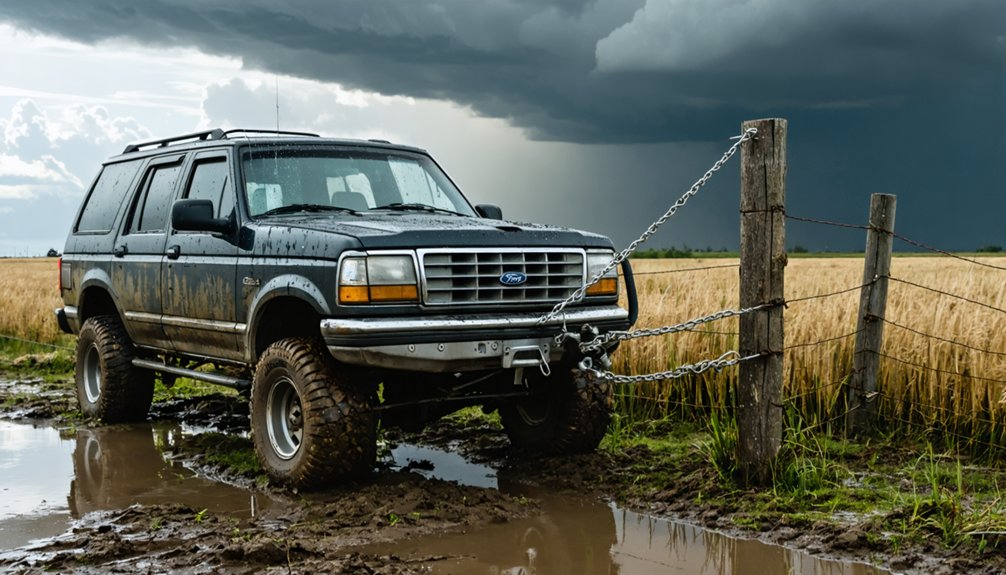
Getting stuck in mud, sand, or snow during severe weather operations isn’t a matter of if—it’s when. You’ll need reliable self-recovery capability when road conditions deteriorate rapidly.
When severe weather strikes and terrain conditions collapse, your vehicle’s self-recovery system becomes the difference between mission success and costly rescue operations.
Essential winch performance ratings for storm chasing include:
- 7HP motors delivering 13,000 lbs pulling capacity handle most passenger vehicles and light trucks
- Electronic torque limiters prevent burnout during extended recovery operations
- IP67 waterproof ratings maintain functionality in rain and water crossings
- Variable speed control with 10 Amp SCR controllers provides precise load management
Winch cable durability matters greatly in field conditions. Synthetic rope offers superior scratch resistance and safer handling compared to steel cable, with 1/2″ construction providing adequate strength. Load-indication systems display exact pulling weight, preventing overload damage. Truck-mounted installations integrate cleanly without compromising cargo space.
Protective Bumpers and Structural Upgrades
Though budget constraints limit access to purpose-built chase vehicles, strategic reinforcement upgrades transform standard SUVs and trucks into capable storm intercept platforms. You’ll want hitch-mounted bumper systems as your first line of defense—they’re removable, transferable between vehicles, and substantially cheaper than custom fabrication work. These bolt-on solutions protect your front end from hail damage and debris strikes without permanent modifications.
For structural integrity, vehicles with independent front suspension offer better handling during evasive maneuvers on deteriorating roads. Reinforce your windshield frame mounting points and consider aftermarket skid plates for undercarriage protection. Focus your budget on essential safety equipment rather than aesthetic modifications. Steel bumpers outperform aluminum in impact scenarios, though they add considerable weight affecting fuel economy and handling characteristics during high-speed repositioning.
Frequently Asked Questions
What Insurance Coverage Is Recommended for Storm Chasing Vehicles?
With 1,200 tornadoes striking annually, you’ll need commercial extensive insurance and one million dollars in liability coverage for storm chasing operations. Standard personal policies won’t protect you, and multiple hail claims trigger serious rate increases or coverage denials.
How Do Maintenance Costs Compare Between Sedans and SUVS?
SUVs cost you more in fuel efficiency considerations due to 5 mpg disadvantage, but sedans rack up higher repair bills from off-road damage. However, repair part availability favors sedans, offsetting some costs when you’re maintaining your chase vehicle long-term.
Are There Financing Options Specifically for Storm Chasing Equipment?
Standard equipment financing and loan programs don’t specifically target storm chasing gear. You’ll need traditional personal loans or credit cards for equipment purchases. Vehicle financing follows conventional auto loan processes, treating chase vehicles like standard consumer purchases.
What Resale Value Can I Expect From a Modified Chase Vehicle?
Like Icarus’s wings melting, your customization costs won’t return—expect 40-60% depreciation rates immediately. Steel plating and specialized gear appeal only to niche buyers, so you’ll recover far less than stock vehicles when selling your modified chaser.
Do Storm Chasers Need Special Permits or Licenses for Equipment?
You won’t need special permits for vehicle modifications or regulations on mounted equipment unless you’re flying drones (FAA Part 107 required) or transmitting on ham radio (FCC license needed). Standard traffic laws apply otherwise.