Emergency Response Network

Stay prepared with our Emergency Response Network resources. Find essential tips, tools, and information to handle crises effectively.

10 Best Tech Tools for Storm Chasers & Response Coordination

storm chasers tech essentials

We've pinpointed the ten most essential tech tools for storm chasers and response teams. Real-time weather apps give us accurate storm updates and prioritize lightning detection. Mobile radar systems offer detailed storm tracking and pinpoint storm movement. GPS navigation tools secure accurate positioning and seamless integration with storm predictions. Satellite communication devices assure uninterrupted global […]

10 Best Tech Tools for Storm Chasers & Response Coordination Read More »
10 Tips for Coordinating Storm Chasing Evacuations

storm chasing evacuation coordination

Coordinating storm chasing evacuations demands precise strategies. We implement strong communication protocols using reliable tools like radios and GPS trackers, making sure real-time weather updates flow seamlessly. Identifying and securing safe zones are essential, favoring fortified buildings with ample supplies. Thorough evacuation routes, updated with GPS and traffic data, help us avoid high-risk zones. Regular

10 Tips for Coordinating Storm Chasing Evacuations Read More »

3 Best Simulation Exercises for Emergency Response Coordination

top emergency response simulations

In our quest to build robust emergency response strategies, we rely on three essential simulation exercises: tabletop drills, full-scale exercises, and virtual simulations. Tabletop drills let us simulate emergency scenarios in a controlled setting, guaranteeing we assess and refine our response strategies. Full-scale exercises push our coordination skills under realistic, high-pressure situations, testing the full

3 Best Simulation Exercises for Emergency Response Coordination Read More »

3 Best Strategies for Psychological Emergency Response Coordination

emergency response coordination strategies

We can greatly improve our psychological emergency response by focusing on three key strategies. First, we build a resilient team through intensive training and fostering mutual respect. Next, we employ effective communication techniques like active listening and empathy to secure trust and accurate information sharing. Finally, we integrate stress management practices, including mindfulness and deep

3 Best Strategies for Psychological Emergency Response Coordination Read More »
5 Best Practices for Drones in Emergency Response

effective drone use guide

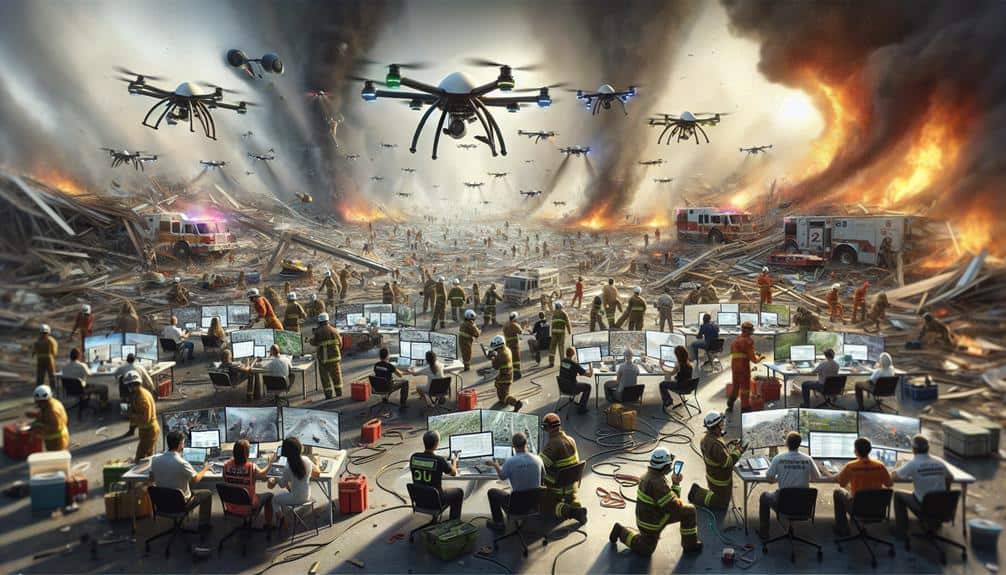
We recommend five best practices for using drones in emergency response: first, establish pre-planned deployment protocols to guarantee swift deployment. Second, utilize real-time data collection to enhance situational awareness and agile decision-making. Third, strengthen communication channels to ensure smooth information flow and effective coordination. Fourth, prioritize drone safety by conducting thorough risk assessments and continuous

5 Best Practices for Drones in Emergency Response Read More »

7 Ways Storm Chasers Aid in Disaster Coordination

storm chasers aid coordination

We utilize storm chasers to enhance disaster coordination by employing real-time weather tracking with advanced meteorological instruments. They improve early warning systems by delivering timely alerts based on precise data. Storm chasers collect, analyze, and validate pivotal data that informs predictive models. They provide on-ground situation reports using geolocation technology and advocate for public safety.

7 Ways Storm Chasers Aid in Disaster Coordination Read More »

Achieving Optimal Safety and Efficiency in Emergency Response

optimizing emergency response protocol

We achieve peak safety and efficiency in emergency response by leveraging storm dynamics for accurate tracking and timely actions. Rigorous training guarantees our teams are skilled and ready, while advanced equipment and technology like drones and portable medical devices enhance operational capabilities. Effective real-time communication enables swift, coordinated efforts, and robust risk assessment protocols prioritize

Achieving Optimal Safety and Efficiency in Emergency Response Read More »

Collaborating With Meteorologists for Timely Storm Warnings

weather forecasting partnership success

We prioritize collaborating with meteorologists to guarantee timely storm warnings, leveraging advanced technology like satellite imagery and computer models. By establishing clear communication protocols and sharing real-time data, we enhance forecast accuracy and guarantee precise updates. Regular briefing sessions keep all stakeholders informed and ready to act. Our thorough understanding of weather patterns and utilization

Collaborating With Meteorologists for Timely Storm Warnings Read More »

Coordinating Shelter Placement for Displaced Storm Survivors

shelter placement for survivors

When coordinating shelter placement for displaced storm survivors, we swiftly evaluate immediate needs and identify available shelter locations. Partnering closely with local authorities, we guarantee safe, timely placements and effective resource distribution. Our efforts include mobilizing community volunteers, streamlining transportation logistics for essentials, and adhering to strict shelter safety standards. Clear communication keeps survivors informed

Coordinating Shelter Placement for Displaced Storm Survivors Read More »

Coordinating With First Responders in Emergency Situations: a Guide

collaborating with first responders

In emergency situations, coordinating with first responders effectively depends on strong communication channels and clear protocols. We need to ensure our communication systems are robust and regularly tested, utilizing multiple channels to avoid single points of failure. Familiarizing ourselves with emergency protocols and practicing them regularly assures swift, organized responses. Sharing real-time data, like live

Coordinating With First Responders in Emergency Situations: a Guide Read More »

Effective Coordination Strategies for Extreme Weather Events

extreme weather event coordination

We've devised successful coordination strategies for extreme weather events by concentrating on robust communication protocols and real-time data sharing. Utilizing advanced sensors and cloud-based systems, we guarantee smooth information flow and agile decision-making. Prioritizing resource management and pre-positioning teams in hotspots reduces response times noticeably. Proactively planning evacuation routes and involving communities through regular drills

Effective Coordination Strategies for Extreme Weather Events Read More »

Effective Strategies for Coordinating Medical Assistance During Emergencies

medical assistance coordination strategies

During emergencies, we need to assess the situation swiftly and accurately with triage protocols to prioritize care. Clear, direct communication among teams is essential, using standardized terminology. Efficient resource allocation, guided by triage criteria, guarantees patient needs are met. Regular drills and training improve our coordination and decision-making skills. Post-emergency reviews help us analyze our

Effective Strategies for Coordinating Medical Assistance During Emergencies Read More »

Efficient Storm Chasing Coordination: Top 5 Tips

storm chasing coordination strategies

Efficient storm chasing coordination requires us to set up clear communication channels to share real-time updates, utilize advanced weather technology for precise tracking, and implement strict safety protocols to protect our team. We must also coordinate with local authorities to gain situational insights and optimize team mobility and equipment for seamless operations. By focusing on

Efficient Storm Chasing Coordination: Top 5 Tips Read More »

Enhancing Emergency Coordination Through Community Involvement

strengthening community ties in emergencies

We strengthen emergency coordination by actively involving our community in preparedness and response efforts. By fostering local partnerships and transparent communication, we make sure everyone is engaged and informed. Training community volunteers with essential skills through hands-on simulations builds a well-coordinated response network. Efficient communication channels that leverage social media and mobile apps enable real-time

Enhancing Emergency Coordination Through Community Involvement Read More »

Improving Communication for Emergency Response: 7 Tips

enhancing emergency response communication

To improve our emergency response communication, we must establish clear protocols and roles. Using dependable technology, like emergency alerts and mobile apps, is vital. Regular drills and realistic training scenarios help make procedures second nature. Standardized language guarantees everyone's on the same page, reducing misunderstandings. Interagency collaboration with unified systems promotes coordinated efforts. Real-time data

Improving Communication for Emergency Response: 7 Tips Read More »

Leveraging Social Media for Emergency Response Coordination

social media for emergencies

We can utilize social media for emergency response by using real-time data to map disasters and track progress. Platforms like Twitter help us recruit volunteers and broadcast vital information instantly. With 75% of the public using social media to check on loved ones, community engagement and empowerment are essential. Our response times improve by 30%

Leveraging Social Media for Emergency Response Coordination Read More »
Mastering Emergency Coordination for Storm Chasers: A Guide

storm chasing coordination manual

Mastering emergency coordination for storm chasers involves integrating high-tech tools and developing robust protocols. We prioritize recruiting and training highly skilled individuals, ensuring each team member has clearly defined roles. Real-time data analysis and communication are crucial, relying on Doppler radar, satellite imagery, and weather models to track storms precisely. Regular drills simulate emergency scenarios,

Mastering Emergency Coordination for Storm Chasers: A Guide Read More »

Optimizing Resources for Efficient Emergency Response Coordination

resource management for emergencies

We can optimize resources for efficient emergency response by tailoring our needs to specific situations and making sure essential materials are readily available. We should streamline communication with instant messaging and video conferencing tools, enabling rapid information sharing and seamless collaboration. Utilizing real-time data from various technologies helps us make quick, informed decisions. Regular training

Optimizing Resources for Efficient Emergency Response Coordination Read More »

Optimizing Search and Rescue Operations in Emergencies

enhancing rescue missions efficiency

We optimize search and rescue operations by integrating advanced technology, effective communication, and strategic resource allocation. Utilizing drone surveillance, GPS tracking, and thermal imaging enhances our situational awareness. We guarantee seamless real-time updates through radios and satellite phones. Predictive analytics help us deploy resources where they are most needed, while simulation exercises and cross-disciplinary drills

Optimizing Search and Rescue Operations in Emergencies Read More »

Overcoming Hurdles in Emergency Response Coordination

improving emergency response coordination

We must address the main obstacles in emergency response coordination with a strategic approach. By standardizing communication procedures and leveraging real-time technology, we can guarantee efficient information sharing. Strategically allocating and cross-training personnel boosts our flexibility, while real-time tracking optimizes resource deployment. Using advanced analytics and cloud-based solutions solves data challenges. Effective volunteer recruitment and

Overcoming Hurdles in Emergency Response Coordination Read More »
Real-time Storm Chasing Coordination: A How-to Guide

storm chasing coordination guide

In our guide on real-time storm chasing coordination, we'll establish robust communication channels using high-capacity satellites and secure radio frequencies, ensuring uninterrupted team coordination. We'll integrate GPS tracking apps and satellite phones for pinpoint location monitoring and real-time data updates. Our roles include lead chasers and data analysts leveraging ground-based weather stations and radar interpretation

Real-time Storm Chasing Coordination: A How-to Guide Read More »

The Influence of Climate Change on Emergency Response Coordination

climate change impacts response

We can't overlook that climate change is significantly impacting how we coordinate emergency response efforts. With the frequency of severe storms more than doubling in the past two decades, our strategies must evolve. We need resilient communication systems to guarantee seamless coordination. Real-time data integration, AI, and interoperable platforms are key for efficient resource allocation.

The Influence of Climate Change on Emergency Response Coordination Read More »

Top 5 Benefits of Teamwork in Emergency Response

benefits of teamwork in emergencies

In emergency response, teamwork's key benefits include enhanced situational awareness, improved resource allocation, faster decision making, increased safety measures, and effective communication channels. We collectively gather and analyze critical information rapidly, ensuring no single person is overwhelmed. Our coordinated approach maximizes resource use, adapting swiftly to evolving circumstances. By leveraging trust and mutual respect, we

Top 5 Benefits of Teamwork in Emergency Response Read More »

Top Storm Chasers Emergency Response Coordination Strategies

storm chasers and coordination

We've improved our emergency response coordination strategies by utilizing real-time communication tools such as satellite phones and mobile apps, guaranteeing immediate emergency alerts and flexible planning. Our integration of radar systems, satellite imagery, and sensors offers detailed models for proactive risk reduction. Safety procedures concentrate on GPS tracking, precise evacuation plans, and thorough equipment upkeep.

Top Storm Chasers Emergency Response Coordination Strategies Read More »

Top Tips for Storm Chasers in Emergency Response Coordination

storm chasers coordination tips

As storm chasers, we've got to get emergency response coordination accurate to stay safe and effective. First, establish solid communication networks using satellite phones and dependable radios. We also need to leverage real-time data from weather stations and satellites, adjusting our strategies as necessary. Coordination with local authorities is vital; syncing our efforts guarantees well-informed

Top Tips for Storm Chasers in Emergency Response Coordination Read More »
What Are the Coordination Challenges for Rural Storm Chasers?

rural storm chaser coordination

As rural storm chasers, we grapple with coordination challenges due to limited communication networks, inadequate road infrastructure, and scarce specialized resources. Reliable real-time data sharing is compromised by poor signal strength, impacting GPS tracking and decision-making. Sparse sensor networks and insufficient Doppler radar coverage hinder accurate weather forecasting. Geographic isolation further complicates team coordination and

What Are the Coordination Challenges for Rural Storm Chasers? Read More »
What Role Do Local Authorities Play in Emergencies?

local authorities manage emergencies

Local authorities play a vital role in emergencies. We prepare through well-established plans, community training, and regular drills. Effective communication, including emergency alerts and social media updates, guarantees timely information. We allocate resources swiftly, manage public safety, and coordinate with agencies like the Red Cross and FEMA. By engaging communities and maintaining robust communication channels,

What Role Do Local Authorities Play in Emergencies? Read More »
What Role Does Data Analytics Play in Emergency Coordination?

data analytics in emergency

We leverage data analytics to greatly enhance emergency coordination. By predicting storm patterns using big data and machine learning, we create precise models to inform response strategies. We guarantee best resource allocation by pinpointing urgent needs and deploying supplies efficiently. Real-time communication is strengthened through data visualization tools, transforming data into intuitive formats. Robust risk

What Role Does Data Analytics Play in Emergency Coordination? Read More »

What Strategies Work Best for Coordinating Emergency Volunteers?

effective coordination of emergency volunteers

To coordinate emergency volunteers effectively, we should utilize multiple communication platforms for swift alerts and clear role assignments with detailed descriptions. Regular training, including simulations, guarantees everyone is prepared. Leveraging technology for automating scheduling and real-time communication is essential. During an emergency, strategic volunteer deployment and prioritizing tasks based on immediate needs maximize impact. Continuous

What Strategies Work Best for Coordinating Emergency Volunteers? Read More »

Why Is Coordination Crucial Between Storm Chasing Teams?

storm chasing requires teamwork

In storm chasing, coordinating between teams is vital because it enhances our safety, boosts data accuracy, and optimizes resource allocation. We use advanced communication systems to share real-time data, ensuring everyone is informed and can make strategic decisions quickly. By synchronizing our efforts, we prevent overlapping coverage and deploy equipment effectively. Unified emergency protocols and

Why Is Coordination Crucial Between Storm Chasing Teams? Read More »

Scroll to Top