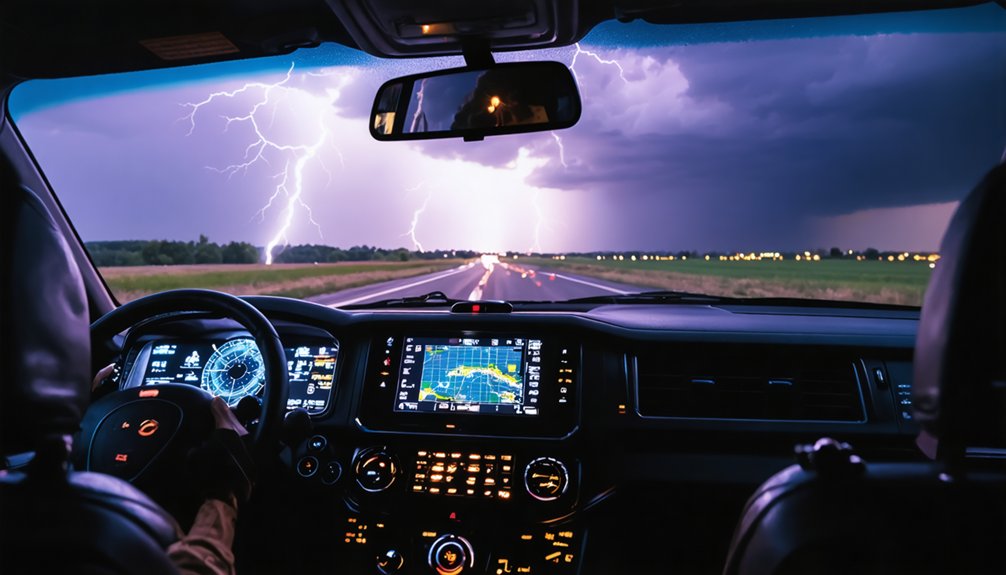
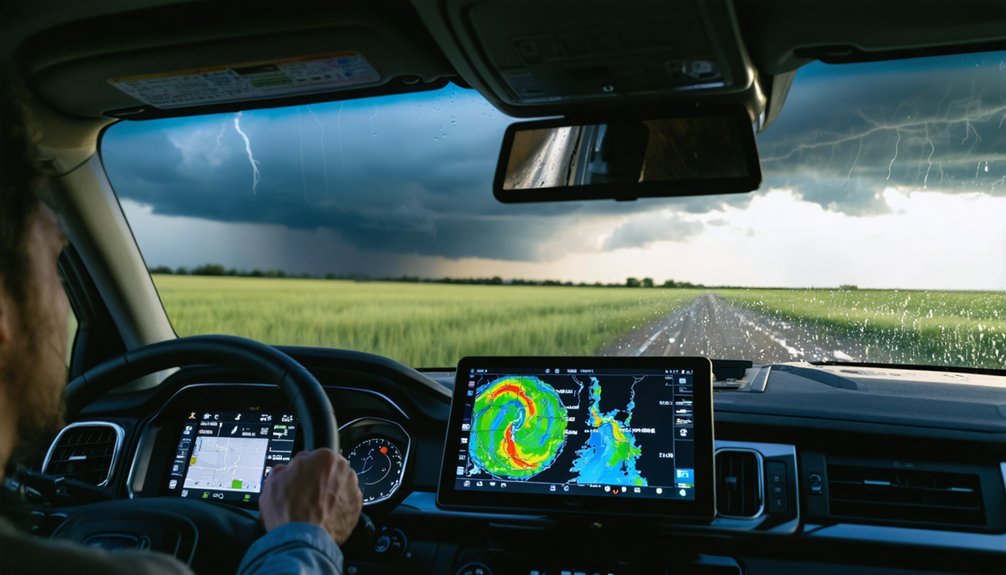
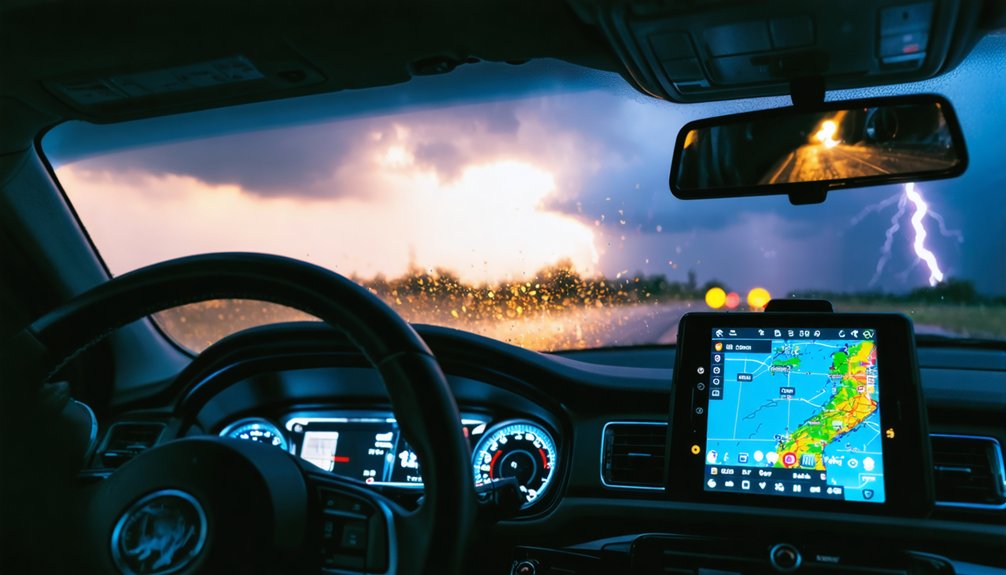
Doppler radar advancements are reshaping how you survive in the field. NEXRAD’s dual-polarization upgrades let you identify airborne debris before you see a tornado, while phased array systems deliver full atmospheric scans in under 60 seconds. AI-integrated models extend your predictive window up to two hours, replacing guesswork with quantifiable risk margins. If you’re operating where tornadoes intensify in under 90 seconds, the tools and data ahead could redefine your operational edge.
Key Takeaways
- NEXRAD’s WSR-88D provides real-time rotational data, helping storm chasers identify tornado development before dangerous conditions escalate.
- Phased array radar scans the atmosphere in under 60 seconds, delivering rapid updates on wind shear and mesovortex intensification.
- Dual-polarization radar detects airborne debris signatures in real time, confirming tornado presence before visual confirmation is possible.
- AI-integrated radar models extend tornado prediction windows up to two hours, giving storm chasers critical operational planning advantages.
- Mobile DOW units capture low-altitude phenomena at 75 m resolution, filling dangerous coverage gaps left by standard NEXRAD systems.
Doppler Radar’s Real Role in Keeping Storm Chasers Alive
When storm chasers enter the field, Doppler radar systems serve as their primary line of defense against rapidly evolving severe weather.
You’re relying on NEXRAD’s WSR-88D to deliver real-time rotational data, tracking velocity couplets that signal tornado development before it’s visible. That’s storm chaser safety operating at its most technical level.
Radar technology now integrates dual-polarization capabilities, distinguishing debris signatures from precipitation, giving you precise situational awareness even during nighttime operations.
Phased array systems scan the atmosphere in under one minute, compared to NEXRAD’s 4-6 minute cycle, compressing your decision window without compressing your options.
Machine learning layers mesovortex detection onto radar echoes, extending your predictive advantage up to two hours.
You’re not guessing—you’re operating on verifiable, high-resolution data that keeps you mobile and informed.
Radar Tools Storm Chasers Actually Use in the Field
Out in the field, you’re operating with a specific radar toolkit built for speed, resolution, and survivability.
Storm tracking demands tools that deliver radar accuracy without delay or compromise.
Storm tracking is unforgiving. The tools you deploy must deliver precision, speed, and zero tolerance for error.
Here’s what you’re actually deploying:
- DOW units — 75 m resolution versus 250 m traditional, capturing low-altitude phenomena NEXRAD misses
- Phased Array Radar — full atmospheric scans under one minute, critical when storms evolve faster than standard cycles
- Dual-polarization radar — distinguishes debris signatures, rain, and hail in real time
- Mobile PAR systems — fused data streams extending tornado lead times to 30 minutes
- AI-integrated radar outputs — mesovortex detection and velocity couplet layering for rural tornado emergencies
Each tool eliminates blind spots, giving you actionable intelligence before conditions turn lethal.
What Dual-Pol Debris Signatures Tell Chasers Before a Tornado Hits
Dual-polarization radar doesn’t just confirm a tornado’s presence — it tells you what’s already airborne before you see rotation tighten on your screen.
When debris detection triggers a tornadic debris signature, you’re reading real lofted material — wood, insulation, vegetation — not precipitation artifacts.
Correlation coefficient values drop below 0.80, while reflectivity spikes and differential reflectivity collapses toward zero. That combination gives you ground truth faster than visual confirmation ever could.
For tornado forecasting, this data compresses your decision window into seconds, not minutes. You can reposition before debris fields expand outward.
Dual-pol upgrades completed between 2012 and 2015 made this capability standard across National Weather Service radars, meaning you’re never operating blind when a confirmed tornado is already consuming structure.
How Phased Array Radar Gives Storm Chasers Faster Escape Windows
Phased array radar compresses your situational awareness window in ways NEXRAD simply can’t match. Rapid scanning delivers full atmospheric updates in under 60 seconds versus NEXRAD’s 4–6 minutes, giving you actionable data before a tornado reorganizes.
Key advantages for storm detection and planning escape routes:
- Captures sub-minute rotational velocity changes, flagging intensification cycles early
- Resolves mesovortex positioning at higher spatial accuracy than legacy systems
- Updates wind shear gradients faster, letting you recalculate escape routes in real time
- Reduces warning lead-time gaps where NEXRAD leaves dangerous blind spots
- Supports mobile deployments like VORTEX2, pushing localized data directly to field teams
That speed differential isn’t academic. When a wedge tornado accelerates unexpectedly, 4 saved minutes translates directly into miles between you and the circulation.
How AI-Enhanced Radar Extends the Warning Window for Field Teams
Faster scans buy you time, but AI-enhanced radar stretches that window further by turning raw data into predictive intelligence. AI algorithms extrapolate radar echoes up to two hours ahead, identifying mesovortices before full tornado development occurs. That translates directly into actionable exit decisions for your field team.
Through radar integration, TorNet-trained models layer velocity couplets with reflectivity hooks, sharpening warning accuracy across rural terrain where traditional thresholds fail.
TorNet-trained models sharpen warning accuracy where traditional radar thresholds fail rural terrain most.
Ensemble runs incorporating real-time radar inputs generate probability cones accurate to within 10 knots, giving you quantifiable risk margins rather than guesswork.
Storm prediction no longer depends solely on what’s happening now—it accounts for what’s statistically likely within your deployment window.
That 30-minute extended lead time isn’t theoretical; it’s your operational advantage in the field.
Frequently Asked Questions
How Does Nexrad’s Hurricane Track Accuracy Protect Chasers Near Landfall Zones?
NEXRAD’s high-resolution data cuts 72-hour hurricane forecasting errors to under 50 miles, so you’ll accurately predict landfall impacts, letting you position yourself safely outside dangerous surge zones before the storm arrives.
Can DOW Radars Detect Dangerous Inflow Boundaries Beneath Heavy Rain Shields?
Like a scalpel cutting through fog, DOW radars’ 75 m resolution empowers you to achieve precise inflow detection beneath heavy rain shields, revealing dangerous low-level boundaries traditional systems miss, giving you critical freedom to reposition safely.
How Do Nsf-Funded Portable Radars Improve Chaser Safety During Active Tornado Research?
NSF-funded portable S-band dual-polarization radar technology sharpens your storm prediction capabilities, delivering high-resolution precipitation data and real-time storm dynamics. You’ll detect dangerous rotation earlier, extending warning lead times and keeping you safer during active tornado research operations.
What Resolution Differences Between DOW and NEXRAD Matter Most for Chaser Positioning?
DOW’s 75 m resolution is your compass to freedom—it sharpens chaser strategies where NEXRAD’s 250 m radar limitations blur small-scale threats. This resolution impact transforms data interpretation, letting you position safely within tornado inflow zones.
How Does Tornet’s AI Dataset Help Predict Tornado Formation Timing for Field Teams?
TorNet’s AI datasets sharpen tornado prediction by revealing formation timing and causes, so you’re analyzing real-time patterns faster. You’ll leverage machine learning to extrapolate radar echoes two hours ahead, giving field teams critical deployment windows.
References
- https://wickedwxlive.com/chasing-the-future-how-advancing-weather-technology-is-changing-storm-tracking/
- https://www.natureworldnews.com/articles/72810/20260326/how-storm-tracking-radar-powers-real-time-hurricane-prediction-weather-forecasting.htm
- https://en.wikipedia.org/wiki/Doppler_on_Wheels
- https://www.nsf.gov/impacts/doppler
- https://www.foxweather.com/lifestyle/noaa-budget-next-generation-par-weather-radar-products
- https://inside.nssl.noaa.gov/nsslnews/2024/11/a-clear-vision-phased-array-radar-innovating-for-the-future/
- https://nps.edu/-/nps-tornado-chasers-use-advanced-radar-to-improve-forecasting
- https://www.weather.gov/mqt/fitz_remote
- https://news.mit.edu/2024/tornet-ai-dataset-carves-new-paths-tornado-detection-0429
- https://haagglobal.com/articles/new-blog-footer/