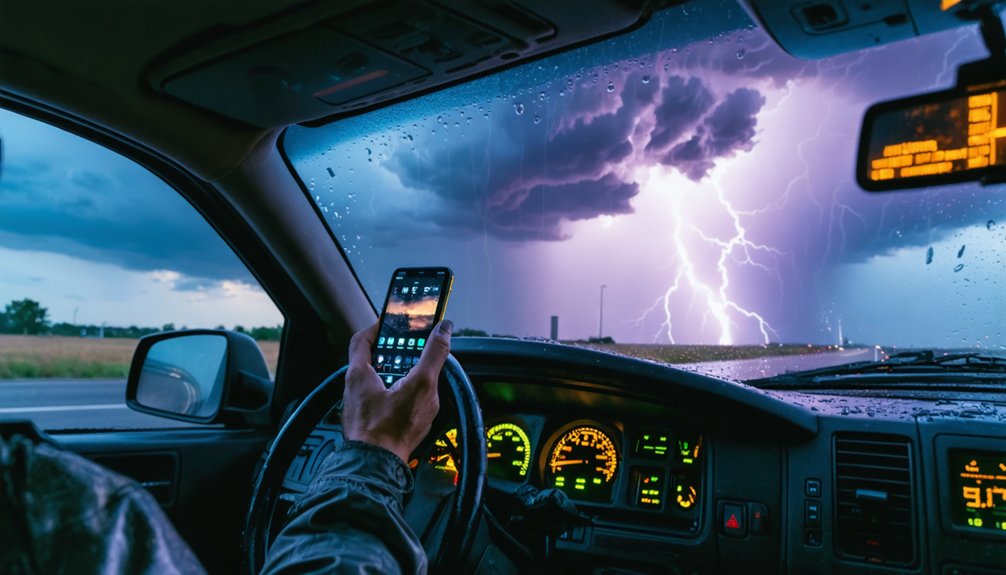
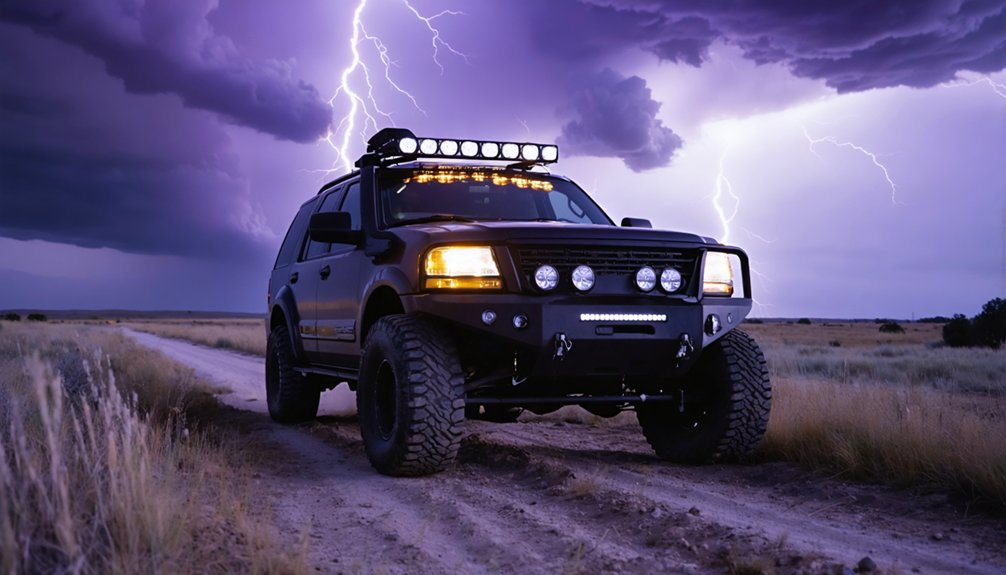
Your storm chasing truck’s emergency kit must cover seven critical categories: storm-specific gear, first aid supplies, vehicle repair tools, communication equipment, navigation systems, lighting gear, and survival essentials like food, water, and shelter. You’ll need everything from hail rulers and recovery straps to tactical flashlights and two-way radios. Pack smart, audit monthly, and verify all equipment before every deployment. Each category contains specific must-haves that could mean the difference between a successful chase and a dangerous situation.
Key Takeaways
- Storm chasers need hail rulers, recovery straps, inverters, and electrical tools to document and manage field-specific operational challenges effectively.
- A thorough first aid kit should include bandages, antiseptics, pain relievers, splints, prescription medications, and completed medical contact forms.
- Vehicle repair tools like jumper cables, tire irons, bottle jacks, and multi-tools ensure trucks remain operational during unexpected breakdowns.
- Communication gear, including two-way radios, GPS systems, and cell boosters, maintains connectivity and navigation accuracy in remote storm-chasing locations.
- Pack shelf-stable food, sealed water containers, weather-resistant clothing, and thermal shelters to sustain extended overnight storm-chasing pursuits.
Storm-Specific Essentials Every Chase Truck Needs
Storm chasing demands specialized gear that goes beyond standard emergency supplies, so your chase truck’s kit needs to include items tailored specifically to severe weather operations.
For accurate storm safety documentation, you’ll want a hail measurement ruler alongside high-quality camera equipment and a video camera charger.
Your emergency preparedness setup should include a recovery strap, tow strap, and tow rope for vehicle extraction from compromised terrain.
Power management is critical, so equip your truck with an inverter and laptop charger to keep essential devices operational in the field.
Electrical troubleshooting tools round out your kit — carry wire cutters, electrical tape, and a multimeter.
These components let you diagnose and resolve vehicle electrical issues quickly, keeping you mobile when conditions deteriorate rapidly.
First Aid Kits Built for Storm Chasing Conditions
While your truck’s specialized gear keeps you operational through severe weather, your first aid kit keeps you alive when things go wrong. Storm conditions demand a kit that’s stocked beyond basic supplies.
Your first aid kit should include bandages, sterile gauze pads, antiseptics, and antibiotic ointment for wound management. Add hydrocortisone cream, pain relievers, and an instant cold pack for trauma response.
Bandages, antiseptics, and cold packs aren’t extras—they’re the essentials keeping you field-ready when storms turn dangerous.
Keep scissors, tweezers, and latex gloves accessible for precise field treatment. Don’t overlook cotton swabs and splints for injury stabilization during rapid evacuations.
Store up-to-date prescription medications and completed medical contact forms—emergency responders need that information fast.
You’re operating in unpredictable, high-risk environments. A well-built first aid kit isn’t optional equipment; it’s your last line of defense when storm chasing pushes beyond safe boundaries.
Vehicle Repair Tools for Storm Chasing Trucks
A broken-down truck in the path of a storm isn’t just an inconvenience—it’s a life-threatening situation. You need reliable vehicle repair tools organized and accessible immediately.
For tire maintenance, carry a tire iron, air pump, and bottle jack. These three items alone can get you moving when minutes matter most.
Your tool organization should follow a strict system—every tool in a designated spot. Stock jumper cables, a lithium-ion jump starter, ratchets, sockets, screwdrivers, and Allen wrenches.
Add pliers, wrenches, spare fuses, and duct tape for field repairs.
A multi-tool and Swiss army knife handle unexpected situations fast. When you’re chasing severe weather, mechanical self-sufficiency isn’t optional—it’s the difference between escaping a dangerous situation and becoming stranded inside one.
Lighting and Visibility Gear for Storm Chasing Roads
When selecting a tactical flashlight, you’ll want a high-output model like the Streamlight, backed by extra batteries, to reliably cut through storm-driven darkness.
You should deploy LED strobe warning lights, emergency flares, and reflective warning triangles to signal your position to other drivers traversing hazardous roads.
A dashcam also serves a critical dual purpose, recording both severe weather events and any road incidents that occur during your chase operations.
Tactical Flashlight Selection
Choosing the right tactical flashlight for storm chasing requires balancing durability, brightness, and reliability under extreme weather conditions. Your Streamlight tactical flashlight needs to perform when visibility drops to zero and rain’s hammering your truck.
Key tactical flashlight features to evaluate:
- Brightness output — Prioritize lumens between 500-1,000 for effective flashlight brightness comparison; higher isn’t always better in fog or heavy rain.
- Weather resistance — Select IPX7-rated waterproof models that withstand submersion, ensuring functionality during flash flooding or hail bombardment.
- Battery versatility — Choose models accepting both rechargeable and standard batteries, guaranteeing you’re never stranded without power during extended deployments.
Always store extra batteries in a waterproof container within your kit. Your flashlight’s your lifeline when storms cut power across entire regions.
Emergency Warning Signals
Storm chasers operating on active chase roads face serious collision risks from distracted or panicked drivers evacuating storm zones, so your emergency warning signals aren’t optional equipment — they’re critical safety infrastructure.
Deploy LED strobe warning lights on your roof rack for 360-degree visibility during low-light or rain-obscured conditions. These outperform traditional options through longer battery life and superior brightness.
Carry emergency flares as your backup system when electronics fail. Modern road flares burn 30-plus minutes and remain visible through heavy precipitation.
Supplement both with reflective warning triangles positioned 100–300 feet behind your vehicle during roadside stops.
Your warning lights and flares work as a layered system — each compensates for the other’s limitations. Never rely on a single signaling method when operating near active storm corridors.
Dashcam Recording Benefits
Beyond warning lights and flares, a dashcam gives you a continuous, timestamped record of road conditions, driver behavior, and storm activity during your chase. Its dashcam advantages extend beyond accountability—video documentation protects you legally and scientifically.
Consider what your footage captures:
- Hail Impact Sequences – Frame-by-frame imagery of hailstones striking your hood, revealing size, density, and storm intensity for post-chase analysis.
- Debris Field Navigation – Real-time footage of downed power lines, flooded roadways, and airborne objects you’re maneuvering around at speed.
- Storm Wall Progression – Continuous wide-angle recording of rotating cloud structures, precipitation curtains, and lightning strikes advancing toward your vehicle.
Mount your dashcam with an unobstructed windshield view, guarantee it’s hardwired to your vehicle’s power, and confirm storage capacity before every chase.
When chasing storms, you’ll need reliable communication and navigation tools to stay informed, coordinate with other chasers, and reroute around road closures.
Install a two-way radio and amateur radio with a quality antenna for dependable radio communication across varying frequencies and distances. A cell phone booster paired with a portable charger guarantees you maintain connectivity in remote areas where signals weaken.
For GPS accuracy, equip your truck with both USB GPS pucks and a dedicated GPS navigation system, giving you redundant positioning data when storm interference degrades signal quality.
Keep spare USB cables available for data transfer between devices. These layered communication and navigation systems work together, giving you the situational awareness and operational flexibility to chase safely while maintaining control over your positioning and team coordination.
Survival Supplies That Keep Storm Chasers in the Field
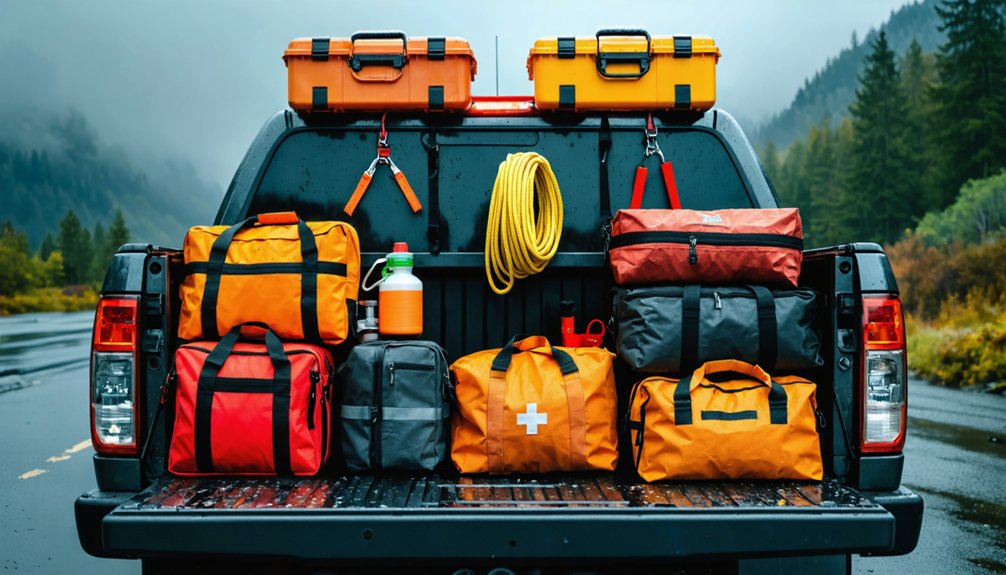
When you’re operating in remote areas far from resupply points, you’ll need to carry sufficient water and calorie-dense food to sustain extended deployments.
Pack thermal blankets and a Mylar sleeping bag alongside warm clothing, gloves, a winter hat, and extra socks to manage sudden temperature drops or overnight stays in the field.
Your rain poncho, sunscreen, and bug spray round out the shelter and clothing essentials that keep you functional regardless of what conditions you encounter.
Water And Food Essentials
Staying hydrated and fueled during long deployments separates a focused storm chaser from a compromised one. Your hydration strategies and food storage choices directly impact your decision-making in the field.
- Water Supply: Store at least one gallon per person daily in sealed, BPA-free containers. Include purification tablets as backup.
- High-Calorie Food: Pack dense, shelf-stable options — jerky, nuts, energy bars, and freeze-dried meals requiring minimal preparation or cooking equipment.
- Organized Storage: Use labeled, waterproof containers to separate water reserves from food supplies, preventing cross-contamination and enabling rapid access during active chasing.
You can’t predict when a pursuit extends into overnight territory. Preloaded supplies keep you autonomous, mobile, and sharp — exactly where you need to be when the storm demands your full attention.
Clothing And Shelter Gear
Food and water keep your body running, but exposure to the elements can shut you down just as fast. Pack weather resistant clothing — thermal underlayers, waterproof outer shells, insulated gloves, and wool socks — rated for extreme cold and wet conditions.
A winter hat cuts heat loss dramatically.
Your portable shelter options should include a Mylar sleeping bag and thermal emergency blankets. They’re lightweight, compact, and retain up to 90% of your body heat when temperatures drop unexpectedly.
Toss in a rain poncho for rapid deployment during sudden downpours.
Storm environments shift fast. Sunscreen and bug spray address prolonged field exposure beyond the storm itself.
Layer your gear strategically, and you’ll stay operational regardless of what conditions you’re working through.
How to Pack and Organize Your Storm Chasing Emergency Kit
Packing your storm chasing emergency kit correctly can mean the difference between a manageable crisis and a life-threatening one. Apply smart packing strategies and organization tips to keep critical gear accessible under pressure.
- Prioritize by urgency — Place your first aid kit, flashlight, and two-way radio at the top or in outer pockets for immediate grab-and-go access.
- Waterproof and compartmentalize — Seal electronics, spare fuses, and medical supplies in labeled ziplock bags, then group them into dedicated hard-sided cases.
- Secure heavy items low — Store bottle jacks, recovery straps, and extra fuel toward the truck bed’s base to prevent shifting during high-speed repositioning.
Conduct monthly audits, replace expired medications, and verify every item’s functionality before each deployment.
Frequently Asked Questions
How Often Should Storm Chasers Replace Expired Emergency Kit Supplies?
You should conduct freshness checks every six months and replace expired supplies immediately. Maintain a strict supply rotation schedule to guarantee your medications, antiseptics, and food remain effective when you’re chasing in remote areas.
Are There Legal Requirements for Storm Chasers Carrying Emergency Equipment?
There aren’t universal legal regulations for storm chasers, but you’ll want to prioritize emergency preparedness regardless. Check your state’s specific vehicle equipment laws, carry required safety gear, and guarantee your kit meets local compliance standards.
What Insurance Coverage Do Storm Chasers Need for Emergency Kit Equipment?
Like armor shielding a warrior, you’ll need specialized insurance types covering your emergency kit equipment. Secure adequate coverage limits through inland marine or equipment floater policies to protect your gear against storm-chasing’s unpredictable risks.
How Do Extreme Temperatures Affect Emergency Kit Supplies in Chase Trucks?
Extreme temperatures compromise your supply storage considerably. You’ll need temperature resilience strategies: store medications in insulated cases, keep batteries warm in winter, prevent heat from degrading adhesives, and regularly rotate perishables to maintain your emergency kit’s effectiveness.
You can practice kit sharing, but don’t rely on it exclusively. Make sure vehicle coordination keeps critical supplies—jumper cables, first aid, communications gear—distributed across all chase trucks so you’re never left without essentials during split deployments.
References
- https://www.benholcomb.com/storm-chasing/equipment/items-in-my-storm-chase-vehicle/
- https://www.geotab.com/blog/truck-emergency-kit/
- https://svinews.com/2024/featured/97765/things-every-storm-chaser-needs-in-their-truck/
- https://www.redcross.org/take-a-class/resources/articles/car-emergency-kit-what-to-include
- https://www.safetykitsplus.com/blogs/emergency-preparedness/car-emergency-kit-list
- https://www.weather.gov/ilx/winter_drive2_social