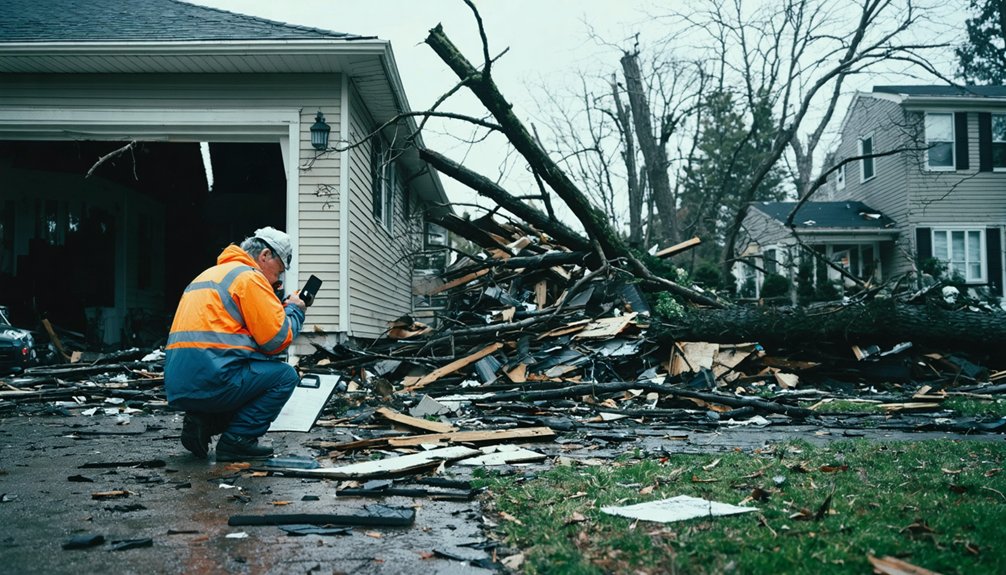
You’ll need to document storm damage immediately by photographing all affected areas from multiple angles, capturing close-ups with measuring tape for scale, and recording narrated video walkthroughs. Contact your insurance company within 24-48 hours while creating a detailed written log of the exact date, time, and weather conditions. Cross-reference your observations with official weather service reports, photograph serial numbers on damaged items, and maintain organized records of all communications. This thorough guide reveals the systematic approach that guarantees you won’t overlook critical details when negotiating your settlement.
Key Takeaways
- Contact your insurance company within 24-48 hours to initiate the claim and understand your policy’s coverage limits and deductibles.
- Photograph damage from multiple angles, including wide exterior shots with landmarks and close-ups with measuring tape for scale reference.
- Record narrated video walkthroughs under 90 seconds per area, capturing all affected rooms before moving or repairing anything.
- Document the storm’s exact date, time, and severity, cross-referencing your observations with official weather service reports and warnings.
- Maintain a detailed claim diary logging all insurance interactions, expenses, and repair timelines with consistent claim number references throughout.
Prioritizing Safety and Taking Immediate Action After a Storm
When severe weather strikes your property, your first responsibility is securing the safety of everyone in your home before attempting any damage assessment or documentation. Remain indoors until you’ve confirmed the storm has completely passed through your area. Listen to weather updates via battery-operated radio to verify conditions.
Once cleared, methodically inspect your surroundings for hazards like downed power lines, gas leaks, or structural instability. Evaluating home structure stability requires checking for foundation cracks, roof damage, and compromised walls before entering affected areas. Don’t risk entering unstable structures—wait for professional assessment.
Preparing emergency supplies beforehand guarantees you’ll have flashlights, first aid kits, and non-perishable food accessible during power outages. Document everything systematically once safety is established, photographing damage from multiple angles for insurance claims and renovation planning.
Contacting Your Insurance Company and Understanding Your Policy
Once you’ve secured your property, contact your insurance company within 24-48 hours to meet policy notification deadlines and initiate your claim.
Review your policy documents immediately to identify your deductible amount, coverage limits, replacement cost versus actual cash value terms, and any special storm-related endorsements that affect your payout.
Document every interaction with your insurer by recording the date, time, representative’s name, and key details discussed, then request written confirmation of your claim number and assigned adjuster.
Immediate Notification Requirements
After discovering storm damage to your property, you must contact your insurance company within a specific timeframe to protect your coverage rights. Most policies require notification within 48-72 hours, though immediate reporting within 24-48 hours accelerates processing and prevents coverage disputes. New York policies mandate “prompt notice,” interpreted as reasonable time given your circumstances.
Don’t let timeframe recommendations intimidate you—even minor damage warrants immediate reporting to avoid later disclaimer issues.
Contact your insurer through their claims hotline, online portal, or agent, then follow up with written confirmation as proof of notification. Document the exact date and time of your report, including representative names and reference numbers. Delays beyond initial discovery risk denial under late notice provisions. While formal claim filing allows up to one year, early notification protects your right to full coverage consideration.
Policy Coverage Review
Understanding your policy’s specific coverage terms becomes critical before filing your storm damage claim, as different perils trigger different coverage mechanisms and deductibles. Review your declarations page to identify windstorm deductibles, which may vary greatly from standard amounts in hurricane-prone regions.
Examine policy exclusions carefully—flood damage from rising water requires separate coverage, while gradual deterioration won’t be covered regardless of storm timing. Check your policy endorsements for additional protections like enhanced hail coverage or separate windstorm policies mandated in coastal states.
Confirm whether your policy covers ice dams, wind-driven rain, and fallen trees. Document your coverage limits and caps on deductible charges across multiple storm events. This review prevents claim denials and guarantees you’re documenting the right damage categories.
Document All Communications
Knowing your coverage parameters sets the foundation, but protecting your claim requires meticulous documentation of every interaction with your insurance company from first contact through final settlement.
Record your claim number, adjuster’s name, and policy details immediately when filing. Maintain detailed logs of every phone call with dates, times, and discussion points. Save all emails and text messages in dedicated folders with complete conversation threads. Document adjuster visit dates and request written permission before making repairs. Take photos and videos supporting your damage description.
Create organized documentation systems using both digital and physical storage methods. Retain all receipts for temporary repairs, hotel stays, and related expenses with dates and descriptions. Store communications in secure storage locations like cloud drives or binders for quick retrieval when challenging denials or discrepancies.
Capturing Comprehensive Photographic and Video Evidence
When storm damage strikes your property, your camera becomes the most critical tool for securing fair insurance compensation and planning accurate renovations. Start capturing quality media with 4-6 exterior angles showing landmarks and street signs for location proof.
Shoot each affected room from doorways before touching anything. Take close-ups of cracks, water stains, and structural failures with measuring tape for scale. Photograph serial numbers on damaged items from multiple angles.
For roofs, plan 6-12 shots per slope plus changeover details. Record narrated video walkthroughs under 90 seconds per area. Enable timestamp features or EXIF data for establishing verifiable timeline—your smartphone works perfectly.
Include index cards with dates in key frames. Use high-resolution settings, avoid scene alteration, and organize files by area and damage type. Document everything before cleanup begins.
Creating Detailed Written Records and Storm Reports
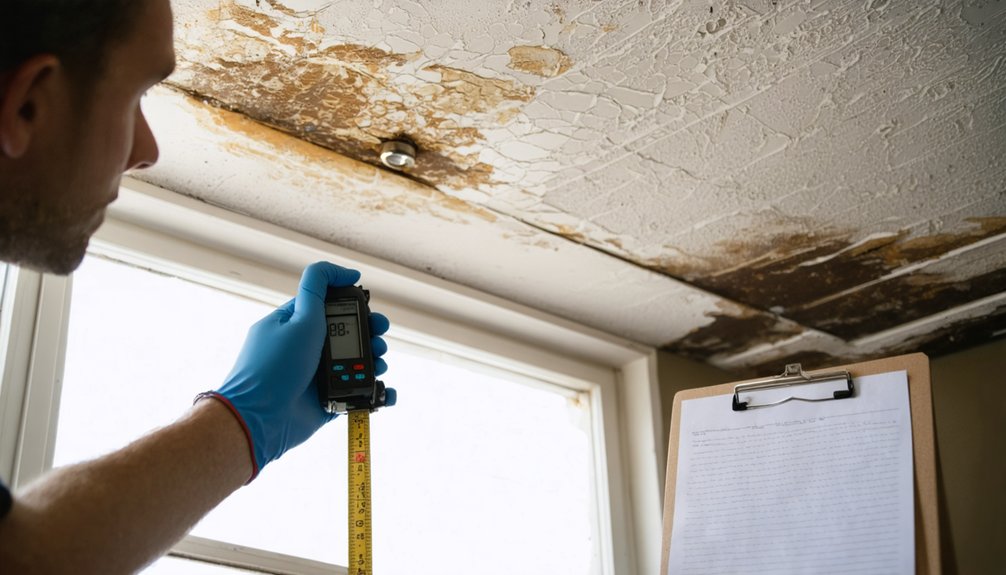
You’ll need to create a written storm event report that captures the exact date, time, and weather conditions when the damage occurred, along with a chronological account of how the storm progressed and affected your property.
Maintain a detailed claim diary that logs every interaction with your insurance company, including the names of representatives you’ve spoken with, claim numbers assigned, and specific instructions they’ve provided. These written records serve as critical evidence that corroborates your photographic documentation and establishes a clear timeline for your insurance claim.
Document Storm Event Details
As soon as the storm passes, begin documenting the event details with precision—your written record forms the foundation of your insurance claim and renovation timeline. Record the exact date, time, and duration of the storm event. Specify the storm type—whether hail, wind, flood, or ice—and note severity indicators like wind speeds or rainfall totals.
Create a detailed timeline showing when damage occurred, from initial impact through discovery. Cross-reference your observations with official weather service reports and supporting meteorological data to verify the event’s intensity and rarity. Include any alerts or warnings issued during the incident. This chronological documentation ties your property damage directly to the storm, establishing clear causation that protects your claim and accelerates your renovation planning.
Maintain Comprehensive Claim Diary
Building on your storm event timeline, you’ll need to transform that initial documentation into an ongoing, detailed claim diary that tracks every aspect of your damage assessment and recovery process. Record daily observations while details remain sharp—note new damage discoveries, contractor visits, and insurance discussions with dates, times, and participant names.
Your claim diary management system should include chronological entries that capture damage scope, context, and progression. Implement document organization strategies by maintaining separate sections for communications, expenses, and repair timelines. Reference your claim number consistently throughout all entries to prevent administrative mix-ups.
Store digital backups in cloud drives alongside physical copies. This systematic approach gives you control over your claim, ensuring no critical detail gets overlooked when negotiating your settlement.
Compiling a Complete Inventory of Damaged Property
When storm damage strikes your property, creating a systematic inventory becomes your most critical defense against insurance disputes and underpayment. You’ll need to document every damaged item with precision, capturing serial numbers, purchase dates, and values. Store this critical data in offsite backup locations—cloud services and safe deposit boxes—protecting it from further loss.
Your complete inventory process should include:
- Room-by-room photography and videography documenting all possessions with close-up shots of identification labels
- Digital cataloging systems recording bar codes, receipts, and replacement costs for each damaged item
- Insurance policy limits verification ensuring your documented losses align with coverage thresholds
Compile everything into a consolidated folder with time-stamped evidence, written descriptions, and proof of ownership. This organized approach eliminates claim delays and maximizes your settlement.
Obtaining Professional Assessments and Repair Estimates

Your documented inventory establishes what you’ve lost, but determining restoration costs requires expert evaluation. Engage trained restoration specialists who’ll execute a detailed inspection plan covering structural integrity, water intrusion, roofing, and interior systems.
They’ll conduct formal safety checks for gas leaks, downed power lines, and structural instability before proceeding. Professionals use moisture meters to detect hidden water damage in wall cavities, subfloors, and attics—critical for preventing mold growth within 24-48 hours per EPA guidelines.
Professional safety inspections identify gas leaks and structural hazards while moisture meters detect hidden water damage before mold develops within 24-48 hours.
Securing reliable contractors means obtaining multiple written estimates that specify materials, labor, and timelines. These detailed reports establish direct connections between storm events and damage, accelerating your insurance claim. Accompany adjusters during inspections to guarantee complete documentation.
This methodical approach prevents costly change orders and delivers accurate compensation for proper restoration.
Submitting Your Claim With Supporting Documentation
Successful claim resolution hinges on the quality and completeness of your submission package. You’ll need exhaustive documentation when reviewing adjuster assessment results to guarantee fair compensation. Create an ironclad submission by organizing your evidence methodically:
- Compile visual proof: Include timestamped photos from multiple angles, videos showing functionality issues, and measurements of affected areas like damaged decking or roof sections.
- Document all expenses: Attach receipts for temporary repairs, emergency fixes, hotel stays, and additional living costs incurred due to storm damage.
- Maintain communication logs: Record every interaction with your insurer through emails, texts, and call summaries with dates and key discussion points.
This thorough approach strengthens your position when disputing claim denial and provides undeniable evidence supporting your renovation needs. Keep everything in accessible digital folders for quick reference.
Maintaining Organized Records Throughout the Claims Process

Because insurance claims can stretch over weeks or months, establishing a robust organizational system from day one protects your financial interests and prevents critical details from slipping through the cracks.
You’ll need dedicated physical and digital folders separating initial documentation, adjuster correspondence, repair estimates, and expense receipts. Managing electronic records requires cloud storage with automatic syncing across devices, ensuring you’ve got access anywhere, anytime.
Securing backup files on multiple platforms—external drives, email archives, and cloud services—safeguards against data loss that could derail your claim. Label everything with dates and damage categories for quick retrieval.
Update your claim diary daily with conversations, decisions, and next steps. This systematic approach gives you control, eliminates insurer delays caused by missing information, and maximizes your settlement autonomy.
Frequently Asked Questions
Can I Start Renovations Before the Insurance Adjuster Inspects the Damage?
No, you shouldn’t start renovations before the adjuster inspects. You’ll jeopardize your claim’s integrity. Instead, follow the proper documentation process and maintain timely communication with your insurer to preserve evidence and secure your rightful settlement freedom.
How Long Do Insurance Companies Typically Take to Process Storm Damage Claims?
Claim processing timelines typically range from 2-6 weeks for standard storm damage, though you’ll find insurance policy requirements vary by state. Complex cases can extend to months, especially when documentation’s incomplete or multiple inspections are needed.
What if My Contractor’s Estimate Differs From the Insurance Adjuster’s Assessment?
You’ll need to document discrepancies with photos and itemized comparisons, then start negotiating settlement with your adjuster. If they won’t budge, you’re filing supplemental claim with contractor-verified evidence of hidden damage and actual market costs.
Are There Tax Deductions Available for Uninsured Storm Damage Losses?
Every cloud has a silver lining: You can deduct uninsured federally-declared disaster losses on your tax return, though tax credits and disaster relief grants don’t apply here. Document everything methodically—receipts, photos, estimates—for IRS substantiation of your claim.
Should I Accept the First Settlement Offer From My Insurance Company?
Don’t accept immediately. First, review policy coverage details thoroughly to understand your entitlements. Consider talking to an adjuster about their damage assessment methodology. Document everything methodically—you’re free to negotiate when you’ve compiled detailed evidence supporting higher compensation.