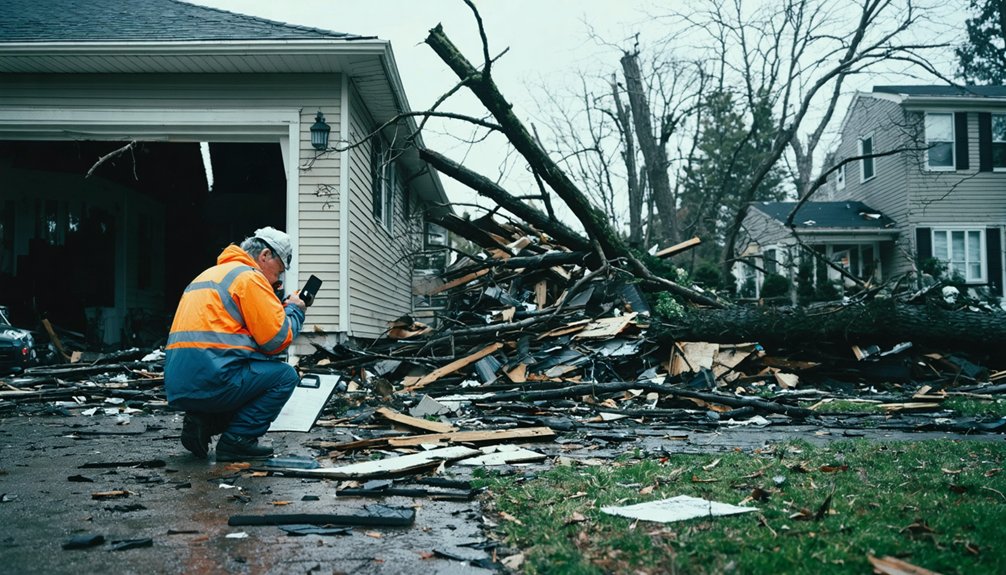
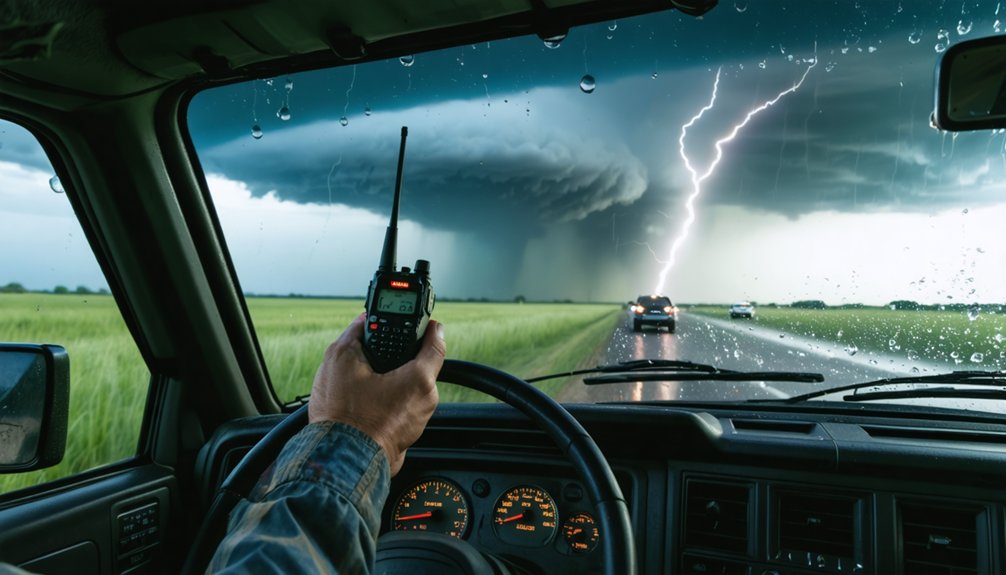
You’ll maximize storm emergency communication by establishing bidirectional social media protocols that leverage real-time intelligence streams. Monitor geo-coded posts and location-based hashtags to pinpoint damage patterns within minutes of incidents occurring. Deploy crowdsourcing frameworks to collect citizen-generated damage assessments while maintaining accredited meteorologist channels for expert guidance. Implement sentiment analysis tools to track community needs from pre-landfall warnings through aftermath recovery. Counter misinformation immediately through verified communication channels, and optimize your platform integration to transform social feeds into command centers that coordinate resources precisely where they’re needed throughout each storm phase.
Key Takeaways
- Monitor social media platforms in real-time to track storm updates, damage reports, and identify geographic patterns from millions of location-tagged posts.
- Establish bidirectional communication channels to share evacuation routes, shelter locations, and weather warnings while receiving urgent community needs.
- Crowdsource damage assessments from citizens to fill surveillance gaps and identify hardest-hit areas for faster resource allocation.
- Deploy location-based hashtags and geo-coded data streams to align emergency resources precisely where needed during active storm events.
- Engage communities throughout all storm phases: preparedness education before, crisis updates during, and recovery communication after the event.
Harnessing Real-Time Information Dissemination During Storm Events
When storms threaten communities, social media platforms transform into critical command centers that enable emergency managers to disseminate life-saving information within seconds of an event’s onset. You’ll find that tweets about incidents begin less than two minutes after events occur, allowing you to notify affected populations immediately.
Platforms like Twitter deliver weather watches and warnings while sharing geolocative insights through location-based hashtags that align resources precisely where they’re needed. Emergency agencies successfully deployed these protocols during Superstorm Sandy and blizzard Nemo, demonstrating their operational effectiveness.
You can leverage bidirectional communication to counter misinformation in real-time while streamlining multilingual outreach to diverse populations. Track metrics like retweet counts and trending hashtags to measure your message’s reach and refine protocols continuously.
Building Situational Awareness Through Social Media Monitoring
You’ll gain critical situational awareness by monitoring social media platforms for real-time storm updates, which can detect emergencies within hours and provide immediate incident notifications.
Implement crowdsourcing protocols to collect damage assessments, resource needs, and on-the-ground reports directly from affected populations through photos, videos, and location data. Analyze this aggregated data to identify patterns, prioritize response efforts, and match available resources with documented needs across your operational area.
Tracking Real-Time Storm Updates
As storm systems intensify, social media transforms into your primary situational awareness platform, delivering real-time updates that outpace traditional emergency broadcasts. You’ll access visual storm representations and social media dynamics that provide unfiltered ground truth from affected areas.
Systems like SMTAS process millions of daily messages, filtering credible information from noise while tracking geographic patterns across coastal zones.
Your real-time tracking protocol includes:
- Geo-coded data streams analyzing 4.2 million location-tagged posts during active storm periods
- Accredited meteorologist channels delivering 24/7 expert guidance without studio constraints
- Sentiment analysis modules monitoring pre-landfall warnings through aftermath recovery phases
- Topic modeling algorithms identifying dominant discussions across floods, tropical systems, and extreme weather events
- Multi-platform monitoring across Facebook, YouTube, X, Instagram capturing diverse situational intelligence
You’ll bypass mainstream delays while maintaining verification standards.
Crowdsourcing Damage and Needs
Social media platforms generate massive crowd-sourced damage intelligence that transforms your situational awareness during active storm events. Citizen led data collection fills critical surveillance gaps where traditional monitoring systems fall short—studies show it’s deployed in 75% of natural disasters.
You’ll gain access to real-time observations including flooding locations, power outages, road closures, and direct assistance requests that government agencies can’t immediately verify. Integrating geo located data from platforms like Twitter reveals precise damage patterns; Hurricane Sandy analysis of 4.2 million geo-coded tweets demonstrated strong correlations between social activity and actual economic impact.
You’ll identify hardest-hit areas faster, allocate resources more effectively, and respond to emerging needs before official assessments conclude. This decentralized intelligence network operates independently, delivering actionable ground truth when you need it most.
Analyzing Data for Insights
Real-time monitoring systems pull actionable intelligence from social media streams, transforming raw posts into strategic situational awareness. You’ll leverage trending analytics to detect 55.6% of emergencies within one day, with 12.46% identified within the first hour. Data visualization insights through heatmaps and streamgraphs reveal where resources are needed most, cutting through bureaucratic delays.
Your monitoring framework should include:
- Geotagged posts and location-based hashtags pinpointing affected areas requiring immediate resource deployment
- Communication silence indicators revealing network failures demanding emergency service intervention
- Sentiment analysis measuring regional public opinion and threat perception levels
- Hot emergency rankings displaying detected events from the past five days based on volume
- Streamgraphs tracking frequency changes in emergency types across temporal patterns
These tools enable evidence-based decisions without centralized gatekeeping, empowering rapid response when minutes matter.
Engaging Communities Before, During, and After the Storm
You’ll need to establish clear protocols for pre-storm preparedness outreach that deliver critical information when your community is most receptive to it. Your social media strategy must shift seamlessly to real-time crisis updates once the storm begins, providing two-way communication channels for urgent needs and damage reports.
Execute both phases with precise timing—research shows the public seeks information before hurricanes more than after, making your pre-event messaging window essential for maximum impact.
Pre-Storm Preparedness Outreach
Before any storm clouds gather on the horizon, you must establish your social media presence and build community trust. Your pre-event strategy should focus on preparedness education while leveraging influencers who already command audience attention. Guaranteeing multilingual strategies ensures you’ll reach diverse populations when seconds count.
Essential Pre-Storm Actions:
- Identify official accounts and promote them as verified information sources to combat misinformation before crisis hits
- Tailor platform selection to your community’s preferences—Facebook for local mobilization, Twitter for broader reach
- Assess literacy levels and social media infrastructure to understand how your population consumes information
- Create preparedness content emphasizing the 3 Rs framework: Review threats, Recognize warnings, Respond appropriately
- Build follower base during calm periods so your emergency messages reach maximum audiences instantly
Real-Time Crisis Updates
When disaster strikes, every second counts in delivering actionable information to your community. You’ll need dynamic incident monitoring through geotagged posts, photos, and videos tracking real-time conditions across affected areas. Tweets about incidents surface within two minutes of events—when volume hits 200 per minute, you’ve got a threshold alert that hospitals can act on before patients arrive.
Your optimized storm briefings should include evacuation routes, shelter locations, and weather warnings posted directly to X, Facebook, and Instagram. Don’t just broadcast—engage. Reply to questions, provide reassurances, and counter misinformation immediately. Map Twitter data for rescue coordination and resource deployment. Remember: simpler wording, actionable tips, and compelling photos get retweeted most. Your community depends on unfiltered, verified intelligence when conditions deteriorate rapidly.
Combating Misinformation and Rumors in Crisis Moments
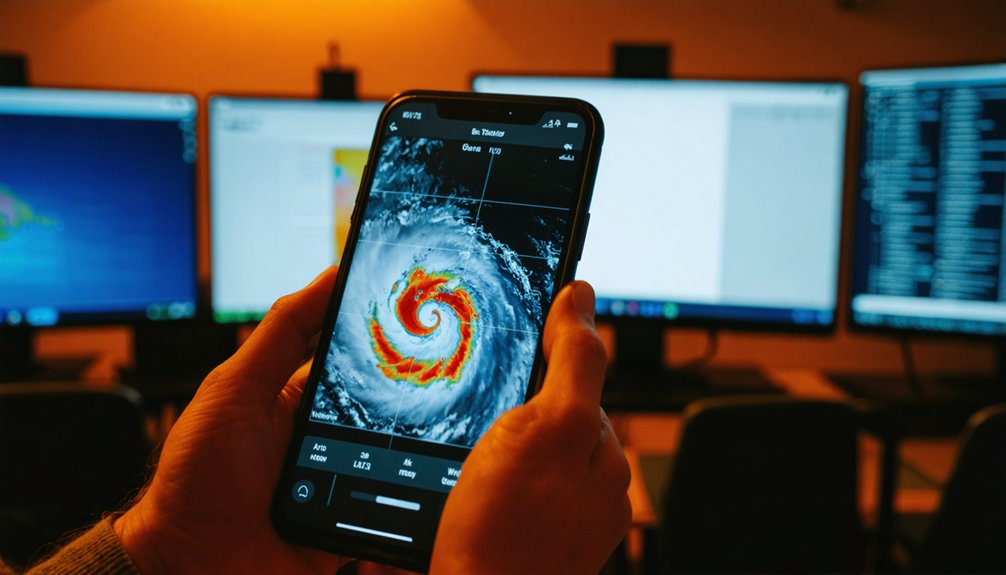
Misinformation spreads faster than verified facts during storm emergencies, and you’ll face serious consequences if you don’t address it immediately. During Hurricane Harvey and Irma, false rumors about immigration checks at shelters prevented undocumented families from evacuating, putting lives at risk. You can’t afford to let fabricated images, fake flood predictions, or bogus rescue alerts derail your response operations.
Your essential protocols for combating misinformation fatigue:
- Monitor Twitter and WhatsApp continuously—they’re primary vectors for disaster rumors
- Verify user-generated content before sharing evacuation routes or shelter information
- Partner with official emergency accounts to debunk false claims within minutes
- Deploy Community Notes features on platforms spreading fake damage reports
- Document misinformation patterns to anticipate recurring threats during future events
Speed matters when protecting your community’s freedom to access truthful, life-saving information.
Coordinating Emergency Resources and Volunteer Response
Emergency managers who tap into social media’s coordination capabilities can reduce response times by hours and save lives through precise resource matching. Machine-learning algorithms now identify and connect supply offers with demand requests across platforms like Twitter and Facebook, automating what once required labor-intensive manual searches.
You’ll track geotagged posts to pinpoint disaster-affected areas, assess damage through crowd-sourced photos and videos, and allocate resources where they’re needed most.
Virtual volunteer coordination transforms your emergency response through direct communication channels that mobilize communities instantly. Digital resource repositories built from real-time social media data—yielding hundreds of actionable posts per crisis event—provide ground truth for rescue operations.
You’ll establish peer-to-peer networks that distribute responsibilities efficiently, engage communities in preparedness activities, and monitor communication silence as indicators of network failures requiring immediate intervention.
Ensuring Accessibility and Inclusive Storm Communications
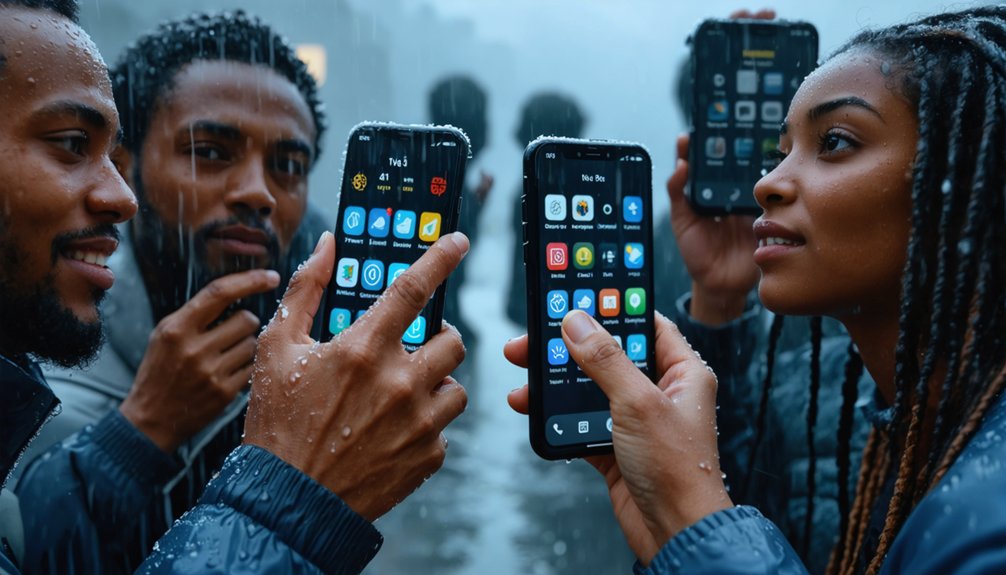
Over 5 billion people worldwide use social media platforms, yet this widespread adoption masks critical accessibility gaps that compromise storm emergency communications. You must implement multichannel accessibility protocols to reach every community member effectively.
Essential Accessibility Requirements:
- Screen reader compatibility for all emergency posts—technical standards aren’t optional when lives depend on information access
- Multiple media channels including television and direct outreach to complement digital platforms, avoiding over-reliance on single channels
- Age-targeted content strategies since younger users dominate social platforms while older populations require alternative formats
- Accessible document formats using available tools for PDFs and visual content that assistive devices can process
- Trust-building measures overcoming algorithm bias that prioritizes emotional content, potentially triggering panic rather than informed action
Your emergency protocols must accommodate 2.2 billion people with vision impairments and varied disability needs through proactive inclusive design.
Training Teams for Effective Social Media Crisis Management
When storm emergencies strike, your social media team’s preparedness determines whether critical information reaches affected populations within minutes or devolves into confusion. Assemble your core team with representatives from social media, public relations, legal, customer service, and leadership. Pre-assign specific roles and responsibilities—eliminate ambiguity before disaster hits.
Conduct crisis simulations using real-world storm scenarios. Tools like Prevency test your coordination speed and response accuracy under pressure. Run regular drills strengthening role integration across departments, ensuring technical, IT, and security personnel coordinate seamlessly with communications staff.
Establish your digital command center with shared dashboards and live alerts. Define escalation triggers—such as 3x mention spikes—and clarify decision-making authority at each crisis stage. Leadership accountability must be explicit, with designated backup personnel for every critical role ensuring uninterrupted emergency communications.
Analyzing Social Media Data to Strengthen Future Storm Response

Training your team establishes immediate response capability, but data analysis transforms each storm event into intelligence that sharpens your next emergency protocol. You’ll leverage millions of social media posts to understand how communities actually behave during disasters, enabling data driven response planning that anticipates real needs rather than guessing.
By examining tweet patterns, network interactions, and timing variations across hurricanes, you’re forecasting response needs before the next storm strikes.
Extract actionable intelligence from your social media data:
- Analyze tweet volume spikes to identify when your audience needs information most urgently
- Map user categories—citizens, media, government, NGOs—to target messages effectively
- Track adaptation discussions weeks post-event to refine long-term recovery protocols
- Measure information dissemination intensity across storm phases for strategic timing
- Monitor retweet patterns and follower influence to maximize emergency message reach
Frequently Asked Questions
What Legal Liability Exists When Sharing Storm Information on Social Media?
You’re liable for defamation if sharing unverified storm information. Protect yourself by establishing social media policies and emergency communications plans that require fact-checking before posting. You’ll avoid copyright infringement and privacy violations through proper verification protocols.
How Do Organizations Maintain Social Media Operations During Power Outages?
You’ll deploy mobile communication units with social media backup power to community centers, enabling real-time data monitoring when grids fail. Battery-powered systems and pre-established broadcast partnerships keep your channels active, ensuring you’re never silenced during critical moments.
Which Metrics Determine if Storm Social Media Communication Was Successful?
You’ll measure success through audience engagement metrics like retweet counts, reach, and response times. Social media analytics track follower growth, message amplification, and sentiment patterns. Monitor whether your posts achieved 200 tweets per minute for effective emergency alerts.
Should Organizations Create Separate Accounts Dedicated Solely to Emergency Communications?
You shouldn’t create separate emergency accounts. Instead, leverage your established main profiles for coordinated outreach efforts and targeted audience engagement. You’ll maintain existing follower trust, avoid resource duplication, and guarantee your emergency messages reach the widest possible audience instantly.
How Often Should Archived Storm Social Media Content Be Deleted?
Like seasons passing, you’ll delete archived storm content based on your jurisdiction’s social media archiving requirements and content retention policies. Legal obligations trump preferences—follow mandated schedules while balancing storage capacity. Your compliance timeline dictates action, not arbitrary choices.