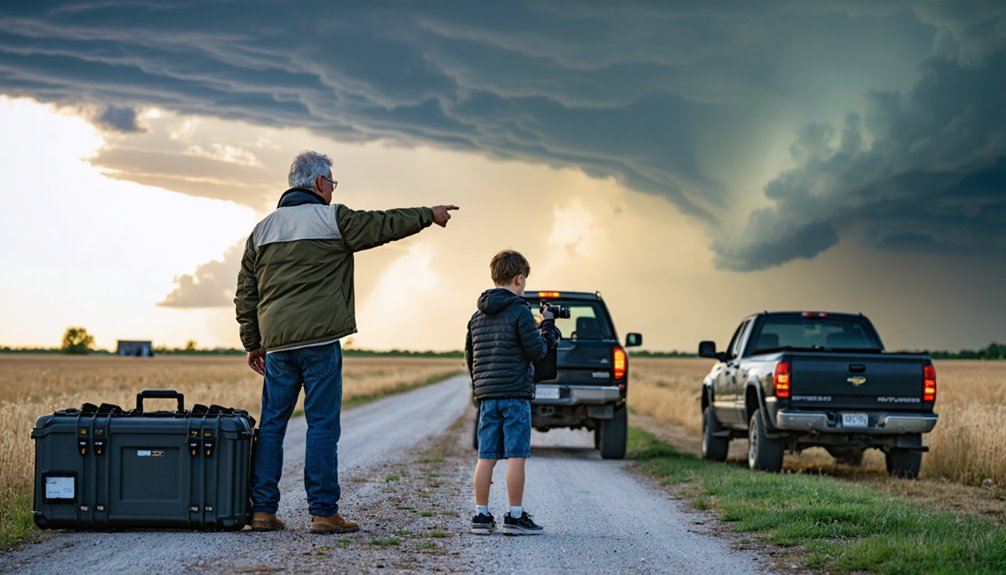
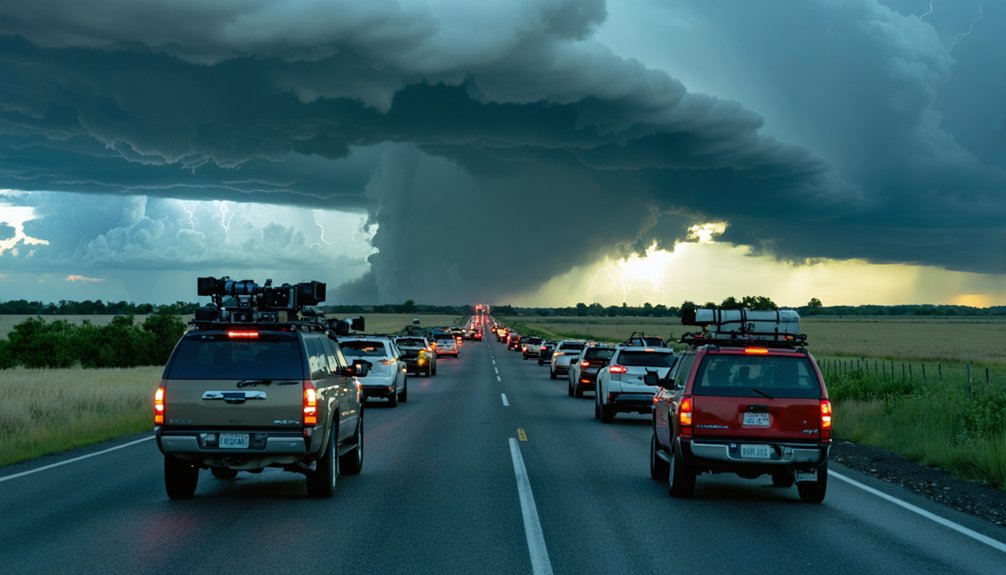
Storm chasing etiquette isn’t optional — it’s what keeps everyone safe. You must drive predictably, never block intersections, and stay off private property. Respect fellow chasers by maintaining safe distances and communicating your intentions clearly. Disregarding these rules endangers other chasers, damages community trust, and invites legal consequences. Whether you’re chasing solo or in a group, your decisions ripple outward. The full picture of responsible chasing goes much deeper than you might expect.
Key Takeaways
- Never block intersections or roads, as doing so compromises escape routes for fellow chasers and disrupts emergency response vehicles.
- Trespassing on private property risks legal consequences and damages the storm-chasing community’s reputation with landowners and locals.
- Drive predictably by signaling early, braking gradually, and maintaining safe following distances to prevent accidents among chasers.
- Avoid overreliance on radar, as focusing solely on screens causes you to miss critical live storm behavior shifts.
- Group chasing with experienced guides improves safety, situational awareness, and access to optimal storm viewing positions.
The Real Consequences of Ignoring Storm Chasing Etiquette
When storm chasers ignore established etiquette, the consequences ripple far beyond personal risk. Etiquette violations don’t just endanger you — they compromise every chaser in the field.
Blocking intersections cuts off escape routes for both chasers and locals. Trespassing on private roads triggers landowner restrictions, eliminating access for future operations. Cutting off traffic creates unpredictable movements that cause accidents in already dangerous conditions.
Storm chasing consequences extend into community trust as well. When you disrespect local residents or leave vehicles trashed, you damage the credibility of the entire chasing community. Authorities respond by restricting road access during active weather events.
You’ve chosen a pursuit demanding discipline and awareness. Violating basic conduct standards doesn’t just reflect poorly — it actively dismantles the operational freedom that responsible chasers have earned.
Road Etiquette Every Storm Chaser Must Follow
When you’re traversing roads during a chase, you must move predictably—signal early, brake gradually, and avoid sudden lane changes that can catch other chasers or local drivers off guard.
You should never block intersections or roads, as doing so compromises escape routes for both yourself and others in rapidly evolving storm conditions.
Keep safe following distances at all times, accounting for sudden stops that storm activity or changing road conditions can demand.
Predictable Road Movement Practices
Storm chasing demands that you move predictably on roads, because erratic driving creates dangerous confusion for fellow chasers, emergency responders, and local traffic alike.
Execute predictable maneuvers by signaling well in advance, maintaining consistent speeds, and avoiding sudden lane changes. You’re operating in high-pressure environments where split-second decisions compound quickly, so deliberate, smooth actions protect everyone around you.
Safe shifts between positions require you to communicate your intentions clearly through proper signaling and gradual speed adjustments.
Never brake unexpectedly or accelerate aggressively without reason. Situational awareness means you’re scanning beyond the storm itself, monitoring surrounding vehicles, intersections, and road conditions simultaneously.
Your freedom to chase effectively depends on maintaining disciplined road behavior that keeps your team mobile, your escape routes open, and your fellow chasers confident in your movements.
Avoiding Unnecessary Road Blockage
Blocking roads or intersections during a chase disrupts emergency response routes, frustrates local traffic, and signals disrespect to the communities you’re operating in.
Road safety isn’t optional — it’s a core discipline that separates professional chasers from reckless ones.
Maintain traffic awareness at every stop. Pull completely off the roadway, confirm you’re not obstructing driveways, side roads, or intersection sightlines, and never assume a shoulder is wide enough without verifying clearance.
If you’re repositioning the vehicle, do it decisively and efficiently.
Maintaining Safe Driving Distances
Road blockage and cutting off other chasers or local traffic are two sides of the same coin — both stem from poor spatial awareness and self-centered driving habits.
Maintaining safe distances means you’re preserving everyone’s freedom to maneuver — including your own. Tailgating another chaser during a rapidly evolving storm leaves zero reaction time if they brake suddenly or reroute.
Your driving awareness must extend beyond your immediate vehicle. Watch convoy spacing, monitor local traffic merging from intersections, and anticipate unpredictable civilian reactions near storm activity.
Keep predictable, steady movements — no sudden lane changes or aggressive positioning.
Safe distances aren’t just courtesy; they’re tactical. Compressed spacing eliminates escape route options precisely when you need them most.
Discipline your following distance, and you protect both your chase and everyone sharing that road.
Don’t Trespass: Private Property Rules for Storm Chasers
While the thrill of chasing severe weather can push chasers toward shortcuts, trespassing on private roads or fields is strictly off-limits. Respecting private property isn’t just ethical — it’s essential for preserving your freedom to chase.
Legal ramifications from trespassing can include fines, arrest, or permanent bans from certain regions, severely limiting your future pursuits.
You must stay on public roads and legally accessible areas, even when a storm’s position tempts you onto restricted land. Farmers and landowners have rights that supersede your chase objectives.
Violations damage the broader storm-chasing community’s reputation, potentially triggering stricter regulations affecting all chasers.
Plan your routes in advance, identify public access points, and never rationalize crossing property boundaries under pressure.
Your discipline here directly protects the community’s long-term access and operational freedom.
How to Avoid Cutting Off or Blocking Fellow Chasers
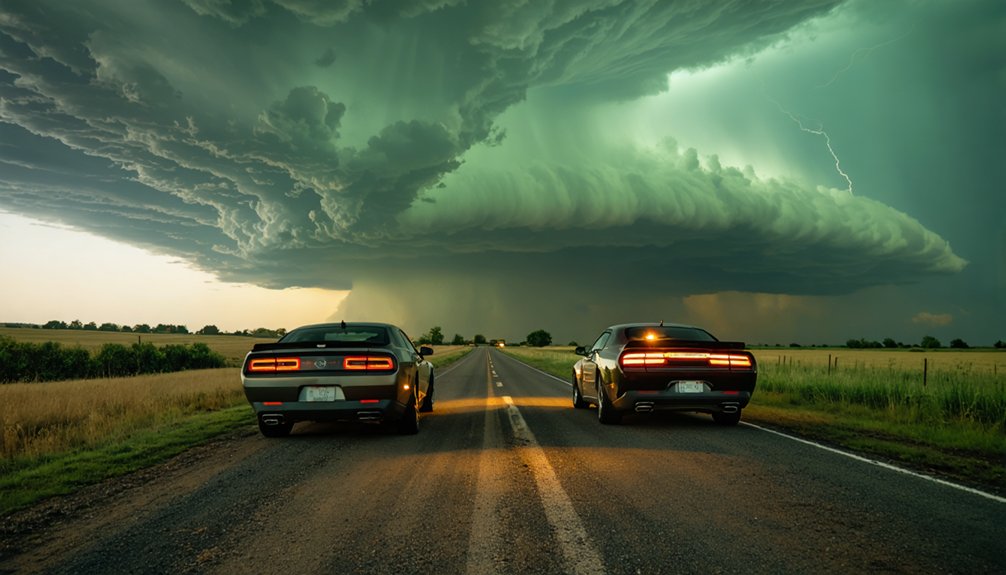
Many chasers underestimate how much sudden braking or cutting off other vehicles disrupts the coordinated flow of a chase convoy. You’re operating within a shared tactical environment, and your movements directly affect everyone’s positioning and safety margins.
Predictable driving is non-negotiable. Signal early, accelerate smoothly, and never brake unexpectedly. Road communication between vehicles keeps the group synchronized — use radios to announce lane changes, turns, or repositioning maneuvers before executing them.
Chaser cooperation also means you don’t block intersections while waiting for a decision. Pull completely off the road when stopping, and never park where you obstruct another chaser’s escape route or sightline.
Treat every vehicle around you as part of a coordinated unit. Your freedom to chase efficiently depends on everyone maintaining disciplined, respectful movement throughout the operation.
Group Etiquette Rules That Keep Every Chase Safe
When your instructor calls a stop, you follow their directions immediately and without hesitation—delayed responses create dangerous gaps in group coordination.
You treat every fellow chaser with the same professional respect you’d expect in return, keeping communication clear and conduct disciplined throughout the chase.
These two principles—deference to experienced leadership and mutual respect among chasers—form the behavioral backbone that keeps every participant safe in dynamic, high-risk conditions.
Following Instructor Directions
During a storm chase, following your instructor’s directions isn’t optional — it’s the operational backbone that keeps the entire group safe and coordinated.
Instructor communication flows fast in dynamic conditions, and hesitation costs everyone. You maintain your freedom to experience the storm by trusting the structured system that protects it.
At every stop, apply these four principles:
- Listen actively before moving or repositioning.
- Acknowledge instructions so your instructor confirms receipt.
- Execute immediately — delayed responses compress escape windows.
- Ask questions during calm moments, never mid-maneuver.
Following instructions isn’t submission — it’s tactical discipline.
The chase environment shifts rapidly, and your instructor processes variables you may not yet recognize. Respecting that expertise keeps your access to the field open, safe, and repeatable.
Respecting Fellow Chasers
Storm chasing isn’t a solo performance — even when you’re operating within a group, your decisions ripple outward and directly affect every other chaser on the road.
Chaser camaraderie isn’t optional; it’s operationally essential. Don’t cut off fellow chasers or block intersections unnecessarily — these actions compromise positioning and create dangerous cascading reactions down the convoy.
Mutual respect means treating trip members with consistent professionalism throughout every stop, repositioning, and observation window.
Be friendly and genuinely helpful when outsiders ask questions — you represent the entire chasing community. Listen actively to instructor directions rather than freelancing your own route decisions.
Your vehicle’s behavior communicates intent to everyone around you.
Stay predictable, avoid unexpected braking, and maintain situational awareness continuously.
Respect isn’t passive — it’s an active, deliberate practice you execute on every chase.
What Storm Chasers Miss When They Focus Only on Radar
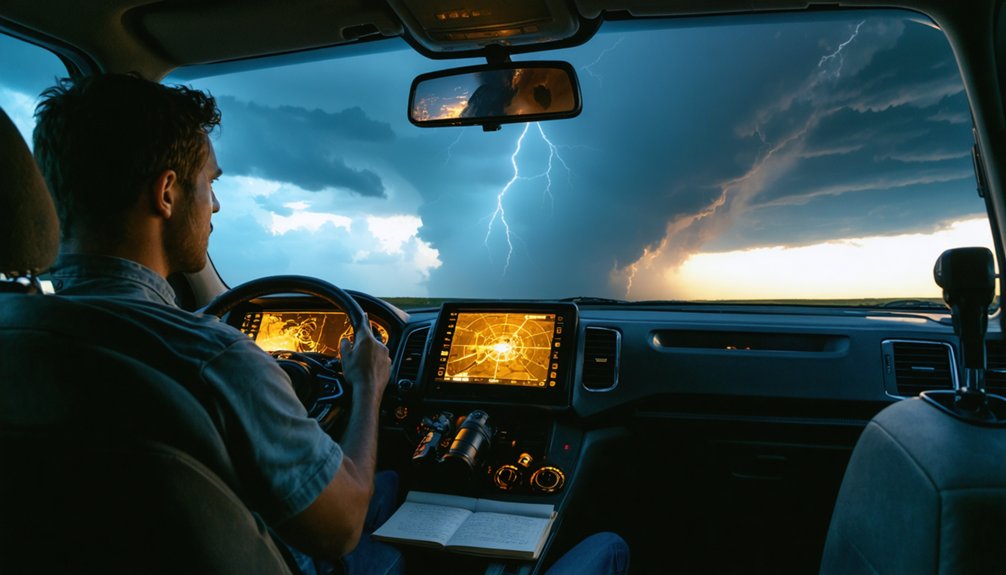
Radar fixation is one of the most dangerous habits a chaser can develop, pulling your attention away from the live storm environment unfolding around you.
Radar overreliance blinds you to critical storm behavior shifts happening in real time. When you’re locked onto your screen, you miss:
Radar overreliance costs lives — the storm doesn’t pause while you’re staring at a screen.
- Deviant storm motion indicating rapid intensification
- RFD gust fronts signaling active tornado production zones
- Notch regions developing dangerously close to your position
- Lightning exposure risks near tall trees and power lines
You’re in the field to read the atmosphere directly, not a delayed digital interpretation of it.
Broaden your awareness, scan your surroundings continuously, and treat radar as one tool among many. Your freedom to chase safely depends on staying fully present.
Beginner Storm Chasing Etiquette: Why Solo Pursuits Are Never Acceptable
Whether you’re drawn by curiosity or adrenaline, chasing a tornado alone without experience isn’t bold—it’s reckless.
Solo safety depends entirely on your ability to read storm behavior, navigate escape routes, and respond to rapidly shifting conditions—skills that take years to develop.
Organized tours exist precisely to protect your freedom to chase without dying for it. Experienced guides position you for ideal viewing while managing group dynamics that keep everyone coordinated and situationally aware.
They track RFD gust fronts, monitor deviant storm motion, and execute escape routes you wouldn’t anticipate alone.
Attempting solo pursuits without training is equivalent to performing high-risk technical operations with zero preparation.
You’re not just endangering yourself—you’re potentially creating hazards for other chasers and emergency responders working the same area.
Frequently Asked Questions
How Should Storm Chasers Behave When Locals Ask Questions During Chases?
When locals ask questions, you should engage in local engagement with respectful communication—be friendly, helpful, and patient. Don’t dismiss concerns; share knowledge confidently while maintaining chase-mode awareness, ensuring you’re never compromising safety or missing critical storm developments.
What Body Positions Minimize Lightning Strike Risk When Caught in the Open?
When caught in the open, you’ll minimize lightning safety risks by focusing on body posture: kneel, squat, or crouch low. Avoid lying prone or standing tall—stay away from trees and power poles.
How Do Chasers Identify Tornado-Producing Regions Using RFD Gust Fronts?
While it’s not obvious, you’ll identify tornado-producing regions by analyzing RFD characteristics and gust front dynamics—recognize the RFD’s curved boundary meeting the inflow tail, marking the dangerous intersection where tornado development actively occurs.
You must remove all garbage and personal belongings from shared vehicles nightly. Maintaining cleanliness etiquette and proper vehicle maintenance isn’t optional—it’s your responsibility to respect group resources and keep vans clean for everyone’s benefit.
Why Should Storm Chasers Avoid Chasing in the Dixie Alley Regions?
You should avoid Dixie Alley hazards because reduced visibility from dense forests and complex weather pattern understanding challenges make safe chasing nearly impossible. These conditions severely limit your escape routes, increasing life-threatening risks exponentially.
References
- https://www.atms.unca.edu/cgodfrey/courses/swfex/pdf/ChasingSafety.pdf
- https://weather.cod.edu/chasing/assets/documents/chaserules.pdf
- https://www.youtube.com/watch?v=nxPSFg2R8YY
- https://www.stormchasingusa.com/blog/beginners-guide-to-storm-chasing-with-organized-tours/
- https://stormchasercoaching.com/eight-rules/
- https://stormtrack.org/threads/chasing-etiquette.30244/