Storm chasing jobs span three employment tracks: government research, private sector contracting, and media broadcasting. You’ll find fewer than 200 dedicated positions on major job boards at any given time — Indeed lists 75 storm chasing roles while ZipRecruiter features 60 postings. NOAA, tour companies like Silver Lining Tours, and media outlets represent your primary hiring targets. Pairing storm chasing with meteorology or sales roles greatly improves your financial stability, and the full picture of where to find these opportunities goes much deeper.
Key Takeaways
- Indeed lists 75 storm chasing roles and ZipRecruiter features 60 postings, making both platforms strong starting points for job seekers.
- Federal agencies like NOAA and NSSL hire meteorologists for field deployment roles, requiring master’s or PhD-level credentials.
- Tour companies like Silver Lining Tours and Tempest Tours hire experienced chasers for paid, client-facing storm chasing work.
- SKYWARN certification signals field-readiness to employers and provides entry-level candidates a competitive edge without a formal degree.
- Pairing storm chasing with meteorology or sales roles improves financial stability, given seasonal limitations and inconsistent standalone income.
What Does a Storm Chaser Actually Do?
Storm chasers track and intercept severe weather systems—primarily tornadoes, supercells, and large hail events—to collect real-time atmospheric data that researchers, broadcasters, and emergency management agencies can’t obtain any other way.
You’re operating mobile instrumentation, deploying probes, and transmitting field observations during rapidly evolving conditions.
Your core responsibilities center on storm tracking through dynamic, unpredictable environments where weather patterns shift within minutes. You’ll analyze radar data, interpret mesoscale convective signatures, and position vehicles to maximize data collection while managing personal risk.
Tracking storms means reading the sky in real time—radar, instinct, and split-second decisions keeping you one step ahead.
Some roles prioritize documentation for broadcast media, while others feed directly into federal research pipelines.
You’re not passively observing—you’re generating actionable atmospheric intelligence. The work demands sharp situational awareness, technical proficiency, and decisive independent judgment in high-pressure, time-critical conditions.
Government and Research Storm Chasing Careers
If you want to do serious atmospheric field work backed by institutional resources, federal agencies and research institutions represent the highest-credential, highest-stability path in storm chasing.
Government roles within NOAA and research opportunities at the National Severe Storms Laboratory demand master’s or PhD-level credentials in meteorology, physics, or electrical engineering.
Three realities define this career track:
- No dedicated storm chaser title exists at NSSL — field deployment only occurs during special research projects.
- NOAA’s Office of Atmospheric and Oceanic Research funds positions combining lab analysis with episodic field work.
- SKYWARN certification through the National Weather Service provides entry-level credentialing via free online training at COMET/MetEd.
You’re trading schedule flexibility for institutional backing, data access, and long-term career stability.
Private Sector Storm Chasing Careers
If you’re drawn to storm chasing outside of government research, the private sector offers two primary career tracks: tour companies and media broadcasting.
Companies like Storm Chasing Adventure Tours, Cloud 9 Tours, Silver Lining Tours, and Tempest Tours actively hire experienced chasers, while outlets like The Weather Channel and AccuWeather seek field talent for live storm coverage.
Hourly rates for these roles range from $15 to $120, reflecting the high variance in experience levels, risk tolerance, and employer type across the industry.
Storm Chasing Tour Companies
For those seeking paid storm chasing work outside of government research, tour companies represent one of the most direct career pathways into the field. Organizations like Silver Lining Tours, Tempest Tours, and Cloud 9 Tours actively hire experienced chasers who combine weather forecasting skills with strong client communication abilities.
Your responsibilities typically include:
- Route planning — Using real-time atmospheric data to position guests within safe viewing distance of active tornado events.
- Storm chasing safety management — Executing rapid vehicle repositioning while maintaining protocols that protect paying clients.
- Guest instruction — Explaining meteorological conditions as events develop, translating technical data into accessible, engaging commentary.
These roles demand both scientific competency and operational decisiveness, giving you genuine autonomy in dynamic, high-stakes environments where your expertise directly determines mission success.
Media And Broadcasting Roles
Media outlets like The Weather Channel and AccuWeather represent another viable private-sector pathway, where storm chasers shift from field operatives into on-air talent, field correspondents, or technical content producers.
These organizations actively recruit professionals who combine meteorological expertise with strong media coverage instincts and broadcasting techniques.
You’ll leverage real-time data interpretation alongside camera presence, transforming raw atmospheric observations into broadcast-ready content. Salary potential reaches $90,210 annually for experienced roles, though compensation varies considerably by market size and specialization.
Your competitive edge sharpens when you demonstrate both scientific credibility and communication precision.
Unlike tour companies, media employers prioritize your ability to translate complex storm dynamics for mass audiences without sacrificing technical accuracy.
Mastering this dual competency positions you as an irreplaceable asset within weather broadcasting‘s increasingly competitive private sector landscape.
What Degree Do You Need to Chase Storms Professionally?
Whether you’re pursuing a government research role or a position with a private organization, your educational background will largely determine the doors open to you. Understanding degree requirements and educational pathways helps you plan strategically.
Your educational background will largely determine the doors open to you — plan your pathway strategically.
- Meteorology or Atmospheric Science – The National Severe Storms Laboratory requires master’s or PhD-level credentials for field data collection roles.
- Physics or Electrical Engineering – NSSL project-based positions accept these disciplines alongside meteorology, expanding your entry points.
- SKYWARN Certification – The National Weather Service offers free online training through COMET/MetEd, giving you foundational spotter credentials without a formal degree.
Government regulations currently restrict volunteer storm chasing due to liability concerns, so institutional ties through ongoing research programs remain your most direct path to legitimate field work.
Storm Chasing Certifications That Strengthen Your Hire
Certifications don’t replace degrees, but they measurably strengthen your positioning in a competitive hiring pool.
SKYWARN certification, issued through the National Weather Service, represents essential training that signals field-readiness to employers. You can complete it via COMET/MetEd online modules or attend in-person sessions, giving you flexible access regardless of location.
The certification benefits extend beyond credibility. Employers at organizations like the Storm Prediction Center and National Severe Storms Laboratory recognize certified spotters as operationally aware candidates.
For tour-based roles at companies like Tempest Tours or Silver Lining Tours, certification demonstrates situational judgment under dynamic conditions.
Pairing SKYWARN with relevant coursework in meteorology or physics creates a verifiable skill profile. Certifications don’t guarantee employment, but they quantifiably differentiate your application in a field where precision and preparedness directly determine hiring outcomes.
How Much Do Storm Chasers Get Paid?
Once your certifications and qualifications are in place, compensation becomes the next measurable variable worth analyzing.
Certifications unlock the door. Compensation determines how far inside you’re willing to walk.
Storm chasing roles span a wide salary range, giving you flexibility to target positions aligned with your financial goals.
Here’s a salary comparison across core roles:
- Hourly field storm chasers earn $15–$120/hour, depending on experience and employer.
- Atmospheric scientists average $90,210 annually, with 9.3% projected industry growth through 2024.
- Storm-related sales representatives command $100K–$130K yearly, often with competitive job benefits including commissions and travel allowances.
The market rewards specialization.
Entry-level spotters occupy the lower tier, while degreed meteorologists and high-performing sales professionals capture premium compensation.
Understanding where your skill set lands within this range positions you to negotiate effectively.
Top Employers Hiring Storm Chasers
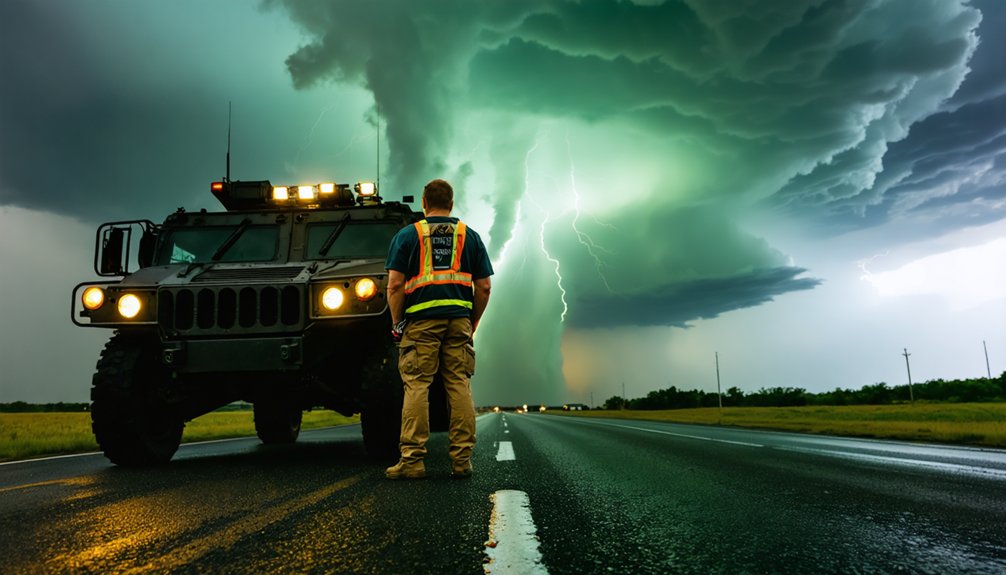
Several distinct employer categories define where storm chasing careers actually exist, and identifying them narrows your job search considerably.
Government research institutions like the National Severe Storms Laboratory, Storm Prediction Center, and NOAA’s Office of Atmospheric Research hire meteorologists and hydrologists, though storm chaser roles there require master’s or PhD credentials.
Media outlets, including The Weather Channel and AccuWeather, offer another pathway.
For independent operators, tour companies like Silver Lining Tours, Tempest Tours, and Cloud 9 Tours structure storm chasing safety protocols around paying clients, creating guide-based employment.
Storm-related contracting firms such as Apex Roofing and Agostino Utilities hire field representatives following severe weather events.
Each employer category carries different entry requirements, compensation structures, and operational freedoms, so matching your qualifications to the right sector matters.
Where to Find Storm Chasing Jobs Right Now
Finding storm chasing jobs requires knowing which platforms actually list them. The job market concentrates heavily on two sites that deliver real, actionable leads for skill development and field work.
- Indeed — Browse 75 storm chasing listings and 4,407 storm spotter roles covering field sales, repair technician, and grounds maintenance positions.
- ZipRecruiter — Access 60 storm chaser postings with 1-click apply options, spanning entry-level to senior roles across seven dedicated storm chaser listings.
- Gameday & Live Event Venues — Omaha Storm Chasers and Werner Park post seasonal employment opportunities that build transferable outdoor operational skills.
You don’t need to chase blindly. These platforms give you structured entry points into a growing industry with clear, quantifiable opportunities waiting for you right now.
Is Storm Chasing a Viable Full-Time Career?
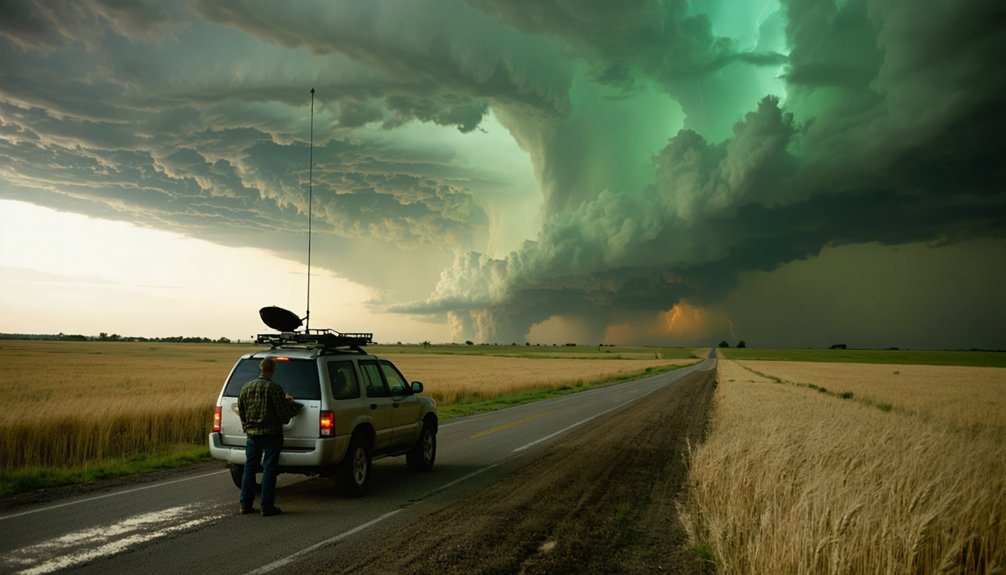
Whether storm chasing can sustain you as a full-time career depends on how broadly you define the role. Pure storm chasing sustainability is limited — seasonal storms, unpredictable patterns, and high operational costs create significant income volatility.
However, pairing field work with adjacent roles like meteorology, sales, or restoration management dramatically improves your financial stability.
Risk management becomes critical here. You’re balancing physical danger against inconsistent pay, with hourly rates ranging from $15 to $120.
Government research positions offer stability but require master’s or PhD credentials. Tour companies and media outlets provide commercial pathways, though competition is fierce.
If you’re comfortable diversifying your income streams and treating storm chasing as one component of a broader career strategy, full-time viability becomes achievable.
Frequently Asked Questions
What Insurance Coverage Do Professional Storm Chasers Typically Carry for Protection?
Here’s what you don’t know yet — liability insurance and equipment coverage are critical protections you’ll need. They shield you from costly damages, lawsuits, and gear losses while you’re actively chasing severe storms professionally.
How Do Storm Chasers Handle Mental Health Challenges From Dangerous Field Work?
You’ll tackle mental health challenges by actively employing stress management techniques and coping strategies like debriefing sessions, peer support networks, and mindfulness practices, which data shows greatly reduces psychological strain from high-risk, adrenaline-driven storm chasing field work.
Can Storm Chasers Work Internationally, and Which Countries Offer the Best Opportunities?
Vast storm-swept horizons await you globally! You can chase international opportunities across tornado-prone Argentina, cyclone-battered Australia, and monsoon-drenched Bangladesh. These best countries offer thrilling field data collection, though you’ll need meteorology credentials and research institution ties.
What Physical Fitness Requirements Exist for Professional Storm Chasing Positions?
No standardized physical fitness requirements exist for storm chasing, but you’ll need endurance training to handle long field hours. You must master safety protocols, as demanding conditions require stamina, quick decision-making, and physical resilience to pursue unrestricted storm data collection.
How Do Storm Chasers Manage Income During Off-Season or Low-Activity Periods?
Like medieval merchants diversifying trade routes, you’ll navigate freelance opportunities—field sales, repair technician roles, or restoration project management ($60K–$65K)—as seasonal strategies. You’re actively securing income streams across ZipRecruiter’s 60+ listings during storm chasing’s inevitable downtimes.
References
- https://www.onlinedegree.com/careers/life-physical-science/storm-chaser/
- https://www.indeed.com/q-storm-chasing-jobs.html
- https://www.ziprecruiter.com/Jobs/Storm-Chasers
- https://www.indeed.com/q-storm-spotter-jobs.html
- https://www.milb.com/omaha/ballpark/gameday-employment
- https://www.ziprecruiter.com/Jobs/Storm-Chaser-Job
- https://www.nssl.noaa.gov/people/jobs/
- https://www.weather.gov/btv/skywarn_join