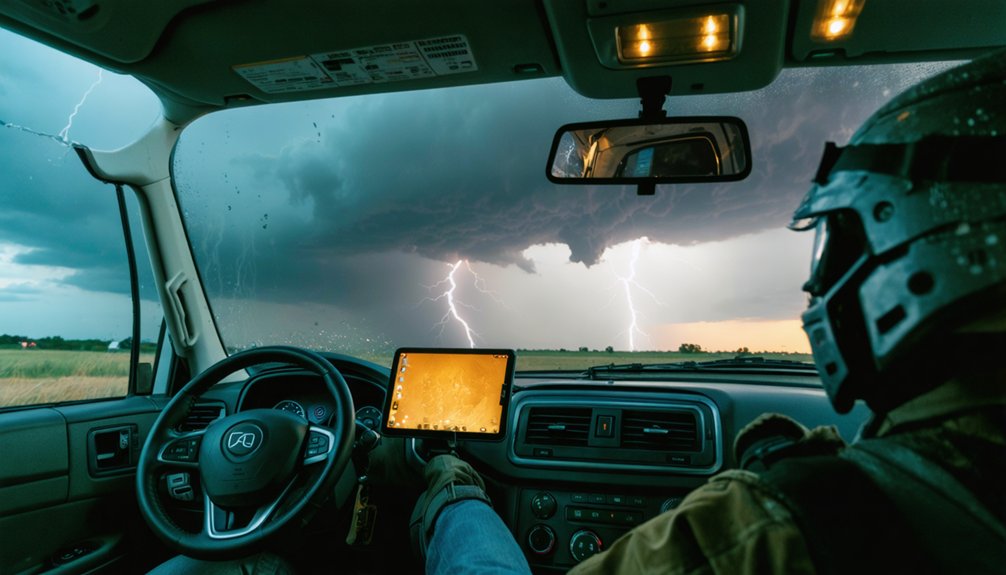
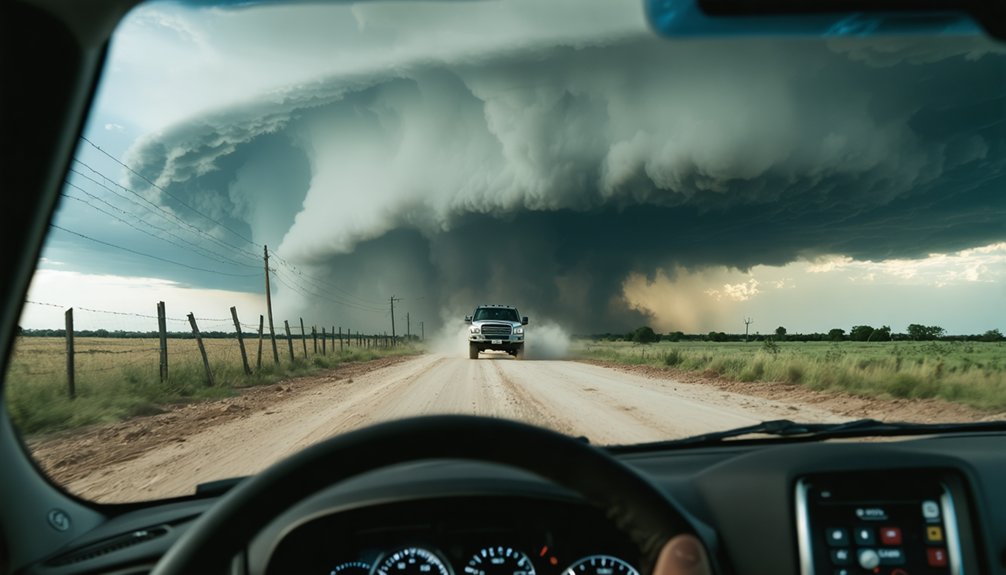
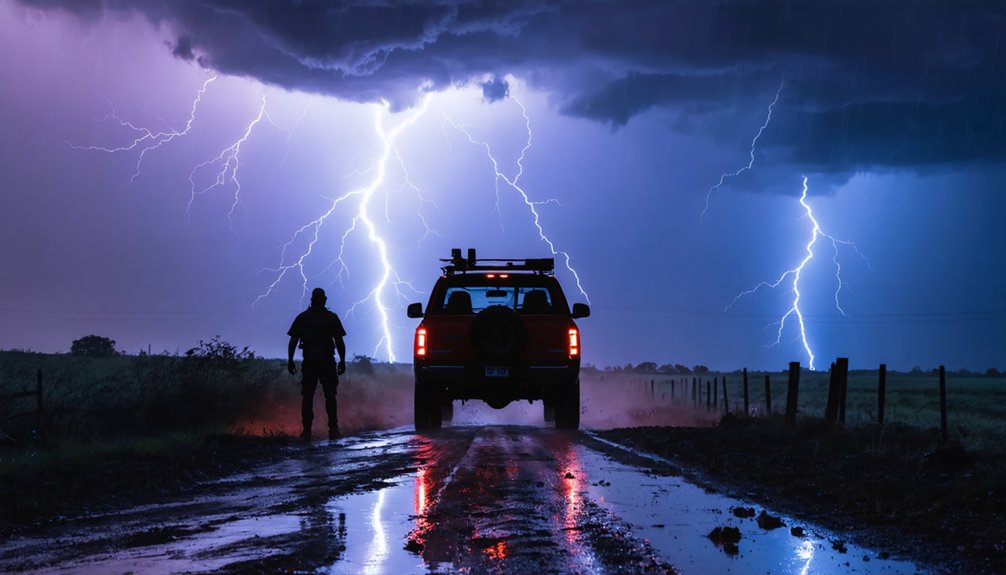
Surviving extreme temperatures as a storm chaser means treating thermal threats as your primary tactical problem before you ever position for a chase. You must layer moisture-wicking base layers, insulating fleece, and a breathable outer shell to adapt fast when conditions shift. Monitor barometric pressure every 15 minutes, track dew point changes, and never ignore wind chill or heat accumulation. Your gear, mental resilience, and atmospheric awareness are what keep you operational when temperatures turn lethal—and there’s far more to master.
Key Takeaways
- Prioritize thermal threats before chasing, as extreme heat accelerates dehydration and cold triggers hypothermia, both impairing critical decision-making in the field.
- Monitor barometric pressure every 15 minutes, as rapid drops signal dangerous cold fronts, heat domes, and sudden temperature anomalies requiring immediate action.
- Use a three-layer clothing system: moisture-wicking base, insulating fleece mid-layer, and a breathable, wind-blocking waterproof outer shell.
- Prevent frostbite by wearing insulated waterproof boots, thick wool socks, layered gloves under waterproof mitts, and a scarf shielding the nose and jaw.
- Build mental resilience before deployment using scenario rehearsals and rhythmic breathing to counter decision fatigue and sensory overload in extreme conditions.
Why Extreme Temperatures Are a Storm Chaser’s First Threat
When you’re chasing storms, extreme temperatures aren’t just uncomfortable — they’re your most immediate and persistent threat.
Before wind, lightning, or tornadoes even factor in, temperature impacts your judgment, mobility, and survival capacity. Heat accelerates dehydration and impairs cognitive function. Cold triggers hypothermia faster than most chasers anticipate, especially when combined with wind chill and wet conditions.
Your chase strategies must account for thermal threats before you deploy. Ignoring temperature variables compromises every decision you’ll make in the field — from equipment handling to emergency evacuation timing.
Unlike a tornado, which strikes in seconds, temperature degrades you gradually and silently. That makes it more dangerous, not less. Understanding this threat first puts you in control of every subsequent risk you’ll face on a chase.
Read Weather Patterns Before Temperatures Endanger Your Chase
Before you enter a chase zone, you must read atmospheric pressure gradients, dew point shifts, and wind direction changes that signal rapid temperature swings.
A sudden drop in barometric pressure combined with increasing wind speed often precedes dangerous cold fronts or intensifying heat domes that can trap you in lethal conditions.
Tracking these patterns through real-time radar, surface analysis charts, and upper-level wind data keeps you ahead of the temperature threats that kill unprepared chasers.
Recognizing Dangerous Temperature Shifts
Temperature shifts in storm environments rarely announce themselves directly—pressure drops, dew point spikes, and wind direction changes telegraph dangerous thermal alterations well before your body registers the change. Your temperature awareness must operate continuously, not reactively. Monitor barometric trends every 15 minutes during active chases; a 3-millibar drop within an hour signals rapid atmospheric restructuring that frequently accompanies dangerous thermal changes.
Dew point convergence deserves particular attention. When ambient temperature and dew point readings close within 5 degrees, condensation accelerates, evaporative cooling intensifies, and hypothermia risk escalates rapidly—even in moderate ambient temperatures.
Thermal adaptation requires anticipating these convergence windows, not responding after exposure compromises your judgment. Cross-reference wind-shift indicators against your positioning, because rotational storm environments create localized temperature pockets that standard forecasts won’t capture accurately.
Storm Pattern Warning Signs
Reading storm patterns ahead of thermal danger builds directly on your temperature-shift monitoring—because the atmospheric signals that precede dangerous heat or cold exposure appear in storm structure long before your instruments confirm the threat.
Watch storm indicators like rapid pressure drops, anvil cloud formations, and mesocyclone rotation—each signals imminent temperature anomalies that can swing your environment from manageable to lethal within minutes.
A collapsing updraft often precedes dangerous cold outflow; an intensifying wall cloud typically accelerates surface heat concentration beneath it.
Cross-reference radar returns with surface observation data continuously. When storm indicators and temperature anomalies converge simultaneously, your chase window narrows fast.
Recognize that structural atmospheric changes precede thermometer readings—giving you a critical decision margin to reposition, retreat, or shelter before conditions eliminate your freedom to choose.
Layer Smart: Clothing Systems for Rapid Temperature Swings
When you’re chasing storms across shifting terrain, temperature swings of 30–40°F can occur within minutes, making a layered clothing system your most critical thermal management tool.
Start with moisture-wicking base layers using synthetic or merino wool clothing materials — both regulate heat efficiently while wet. Add a mid-layer fleece for core insulation techniques, trapping warmth without restricting movement.
Synthetic or merino wool base layers wick moisture efficiently, while mid-layer fleece locks in core warmth without restricting movement.
Your outer shell must block wind and precipitation while remaining breathable.
Critically, avoid heavy single-layer approaches. Loose, lightweight layers allow rapid removal or addition as conditions change. Wool and fleece retain thermal properties even when saturated — a non-negotiable advantage in storm environments.
Cover extremities aggressively: a wool hat alone prevents up to 50% heat loss. Configure your system for fast changes, not comfort.
Stay Safe and Mobile When Cold Threatens Your Chase
When cold fronts sweep through your chase zone, your layering system must allow full range of motion without compromising thermal retention—prioritize articulated joints and non-restrictive fits that let you move fast between your vehicle and shooting position.
Protect your extremities aggressively, since frostbite strikes fingers, toes, and ears first, compromising your ability to operate cameras, radios, and vehicle controls.
During downtime between storm intercepts, you can’t afford to let your core temperature drop, so add insulating layers immediately upon stopping and use a sleeping pad or insulated mat if you’re resting on cold ground.
Layering For Chase Mobility
Cold air is a relentless threat to chase mobility, stiffening your hands, slowing your reaction time, and draining the focus you need to make split-second decisions in the field.
Counter it by layering loose-fitting, lightweight insulating materials over your base instead of relying on a single heavy garment. That configuration traps warm air between layers while allowing unrestricted movement when you’re repositioning fast.
Moisture management is equally critical — sweat accumulates rapidly during high-activity chases, and wet fabric against your skin accelerates heat loss dangerously. Choose wool, fleece, or synthetic fabrics that retain warmth even when saturated.
Lock heat in at your extremities with insulated boots, thick socks, and a wool hat, since an uncovered head surrenders up to 50% of your body’s total heat output.
Protecting Extremities From Frostbite
Frostbite targets your extremities first — fingers, toes, ears, and nose — because your body sacrifices peripheral circulation to protect core temperature under sustained cold exposure.
Effective frostbite prevention requires deliberate extremity protection before symptoms appear.
Execute these four field-tested protocols:
- Wear insulated, waterproof boots with thick wool socks — moisture accelerates heat loss dramatically.
- Layer wool or fleece gloves under waterproof mitts — retain dexterity while blocking wind penetration.
- Cover ears completely with a wool hat — up to 50% of body heat escapes through an uncovered head.
- Wrap a thick scarf around your nose and jaw — shielding exposed facial tissue from freezing air preserves your chase mobility and operational independence.
Maintaining Warmth During Downtime
Downtime between chase deployments exposes you to sustained cold that erodes core temperature faster than active movement does. You can’t afford passive rest without deliberate warmth strategies in place.
Sleep out of the wind, maximize loose layering around your core, and always place insulation beneath your body to block ground conduction. A wool hat eliminates up to 50% of preventable heat loss instantly.
During downtime activities, avoid sitting directly on cold surfaces inside your vehicle or base camp. Run your engine strategically rather than continuously, conserving fuel while maintaining interior warmth.
Wear wool, fleece, or nylon fabrics that retain insulating capacity even when damp. Your ability to deploy rapidly depends entirely on preserving physical readiness during these vulnerable low-activity windows between active storm engagements.
Beat the Heat When Chasing Summer Storms
When chasing summer storms, you’ll face a paradox: the same atmospheric instability driving severe weather also generates brutal ground-level heat. Managing heat exhaustion while maintaining operational readiness demands disciplined hydration strategies and smart gear selection.
- Cover exposed skin with long-sleeve defender shirts and neck tubes to block solar radiation without trapping heat.
- Hydrate aggressively — consume electrolyte-enhanced fluids before thirst signals appear; dehydration degrades decision-making.
- Wear ski goggles and face coverings when dust storms accompany storm systems, preventing debris-related eye and lung damage.
- Choose quick-drying, moisture-wicking fabrics that regulate core temperature during rapid shifts between vehicle and field positions.
Recognize heat exhaustion indicators — dizziness, nausea, reduced cognitive function — immediately. Your survival depends on physical capability matching the intensity of what you’re chasing.
Temperature Gear Built for the Demands of Storm Chasing
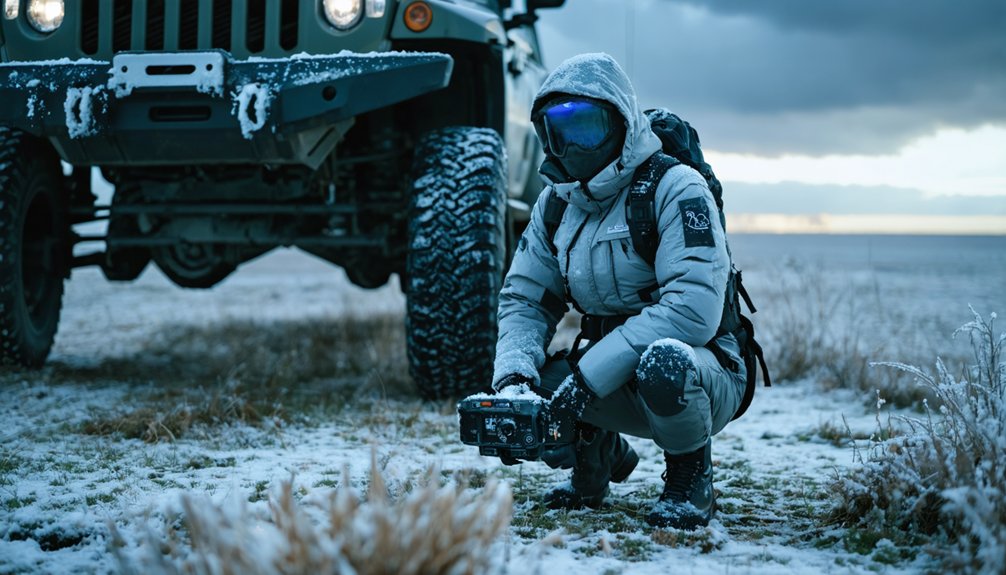
Managing heat is only half the equation — your gear must perform across the full temperature spectrum storm chasing demands. Smart gear selection starts with layering: loose-fitting wool, fleece, or nylon base layers retain warmth even when soaked, critical when storms drop temperatures fast.
For temperature regulation in extreme cold, maximize insulation around your core and wear a wool hat — you’ll lose up to 50% of body heat through an uncovered head. Cover your mouth with a scarf to protect your lungs from sharp cold air.
In heat or dust, quick-drying defender shirts, ski goggles, and neck tubes shield you without trapping dangerous heat. Waterproof, high-traction boots handle mud shifts between both extremes.
Your gear isn’t optional equipment — it’s your operational foundation.
How Extreme Conditions Break Storm Chasers Mentally
Gear keeps your body operational, but extreme conditions systematically dismantle your mental architecture in ways no equipment can fully counter.
Emotional preparedness determines whether you execute decisions or freeze. Mental resilience isn’t passive—it’s actively constructed before deployment.
Extreme environments attack cognition through:
- Decision fatigue — Continuous threat assessment depletes executive function, distorting risk evaluation during critical moments.
- Sensory overload — Simultaneous wind, temperature extremes, and visual chaos fragment situational awareness rapidly.
- Isolation stress — Extended solo operations in hostile environments erode psychological stability without deliberate countermeasures.
- Hopelessness spirals — Prolonged exposure triggers catastrophic thinking, collapsing your willingness to act decisively.
Counter these systematically: rehearse scenarios mentally beforehand, establish personal psychological anchors, maintain rhythmic breathing under pressure.
Your mind is your primary survival instrument—train it accordingly.
Frequently Asked Questions
How Do Storm Chasers Protect Vehicles From Extreme Heat Damage During Chases?
Your vehicle’s your lifeline—treat it like armor. Apply heat reflective coatings to deflect intense solar radiation, and prioritize vehicle insulation to maintain interior temperatures. You’ll preserve critical systems, ensuring your escape route stays operational during extreme chases.
Can Extreme Cold Affect Storm Chasing Equipment’s Battery Life and Performance?
Yes, extreme cold drastically reduces battery efficiency in your storm-chasing gear. In cold weather, you’ll notice shorter runtimes and sluggish performance. Keep batteries insulated and warm to maintain peak functionality and preserve your operational freedom in the field.
What Emergency Protocols Exist When Temperature Extremes Strand Storm Chasers Remotely?
When stranded, you’ll activate remote survival protocols: layer loose clothing to retain core heat, signal via satellite communicators for stranded communication, seek low-wind shelter, insulate yourself from ground, and maintain a positive survival mindset until rescue arrives.
How Do Chasers Manage Temperature Regulation Inside Cramped Chase Vehicles?
You’ll manage temperature regulation by optimizing vehicle ventilation to cycle air efficiently and applying thermal insulation to windows and doors. Layer quick-drying clothing, control HVAC settings precisely, and you’ll maintain core comfort during prolonged cramped chase operations.
Which Extreme Temperature Zones Do Storm Chasers Most Frequently Underestimate While Chasing?
85% of chasers underestimate heat index zones. You’ll frequently overlook humidity effects amplifying perceived temperatures, elevation impacts altering atmospheric stability, and sudden desert heat — all silently compromising your performance before storms even form.
References
- https://www.youtube.com/watch?v=KAFD0YFDX7U
- https://www.outsideonline.com/outdoor-adventure/exploration-survival/how-to-survive-tornadoes-storms-floods/
- https://nhchc.org/wp-content/uploads/2019/08/Extreme_ColdV31.pdf
- https://www.youtube.com/watch?v=9Yw6IWbSSA8
- https://www.weather.gov/ama/SEVERESAFETYTIPS
- https://www.youtube.com/watch?v=on_qX-7rNcQ