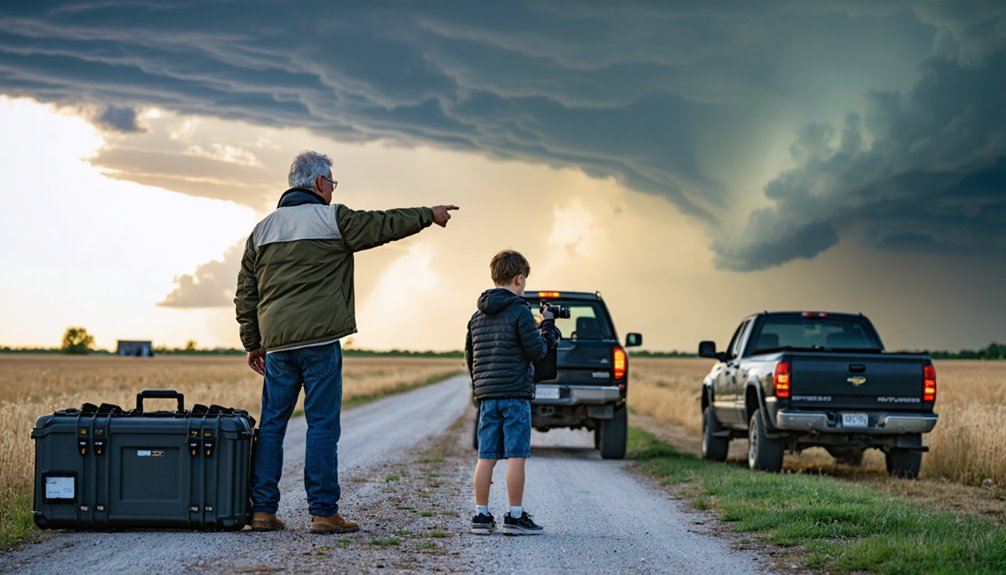
When you post storm damage photos, you’re making an ethical choice with real consequences. Unverified images spread six times faster than corrections, which can misdirect first responders and deepen public trauma. Repeated exposure to graphic destruction also desensitizes viewers, weakening the empathetic responses that drive meaningful relief. Your sharing decisions should prioritize accuracy over speed, public interest over shock value, and sustained awareness over viral momentum — and the full picture is more complex than most people realize.
Key Takeaways
- Unverified storm images spread faster than corrections, potentially misdirecting first responders and compromising emergency relief efforts.
- Repeated exposure to graphic disaster content can cause trauma symptoms in social media viewers, even without direct experience.
- Storm images stripped of context can become propaganda tools, creating false narratives that overshadow accurate disaster information.
- Viral emotional peaks around storm content rarely translate into sustained donations or long-term disaster recovery support.
- Ethical sharing requires verifying images, confirming public interest value, and prioritizing accuracy over the urgency to post quickly.
When a hurricane tears through a coastline or a tornado levels a neighborhood, something instinctive kicks in — you reach for your phone. The emotional impact of witnessing destruction creates an almost involuntary impulse toward social sharing. You want others to understand what’s happening, to bear witness, to respond.
This urgency isn’t irrational. Historically, citizen documentation has accelerated disaster relief and held institutions accountable. But the impulse to share immediately carries real consequences. Unverified images spread faster than corrections, misinformation compromises emergency responses, and graphic content traumatizes viewers who never consented to exposure.
Understanding *why* you feel compelled to share matters before you actually do it. That instinct connects to community, solidarity, and truth-seeking — values worth honoring thoughtfully rather than reflexively.
How Does Graphic Storm Content Traumatize Social Media Viewers?
Unlike television, which uses rating systems to warn viewers about disturbing content, social media delivers graphic storm imagery without filters, warnings, or consent.
When you scroll through disaster footage unmediated, the psychological consequences are real:
- Graphic trauma accumulates — repeated exposure to destruction and suffering rewires your emotional responses without your awareness.
- Emotional overload diminishes judgment — you’re less equipped to process accurate emergency information when you’re overwhelmed by visceral imagery.
- Viewer desensitization erodes empathy — constant graphic exposure numbs your capacity for meaningful response over time.
These aren’t abstract concerns. Research confirms that social media observers can develop trauma symptoms comparable to direct witnesses.
When platforms prioritize engagement over public safety, you bear the psychological cost of their indifference.
Why Do Storm Disasters Flood Social Media With False Information?
Storms don’t just destroy infrastructure — they create the perfect conditions for misinformation to thrive.
When you’re watching catastrophic footage unfold in real time, confirmation bias kicks in. You’re more likely to share content that confirms your fears, even without verifying it. That’s how a fabricated Hurricane Sandy tweet gets retweeted by national news organizations before anyone debunks it.
The misinformation impact compounds quickly.
Meta platforms lacked fact-checks on 98% of analyzed storm posts. YouTube failed entirely. These platforms profit from emotional engagement while crucial emergency information gets buried beneath viral falsehoods.
Social media ethics demand that you recognize your audience responsibility here.
Spreading unverified content doesn’t just misinform — it can actively redirect first responders and compromise genuine public safety operations during moments that matter most.
Why Do Fake Storm Photos Go Viral Faster Than Accurate Ones?
Misinformation doesn’t just spread randomly — it spreads because your brain is wired to prefer it. Fake imagery exploits your emotional response faster than verified facts ever could.
Three mechanisms drive misinformation spread during storms:
- Social urgency compresses your critical thinking — when danger feels imminent, you share first and verify later.
- Confirmation bias makes dramatic fake photos feel true because they match what you already expect disaster to look like.
- Platform algorithms reward engagement over accuracy, pushing emotionally charged content directly into your feed.
Real photos often lack the theatrical intensity that fake imagery delivers. Your instinct to warn others is genuine, but that instinct gets weaponized.
Recognizing these patterns is how you reclaim your role as a responsible information gatekeeper.
When Do Storm Images Become Propaganda?
When a storm image travels far from its original context, it can quickly transform from documentation into a tool for advancing false narratives.
You’ve likely seen photos from entirely different disasters recycled and reframed to provoke outrage or push a political agenda, stripping away any factual grounding the image once had.
Outlets like Mashable have recognized this risk directly, making deliberate editorial decisions to withhold graphic propaganda material rather than allow their platforms to amplify its weaponized intent.
Decontextualized Images Fuel Narratives
A single storm photograph, stripped of its original context, can travel across platforms and become something entirely different from what it was meant to show.
Decontextualized narratives exploit emotional disconnection between viewers and original events, warping purpose and meaning.
When images lose their origin, three predictable distortions follow:
- Propaganda amplification — content designed to energize specific communities gets redirected toward unintended audiences with opposing agendas.
- False credibility — unverified visuals gain legitimacy simply through repeated sharing across multiple platforms.
- Manufactured outrage — emotional responses replace informed understanding, steering public perception away from facts.
You’re responsible for evaluating what you share.
Once an image leaves its original context, you’ve lost control over how it’s weaponized.
Critical thinking isn’t optional — it’s your strongest defense against manipulation.
Editorial Decisions Limit Weaponization
Editorial decisions serve as a critical firewall between raw storm imagery and its potential misuse as propaganda. When you encounter graphic storm content, newsrooms have already weighed its news value against an attacker’s intent to weaponize it.
Mashable, for instance, made a principled editorial choice against sharing grisly propaganda images, recognizing that emotional impact alone doesn’t justify distribution.
You share viewer responsibility in this equation. Unmediated content uploaded by non-professionals streams freely without verification, bypassing the gatekeeping that prevents decontextualized images from fueling false narratives.
News organizations must develop concrete standards for graphic image sharing across platforms. Without those standards, storm imagery transforms from factual documentation into manipulative content that serves agendas entirely disconnected from public safety or informed understanding.
Why Does Viral Outrage Rarely Translate to Disaster Relief?
Social media’s emotional peaks rarely align with the sustained commitments disaster recovery demands.
You’ve seen it repeatedly — hashtags trend, outrage spikes, then attention evaporates before real rebuilding begins. The emotional impact of viral storm content doesn’t automatically convert into meaningful social responsibility.
Research confirms this gap:
- Twitter mentions surge immediately after hurricanes but decline sharply before recovery needs peak.
- Dollar contributions fall considerably below what early social media responses would predict.
- Conspiracy content and dramatic imagery crowd out crucial emergency information.
You’re fundamentally watching a cycle where platforms profit from your outrage while affected communities receive diminishing support.
Recognizing this disconnect means understanding that sharing graphic storm content might generate clicks without generating change.
Sustained attention — not viral moments — is what disaster survivors actually need.
Why Do Facebook, X, and YouTube Fail During Storm Events?
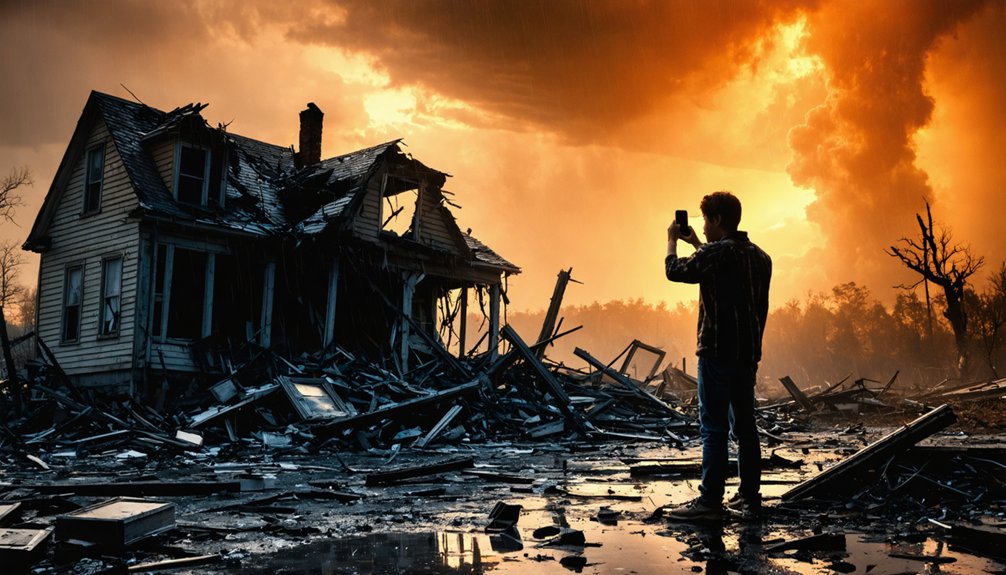
When extreme weather strikes, the platforms you rely on for information fail at their most basic function: ensuring accuracy.
Research reveals that Meta platforms left 98% of analyzed posts without fact-checks during extreme weather events. X performed worse at 99%, while YouTube failed completely — zero fact-checks across every analyzed post.
This isn’t incidental. It reflects a structural breakdown in Content Moderation that puts you directly at risk.
False emergency information doesn’t just mislead — it redirects first responders and compromises coordinated safety efforts.
Misinformation during emergencies doesn’t just confuse — it costs lives and derails the systems designed to save them.
Social Media Accountability matters here because these platforms profit from crisis-driven engagement while doing little to filter dangerous misinformation.
You deserve accurate, verified information when lives depend on it — not algorithmically amplified chaos dressed up as breaking news.
When you’re a journalist covering storm devastation, you face a fundamental tension between your duty to inform the public and your responsibility to avoid causing unnecessary harm.
Graphic footage can carry undeniable news value, documenting the real human cost of a disaster in ways that sanitized reporting cannot. Yet that same content risks traumatizing viewers and potentially being stripped of context as it spreads across platforms.
You must weigh these competing obligations carefully, recognizing that the decision to share isn’t just editorial — it’s ethical.
Ethical Boundaries For Journalists
Journalists covering extreme weather events face a difficult but necessary question: should graphic storm footage be shared on social media? Your editorial decisions carry real consequences, and journalistic integrity demands thoughtful boundaries.
Consider these core principles:
- Weigh news value against harm — Graphic content must serve a clear informational purpose, not shock value.
- Protect viewers proactively — Apply content warnings before exposing audiences to traumatic material without consent.
- Resist speed over accuracy — Publishing unverified footage compounds ethical dilemmas rather than resolving them.
You hold significant power over public perception and emotional well-being. Unlike broadcast television’s rating protections, social media offers no automatic safeguards.
That responsibility falls entirely on you — making deliberate, principled choices before hitting share.
Balancing Newsworthiness Versus Harm
Every piece of graphic storm footage you consider sharing forces a direct collision between two legitimate obligations: informing the public and protecting them from harm.
You must weigh the emotional impact on viewers against the genuine news value the content provides. Ask yourself whether the image advances public understanding or simply amplifies shock.
Viewer responsibility doesn’t disappear once content leaves your hands — but your editorial choices determine what audiences encounter without warning or context.
Consider whether the footage shifts emergency response, clarifies danger zones, or corrects misinformation. If it does none of these things, its news value weakens considerably.
Graphic material without clear informational purpose isn’t journalism — it’s exposure. You retain the authority and the obligation to make that distinction before posting.
Before You Post Storm Damage, Ask These Questions
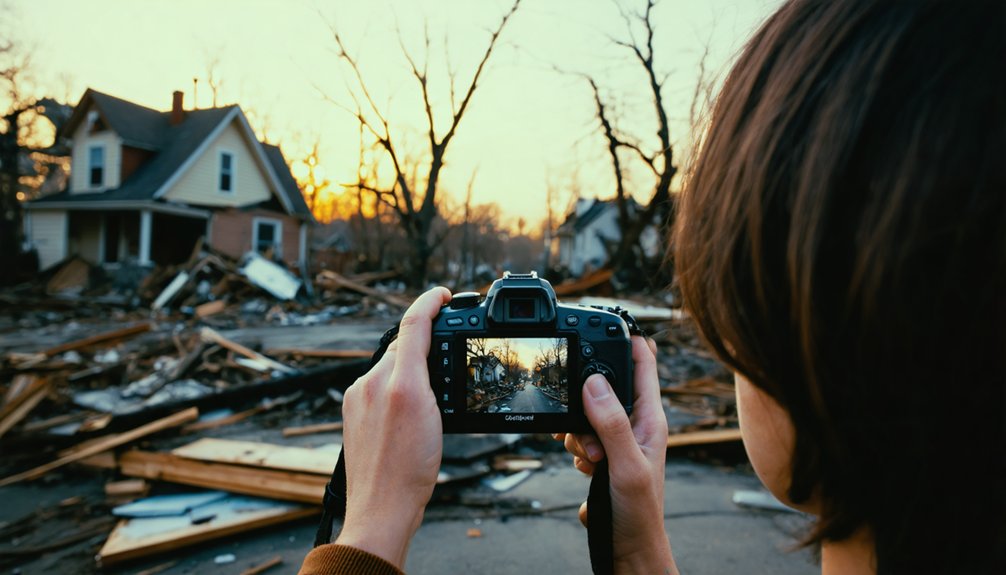
Before hitting “share” on that storm damage photo or video, consider the broader implications of your decision. Unverified content spreads misinformation, graphic imagery causes emotional impact, and repeated exposure creates viewer fatigue.
Ask yourself:
- Is this verified? Unconfirmed images can shift first responder actions and compromise public safety responses.
- Does sharing serve the public or satisfy curiosity? Content stripped of context becomes propaganda material that others weaponize.
- Are you contributing to long-term awareness or short-term shock? Social media attention peaks early but declines rapidly, leaving communities without sustained support during rebuilding.
Your freedom to post carries real responsibility. Thoughtful sharing protects community well-being while ensuring accurate, meaningful information reaches people who genuinely need it.
Frequently Asked Questions
Can Sharing Storm Footage Actually Worsen Emergency Response Times?
Yes, sharing storm footage can worsen emergency response times. When you spread unverified content, you’re shifting first responders’ actions toward false threats, diverting critical resources away from genuine victims who urgently need immediate, life-saving assistance.
Who Is Legally Responsible When Decontextualized Storm Images Cause Harm?
Legal responsibility’s a moving target—you’re steering through murky waters. Platforms, journalists, and sharers all bear legal implications when decontextualized storm images cause emotional impact, but no unified framework clearly assigns accountability across these overlapping responsibilities.
How Do News Organizations Decide Which Graphic Images Deserve Viewer Warnings?
You’ll find news organizations weigh news value, image purpose, and potential psychological harm against viewer sensitivity. They’re applying ethical guidelines to balance transparency with protection, ensuring you’re warned before encountering content that could traumatize without informing.
Does Continuous Storm Coverage Psychologically Harm the Journalists Themselves?
Yes, you’ll drown in an ocean of trauma. Covering storms relentlessly destroys your mental health, accelerates journalist burnout, demands extraordinary emotional resilience, and forces you into ethical dilemmas that compromise your psychological freedom and professional integrity.
Why Do Dollar Donations Fall Short Despite Massive Social Media Disaster Engagement?
You’re experiencing emotional fatigue after intense online engagement, which depletes your motivation to donate. Social media’s design lacks effective donation incentives, so your clicks and shares don’t automatically convert into meaningful financial support for recovery efforts.
References
- https://mediaengagement.org/wp-content/uploads/2018/04/7-social-media-sharing-in-times-of-tragedy-case-study2-1.pdf
- https://ethics.sjmc.wisc.edu/2017/10/11/technology-complicates-ethics-of-natural-disaster-reporting/
- https://www.cjr.org/analysis/this_summer_saw_the_on-camera.php
- https://caad.info/analysis/reports/extreme-weather/
- https://extension.okstate.edu/articles/2022/social-media-response-to-disaster-lacks-followthrough.html
- https://www.preventionweb.net/publication/documents-and-publications/extreme-weather-how-storm-false-and-misleading-claims-about