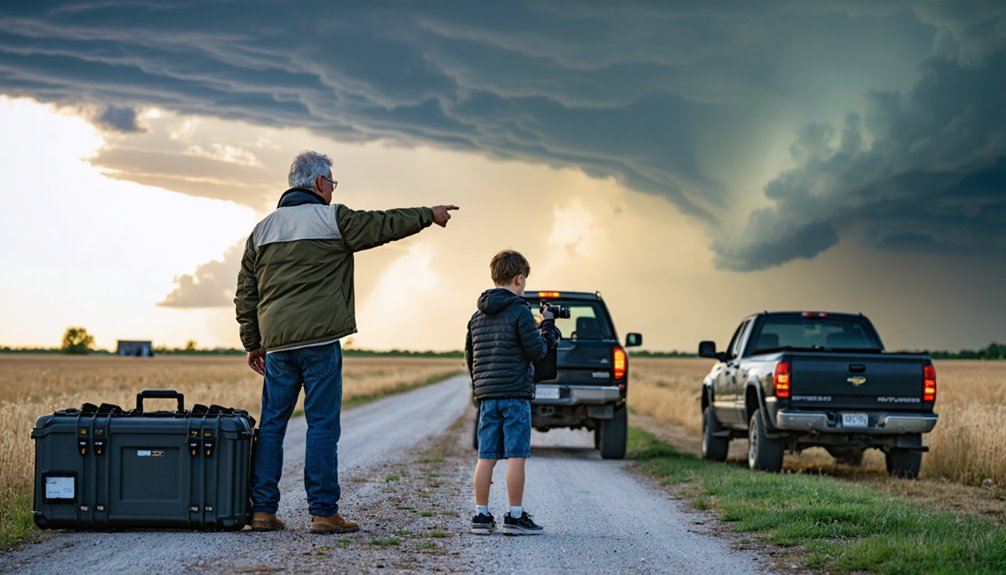
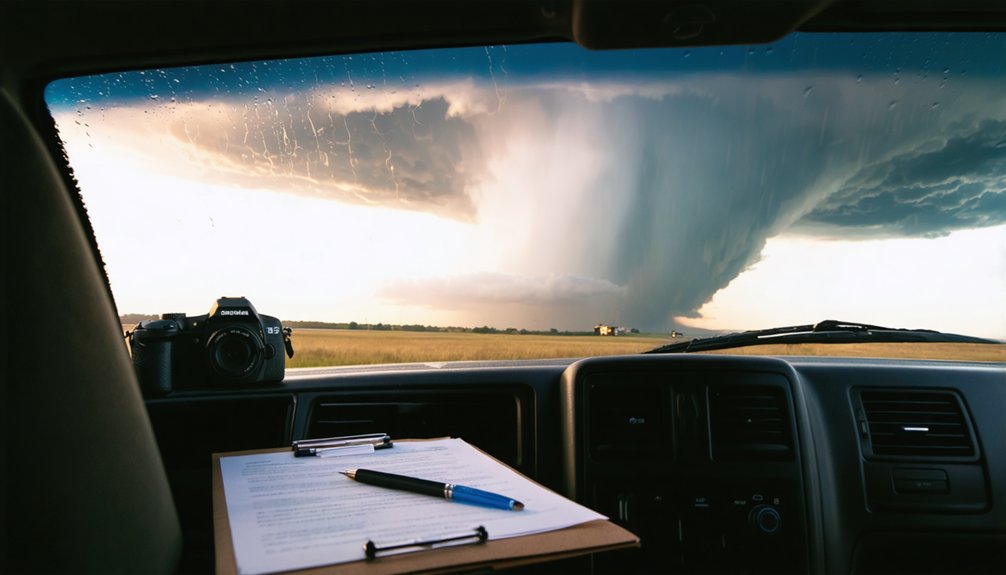
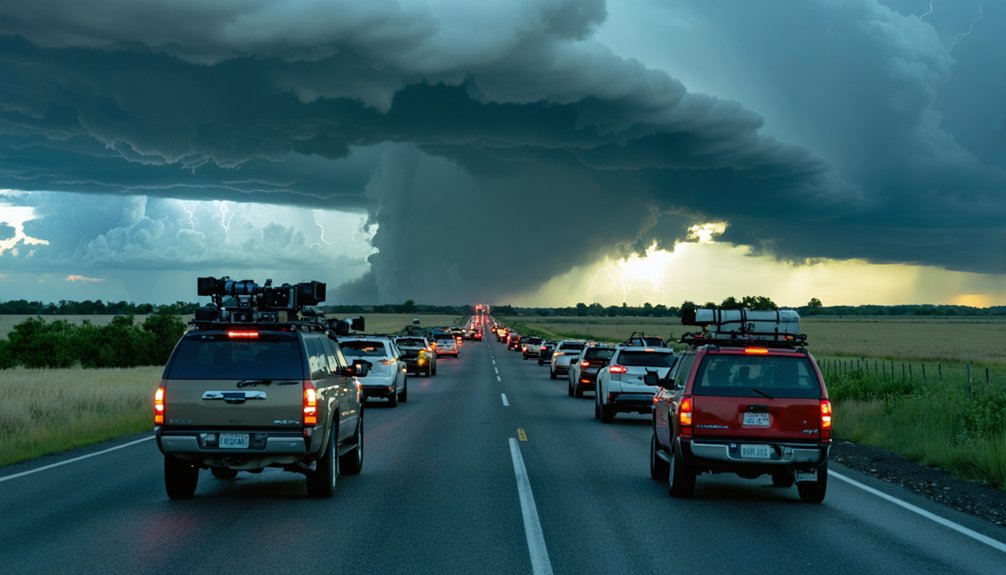
Prioritize safety by adhering to speed limits and avoiding dangerous shelters like highway overpasses, which amplify tornado winds by 20-30%. Respect private property boundaries in disaster areas and provide assistance only within your certified training scope. Lead by example through responsible positioning and documentation practices that elevate community standards. Contribute atmospheric data to fill radar coverage gaps and support tornadogenesis research. Balance your enjoyment with scientific rigor to maintain storm chasing’s legitimacy and prevent restrictive regulations. The following framework connects these principles to actionable decisions during severe weather events.
Key Takeaways
- Avoid highway overpasses and isolated trees as shelter; they amplify tornado winds and offer no protection from debris.
- Respect private property boundaries and maintain appropriate distances from damaged structures without exploiting vulnerable homeowners.
- Provide assistance only within documented qualifications, maintain current certifications, and call emergency services when situations exceed your skills.
- Prioritize atmospheric data collection over dramatic footage, submitting observations to research databases to improve forecast accuracy.
- Lead by example through safe driving practices and responsible behavior to prevent regulations that could restrict storm chasing.
Put Your Safety and Others’ Safety First
Storm chasing’s inherent dangers extend beyond the severe weather itself—highway travel poses the most significant threat to your safety. Tens of thousands of Americans die annually in vehicle accidents, and divided attention while pursuing storms amplifies these risks. You’ll navigate rain-covered highways, reduced visibility, and sudden maneuvers that increase collision probability. Since 2005, data shows 13 storm chaser fatalities, averaging less than one per year.
To prioritize personal safety, guarantee journey planning includes adherence to speed limits in wet conditions and maintaining situational awareness beyond radar fixation. Monitor deviant storm motions, activate headlights during precipitation, and use parking lights when roadside. Calculate risks solely for data collection without endangering your team.
The National Weather Service doesn’t recommend storm chasing—winds exceeding 90 mph can push vehicles off roads and demolish structures.
Never Use Dangerous Shelter Locations
You’ll face critical shelter decisions during storm chasing when conditions deteriorate rapidly.
Highway overpasses function as wind tunnels that amplify tornado winds by 20-30%, channeling deadly debris through confined spaces where you’re completely exposed.
Similarly, single trees or small tree clusters offer zero protection from tornadoes—they become additional projectiles while attracting lightning strikes and concentrating wind forces around their trunks.
Overpasses Create Fatal Traps
The widespread myth that highway overpasses offer tornado protection has proven deadly, most particularly during the May 3, 1999, Oklahoma tornado outbreak when three people died near or under overpasses while only three perished inside well-built structures out of 2,000 who followed proper safety guidelines.
Tornado winds exceeding 200 mph channel airborne debris—shingles, lumber, dirt, and rocks—directly under overpasses, causing fatal debris impact through impalement and severe lacerations. Despite no proven wind accelerations beneath these structures, the funneling effect creates catastrophic exposure.
You’ll also trap others by blocking highways, eliminating escape routes and forcing drivers into equally dangerous ditches or vehicles. The National Weather Service explicitly warns that overpasses heighten fatality risk. Choose sturdy buildings or low-lying ditches instead—your freedom depends on evidence-based decisions.
Lone Trees Lack Protection
While seeking shelter beneath isolated trees during tornado encounters might seem instinctive, this decision ranks among the most lethal mistakes storm chasers make. You’re exposing yourself to tree strike risks when powerful winds snap trunks or tear branches loose at deadly velocities.
Lightning preferentially targets isolated trees, transforming your shelter into a conductor during active thunderstorms. The meteorological hazards don’t end there—weak root systems in open terrain mean trees topple easily under tornadic forces, crushing anything beneath. You’ll also face projectile debris that trees can’t deflect.
Safe rooms and reinforced structures offer genuine protection; lone trees provide false security. Your freedom to chase storms responsibly means rejecting this dangerous impulse and choosing scientifically-validated shelter options that actually increase survival odds.
Respect Private Property and Disaster Areas
When disaster strikes a community, ethical storm chasers must recognize that affected properties aren’t simply meteorological observation points—they’re homes where people face genuine crises. You must respect privacy needs by maintaining appropriate distances from damaged structures and avoiding unauthorized entry onto private land.
Consider homeowner vulnerabilities during these high-stress periods when residents are processing loss and planning recovery. Don’t exploit their circumstances by offering unsolicited services or interfering with legitimate insurance processes. Your data collection shouldn’t compromise emergency response operations or block access routes for recovery personnel.
Document storm impacts from public vantage points while respecting posted boundaries and verbal requests to leave properties. Remember that your freedom to observe weather phenomena carries responsibility toward those experiencing its devastating consequences firsthand.
Provide Assistance When You Have the Training
If you’ve completed certified first aid training, you’re equipped to provide critical initial care at storm scenes—but only within the scope of your documented qualifications. Your intervention must never exceed your skill level or replace professional emergency responders; attempting procedures beyond your training can worsen injuries and create legal liability.
Maintain current certifications through regular refreshers, as outdated knowledge won’t serve victims effectively when seconds determine outcomes.
First Aid Certification Matters
Your location matters considerably. If you’re operating more than 60 minutes from hospital access—common when chasing in remote terrain—Wilderness First Aid becomes essential rather than optional.
This 16-hour certification covers trauma management, environmental emergencies, and patient assessment systems specifically designed for delayed evacuation scenarios.
Without proper credentials, you’re legally and ethically obligated to limit intervention to calling emergency services. Don’t compromise victim safety through untrained assistance.
Know Your Skill Limits
How do you determine whether you’re qualified to assist at a storm damage scene versus when you should stay back and only call 911? Your formal training background dictates your response capabilities. If you’ve completed first aid certification or emergency medical training, you can provide immediate medical assistance. Without those credentials, you’ll create additional hazards rather than solutions.
This principle mirrors observational skill development in storm chasing—recognize what you can’t handle. A meteorology degree doesn’t qualify you for search and rescue operations. Years of chase experience don’t substitute for EMT certification. When you encounter injuries beyond basic first aid, immediately contact emergency services and provide clear location data. Your most valuable contribution might simply be accurate damage documentation for National Weather Service surveys while professionals handle medical emergencies.
Lead by Example to Elevate Community Standards
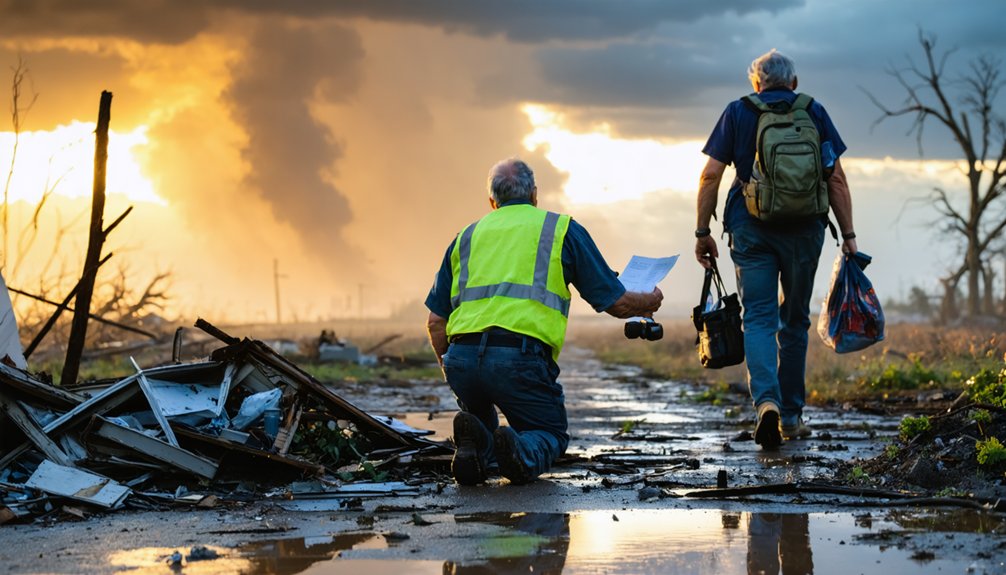
When you position yourself as a responsible storm chaser, you create a ripple effect that shapes how the entire community operates. Your actions during high-stakes events directly influence other chasers’ decisions, particularly newcomers who model their behavior after experienced observers. The 2013 El Reno incident and 2023 Rolling Fork event demonstrate how community engagement becomes critical during major outbreaks when chaser density increases dramatically.
Effective risk mitigation starts with your personal choices: maintaining safe following distances, documenting road hazards, and sharing real-time traffic conditions through established networks. When you witness dangerous behavior—blocking escape routes or trespassing—address it privately first. Public documentation serves as your last resort.
Tour operators bear particular responsibility since they establish standards that dozens of future chasers will internalize and replicate throughout their careers.
Contribute to Scientific Knowledge Through Data Sharing
While dramatic footage may drive social media engagement, the atmospheric measurements you collect during storm intercepts hold far greater long-term value for meteorological science. Your chase logs documenting forecasting methodology, positioning strategies, and observed conditions contribute to diverse data sources that help researchers understand why only 10%-15% of mesocyclones produce tornadoes.
Temperature, humidity, and pressure readings from your location fill critical gaps in radar coverage, especially when shared through coordinated research initiatives like university projects or government networks. Don’t restrict valuable observations to private email lists—submit reports to severe storm databases that support climatology research and real-time warning systems.
Your ground truth documentation reduces scientific ignorance surrounding tornadogenesis mechanisms, ultimately improving forecast accuracy and protecting communities you’re privileged to observe.
Balance Recreation With Responsible Practices
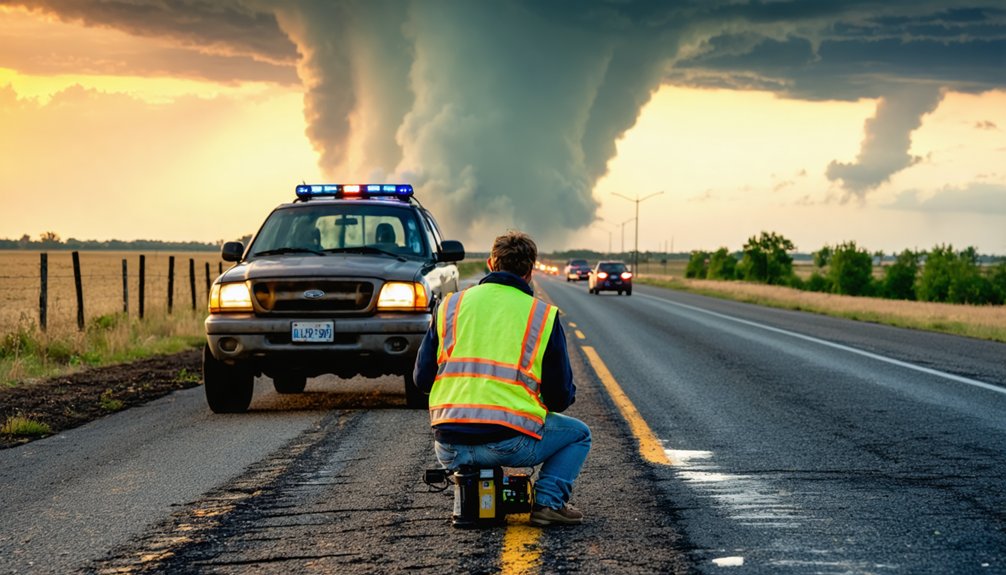
Every decision you make while chasing storms carries consequences that extend beyond your personal experience to the broader perception of storm observation as a legitimate pursuit. Your storm photography techniques should prioritize safety over spectacular shots—never position yourself or others at risk for social media content.
When sharing observations online, social media etiquette demands accurate meteorological information rather than sensationalist claims that spread misinformation. You’ll maintain credibility by grounding your recreational pursuit in severe storm science, understanding supercell structure, and making informed positioning choices.
This knowledge-based approach separates responsible chasers from thrill-seekers, ensuring your freedom to pursue storms isn’t restricted by regulations targeting reckless behavior. Balance your enjoyment with awareness that your actions represent the entire community.
Frequently Asked Questions
What Equipment Is Essential for Storm Chasing Besides a Vehicle and Camera?
You’ll need a GPS navigation device for routing through changing conditions, emergency radio communication for coordinating with other chasers, weather radar apps for real-time tracking, power solutions, and protective gear including rain jackets and first-aid supplies.
How Do Storm Chasers Communicate With Each Other During Active Pursuits?
You’ll chase storms solo yet stay constantly connected—using ham radio, cell networks, and social media for real-time data sharing and strategic coordination. Spotternetwork, scanners, and NOAA weather radio keep you informed while maintaining your independence on the road.
What Insurance Considerations Should Storm Chasers Be Aware of Before Chasing?
You’ll need specialized extreme sports insurance with liability coverage for potential accidents and extensive protection for expensive weather monitoring devices. Standard policies won’t cover storm chasing risks, so secure proper coverage before your first chase expedition.
How Can Beginners Find Experienced Mentors to Learn Proper Chasing Techniques?
You’ll find experienced mentors by joining organized tours like Living Sky Tours, connecting with weather enthusiast communities such as Girls Who Chase, and finding local storm spotter groups through Spotter Network training programs that emphasize safety-first practices.
What Legal Permits or Permissions Are Required for Commercial Storm Chasing Tours?
You’ll need commercial insurance, business licenses, and FCC permits for radar equipment to comply with government regulations. Always secure landowner permissions before accessing private property, and maintain proper documentation for cross-border operations and liability protection.