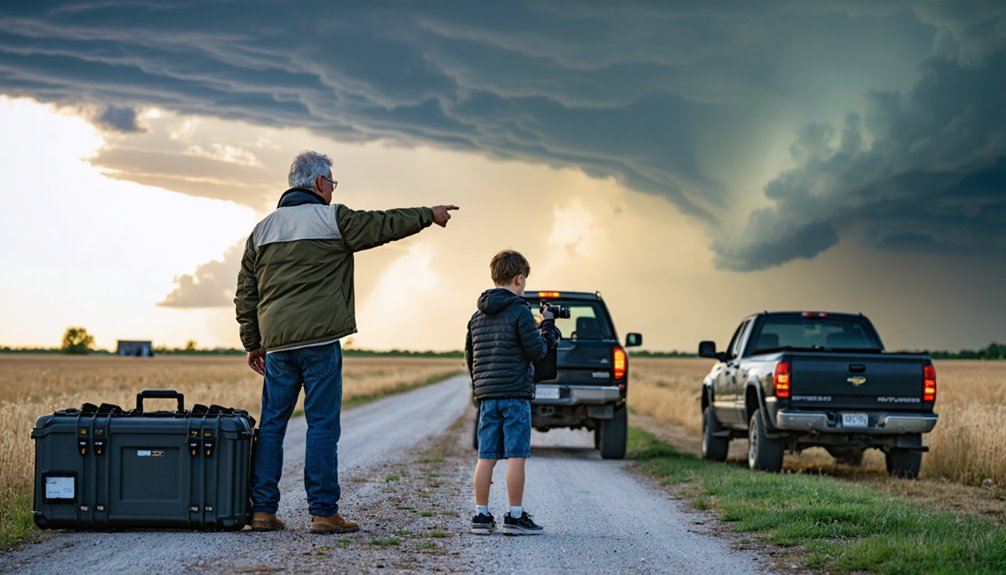
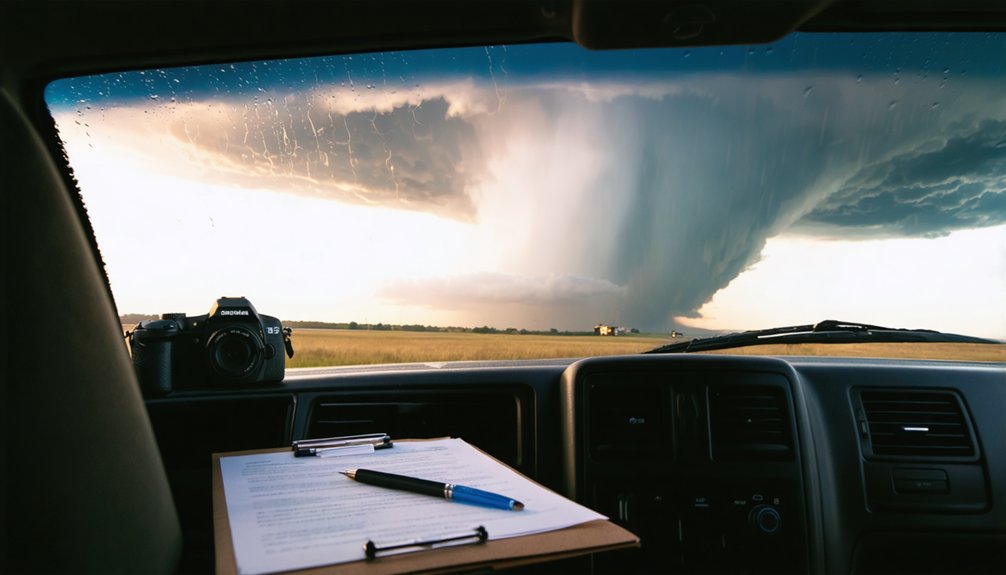
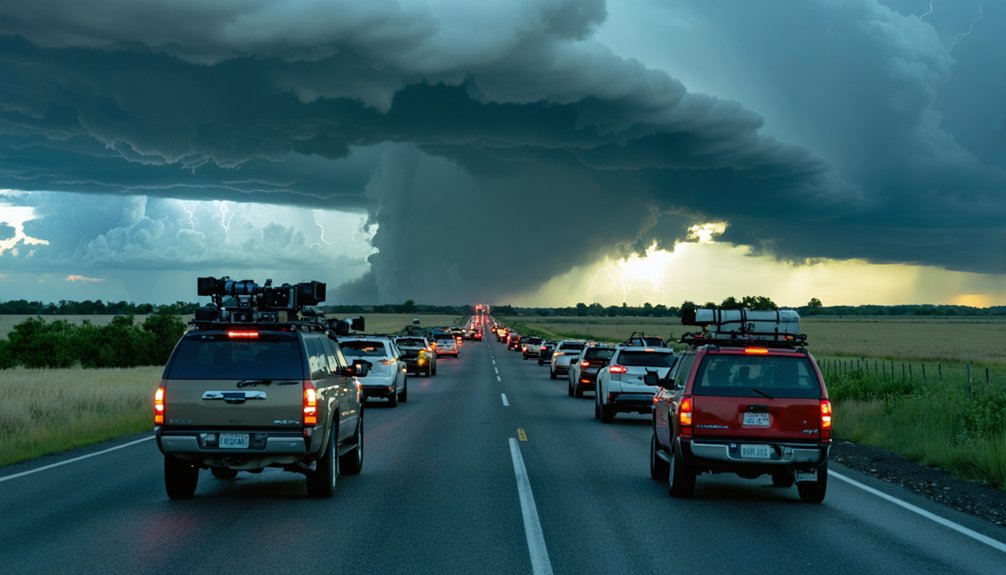
Your storm chasing motivations directly shape your proximity decisions, risk tolerance, and situational awareness in the field. Adrenaline-driven chasers consistently underestimate tornado scale and skip escape route planning, while scientifically motivated chasers use structured protocols that reduce accidents and contribute measurable data to public safety outcomes. You’ll want to pursue Skywarn certification, self-assess your emotional regulation, and anchor decisions to verified forecast data. The tips ahead break down exactly which motivations create dangerous patterns—and how to correct them.
Key Takeaways
- Identify whether your storm chasing motivation is scientific or thrill-seeking, as this directly shapes your risk decisions and field behavior.
- Prioritize safety protocols over adrenaline impulses by establishing escape routes, abort criteria, and risk thresholds before each chase.
- Pursue Skywarn certification and meteorology training to shift focus from spectacle-seeking toward accurate, responsible data collection.
- Respect affected communities by avoiding property disruption, minimizing emergency service interference, and assisting when safely possible.
- Advocate for sustainable chasing practices and share educational resources to promote responsible behavior among aspiring storm chasers.
The Motivation Gap That Makes Storm Chasing Dangerous
When you ask most storm chasers why they do it, the answers split sharply between two camps: scientific data collection and pure adrenaline. This motivation analysis reveals a critical safety gap. Chasers driven primarily by thrill assessment—measuring excitement over meteorological value—statistically make riskier proximity decisions, underestimate tornado scale, and neglect escape route planning.
Your motivations directly shape your behavior in the field. Adrenaline-focused chasers tend toward task saturation, splitting attention between driving and filming rather than maintaining situational awareness.
Your motivations shape your field decisions. Thrill-seekers split focus between filming and driving, sacrificing the situational awareness that keeps you alive.
Data-driven chasers, by contrast, prioritize positioning accuracy and withdrawal timing.
Honest self-examination matters before you deploy. Identifying whether you’re chasing for knowledge or sensation isn’t judgment—it’s risk calibration. Your answer determines whether you return home safely or become a preventable statistic.
What Separates Scientific Storm Chasing From Pure Thrill-Seeking?
When you chase storms for scientific purposes, your decisions stem from data collection objectives rather than adrenaline-driven impulses.
You position yourself to capture atmospheric measurements, document storm structure, and contribute empirical observations to meteorological research.
The distinction is operational: scientific chasers treat each deployment as a controlled investigation, while thrill-seekers treat proximity to danger as the goal itself.
Scientific Purpose Versus Adrenaline
Though both scientific chasers and thrill-seekers share physical proximity to severe weather, their motivations, methodologies, and risk tolerances diverge sharply.
Scientific integrity demands systematic data collection, documented protocols, and measurable research outcomes. You’re not simply experiencing the storm—you’re extracting verifiable information that advances meteorological understanding.
Thrill-seeking motivations operate differently. Adrenaline becomes the primary reward, often displacing rigorous risk assessment and sound ethical considerations. When excitement overrides judgment, proximity decisions become emotionally driven rather than data-driven.
You maintain genuine freedom in this pursuit by anchoring your decisions in methodology rather than impulse.
Scientific chasers who prioritize structured approaches, defined objectives, and disciplined positioning earn community credibility while minimizing preventable accidents. Your motivation fundamentally shapes every tactical decision you’ll make in the field.
Data Collection Drives Decisions
Data collection transforms storm chasing from spectacle into science. When you’re prioritizing research contributions over adrenaline, your decisions carry real meteorological importance.
Every measurement you capture strengthens storm predictions and directly influences public safety outcomes.
Ethical implications emerge immediately when data accuracy becomes your primary objective. You’re not just chasing—you’re contributing to community impact through verified atmospheric intelligence.
Structured data-driven chasing requires:
- Risk assessment documentation — Record positioning decisions and proximity rationale to establish reproducible safety protocols.
- Standardized observation logging — Capture wind speed, pressure, and visual phenomena using consistent methodology for scientific validity.
- Post-chase data submission — Contribute findings to meteorological databases where researchers can apply your observations toward improving forecast accuracy.
Your commitment to rigorous data collection distinguishes purposeful scientific contribution from reckless spectacle-seeking.
Why Chasers Who Contribute to Spotter Networks Chase Differently
Chasers who contribute to spotter networks like Skywarn operate under a fundamentally different decision-making framework than those chasing purely for personal documentation. Your motivation awareness directly shapes your risk assessment calculus.
When community responsibility anchors your chase ethics, you’re positioning for ideal storm prediction data collection rather than dramatic proximity. You’ll find your safety protocols become non-negotiable because compromising them undermines the network’s scientific value.
Spotter network contributors evaluate positioning through a data utility lens. You’re asking, “Does this vantage point maximize reportable observations while maintaining escape corridor access?” rather than “How close can I get?”
This framework naturally produces more disciplined, methodologically consistent behavior. Your freedom to chase sustainably depends on demonstrating that responsible contribution, not reckless documentation, defines your operational standards within the broader meteorological community.
How Skywarn Training Reshapes Your Storm Chasing Goals
Skywarn training fundamentally reorients your chasing objectives by embedding meteorological reporting standards directly into your operational decision-making. Its training impact shifts your focus from spectacle-seeking toward data accuracy, transforming how you interact with the chaser community.
Skywarn benefits extend across three critical operational dimensions:
- Risk awareness calibration — You’ll accurately assess storm proximity thresholds using standardized meteorological criteria rather than intuition alone.
- Knowledge sharing protocols — Educational resources equip you to transmit verified observational data through established reporting networks.
- Mentorship value integration — Ethical guidelines absorbed through certified training naturally position you as a responsible resource for emerging chasers.
These safety practices aren’t restrictions—they’re frameworks that expand your operational effectiveness.
Skywarn-certified chasers consistently produce higher-quality data while maintaining defensible, community-respected positioning decisions.
Does Your Reason for Chasing Put Others at Risk?
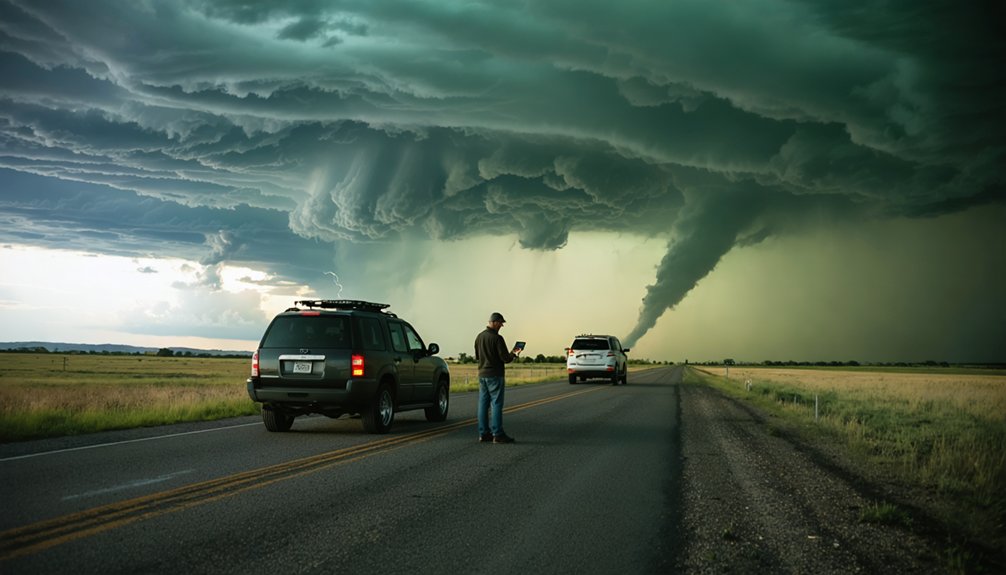
Beyond the reporting standards Skywarn instills, your underlying motivation for chasing shapes every risk decision you’ll make in the field.
Motivation reflection isn’t abstract—it’s applied risk assessment. If adrenaline or social media recognition drives your decision making, you’re statistically more likely to close distances dangerously, compromising public safety and community impact simultaneously.
Ethical considerations demand personal accountability: ask yourself honestly whether your chasing ethics prioritize documentation over safety prioritization.
Chasers operating from ego-driven impulses demonstrate measurably poorer positioning choices and slower escape responses.
Emotional awareness is your internal calibration tool. When your motivations align with scientific contribution and community protection, your operational boundaries tighten appropriately.
Freedom in this pursuit means disciplined self-governance—not reckless proximity. Your reasons for chasing either protect others or endanger them. There’s no neutral ground.
Why Chasing for an Audience Distorts Your Storm Chasing Decisions
When you chase for an audience, cognitive load shifts from storm analysis to performance management, and that shift measurably degrades your operational decisions.
Audience pressure creates documented decision distortion across three measurable dimensions:
- Risk perception narrows — social media validation reinforces dangerous proximity, normalizing thrill versus safety tradeoffs that compromise your personal integrity.
- Ethical dilemmas multiply — public perception demands escalate positioning choices beyond meteorologically sound boundaries, corrupting your motivations analysis.
- Responsibility awareness collapses — performance obligations redirect attention from escape route monitoring toward content capture.
You’re not free when an audience controls your positioning.
True operational freedom requires decisions driven exclusively by atmospheric data, not viewer counts.
Examine your motivations honestly — your autonomy and survival depend on it.
How to Make Safety the Actual Center of Your Storm Chasing Goals
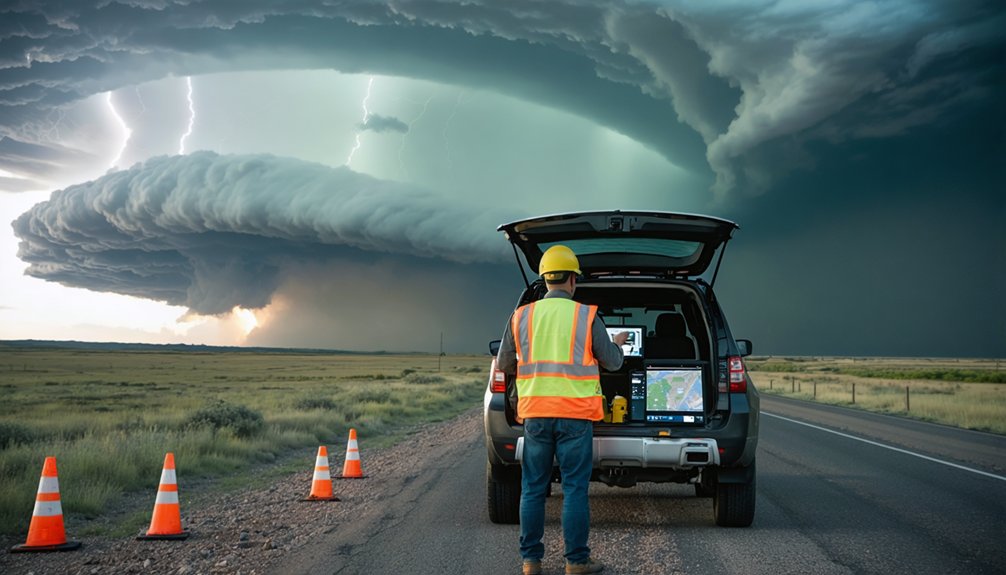
When you treat safety as your primary metric rather than an afterthought, you restructure every chase decision around measurable risk thresholds instead of adrenaline-driven impulses.
You build a risk-aware mindset by anchoring your pre-chase planning to verified forecast data, mapped escape routes, and defined abort criteria before you ever leave your staging area.
Aligning your goals with safety means you’re establishing operational boundaries in advance, so that when conditions deteriorate rapidly, your decisions follow protocol rather than emotion.
Prioritizing Safety Over Thrills
Although thrill-seeking draws many people into storm chasing, research and incident data consistently show that chasers who treat safety as a core objective—rather than a secondary constraint—experience markedly fewer close calls and accidents.
Your decision making frameworks must integrate ethical considerations before excitement ever factors in. Storm awareness isn’t optional—it’s foundational.
Embed these chaser responsibilities into every expedition:
- Conduct thorough risk assessment before deployment, identifying escape routes and debris entrapment zones.
- Apply established safety protocols during real-time positioning to maintain thrill balance without compromising margins.
- Evaluate community impact by recognizing that reckless behavior damages chasing credibility collectively.
You’re free to pursue storms passionately, but freedom without accountability creates preventable casualties.
Prioritizing safety transforms chasing from impulsive spectacle into disciplined, data-driven practice.
Building Risk-Aware Mindsets
Building a risk-aware mindset requires more than memorizing safety checklists—it demands restructuring how you cognitively prioritize threats during high-stimulus environments. Your risk perception must become automatic, not reactive.
Deliberate education emphasis through meteorology coursework and Skywarn certification sharpens your decision making strategies before you’re ever in the field.
Ethical considerations aren’t abstract—they’re operational. You’re responsible for your vehicle, your team, and surrounding communities. That’s community responsibility made concrete.
Mental preparedness means pre-visualizing escape routes, recognizing task saturation triggers, and establishing personal thresholds you won’t compromise under pressure.
Environmental respect reinforces disciplined positioning decisions, keeping you from ecologically sensitive zones and unnecessary exposure.
Integrating safety protocols into your core motivation—not as constraints, but as values—transforms how you chase fundamentally and permanently.
Aligning Goals With Safety
Safety becomes your primary chase objective only when you structurally embed it into every operational decision—not as a checkpoint you clear before pursuing data, but as the metric by which you evaluate every positioning choice, route adjustment, and proximity call.
Motivation clarity separates ethical guidelines from performance pressure. Align your decision making processes around three measurable priorities:
- Risk assessment before deployment — evaluate storm behavior patterns, escape corridors, and road networks systematically.
- Situational awareness maintenance — continuously monitor atmospheric shifts, never sacrificing personal accountability for proximity gains.
- Community responsibility integration — your safety protocols directly influence newer chasers observing your conduct.
Training benefits compound when you’ve internalized that freedom in this pursuit isn’t recklessness—it’s disciplined autonomy earned through competence.
Safety-centered goals don’t restrict your chase; they sustain it.
What Experienced Chasers Teach You About Why You’re Really Out There
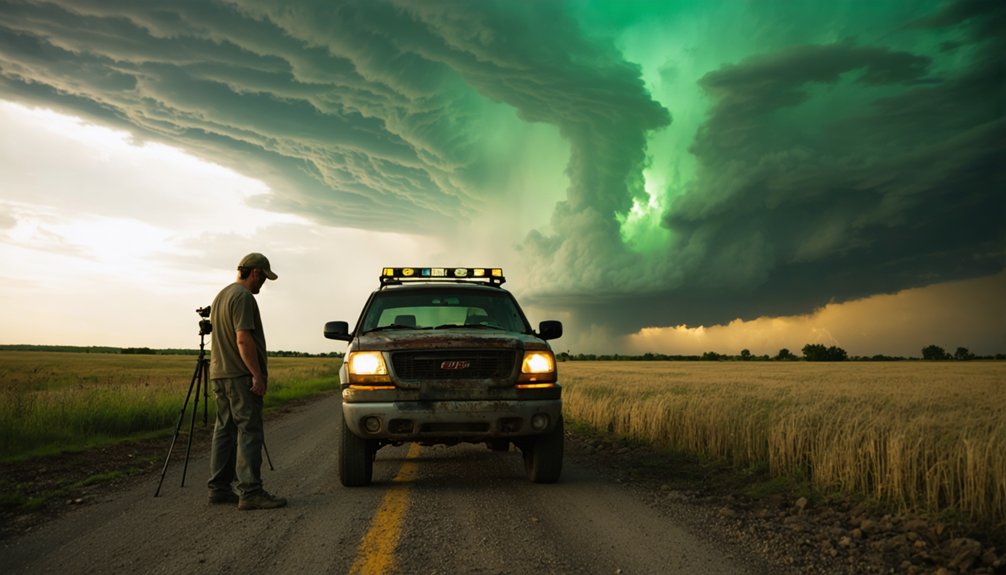
Motivation shapes every decision you make in the field, and experienced chasers are direct about this: if you can’t articulate *why* you’re out there beyond the thrill, you’re a liability to yourself and others.
Emotional motivations cloud decision making ethics and distort risk awareness. Seasoned chasers emphasize personal accountability through practical training, community engagement, and honest self-examination.
They’ll tell you that chaser responsibility extends beyond your vehicle — it includes environmental impact, bystander safety, and safety advocacy within the broader community. Ethical considerations aren’t abstract; they’re operational.
When your motivations align with data-driven objectives rather than adrenaline, your situational awareness sharpens, your positioning improves, and your escape decisions become clearer.
Experienced mentors don’t just teach technique — they teach you to interrogate your own presence in the field.
Which Storm Chasing Motivations Create the Most Dangerous Decisions
Not all motivations carry equal risk — research and community data consistently show that certain psychological drivers produce measurably worse field decisions.
Motivation analysis reveals that chasing psychology rooted in thrill seeking behavior systematically compromises safety prioritization, distorting your risk assessment and ethical considerations.
Decision making dynamics deteriorate fastest under these three motivation patterns:
- Ego-driven documentation — prioritizing viral content over positioning safety, increasing community impact through reckless behavior modeling
- Adrenaline dependency — thrill seeking behavior that overrides rational proximity judgments, elevating personal and environmental impact
- Competitive positioning — racing other chasers for superior angles, creating convoy hazards and compromised escape corridor awareness
You can’t simultaneously chase freedom and ignore the data.
Recognizing your actual motivation framework is your most precise safety instrument.
The Self-Assessment Questions Every Chaser Should Answer Before Deploying
Before you deploy, honest self-assessment functions as your most reliable pre-mission instrument — research on human factors in high-risk recreation consistently demonstrates that decision errors originate upstream from field conditions, embedded instead in the psychological state you bring to the chase.
Apply these self reflection prompts systematically:
Are you emotionally regulated, or are external pressures distorting your risk tolerance?
Emotional dysregulation silently inflates risk tolerance — before you chase the storm, audit the psychological weather you’re already carrying.
Can you articulate a clear escape route for your target area?
Are your ethical considerations genuine, or are spectacle-driven motivations overriding safety protocols?
Do you have a dedicated driver, redundant communications, and verified weather data?
Your honest answers determine your actual readiness.
Autonomy in storm chasing demands disciplined self-governance — when you answer these questions truthfully, you preserve both your freedom to chase and your capacity to return safely.
Frequently Asked Questions
How Does Storm Chasing Impact Local Emergency Response Teams During Active Events?
When you chase irresponsibly, you’ll strain emergency coordination by diverting first responders to assist chasers instead of victims. You’re directly compromising community safety when your actions create additional rescue demands during active, resource-critical storm events.
What Legal Liabilities Can Storm Chasers Face When Operating Near Populated Areas?
You’ll face significant legal responsibilities if your actions cause accidents or property damage near populated areas. Liability insurance protects you financially when courts determine negligence, particularly when traffic violations or reckless positioning contribute to documented civilian harm.
How Do Insurance Companies View Storm Chasing as a Recreational or Professional Activity?
Like traversing uncharted skies, you’ll find insurance perceptions of storm chasing are complex. Insurers typically classify it under high recreational risks, potentially excluding coverage or raising premiums considerably when you’re actively pursuing severe weather events professionally or recreationally.
What Mental Health Considerations Affect Long-Term Storm Chasers Over Multiple Seasons?
You’ll develop emotional resilience through repeated high-stress exposures, but cumulative trauma management becomes critical. Multiple seasons intensify psychological strain, requiring structured debriefing, peer support networks, and professional counseling to maintain cognitive sharpness and sound decision-making during active chase operations.
How Do International Storm Chasing Practices Differ From Those in North America?
You’ll find that international storm chasing differs markedly through varying cultural attitudes toward risk tolerance and community-driven safety regulations. Outside North America, you navigate fewer formalized protocols, less infrastructure support, and dramatically different atmospheric environments requiring adaptive, self-governed expedition frameworks.
References
- https://stormtrack.org/threads/storm-chasing-ethics-and-safety.26831/
- https://www.youtube.com/watch?v=nxPSFg2R8YY
- https://www.livingskytours.com/storm-chasing-101/
- https://weather.cod.edu/chasing/assets/documents/safety.pdf
- https://www.foxweather.com/learn/storm-chasing-advice-from-the-pros
- https://www.flame.org/~cdoswell/chasesums/Chase_safety.html
- https://www.youtube.com/watch?v=MogZEEeYISs
- https://www.wiu.edu/SevereWeather/images/presentations/How_to_Effectively_Storm_Chase.pdf