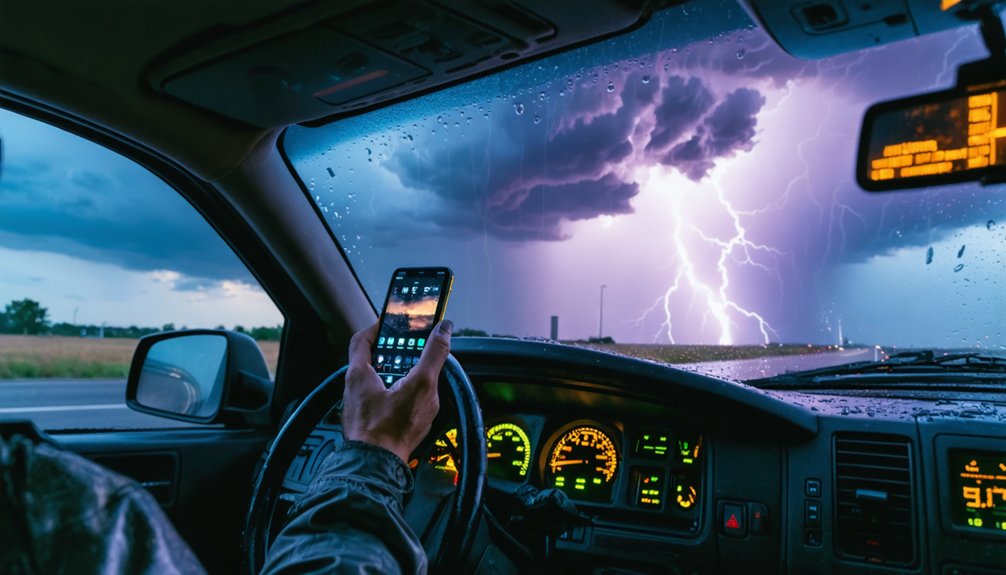
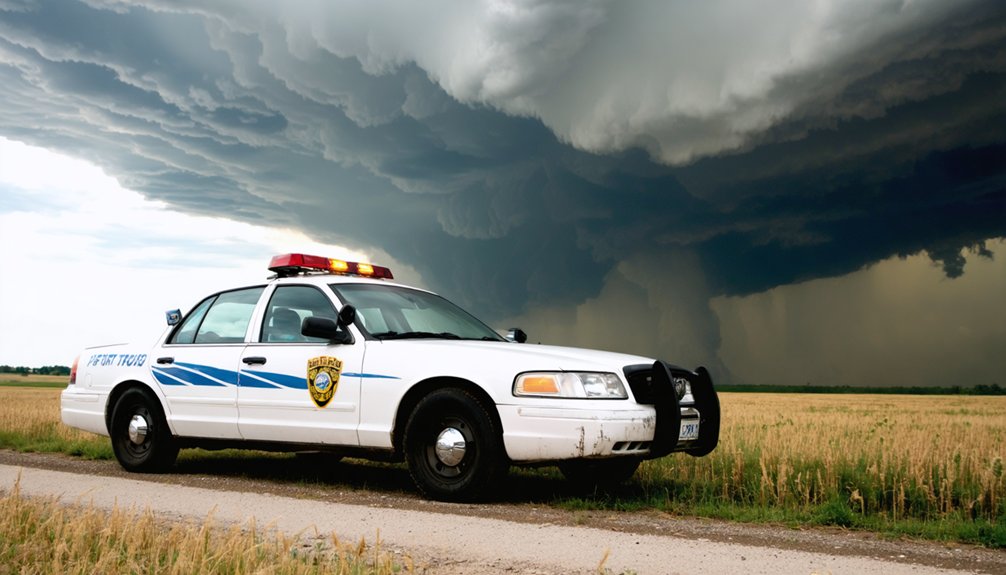
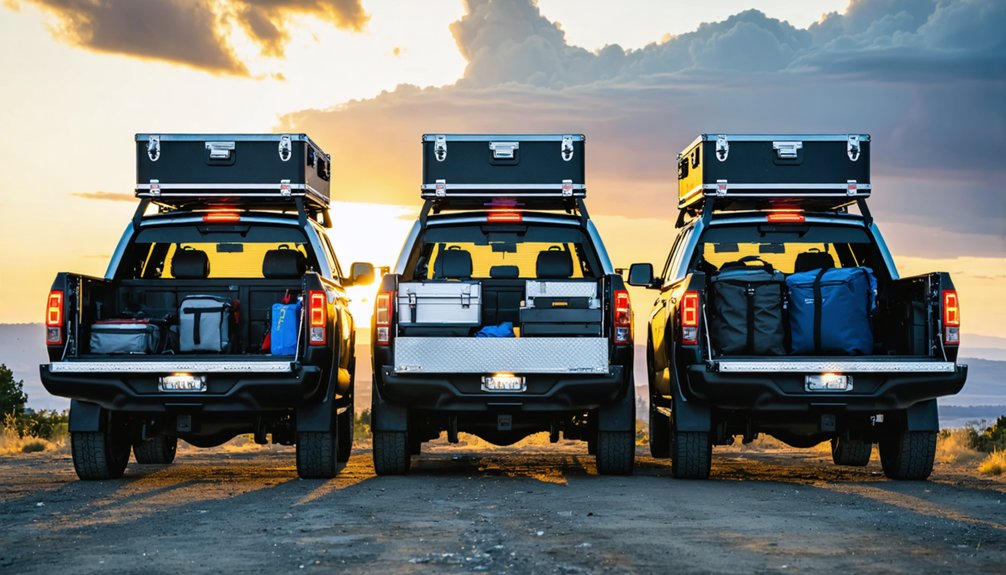
You’ll need reinforced multi-layered steel chassis construction with 6×6 drivetrain conversions providing superior traction through three axles and ten wheels. Critical protection comes from 1.63-inch bullet-resistant polycarbonate windows, Kevlar-steel composite armor, and run-flat tires enabling 50-mile escapes. Hydraulic anchoring systems deploy 6-8 inch ground-penetrating spikes while air dump valves create stable observation platforms. Your powertrain requires 400-625 horsepower turbodiesel engines with 92-gallon fuel capacity. Essential instrumentation includes GPS-corrected anemometers, real-time radar streaming, and multi-camera arrays with data overlay capabilities that transform your vehicle into a mobile meteorological laboratory.
Key Takeaways
- Reinforced multi-layered chassis with 6×6 drive systems provide superior traction and structural protection against extreme weather impacts.
- Advanced armor combining steel, Kevlar, and bullet-resistant polycarbonate shields occupants from flying debris and hail damage.
- High-performance turbodiesel engines delivering 400-625 horsepower enable rapid tornado intercepts and sustained high-speed pursuits.
- Hydraulic anchoring systems with ground-penetrating spikes stabilize vehicles in severe winds for safe scientific measurements.
- Comprehensive weather monitoring equipment including anemometers, radar systems, and multi-camera arrays capture real-time storm data.
Reinforced Chassis and Drive Systems Built for Extreme Conditions
Storm chasing vehicles demand chassis reinforcement far beyond conventional truck specifications, with the Tornado Intercept Vehicle (TIV) series exemplifying this engineering challenge through multi-layered steel construction. You’ll find 1/8-inch steel skin welded over 2-inch square tubing frames, with 1/4-inch plate reinforcement protecting crucial structural zones.
Multi axle configurations transform standard platforms into formidable tornado interceptors—TIV 2’s 6×6 conversion delivers superior traction through three axles and ten wheels. Weight saving modifications prove essential when strengthening chassis; engineers reduced TIV 2 from 16,500 to 14,300 pounds by converting steel to aluminum in non-critical areas while maintaining pivotal protection.
Modified 6.7-liter Cummins turbo diesels generate 625 horsepower, providing the power-to-weight ratio necessary for positioning within severe weather phenomena.
Advanced Armor Protection Against Flying Debris and Severe Weather
Armor engineering transforms reinforced chassis into survivable platforms through multi-layered defensive systems that withstand projectile impacts at velocities exceeding 200 mph. You’ll find composite configurations combining 1/8-inch steel plating, Kevlar, polycarbonate, and rubber layers that defeat tornado-borne debris like 2×4 lumber traveling at lethal speeds.
Bullet-resistant polycarbonate windows measuring 1.63 inches thick provide improved driver visibility while maintaining structural integrity against 250 mph EF5 winds. Strategic steel-to-aluminum conversions reduce operational weight from 17,000 to 14,000 pounds without compromising protection zones.
Hydraulic skirts shield vulnerable undercarriages, while run-flat tires enable 50-mile escape distances post-puncture. These integrated systems deliver thermal insulation capabilities alongside debris resistance, creating autonomous platforms that maintain crew safety during extreme weather intercepts where conventional vehicles fail catastrophically.
Hydraulic Anchoring Technology for Maximum Stability
When tornado intercepts demand stationary positioning within 250+ mph wind fields, hydraulic anchoring systems deploy ground-penetrating spikes that transform mobile platforms into fixed observation posts. You’ll activate the hydraulic pump through safety-switched controls, extending spikes 6-8 inches into asphalt or several feet into soil before vortex contact.
The sequence begins with air dump valves deflating suspension airbags, lowering your 11,000-pound vehicle flush to ground level while blocking airflow beneath the chassis. This integration enables tornado interception capabilities that’ve recorded pressure drops exceeding 100 millibars—data previously unattainable from external positions.
Combined with sensor and telemetry integration, these hydraulic anchors permit ground-level measurements inside EF5-rated systems, functioning across muddy post-rainfall terrain where traditional observation methods fail. You’re deploying technology that’s fundamentally expanded atmospheric science’s experimental boundaries.
High-Performance Engines and Power Generation Systems
Since tornado intercept missions require sustained high-speed pursuits across unpredictable terrain while powering extensive instrumentation arrays, storm chasing vehicles rely on heavily modified turbodiesel powerplants that balance raw horsepower with operational endurance. TIV2’s 6.7-liter Cummins engine incorporates turbocharging modifications including propane and water injection, delivering 625 horsepower while maintaining diesel fuel efficiency across 750 miles from its 92-gallon capacity.
You’ll find Dominator 3 employs the same 6.7-liter turbodiesel producing 400 horsepower through a six-speed automatic transmission with 4-wheel drive integration. These configurations push 14,300-pound armored platforms beyond 100 mph while simultaneously generating auxiliary power for weather stations, radar arrays, humidity sensors, and probe deployment systems. Heavy-duty alternators sustain electrical demands during multi-day operations, eliminating refueling constraints that compromise intercept opportunities.
Comprehensive Weather Monitoring and Camera Equipment
Beyond propulsion capabilities, storm chasing vehicles integrate multi-layered meteorological instrumentation that transforms mobile platforms into detailed field laboratories capable of documenting atmospheric phenomena with scientific precision.
You’ll mount AcuRite Atlas™ stations recording wind speeds exceeding 100 km/hr and rain intensity reaching 46 mm/hr, while vehicle-mounted RM Young 5103 anemometers collect GPS-corrected wind data at one-second intervals.
Kestrel handheld meters provide waterproof, drop-tested readings for immediate field verification. Baron Mobile Threat Net and RadarScope Pro enable real-time streaming capabilities through integrated radar systems, while portable lightning detectors identify approaching electrical activity.
Multi-camera configurations—including Frontline Live&Drive™ systems with bubble cameras and SIRUI anamorphic lenses—capture ultra-wide documentation with data storage and analysis through SD card overlays, giving you unrestricted pursuit capabilities backed by empirical measurement precision.
Frequently Asked Questions
What Is the Typical Cost to Build or Purchase a Storm Chasing Vehicle?
You’ll spend $35,000-$750,000 depending on your budget considerations and vehicle customization options. Standard builds start around $35,000, while heavily armored intercept platforms with specialized meteorological equipment reach $750,000 for maximum operational capability.
Do Storm Chasers Need Special Insurance for Their Modified Vehicles?
Verily, you’ll need extensive insurance coverage requirements meeting vehicle modification regulations. Standard policies won’t cover storm-chasing modifications like reinforced windshields or data equipment. You’re free to chase, but specialized coverage protects your investment against deliberate storm exposure risks.
How Much Maintenance Do Hydraulic Anchoring Systems Require Annually?
You’ll need annual fluid replacement, biannual oil analysis, and monthly filter inspections. Regular maintenance checks every six weeks cover hoses, cylinders, and strainers, while proper lubrication procedures and seal integrity monitoring guarantee ideal hydraulic anchor performance year-round.
Can Civilian Storm Chasers Legally Use Sirens to Warn the Public?
No, you can’t legally use sirens on public roads as a civilian storm chaser. Public safety regulations restrict emergency sirens to authorized vehicles, though proposed licensing could grant storm warning protocols privileges to certified chasers with proper training.
What Fuel Type Provides the Best Range for Extended Storm Chases?
Diesel fuel absolutely dominates extended chase operations, delivering unmatched fuel economy of 13-14 MPG with 750-mile range capability. You’ll maximize your independence with superior off-road capability while maintaining continuous pursuit freedom across multiple states without refueling constraints.