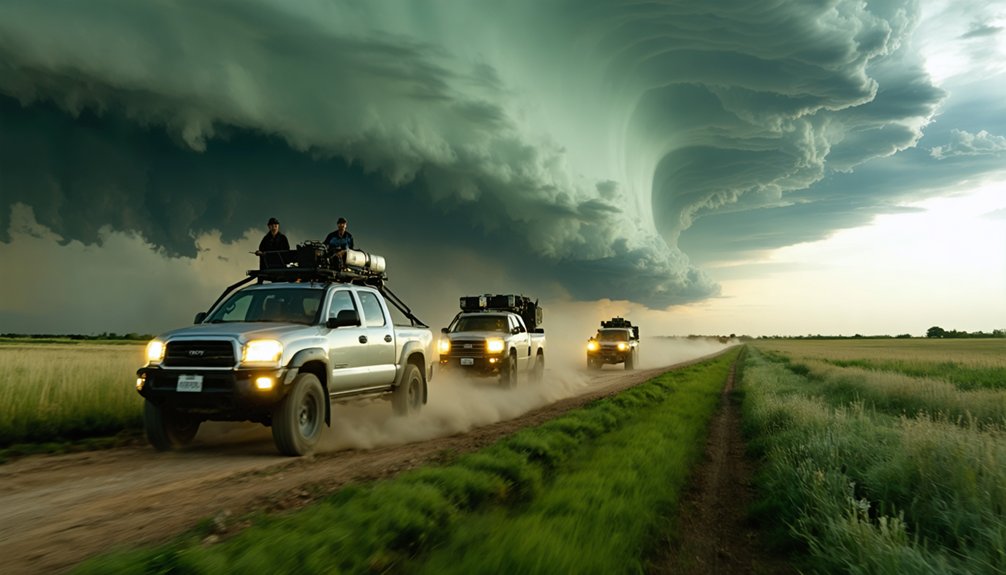
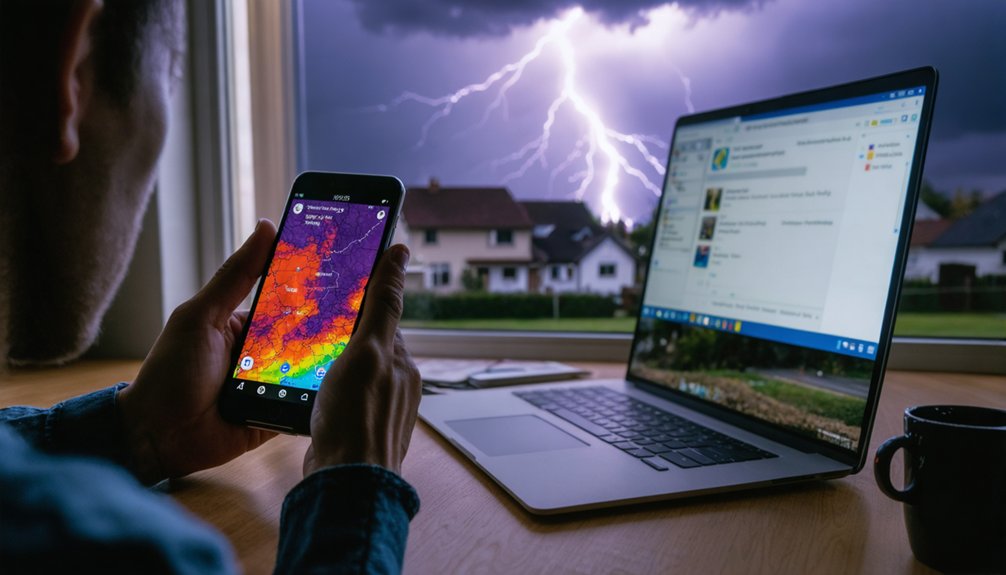
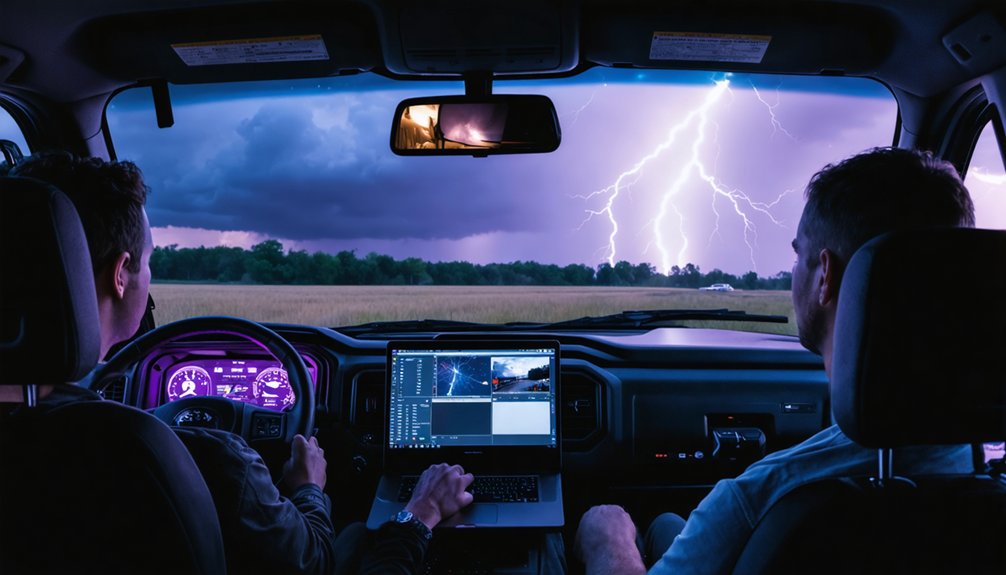
If you’re chasing tornadoes across Tornado Alley, your top guided options include Tempest Tours, Silver Lining Tours, Extreme Tornado Tours, StormTours, and Tornadic Expeditions. Most depart from Oklahoma City or Denver, run five to eleven days, and operate between April and June when supercell activity peaks across Oklahoma, Kansas, and Colorado. Guides are typically degreed meteorologists with documented field credentials. Each company differs considerably in safety standards, group size, and specialization — and those differences matter more than you’d expect.
Key Takeaways
- Tempest Tours and Silver Lining Tours operate from both Oklahoma City and Denver, making them accessible across multiple storm-prone regions.
- Top companies include Tempest Tours, Silver Lining Tours, Extreme Tornado Tours, StormTours, and Tornadic Expeditions, each offering unique chasing experiences.
- Tours typically run five to eleven days, with peak storm chasing activity occurring April through June in Oklahoma, Kansas, and Colorado.
- Reputable storm chasing guides hold meteorology degrees or NWS certifications, with documented field experience and rigorous vehicle safety protocols.
- Book early, as small-group tours fill quickly; verify guide credentials, vehicle safety standards, and cancellation policies before reserving your slot.
Top Storm Chasing Tour Companies Operating in Tornado Alley
Several storm chasing tour companies operate across Tornado Alley, each offering distinct experiences for thrill-seekers and weather enthusiasts. You’ll find options ranging from five to eleven-day tours departing from Oklahoma City and Denver between March and August.
Key operators include Tempest Tours, founded in 2000, deploying heavy-duty vans with annual tornado safety protocols.
Silver Lining Tours is ideal if storm photography drives your interest, co-led by professional videographer Roger Hill.
ExtremeTornadoTours, established in 2008, fields degreed meteorologists and has logged hundreds of documented tornadoes.
StormTours has operated since at least 1999, emphasizing small-group professional guidance.
Tornadic Expeditions specializes in private, personalized tours with 2026-2027 bookings available.
All companies prioritize veteran guides, education, and safety across Kansas, Oklahoma, and Colorado corridors.
Storm Chasing Tours Leaving From Oklahoma City, Denver, and Beyond
Beyond knowing which companies operate in Tornado Alley, your tour’s departure city shapes your access to storm systems and overall chase range. Oklahoma City positions you centrally within peak tornado corridors, while Denver extends your westward reach into Colorado and Wyoming storm tracks.
TempestTours and Silver Lining Tours both launch from Oklahoma City and Denver, maximizing your flexibility across two distinct atmospheric zones. This dual-hub approach considerably broadens your storm chasing experiences, letting you intercept weather systems developing across a wider geographic footprint.
If tornado photography drives your trip, Silver Lining Tours’ Oklahoma City and Denver departures cater specifically to visual documentation.
TempestTours mirrors this structure with five-to-eleven-day windows running March through August, ensuring you’re positioned where atmospheric conditions statistically favor supercell development and active tornado corridors.
What Makes a Storm Chasing Guide Actually Qualified?
When vetting a storm chasing guide, credentials and field hours matter more than marketing language. You’re trusting someone with your safety inside active storm cells, so demand verifiable qualifications before booking.
Look for these three indicators of legitimate guide experience:
- Meteorological expertise — Degreed meteorologists or NWS-certified professionals demonstrate structured weather prediction training, not just hobbyist familiarity.
- Documented safety training — Annual protocols, vehicle specifications, and emergency procedures signal operational discipline under pressure.
- Measurable field history — Logged tornado sightings, combined team experience exceeding decades, and tour customization flexibility reflect real operational depth.
Strong guest interaction separates elite guides from adequate ones.
You’ll want a guide who translates complex atmospheric data into real-time, accessible decisions — keeping you informed, mobile, and positioned effectively throughout the chase.
How Top Storm Chasing Companies Handle Certification and Vehicle Safety
When you’re evaluating storm chasing companies, certification standards and vehicle safety protocols are two of the clearest indicators of operational quality.
Tempest Tours, for example, runs annual safety training for its guides and transports guests in heavy-duty vans built for 6-7 passengers, setting a measurable benchmark for the industry.
You’ll find that companies prioritizing these standards—degreed meteorologists, NWS-certified staff, and purpose-built vehicles—consistently deliver safer, more credible experiences than those without verifiable credentials.
Guide Certification Standards
Safety standards and certification practices vary across storm chasing tour companies, but the industry’s leading operators share a common emphasis on meteorological credentials and vehicle preparedness.
Guideline compliance separates amateur outfits from proven professionals, making certification importance undeniable when you’re selecting a tour operator.
Top-tier companies demonstrate credibility through:
- Meteorological credentials – Tempest Tours fields a climatologist and NWS meteorologist, giving you data-driven forecasting you can trust.
- Annual safety training – Tempest Tours conducts yearly vehicle and protocol drills, ensuring heavy-duty vans carrying 6-7 passengers meet rigorous standards.
- Decades of combined field experience – Extreme Tornado Tours boasts 50+ combined years, while Tempest Tours claims 200+ years of team experience chasing verified severe weather events.
You gain freedom knowing certified experts navigate the storm, not guesswork.
Vehicle Safety Protocols
When you’re booking a tour, you’ll want to confirm that your operator integrates systematic vehicle maintenance schedules, emergency protocols, and redundant communication systems into their tour logistics.
Tempest Tours deploys these standards across routes originating from Oklahoma City and Denver. Effective route planning accounts for rapidly shifting supercell trajectories, requiring drivers with specialized driving training.
You should also verify that safety equipment—including weather preparedness kits—meets field-tested standards. Companies operating since the late 1990s have refined these systems through hundreds of documented chases, giving you measurable confidence before you commit to a five-to-eleven-day expedition.
What Is a Storm Chasing Tour Group?
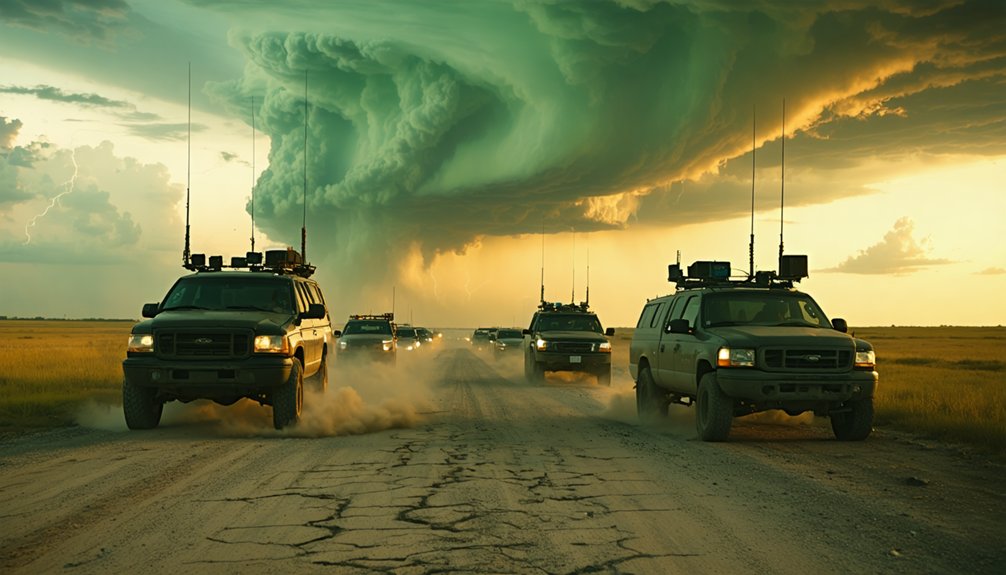
When you join a storm chasing tour group, you’re paying for access to professional meteorologists and veteran guides who track and intercept live severe weather events across the midwestern USA.
These companies operate five to ten-day excursions targeting tornadoes, supercells, hail, and lightning, deploying safety-rated vehicles and trained personnel to put you within viewing range of extreme atmospheric phenomena.
You gain the benefit of expert forecasting, real-time data analysis, and field experience that would otherwise take years to develop independently.
Guided Weather Adventure Tours
Storm chasing tour groups are guided meteorological expeditions that take paying guests into active severe weather environments across the midwestern United States.
You’ll chase dynamic weather phenomena alongside veteran meteorologists who track real-time atmospheric data. Tour itineraries typically span five to eleven days, targeting:
- Rotating supercells producing wall clouds with winds exceeding 100 mph
- Violent tornadoes tearing across open Oklahoma and Kansas plains
- Dramatic lightning storms illuminating vast, darkened prairie skies
Companies like TempestTours and ExtremeTornadoTours deploy heavy-duty vehicles carrying small groups of six to seven passengers.
You’re not watching from a distance — you’re positioned strategically within striking range of nature’s most powerful atmospheric events, guided by professionals logging hundreds of documented tornado intercepts annually.
Chasing Storms Professionally
Though the term gets thrown around casually, a storm chasing tour group is a commercially operated expedition company staffed by credentialed meteorologists and veteran field guides who intercept active severe weather systems for paying guests.
These organizations deploy refined storm chasing techniques, including real-time radar analysis, mesoscale convective assessment, and mobile positioning strategies to place you inside striking distance of tornadoes, supercells, and significant hail events.
You’re not a passive observer — you’re embedded within a structured operational framework. Professional storm observation strategies dictate route selection, intercept timing, and safety protocols, giving you unfiltered access to extreme atmospheric events without reckless exposure.
Tours typically run five to eleven days across Oklahoma, Kansas, and Colorado, targeting peak severe weather season from March through August.
Safety And Expert Knowledge
Safety isn’t incidental to these operations — it’s architecturally embedded in how every tour runs. You’re not riding alongside enthusiasts; you’re positioned with credentialed professionals who’ve logged decades interpreting atmospheric data.
Their expertise directly shapes your survival odds and experience quality:
- Storm forecasting precision — guides like TempestTours’ NWS meteorologist read radar signatures, wind shear vectors, and mesocyclone rotation in real time, repositioning vehicles before conditions escalate.
- Weather education integration — you’ll understand what you’re witnessing, from supercell structure to tornado genesis, transforming raw spectacle into comprehensible science.
- Annual safety training protocols — TempestTours mandates structured safety drills, ensuring every passenger knows exact evacuation procedures.
You retain freedom to experience extreme weather because trained professionals continuously manage the variables you can’t see coming.
How Long Are Storm Chasing Tours and When Do They Run?
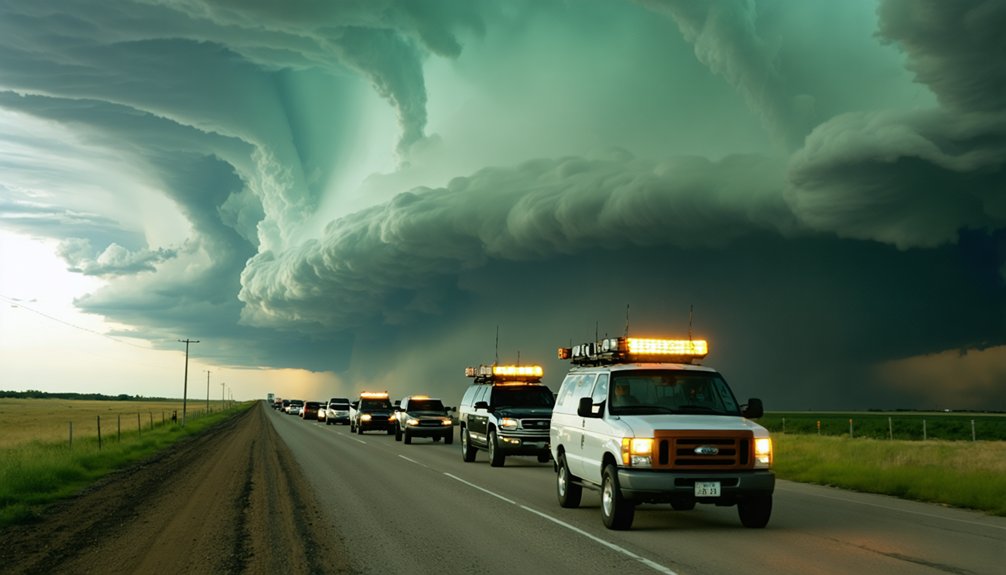
Most storm chasing tours run five to eleven days, operating primarily between March and August across the midwestern United States.
You’ll find peak activity concentrated in April through June, when atmospheric conditions optimize tornado formation across Oklahoma, Kansas, and Colorado.
Companies like TempestTours and Silver Lining Tours launch expeditions from Oklahoma City and Denver, giving you flexible entry points into Tornado Alley.
TempestTours and Silver Lining Tours depart from Oklahoma City and Denver, placing you directly inside Tornado Alley.
ExtremeTornadoTours runs five, seven, and ten-day options, letting you choose commitment levels that fit your schedule.
Storm chasing techniques and weather prediction tools dictate tour timing, as guides track developing supercells in real time.
You’re not locked into rigid itineraries — routes shift dynamically based on unfolding meteorological data, maximizing your exposure to tornadoes, hail, and lightning events throughout the season.
Which Storm Chasing Tour Is Best for Photographers and Videographers?
If you’re a photographer or videographer, Silver Lining Tours stands out as the definitive choice — it’s specifically geared toward visual documentation of storm events, co-run by professional videographer Roger Hill.
You’ll chase from Oklahoma City or Denver on five to eleven-day tours designed around capturing nature’s most violent displays.
Silver Lining Tours enhances your experience through:
- Strategic positioning — guides place you within ideal range for photography techniques like long exposure and telephoto compression shots.
- Videography equipment compatibility — tours accommodate professional rigs, stabilizers, and broadcast-grade cameras.
- Target-rich environments — supercells, tornadoes, and lightning strikes become your primary subjects.
You’re not just chasing storms — you’re documenting them with professional-level precision and creative freedom.
Private vs. Group Storm Chasing Tours: Which Fits You?
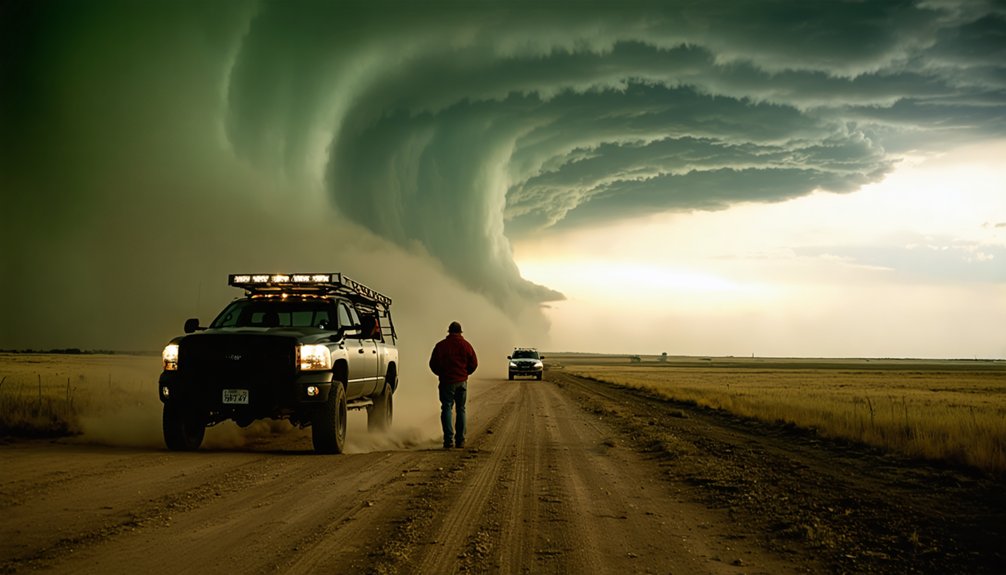
Whether you thrive in a shared environment or demand personalized attention shapes which tour structure delivers the most value.
Group dynamics reduce costs markedly, with standard tour itineraries distributed across six to seven passengers per van. Social interactions enhance learning, while expert insights flow naturally through shared observation. Safety considerations remain consistent across both formats, with annual training protocols maintained regardless of group size.
Private experiences, like those offered by Tornadic Expeditions, deliver maximum tour flexibility and customized booking processes aligned with your personal preferences.
You’ll control pacing, targets, and scheduling without compromise. However, cost comparisons reveal private tours carry considerably higher price points. If autonomy defines your ideal chase experience, private tours justify the premium.
If community and cost efficiency matter more, structured group tours deliver exceptional value.
Daily Schedules, Gear, and What Storm Chasing Actually Feels Like
On a typical chase day, you’ll wake early to analyze synoptic charts, surface observations, and mesoscale discussions before your guide plots a target zone within a 200–400 mile drive radius.
Your gear load-out matters: a laptop running GR2Analyst or Baron Threat Net, a portable weather radio, polarized optics, and a DSLR with a wide-angle lens keep you operationally ready when a supercell rapidly organizes.
Once in the field, you’ll reposition every few minutes based on storm motion vectors, often sitting just one to three miles from a rotating wall cloud while your meteorologist guides reads the inflow and updraft structure in real time.
Storm Chaser Daily Routines
Storm chasing tours run on a fluid but structured daily rhythm built around atmospheric data.
You’ll wake early, reviewing overnight model runs before breakfast. Guides apply advanced storm chasing techniques using weather tracking tools like RAP models, SPC outlooks, and mobile radar apps to pinpoint your intercept target.
Your day typically unfolds across three critical phases:
- Morning briefing — Analyze convective parameters, wind shear profiles, and instability indices to select the target zone.
- Deployment — Drive hundreds of miles repositioning dynamically as supercells mature and shift tracks.
- Intercept — Position within visual range of wall clouds, mesocyclones, or tornadoes while maintaining escape routes.
You’re not a passive passenger.
You’re reading real atmospheric science as it executes itself across the open plains.
Essential Gear Breakdown
Packing for a storm chase tour demands the same analytical precision you apply to reading a skew-T diagram. Your storm gear loadout directly determines your operational effectiveness.
Essential equipment includes a quality weather radio, laptop running RadarScope or GR2Analyst, and a reliable GPS unit. Layer your safety supplies strategically: helmets, impact-resistant eyewear, and a stocked first aid kit aren’t optional redundancies — they’re field necessities.
Weather tools like portable anemometers and barometers sharpen your situational awareness beyond what mobile apps deliver. If you’re running photography gear, prioritize wide-angle lenses, fast shutter speeds, and weather-sealed bodies.
Communication devices — satellite messengers and ham radios — keep you connected when cell towers fail. Personal items should include hydration systems, high-calorie provisions, and moisture-wicking layers.
Pack deliberately; every ounce serves a purpose.
The Real Chasing Experience
Each day on a storm chase tour runs on a tight operational rhythm that balances meteorological analysis with rapid field deployment.
You’ll absorb severe weather education through live briefings, real-time radar interpretation, and atmospheric data analysis before wheels start rolling.
The storm chasing adrenaline builds progressively through three distinct phases:
- Morning target selection — Teams analyze upper-level winds, dewpoint boundaries, and convective outlooks to pinpoint intercept zones.
- Afternoon intercept — You’re repositioning constantly, reading storm structure, and executing precise escape routes.
- Evening debrief — Raw footage, damage surveys, and meteorological data get reviewed systematically.
You’re not a passive observer here.
You’re tracking mesocyclone rotation, communicating positioning, and making real-time decisions alongside veteran guides who’ve logged hundreds of documented tornadoes.
How to Book a Storm Chasing Tour Near You
Booking a storm chasing tour starts with identifying which company aligns with your geographic location, schedule, and chasing priorities. Most operators base out of Oklahoma City or Denver, running five to eleven-day tours from March through August.
Master your storm chasing logistics early: cross-reference tour dates against peak severe weather windows, typically April through June.
Key booking tips include reserving slots months in advance, as small-group tours fill quickly. Verify guide credentials before committing—look for NWS meteorologists, climatologists, or degreed severe weather specialists.
Confirm vehicle capacity, safety protocols, and cancellation policies upfront. If photography or video documentation matters to you, target operators like Silver Lining Tours.
For private experiences, Tornadic Expeditions offers personalized itineraries with 2026-2027 availability currently open.
Frequently Asked Questions
What Is the Typical Cost or Price Range for Storm Chasing Tours?
The provided knowledge doesn’t specify exact pricing, but you’ll typically invest $1,500–$3,500 for tours. Your costs may include storm chasing gear. Companies prioritize tour safety across five to eleven-day Tornado Alley expeditions.
Are Storm Chasing Tours Physically Demanding or Age-Restricted for Participants?
With 200+ years of combined team experience, storm chasing tours don’t require intense physical fitness or strict age limitations. You’ll spend most time in vans, making these adventures accessible for freedom-seekers of nearly all ages.
Can International Travelers Join Storm Chasing Tours Without Prior Experience?
Yes, you can join storm chasing tours without prior experience! Companies like TempestTours prioritize storm chasing safety with professional guides. Follow international traveler tips: book online, confirm visa requirements, and you’ll chase tornadoes across Tornado Alley confidently.
What Weather Conditions Will Automatically Cancel a Storm Chasing Tour?
Like a navigator reading the stars, no single condition auto-cancels tours. Companies use real-time weather monitoring to assess risks. If storm safety demands it, they’ll redirect you toward safer, still-thrilling alternatives instead.
Do Storm Chasing Companies Offer Refunds for Tours With No Tornado Sightings?
Most companies don’t offer refunds for no tornado sightings, as tour guarantees rarely cover specific weather outcomes. You’ll want to review each company’s refund policies carefully, since nature’s unpredictability remains outside any operator’s control.
References
- https://midlandusa.com/blogs/blog/storm-chasing-tours
- https://www.tempesttours.com
- https://stormchasing.com
- https://www.tornadicexpeditions.com
- https://extremetornadotours.com
- https://www.stormchasingusa.com
- https://www.msamlin.com/news-and-insights/insights/meet-the-tornado-chasers/