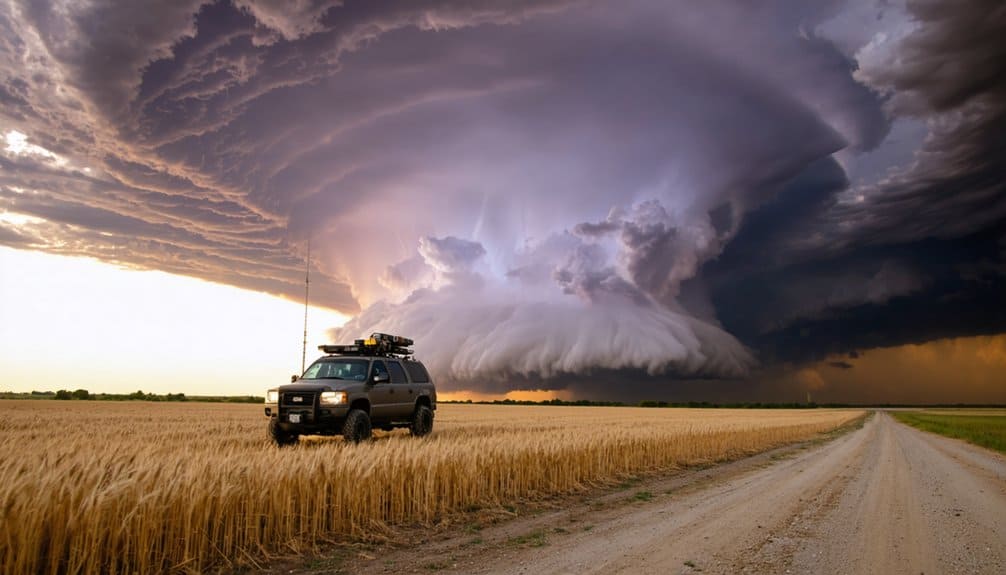
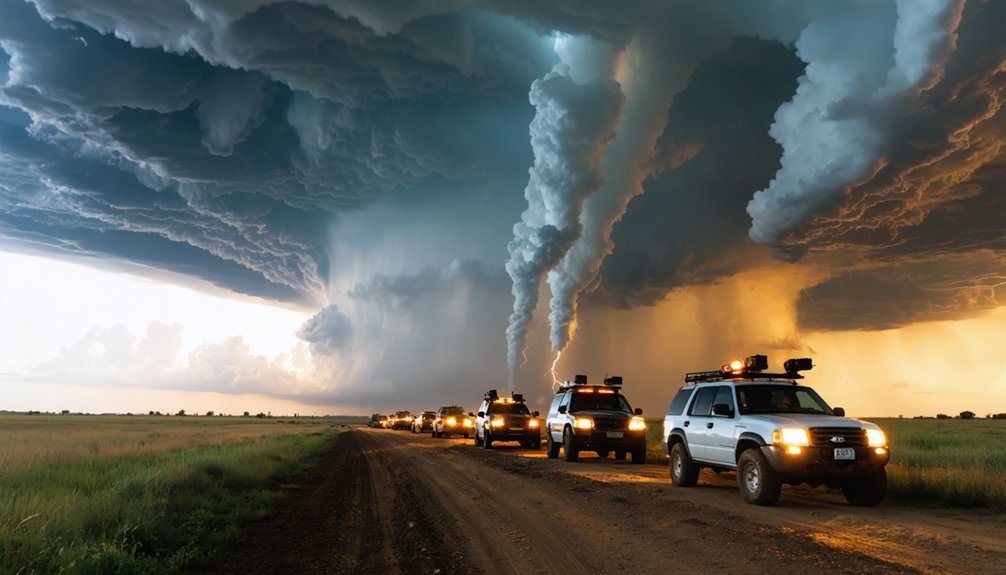
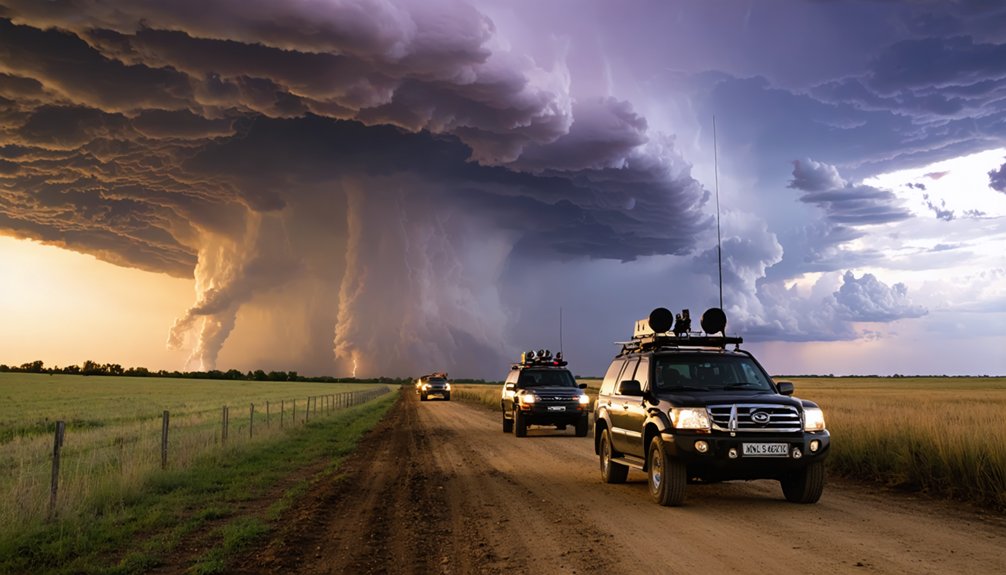
You’ll need three critical elements for safe storm chasing: select tours led by meteorologically trained guides with SKYWARN certification who can interpret atmospheric conditions accurately, guarantee your operator follows strict vehicle safety protocols including avoiding core punching and never sheltering under highway overpasses, and recognize that lightning, hail, and flash flooding statistically pose greater threats than tornadoes themselves. Understanding these fundamentals will prepare you for the thorough safety measures and decision-making frameworks that separate successful storm chasers from those who take unnecessary risks.
Key Takeaways
- Choose tour operators with guides holding atmospheric science degrees and SKYWARN certification for severe weather identification and reporting.
- Ensure the tour company conducts thorough vehicle inspections and follows proper driving protocols, avoiding core punching through heavy precipitation.
- Understand that flash flooding poses the deadliest threat; never attempt to cross flowing water during storm chasing activities.
- Prioritize building-based shelter over highway overpasses when severe weather threatens, and maintain multiple escape routes throughout the tour.
- Recognize that lightning statistically poses greater danger than tornadoes, and hail can shatter windshields causing serious injuries.
Choose Tours With Experienced Meteorologists and Certified Safety Guides
When selecting a storm chasing tour, you’ll want guides who combine academic meteorological expertise with certified safety training. Look for operators employing meteorologists—44.7% of storm chasers hold bachelor’s degrees, with 24.7% possessing master’s credentials in atmospheric sciences. These professionals excel at forecasting tornado-producing thunderstorms using radar scans and satellite imagery.
Verify your guides maintain SKYWARN certification, the industry-standard spotter training covering severe weather identification and reporting. Certified guides demonstrate superb driving skills during high-stress situations while executing data collection protocols that deliver critical information to affected communities. They’re equipped with amateur radio or telephone access for real-time communication procedures, relaying ground-level assessments via toll-free numbers.
This combination of academic knowledge and field certification guarantees you’ll experience nature’s fury safely while contributing meaningful storm data.
Understand Vehicle Safety Protocols and Defensive Driving Standards
Before you venture onto storm-chasing highways, your vehicle becomes your primary survival asset—demanding rigorous preparation that extends beyond routine maintenance checks. Thorough vehicle inspection procedures should assess tire tread depth, windshield integrity against hail impact, and emergency kit readiness before each expedition.
Master hydroplaning avoidance techniques by reducing speed when water splashing becomes audible beneath your chassis, and recognize that puddles parallel to your direction create maximum danger.
Activate headlights during rainfall while maintaining alert distance from congested chase traffic. Never attempt core punching through heavy precipitation shafts—you’ll expose yourself to large hail and tornado strikes. If tornado proximity becomes critical, abandon highway overpasses entirely; their wind-tunneling effect amplifies danger. Prioritize building-based shelter at lowest levels without window exposure instead.
Recognize Natural Hazards Beyond Tornadoes: Lightning, Hail, and Flooding
While tornadoes capture most storm chasers’ attention, the storms producing them generate multiple lethal hazards that’ll strike without warning—and with greater statistical frequency. Lightning kills more people annually than tornadoes, reaching ten miles from rainfall and striking from seemingly clear skies.
You’ll face hail exceeding softball size, capable of shattering windshields and causing traumatic injuries within seconds. Flash flooding presents the deadliest threat—storms dump inches of rain in minutes, transforming dry roads into impassable torrents.
You must prepare for sudden weather changes by maintaining multiple escape routes and positioning vehicles on elevated terrain. Monitor local flood advisories continuously through NOAA weather radio, never attempting to cross flowing water. Six inches of moving water will sweep your vehicle away, ending your chase permanently.
Frequently Asked Questions
What Physical Fitness Level Is Required for Storm Chasing Tours?
You’ll need moderate cardiovascular endurance for long driving days and quick movements during pursuits. Basic core muscle strength helps you handle extended sitting periods and rapid vehicle entries. Most healthy adults can manage these tours with reasonable fitness preparation.
How Far in Advance Should I Book a Storm Chasing Tour?
You should book fixed-duration tours months ahead—they sell out fast during peak season. The ideal booking timeframe depends on tour operator reputation and format. On-call tours require last-minute flexibility, typically confirming just 48 hours before departure.
What Camera Equipment Is Recommended for Capturing Storms Safely?
Like Ansel Adams capturing nature’s drama, you’ll need weather-sealed mirrorless bodies with thoughtful lens selection (ultra-wide 12-24mm plus telephoto 150-600mm), robust camera stabilization systems, and fast apertures for low-light conditions while maintaining safe distances from dangerous storms.
Are Storm Chasing Tours Suitable for Children or Elderly Participants?
Tours suit older teens and healthy adults best. You’ll face safety concerns like long drives and unpredictable weather. Operators require health precautions including medical disclosures and signed waivers. Young children aren’t recommended; elderly participants need good physical endurance.
What Happens if No Tornadoes Occur During My Booked Tour Dates?
You’ll still chase severe warned supercells, witnessing wall clouds, lightning, and dramatic storms. Most operators don’t offer refunds for tornado-free tours since you’re guaranteed expert-guided pursuits, not specific phenomena. Check individual refund policies before booking.