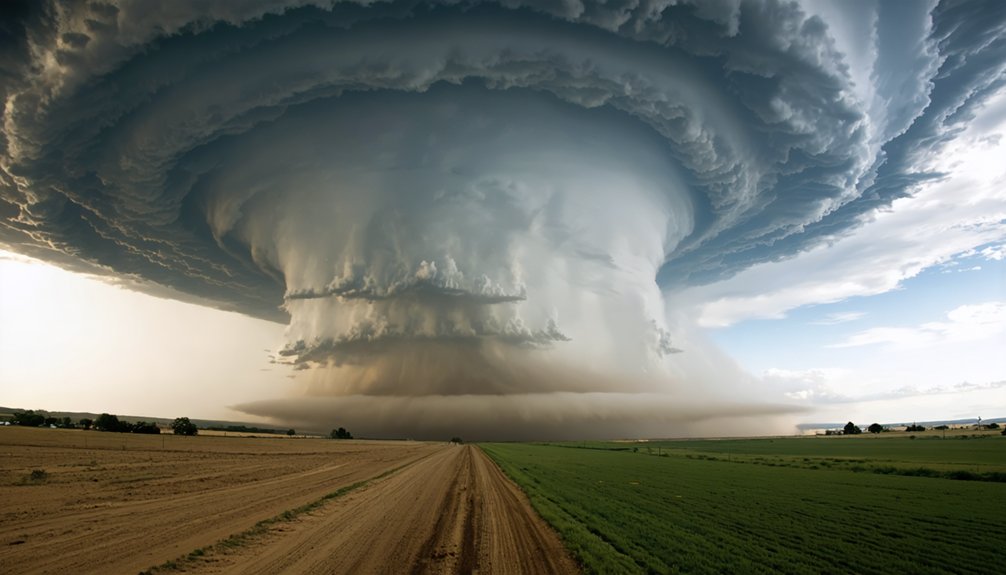
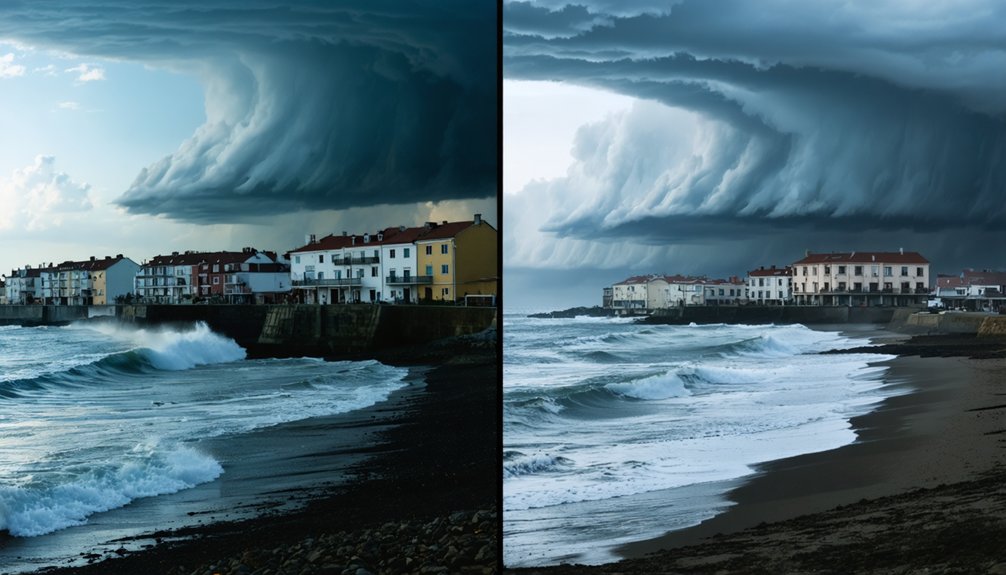
Climate change isn’t just tweaking storm behavior — it’s overhauling it. You’re seeing 84% of hurricanes grow stronger due to human-driven warming, with Category 4 and 5 frequency rising 25-30% per 1°C of warming. Warmer oceans accelerate rapid intensification, while the Clausius-Clapeyron relationship drives 10-15% more precipitation per storm. Rising seas amplify storm surge destruction, and hurricanes are now forming at higher latitudes. The full picture of these interconnected mechanisms runs much deeper.
Key Takeaways
- Warmer oceans intensify hurricanes by enhancing energy transfer, increasing Category 4 and 5 hurricane frequency by 25-30% per 1°C of warming.
- Climate change causes storms to deliver 10-15% more precipitation, driven by the Clausius-Clapeyron relationship increasing atmospheric moisture retention.
- Sea level rise amplifies storm surge impacts, pushing saltwater farther inland and overwhelming aging coastal infrastructure during hurricanes.
- Major hurricane intensity has increased since 1979, with warmer oceans extending storm seasonality and expanding formation to higher latitudes.
- Rapid intensification is more common as deeper warm water layers limit cooler upwelling, concentrating storms’ destructive power significantly.
What Recent Hurricane Seasons Reveal About Climate Change
Recent hurricane seasons offer compelling evidence of climate change’s fingerprint on storm behavior. From 2019-2023, human-driven sea surface temperature increases made 84 percent of hurricanes more powerful than they would’ve otherwise been.
84% of hurricanes grew stronger due to human-driven warming — climate change is already reshaping storm behavior.
In 2024, every single hurricane recorded higher wind speeds because of climate change.
This hurricane unpredictability demands your attention. You’re seeing rapid intensification become more common as warmer ocean waters provide stronger fuel for developing storms.
Category 4 and 5 hurricane frequency rises roughly 25-30 percent per 1°C of warming — a trajectory that threatens your coastal infrastructure, economy, and safety.
Climate adaptation isn’t optional anymore. These data points confirm a measurable shift in storm behavior that requires you to rethink how you prepare, build, and protect what matters most.
How Climate Change Fuels Stronger Hurricane Wind Speeds
As ocean temperatures rise, the thermodynamic engine powering hurricanes becomes markedly more efficient. Warmer seas transfer more energy into storm dynamics, directly amplifying hurricane energy and wind speeds.
Key data points you should understand:
- Every hurricane in 2024 recorded higher wind speeds due to climate change.
- Human-driven warming made 84% of hurricanes from 2019–2023 more powerful than they’d otherwise have been.
- Category 4 and 5 hurricanes increase 25–30% per 1°C of warming.
- Rapid intensification is becoming more common as warmer waters accelerate surface evaporation.
These aren’t projections—they’re observed trends. Warmer oceans don’t just create stronger storms; they’re fundamentally restructuring what “normal” hurricane behavior looks like.
Understanding these mechanics gives you the analytical foundation to assess real, quantifiable risks tied to climate-driven hurricane intensification.
Why Warmer Oceans Drive Hurricane Rapid Intensification
When ocean heat fuels a hurricane’s core, the storm doesn’t just grow—it can explode in intensity within hours. Warming waters have fundamentally altered cyclone behavior, creating conditions where rapid intensification becomes increasingly probable.
Warming oceans don’t just feed hurricanes—they detonate them, turning gradual growth into explosive intensification within hours.
Greenhouse gas emissions drive energy absorption into oceans, directly amplifying storm intensity through accelerated surface evaporation.
You’re witnessing real consequences from these climate feedbacks: oceans retaining excess heat provide hurricanes sustained fuel that drives atmospheric changes throughout the storm’s structure.
Hurricane dynamics shift dramatically when warmer waters extend deeper, preventing cooler water upwelling that would naturally limit intensification.
Ocean temperatures rising even marginally restructure storm patterns in measurable ways. Every 1°C increase correlates with a 25-30 percent rise in Category 4-5 hurricane frequency—data you can’t dismiss when evaluating your vulnerability to these intensifying systems.
How Warmer Air Produces Heavier Hurricane Rainfall and Flooding
As the atmosphere warms, it holds more moisture—a direct consequence of the Clausius-Clapeyron relationship—meaning that when hurricanes make landfall, you’re facing storms loaded with considerably greater water content.
Satellites have already recorded a 4 percent rise in atmospheric water vapor over the last 25 years, and projections indicate storms will deliver 10-15 percent more precipitation as sea temperatures continue climbing.
You can expect this intensified rainfall to translate directly into more severe freshwater flooding events, overwhelming drainage systems and river basins well inland from where a hurricane’s winds pose their greatest threat.
Warmer Air Holds Moisture
Climate change’s influence on hurricane rainfall stems from a fundamental atmospheric principle: warmer air holds more moisture. This moisture retention directly amplifies storm destructiveness.
Here’s what the data shows:
- Atmospheric humidity has increased measurably—satellites recorded a 4% rise in water vapor over the last 25 years.
- Warmer air carries considerably more moisture into storm systems, intensifying precipitation.
- Projections indicate 10-15% more precipitation from storms due to warmer sea temperatures.
- Heavy hurricane rainfall will very likely increase, elevating freshwater flood risks.
You’re looking at a compounding feedback loop: higher temperatures increase atmospheric humidity, which loads storms with more moisture, which triggers heavier rainfall.
The physics don’t negotiate—warmer air simply holds more water vapor, making each storm’s rainfall potential measurably greater.
Rainfall Intensity Projections
Projections make the trajectory clear: tropical cyclones will produce 10-15% more precipitation as sea temperatures continue rising.
You’re looking at a direct climate feedback loop—warmer oceans evaporate more water, that moisture loads into storm systems, and rainfall variability intensifies dramatically. Hurricane-strength storms face the sharpest increases, particularly during extreme precipitation events.
The data reinforces this trajectory. Satellites have already recorded a 4% rise in atmospheric water vapor over 25 years, and that figure keeps climbing.
Studies consistently project significant intensification of cyclone-related rainfall under warming scenarios. Heavy precipitation accompanying hurricanes is very likely to increase, compounding freshwater flood risks far inland.
These aren’t speculative models—they’re analytically grounded projections derived from measurable atmospheric and oceanic changes you can track in real time.
Freshwater Flooding Risks
The mechanics behind those rainfall projections connect directly to freshwater flooding risk. When hurricanes carry 10-15% more precipitation, your community’s drainage infrastructure faces unprecedented stress.
Heavy precipitation accompanying hurricanes will very likely increase, demanding stronger flood preparedness strategies now.
Key freshwater management challenges you’re facing include:
- Overwhelmed storm drainage systems unable to handle surge volumes
- Prolonged inland flooding from slower-moving storms stalling over land
- Contaminated freshwater supplies mixing with floodwaters
- Infrastructure damage compounding recovery timelines and costs
Warmer air holds considerably more moisture, directly translating into deeper, faster flooding events penetrating further inland than historical models predicted.
You can’t rely on outdated flood maps or infrastructure built for yesterday’s storm patterns. Proactive freshwater management planning isn’t optional anymore—it’s your community’s survival strategy.
How Rising Seas Make Hurricane Storm Surges More Destructive
As sea levels rise, hurricane storm surges grow more destructive—and the numbers tell a stark story. Global sea levels have already climbed over half a foot since 1880, with four of those inches occurring since 1993 alone.
These rising sea levels directly amplify storm surge impacts, pushing saltwater farther inland during hurricanes and overwhelming coastal defenses you’d otherwise rely on.
Thermal expansion drives much of this rise, compounding the threat with each degree of warming. Higher baseline water levels mean storms don’t need to be stronger to cause catastrophic flooding—they simply need to arrive.
Coastal communities across Atlantic Canada already face intensifying storm surge impacts, watching hurricanes destroy homes and infrastructure that once stood safely above flood zones. Your margin for error is shrinking.
Are Hurricanes Becoming More Frequent or Just More Intense?
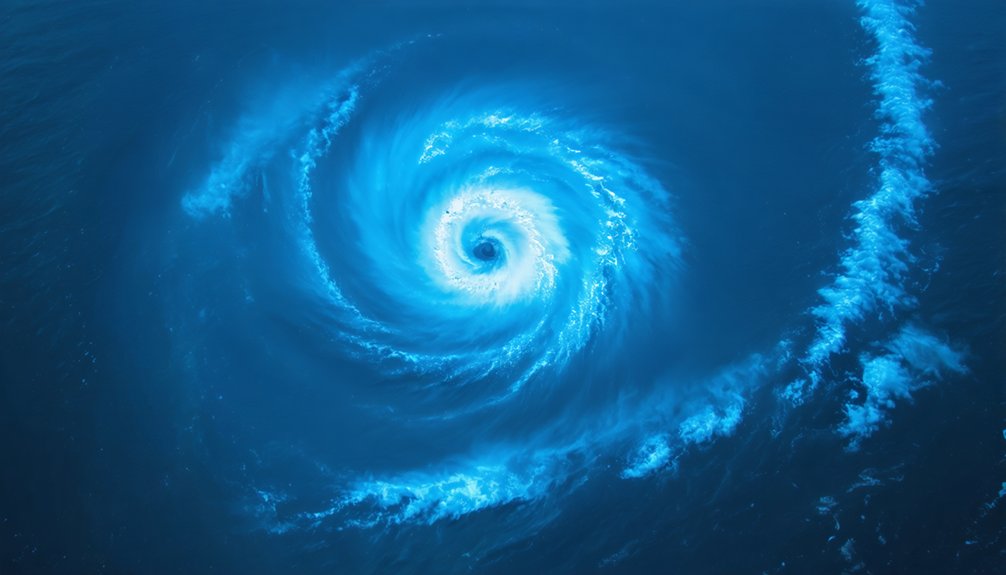
When you examine the data, you’ll find that climate change isn’t simply producing more hurricanes—it’s producing stronger ones.
Over the 39-year period from 1979 to 2017, the total number of smaller hurricanes actually decreased while major hurricanes increased, suggesting a shift in intensity distribution rather than sheer frequency.
Observations indicate a 25-30 percent increase in Category 4 and 5 hurricanes per 1°C of warming, meaning the storms you’re most likely to face today carry considerably more destructive potential than those of previous decades.
Shifting Storm Frequency Trends
While total hurricane counts haven’t surged dramatically, the composition of storms has shifted in a meaningful way.
Hurricane frequency shifts reveal a clear pattern: fewer weak storms, more major ones.
Key trends you should understand:
- Over 1979–2017, major hurricane counts rose while smaller storms declined.
- Warmer oceans extending later into the year are driving storm seasonality changes, expanding windows for storm formation.
- Hurricanes are now forming and intensifying at higher latitudes, pushing dangerous storms toward previously safer coastlines.
- Category 4 and 5 hurricanes increase roughly 25–30 percent per 1°C of warming.
You’re not just seeing more storms—you’re seeing deadlier, better-organized ones forming across broader regions and longer seasons.
That distinction matters enormously when evaluating real risk to communities and infrastructure.
Intensity Over Sheer Numbers
The question isn’t whether hurricanes are becoming more frequent—it’s whether they’re becoming more dangerous.
Data shows that from 1979–2017, major hurricane counts rose while smaller storms declined. That shift in hurricane characteristics signals a critical climate impact: the atmosphere is selecting for intensity.
Warmer seas give storms more energy to work with. You’re seeing a 25–30% increase in Category 4 and 5 hurricanes per 1°C of warming.
Every hurricane in 2024 carried higher wind speeds directly linked to climate change. The mechanism is straightforward—higher sea surface temperatures transfer more thermal energy into developing systems.
You shouldn’t measure storm risk by raw frequency alone. The real threat is concentrated destructive power in fewer, far more dangerous storms.
Major Hurricane Category Increases
Drilling deeper into that intensity shift reveals a striking statistical pattern: observations confirm a 25–30% increase in Category 4 and 5 hurricanes per 1°C of warming.
That’s not a minor statistical blip—it’s a fundamental restructuring of hurricane forecasting models.
What this data tells you:
- Warmer oceans directly fuel stronger storms, not necessarily more storms
- Major hurricanes now carry considerably greater destructive potential per event
- Every 1°C increment compounds risk exponentially for coastal populations
- Climate adaptation strategies must prioritize infrastructure resilience over storm-count metrics
The pattern is clear: you’re facing fewer weak storms and more catastrophic ones.
Understanding this distinction reshapes how communities allocate defense resources.
Protecting your freedom to live and thrive along coastlines demands acknowledging these intensification trends honestly and acting on them decisively.
How Climate Change Is Pushing Hurricanes to Higher Latitudes
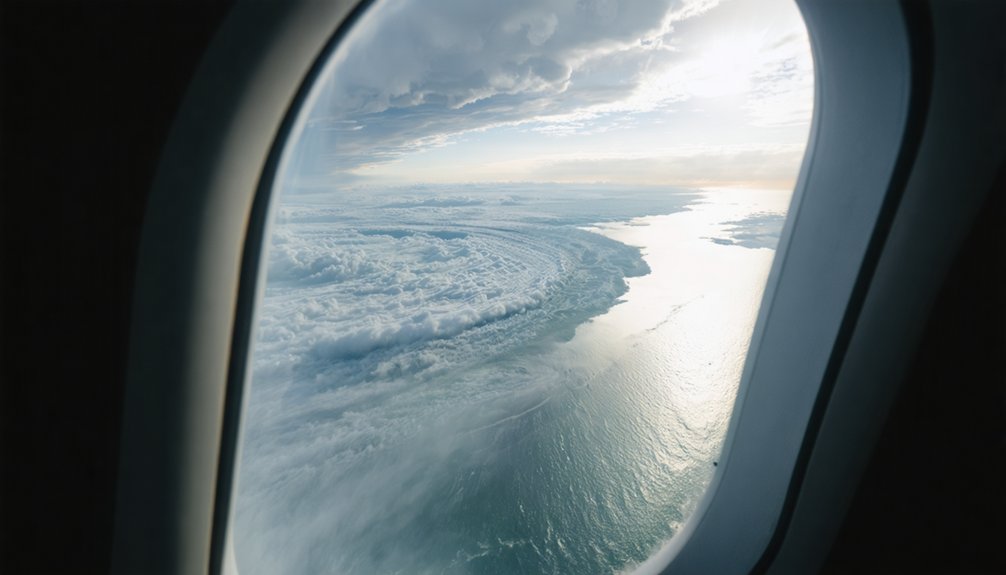
As the climate warms, hurricanes are projected to form and intensify at higher latitudes, increasing the probability that more dangerous storms will reach regions like Atlantic Canada.
These hurricane migration patterns reflect a fundamental shift in atmospheric dynamics—warmer oceans are expanding the zones where tropical cyclones can sustain themselves.
Latitudinal storm shifts mean communities that previously faced minimal hurricane risk now find themselves in the crosshairs.
You’re looking at higher winds, intensified storm surges, and destructive flooding threatening infrastructure that wasn’t built to withstand such forces.
Warmer sea surface temperatures extend the viable formation zones poleward, compressing the margin of safety for northern coastal populations.
Understanding these shifts isn’t academic—it’s essential for making informed decisions about where and how you build, invest, and prepare.
Why Hurricanes Are Slowing Down and Stalling Over Land
Beyond where hurricanes are tracking, there’s another climate-driven shift quietly compounding their destructiveness: they’re slowing down.
Weakening atmospheric currents that control storm motion mean hurricanes linger longer over land, amplifying damage considerably.
Consider what slower storms deliver:
- Extended flooding – North Atlantic storms slowed ~16% over land between 1949 and 2016
- Prolonged wind exposure – communities endure destructive winds far longer
- Compounded storm surge – stalling extends coastal inundation windows dramatically
- Intensified rainfall totals – slower movement dumps disproportionately more precipitation
Greenhouse gas emissions warm the atmosphere, weakening the steering winds that historically moved storms efficiently.
You’re now facing hurricanes that don’t just hit harder — they park themselves over vulnerable areas, transforming what could’ve been manageable events into prolonged, catastrophic disasters you can’t simply wait out.
How Climate Change Is Making Hailstorms Bigger and More Dangerous
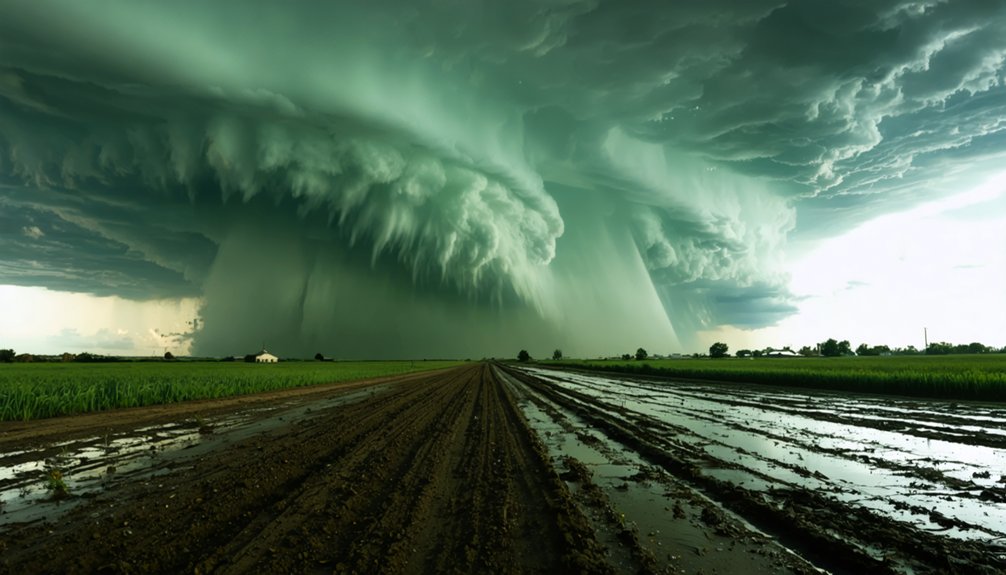
Hurricanes aren’t the only storm type growing more dangerous — hailstorms are intensifying too. Atmospheric warming from greenhouse gas emissions makes larger, more damaging hailstones more likely to develop.
As surface temperatures rise, moist air ascends more rapidly, generating stronger updrafts within convective storms — the very mechanism that drives hailstone size upward.
In southern Alberta, hailstorm frequency is projected to increase alongside severity. You’re looking at a compounding threat: more storms, delivering larger projectiles capable of destroying crops, vehicles, and infrastructure.
Warmer, more moisture-laden air provides the thermodynamic fuel that sustains these intensified systems longer and more powerfully.
The data’s clear — climate change isn’t just reshaping hurricanes. It’s fundamentally altering the mechanics of convective storms, putting more communities directly in the path of escalating hail damage.
Which Coastal Communities Face the Greatest Hurricane Risk
If you live along the Atlantic coast, you face compounding risks from storm surge, high winds, and flooding—risks that are intensifying as sea levels rise and hurricanes push farther north than historical patterns suggested they would.
Low-lying coastal zones, particularly those with shallow offshore bathymetry and limited natural barriers, amplify storm surge impacts, translating even modest hurricane activity into catastrophic inundation.
Climate change is now expanding hurricane reach to higher latitudes, meaning Canadian Atlantic communities that once sat outside the historical strike zone are increasingly in the path of dangerous, high-intensity storms.
High-Risk Atlantic Coastal Zones
As Atlantic hurricanes grow stronger and shift toward higher latitudes, certain coastal communities face disproportionately severe risks from wind, storm surge, and flooding.
You’ll find the highest concentrations of vulnerability in areas where rising seas amplify storm surge impacts. Key high-risk zones include:
- Atlantic Canada: Intensifying storms increasingly threaten coastal infrastructure resilience as hurricanes reach higher latitudes.
- Gulf Coast lowlands: Low elevation accelerates flooding from storm surge.
- Mid-Atlantic barrier islands: Minimal land elevation combined with dense development maximizes exposure.
- Southeastern seaboards: Warm offshore waters fuel rapid intensification close to shore.
Effective hurricane preparedness strategies must account for these region-specific risks.
Since sea levels have risen over four inches since 1993, communities must prioritize adaptive coastal defenses now.
Storm Surge Vulnerability Factors
Several interconnected factors determine which coastal communities bear the greatest storm surge risk, and understanding them can sharpen your assessment of local hurricane vulnerability.
Shallow offshore bathymetry amplifies surge heights, funneling water inland with greater force. Low-lying terrain provides minimal resistance, accelerating flooding across wider areas.
Aging coastal infrastructure — seawalls, levees, drainage systems — frequently lacks capacity to handle intensified surges driven by rising sea levels, which have climbed over half a foot since 1880.
Dense coastal development compounds exposure, concentrating economic and human risk. Climate change further elevates these vulnerabilities by pushing stronger storms toward higher latitudes, threatening communities previously outside typical hurricane corridors.
Evaluating your community’s bathymetric profile, land elevation, infrastructure condition, and proximity to warming ocean waters gives you the clearest picture of actual storm surge exposure.
Northward Hurricane Reach Expansion
Beyond the physical vulnerabilities shaping storm surge exposure, the geographic boundaries defining which communities face hurricane risk are themselves shifting.
Climate change is driving hurricane migration patterns toward higher latitudes, directly expanding northern vulnerability across communities previously considered outside traditional hurricane zones.
Key developments you need to understand:
- Hurricanes are now forming and intensifying at higher latitudes than historical records show.
- Warmer oceans extending further north create favorable intensification conditions closer to Canadian coastlines.
- Atlantic Canada communities face growing risks from high winds, flooding, and storm surge.
- The 39-year period from 1979-2017 confirms major hurricane frequency increases overall.
You’re no longer operating in a world where geography provides a reliable buffer.
These hurricane migration patterns mean northern communities must now integrate serious storm preparedness into their infrastructure and emergency planning frameworks.
Frequently Asked Questions
How Does Climate Change Affect Tornado Frequency and Intensity?
Climate change’s link to tornado trends remains uncertain, but you’re seeing warmer, moister air fueling storm intensity. Rising atmospheric energy creates more favorable conditions for severe convective storms, potentially increasing tornado-producing supercell thunderstorm activity.
Can Climate Change Influence Hurricane Season’s Official Start and End Dates?
Yes, climate change can shift hurricane patterns beyond fixed dates. While official seasons remain June–November, warmer ocean temperatures extend season variability. Climate models show you’re facing longer storm windows as rising seas fuel threats year-round.
How Do Inland Communities Far From Coasts Get Impacted by Hurricanes?
Even far from coasts, you’re not safe — hurricane remnants can penetrate deep inland, releasing catastrophic inland flooding. Warmer air holds 4% more moisture, meaning these weakened storms still dump historically destructive rainfall totals on your community.
What Role Do Forests and Vegetation Play in Storm Damage Reduction?
Like a shield materializing just in time, forests and vegetation actively reduce storm damage. Your canopy coverage, root systems, and vegetation density create natural storm buffers, while forest resilience, biodiversity benefits, and ecological protection through smart land management greatly minimize hurricane-driven wind, flood, and precipitation impacts.
How Does Air Pollution Interact With Storm Systems During Hurricanes?
Air pollution’s pollutant interaction disrupts atmospheric dynamics, altering storm formation and precipitation patterns. Urban heat intensifies convection, while particulates affect air quality and moisture distribution, potentially strengthening or weakening hurricane systems depending on aerosol concentration and location.
References
- https://climateinstitute.ca/news/fact-sheet-climate-change-and-storms/
- https://www.internetgeography.net/topics/how-might-climate-change-affect-tropical-storms/
- https://pmc.ncbi.nlm.nih.gov/articles/PMC12747710/
- https://www.c2es.org/content/hurricanes-and-climate-change/
- https://products.climate.ncsu.edu/weather/hurricanes/climate-change/
- https://www.gfdl.noaa.gov/global-warming-and-hurricanes/
- https://www.edf.org/climate/how-climate-change-makes-hurricanes-more-destructive
- https://www.usgs.gov/faqs/how-can-climate-change-affect-natural-disasters