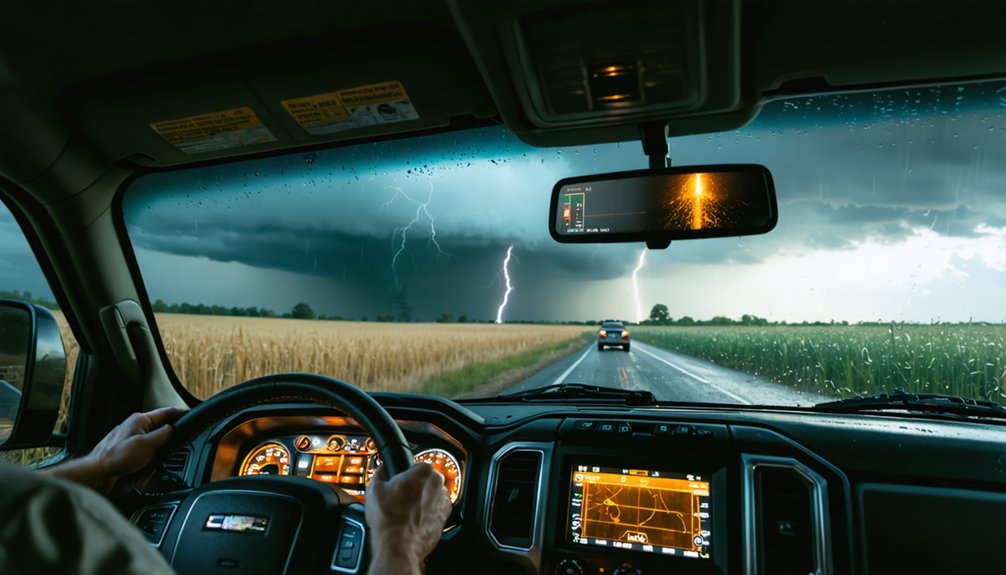
You’re drawn to waterspout chasing by the same neurochemical reward loops that drive compulsive behavior — dopamine surges, variable reinforcement schedules, and compressed decision-making cycles that trigger an intense flow state most land-based experiences can’t replicate. Each successful intercept neurologically reinforces fascination, while unpredictable rewards mimic addictive patterns that deepen your commitment over time. Understanding the full psychological, neurochemical, and physical dimensions of what pulls chasers back reveals just how complex this drive truly is.
Key Takeaways
- Unpredictable rewards and variable success rates create dopamine-driven excitement, making each chase uniquely compelling and reinforcing continued pursuit.
- Compressed, high-stakes decision-making triggers neurochemical responses that sharpen focus and enhance overall performance during waterspout encounters.
- Achieving the goal of intercepting a waterspout reinforces satisfaction, motivating chasers to repeatedly seek that experience.
- The flow state experienced during chasing distorts time perception, transforming thrill-seeking into an increasingly compulsive, addictive behavior.
- Motivations often evolve from simple curiosity or photography into a deeper dependency on the adrenaline rush chasing provides.
Who Actually Chases Waterspouts?
When you picture a storm chaser, you likely imagine someone barreling across the Great Plains in pursuit of a tornado — but waterspout chasers occupy a distinct niche within this community.
Chaser demographics reveal a diverse group, mostly non-meteorologists holding college degrees, concentrated in coastal regions rather than central plains.
Personal motivations vary considerably. You’ll find photographers, thrill-seekers, and nature enthusiasts drawn to waterspouts for their visual spectacle and relative accessibility near coastlines, beaches, and open water environments.
Unlike tornado chasers, waterspout chasers often prioritize documentation over direct intercept.
What unites them is a shared appetite for unpredictable natural phenomena and the freedom of open exploration.
They’re not a monolithic group — they’re independent thinkers who’ve chosen a less conventional, highly specific pursuit within storm chasing culture.
Why Waterspouts Pull Chasers Back Every Time
Once you’ve intercepted a waterspout, the psychological machinery that pulls you back operates through well-documented mechanisms: unpredictable rewards, goal achievement, and the flow state’s intense focus that strips away your sense of time entirely.
That waterspout fascination isn’t accidental — it’s neurologically reinforced each time you succeed.
That pull toward waterspouts isn’t random — your brain actively rewards every successful intercept, making the obsession inevitable.
Variable reward schedules, identical to those driving addictive behaviors, keep you returning. You can’t predict when conditions align perfectly, so every chase carries genuine discovery potential. That uncertainty amplifies your commitment rather than reducing it.
Chasing adventure across open coastlines also triggers eustress — positive stress that sharpens performance without breaking you down.
Fear transforms into fascination during close approaches, rewiring your threat response into motivation. Chasers rarely stop once they’ve started, and the data on that pattern is unambiguous.
Why Waterspout Chasing Triggers Such an Intense Rush
Chasing a waterspout delivers a neurochemical response that differs from most outdoor pursuits because the threat geometry is genuinely multidimensional — you’re managing proximity to rotating water columns, unpredictable lightning strike zones, and coastal terrain simultaneously.
Your brain processes these layered variables through a compressed decision loop, triggering dopamine release patterns consistent with high-stakes curiosity exploration. Unlike land-based tornado intercepts, waterspout chasing compounds sensory input: wind-driven spray, rapidly shifting visibility, and acoustic pressure changes all register concurrently.
That convergence accelerates your entry into flow state, where thrill seeking stops feeling voluntary and becomes neurologically compulsive. Research on eustress responses confirms that positive threat engagement sharpens focus rather than paralyzing it.
You’re not just chasing weather — you’re running an autonomous risk-calculus that most environments never demand.
The Real Dangers Waterspout Chasers Choose to Face
Although the neurological pull toward waterspout chasing feels rewarding, the physical threat environment you’re entering carries compounding hazards that no flow state fully neutralizes.
Waterspout dangers stack rapidly: associated thunderstorms generate lethal lightning, while coastal and open-water positioning eliminates natural shelter. You’re simultaneously managing maritime unpredictability, intensifying hurricane-driven phenomena, and exposure on piers, docks, or beaches where lightning strike probability spikes considerably.
Safety precautions aren’t optional variables here — they’re operational necessities. Climate change is actively strengthening these systems, meaning historical risk benchmarks are becoming outdated.
Your freedom to chase depends entirely on your capacity to assess dynamic threat escalation in real time. Flow state-induced tunnel vision, documented among experienced chasers, directly compromises that assessment.
Recognizing this cognitive vulnerability isn’t weakness — it’s the analytical framework that keeps you operational.
Can Waterspout Chasing Become a Full-Blown Addiction?
How quickly does a calculated risk become a compulsive pattern? Faster than you’d expect. Research shows starters rarely quit, describing waterspout chasing as magnetically addictive, comparable to reward-loop mechanics in video games.
Your chasing motivations shift subtly over time — what begins as curiosity evolves into dependency on unpredictable outcomes and adrenaline-driven flow states.
The psychological impacts are measurable. Eustress, the positive stress fueling your passion, can quietly shift into distress when left unexamined.
During intense intercepts, you experience tunnel vision, loss of time perception, and suppressed fear responses — all neurological markers of compulsive behavioral patterns.
Freedom-seekers particularly underestimate this risk. The open road, the unpredictability, the raw power — these aren’t just attractions. They’re reinforcement mechanisms.
Recognizing that distinction early keeps your freedom intact.
Frequently Asked Questions
What Equipment Do Waterspout Chasers Typically Use During Their Pursuits?
Like ancient mariners reading the seas, you’ll wield camera gear to capture waterspouts while implementing critical safety measures. You’re tracking meteorological data, monitoring radar systems, and using weather apps to analyze storm patterns effectively.
How Does Waterspout Chasing Differ From Chasing Land-Based Tornadoes?
When chasing waterspouts, you’re maneuvering through unpredictable ocean dynamics and coastal storm behavior, unlike land tornadoes where terrain’s more predictable. You’ll face lightning risks near water, requiring faster repositioning and heightened situational awareness during intercepts.
Are There Legal Restrictions on How Close Chasers Can Get to Waterspouts?
You’ll find legal regulations on waterspout proximity aren’t universally standardized, but chaser safety laws vary by jurisdiction. Coastal authorities can restrict access during active weather events, so you must always verify local maritime and emergency management guidelines beforehand.
How Do Waterspout Chasers Prepare Physically and Mentally Before a Chase?
Purposefully preparing propels your performance: you’ll build physical endurance through rigorous training and sharpen mental conditioning via stress-exposure techniques. You’ll analyze meteorological data, simulate high-pressure scenarios, and develop psychological resilience, ensuring you’re ideally equipped for unpredictable, freedom-demanding waterspout pursuits.
Can Waterspout Footage Be Sold to Media Outlets for Profit?
Yes, you can sell waterspout footage to media outlets through footage licensing agreements. You’ll negotiate media rights with networks, news agencies, or streaming platforms, turning your high-risk captures into profitable assets while retaining creative control.
References
- https://en.wikipedia.org/wiki/Storm_chasing
- https://www.youtube.com/watch?v=cNkPWEoQtAc
- https://substack.com/home/post/p-155989667
- https://www.base-mag.com/rider-on-the-storm/