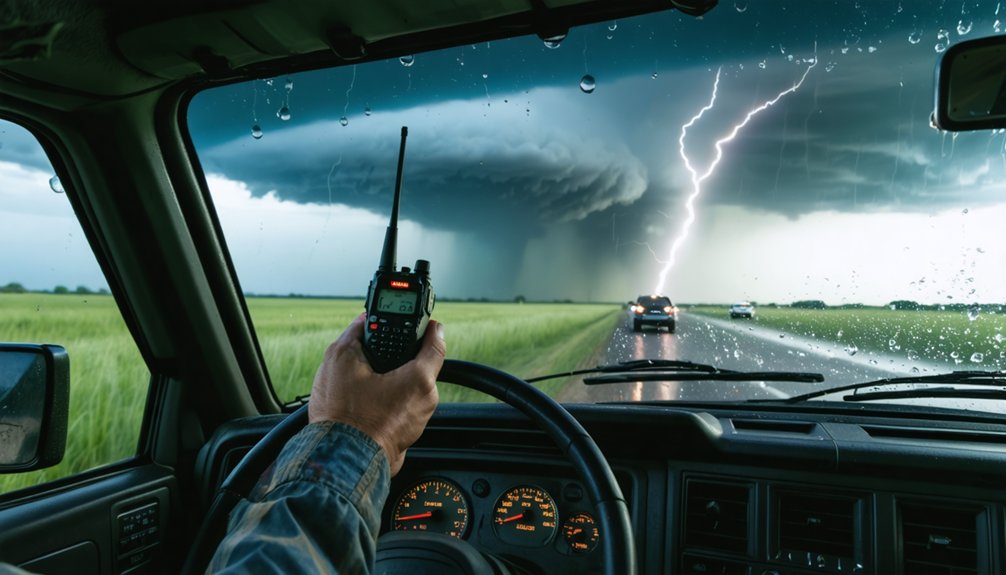
You’ll face severe communication gaps in rural zones where storms develop, making pre-coordinated backup systems essential for your safety. Remote areas demand resource pooling across multi-state operations—think convoy-deployed radar units and shared helium tanks. Without coordination, you risk dangerous traffic convergence on single-lane roads, especially when tornado probabilities spike above 37%. You’ll also need established protocols with emergency management centers and the NWS to transform your field observations into actionable warnings. The following sections break down each coordination element you’ll encounter in the field.
Key Takeaways
- Rural areas lack 5G coverage, forcing teams to pre-plan communication protocols and backup systems before losing signal.
- Multi-state operations require pooled resources like convoy deployments of equipment exceeding single-team capacity across Tornado Alley.
- Coordinated route analysis prevents dangerous traffic convergence on single-lane bridges where rear-end collisions spike during active chases.
- Public-private partnerships with emergency management and NWS transform field observations into actionable warnings for downstream communities.
- Synchronizing multisource data streams strengthens forecast accuracy through bidirectional exchange of radar, satellite, and ground observations.
Limited Communication Infrastructure in Remote Areas
Rural storm chasers face a critical operational challenge: communication infrastructure collapses precisely where they need it most. When you’re pursuing severe weather in remote territories, you’ll encounter the same coverage gaps that plague rural broadband deployment.
5G signals concentrate near population centers, while extremely rural areas—exactly where storms often develop—lack reliable connectivity. Operating expenses run 44% higher in these zones, discouraging provider investments in network resilience during outages. You’ll find yourself three miles from roads without signal, unable to coordinate team movements or relay critical weather data.
This infrastructure deficit directly impacts efficient operations under constraints, forcing you to pre-plan communication protocols and establish backup systems. Without government subsidies driving expansion, these gaps will persist indefinitely.
Resource Sharing Across Vast Geographic Distances
When severe weather systems span territories equivalent to multiple states, you’ll need coordinated resource deployment that transcends individual chase team capabilities. Groups pool critical equipment—helium tanks, mobile radar units, SUVs—into convoys covering routes from Canada to Mexico.
Multi-state severe weather operations demand resource pooling beyond single-team capacity through coordinated convoy deployments spanning continental distances.
This shared infrastructure model addresses technology adoption challenges inherent to rural operations, where sparse population densities can’t support individual ownership of specialized gear.
Strategic capacity building efforts emerge through multi-vehicle deployments launching weather balloons simultaneously across Tornado Alley. You’ll leverage open-source software packages vetted by regional agencies, while backup locations for data storage mitigate isolation risks.
Generators pre-positioned at water stations maintain operations during widespread outages. Real-time data sharing through online platforms extends your observational reach, transforming individual chase efforts into distributed sensor networks that maximize atmospheric sampling across vast, infrastructure-poor territories.
Preventing Dangerous Traffic Convergence on Rural Roads
As tornado probabilities exceed 37%, chaser convergence transforms single-lane bridges and undivided highways into dangerous bottlenecks where rear-end collisions spike dramatically. You’ll find freedom through discipline when implementing safety protocols for spotter vehicles—pre-chase route analysis identifies chokepoints, while Spotter Network relays prevent overlapping positions on narrow pavement.
Traffic flow optimization techniques become critical: maintain safe following distances, avoid prohibited passing zones, and coordinate positioning via real-time Twitter updates. When high-speed convoys form during supercell intercepts, your adherence to courtesy protocols reduces pileup risks that trap both chasers and evacuees.
Poor cell coverage demands proactive coordination before entering rural areas. Some veterans skip mega-chase days entirely, recognizing that coordinated precision on moderate-risk days yields better data collection than chaotic convergence that compromises everyone’s safety and effectiveness.
Integration With Local Emergency Management Systems
Coordinated road management prevents chaser pileups, but your real-time observations gain operational value only when they’re integrated into formal emergency response frameworks. You’ll maximize impact by establishing public private partnerships with local emergency management centers before severe weather strikes.
These agencies rely on amateur radio communications post-disaster, creating natural integration points for your spotter reports. Direct coordination with National Weather Service Warning Coordination Meteorologists transforms your field data into actionable warnings—like the flash flood alerts that evacuated 5,000+ people with zero fatalities.
Effective knowledge management requires pre-established protocols: designated Net Control Stations, clear reporting procedures, and verified communication channels. Your independence as a chaser remains intact while your observations feed coordinated response systems that protect rural communities lacking sophisticated detection infrastructure.
Real-Time Data Collection and Weather Service Collaboration
While your ground observations provide irreplaceable ground-truth data, you’ll amplify their operational value by integrating multiple data streams that National Weather Service forecasters monitor simultaneously. You’re accessing Level 3 radar data for near real-time updates while maintaining crowdsourced storm verification through mPING reports that refine dual-polarized radar algorithms. These cost effective data solutions eliminate dependency on single information sources when cellular networks fail in rural territories.
Your coordination extends beyond passive data consumption—you’re actively contributing through SHAVE phone surveys documenting hail size, wind damage, and flash flooding. This bidirectional information exchange strengthens forecast accuracy for communities downstream from your position. By synchronizing your mobile observations with satellite imagery from GOES and surface probe measurements, you’ll create detailed situational awareness that protects both your team and emergency management operations relying on your field intelligence.
Frequently Asked Questions
What Training Certifications Do Rural Storm Chasers Need Before Joining Coordination Teams?
You’ll need SKYWARN storm spotter training, completing two online courses and a three-hour NWS class. This certification teaches field observation techniques and earns you a spotter ID, granting freedom to safely coordinate with emergency teams.
How Do Rural Chasers Fund Their Fuel and Equipment Maintenance Costs?
You’ll fund fuel and equipment through volunteer coordination models like partner cost-sharing, crowdfunding campaigns, and equipment funding sources including USDA rural programs. Track expenses meticulously for tax deductions while maintaining operational safety standards throughout deployment.
What Insurance Coverage Protects Rural Storm Chasers During Coordinated Operations?
You’ll need liability coverage to protect against damages you cause during chasing operations, plus workers’ compensation if you’ve got team members. Insure your weather monitoring devices separately, as standard policies won’t cover specialized meteorological equipment.
Which Weather Tracking Software Works Best for Rural Coordination Efforts?
You’ll find Storm Hunter WX excels for rural coordination through real-time data sharing and crowd-sourced weather reports. It delivers pre-warning notifications and Future Scan predictions, enabling independent chasers to maintain situational awareness while operating safely across remote territories.
How Do Rural Chase Teams Recruit and Onboard New Members?
You’ll find rural chase teams recruit through community engagement at weather spotter events and emergency management networks. They’ll onboard you through mentorship programs emphasizing safety protocols and team dynamics, ensuring you’re properly trained before deploying independently.