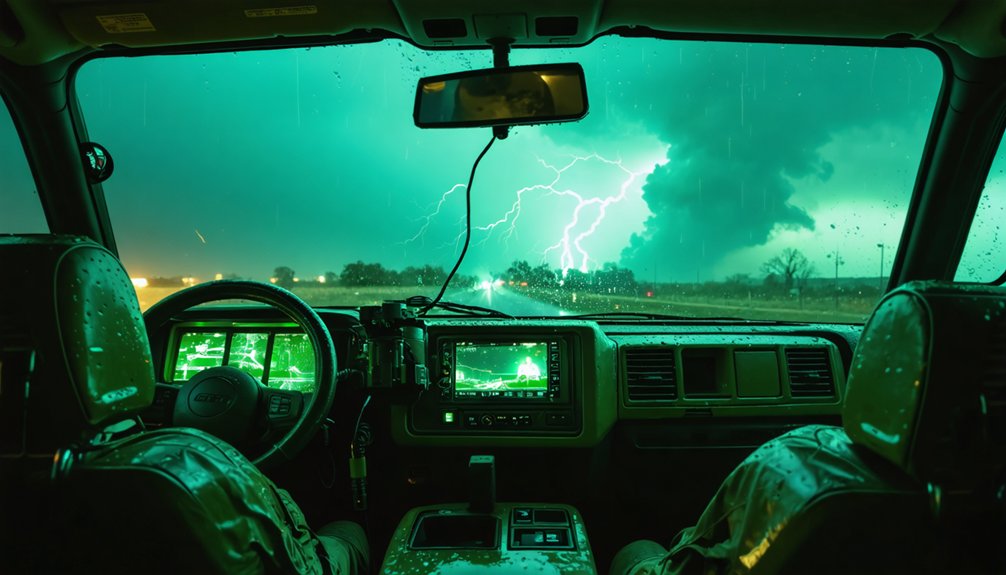
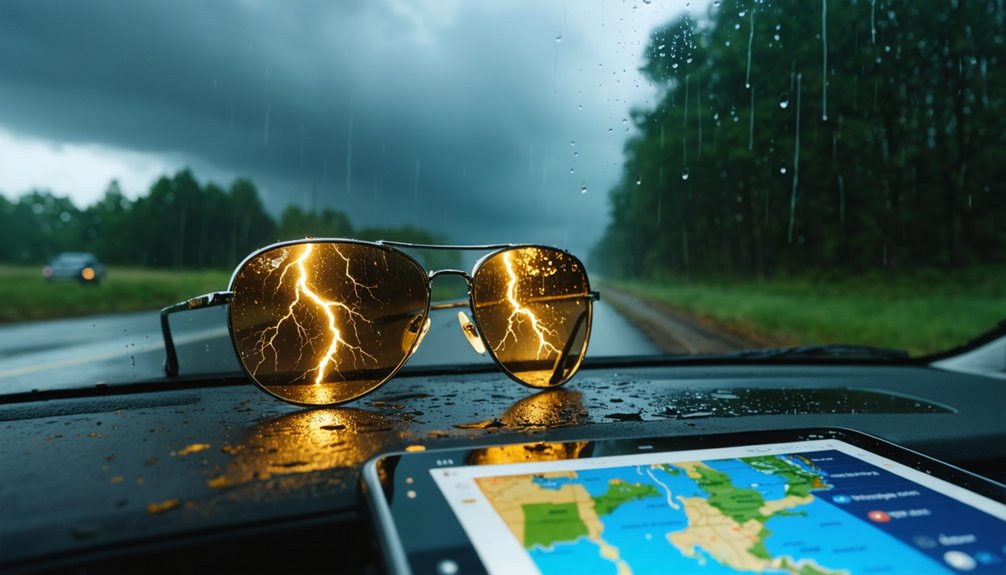
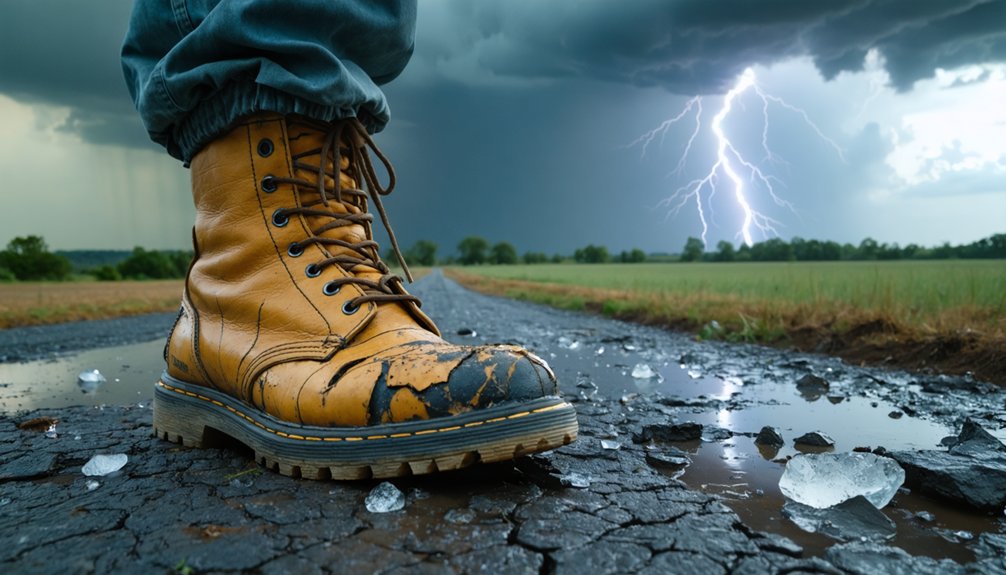
Proper safety gear keeps you alive when storm conditions turn unpredictable. Without it, you’re exposed to wind-driven debris, flash flooding, and dangerous particulates that can incapacitate you instantly. Flawed storm predictions force rapid repositioning across hazardous terrain, where washed-out roads and unstable embankments demand both physical protection and reliable navigation tools. Inadequate equipment isolates you from critical updates and strips away your decision-making edge. Every layer of protection you carry directly determines whether you make it home.
Key Takeaways
- Impact-resistant goggles and face masks shield chasers from high-velocity debris and harmful particulates that storms constantly generate.
- Layered thermal and waterproof clothing protects against sudden temperature shifts, extreme gusts, and chemical contaminants in storm environments.
- Redundant communication tools like two-way radios and NOAA weather radios ensure chasers receive critical updates when networks fail.
- High-capacity power banks and battery management strategies keep essential safety devices operational throughout unpredictable, extended storm chases.
- First aid supplies, waterproof documents, and emergency signaling tools enable rapid response when injuries or dangerous situations arise.
What Makes Storm Chasing Dangerous Without Proper Gear?
Storm chasing exposes you to a convergence of simultaneous hazards that can escalate from manageable to life-threatening within seconds. Without proper gear, you’re vulnerable to wind-driven debris, flash flooding, and rapid temperature shifts that demand immediate physical protection.
Flawed storm prediction compounds these risks, leaving you repositioning through terrain hazards like washed-out roads, unstable embankments, and debris-strewn fields. Inadequate eye protection exposes you to particulate matter traveling at dangerous velocities. Missing slip-resistant footwear transforms wet surfaces into serious fall risks.
Absent communication equipment cuts you off from critical weather updates and emergency services. Each gear gap doesn’t represent a single isolated risk—it creates cascading vulnerabilities that multiply your exposure across every phase of the chase, from initial intercept to safe exit.
Eye, Skin, and Respiratory Protection Against Storm-Driven Debris
When debris-laden winds tear through a storm environment, your eyes, skin, and respiratory system face simultaneous assault from particulate matter traveling at lethal velocities.
Addressing eye safety requires impact-resistant goggles or polarized glasses that block wind-driven fragments while maintaining visual clarity on rain-wrapped tornadoes. You can’t afford compromised vision when conditions shift rapidly.
Respiratory hazards intensify as dust storms and debris clouds saturate the air with contaminants. A properly fitted face mask or bandana filters particulates before they reach your lungs.
Skin protection demands multiple clothing layers that shield against cuts, abrasions, and chemical contaminants from structural debris.
Managing debris risk across all three exposure points simultaneously keeps you operationally effective. Each protective layer you add directly extends your ability to chase safely and independently.
What Protective Clothing Works Best in Severe Weather?
Layering your protective gear doesn’t stop at goggles and masks — your clothing system as a whole determines how well you perform when conditions deteriorate fast.
Start with thermal layers that regulate core temperature when you’re shifting between contrasting air masses. Add a lightweight wind jacket to block extreme gusts common across Tornado Alley.
Convertible zip-off pants let you adapt quickly without stopping operations. For your lower body, prioritize protective footwear — specifically waterproof boots with aggressive grip soles that prevent slips on wet, flooded terrain.
Work gloves shield your hands during debris assessment. Multiple clothing layers reduce exposure to cuts and environmental contaminants when you’re moving through damaged areas.
Every piece you wear should serve a tactical function, not simply provide comfort.
Food, Water, and Comfort Supplies for Multi-Day Storm Chases
When you’re running multi-day chases, non-perishable food supplies and adequate water reserves directly sustain your physical endurance and decision-making capacity in harsh field conditions.
You’ll need to prioritize hydration strategies that account for extreme temperature fluctuations and prolonged outdoor exposure, particularly when shifting between contrasting air masses.
Comfort gear like extra socks, mylar blankets, and convertible clothing aren’t luxuries—they’re operational necessities that keep you functional across extended deployments.
Sustaining Energy During Chases
Multi-day storm chases demand sustained physical performance, making food, water, and comfort supplies as critical as any technical gear you carry.
Pack non-perishable energy snacks like nuts, jerky, and protein bars to maintain sharp focus during extended operations. Dehydration compromises decision-making, so carry sufficient water reserves independent of uncertain roadside access.
Portable chargers keep your navigation devices, radios, and cameras operational when grid power is unavailable. Extra socks and dry footwear prevent moisture-related health issues during prolonged wet conditions.
Mylar blankets and compact rain ponchos defend against sudden temperature drops between contrasting air masses. Convertible zip-off pants enable rapid temperature regulation without stopping operations.
Treating physical endurance as a tactical priority directly extends your operational range and keeps you chasing safely on your own terms.
Hydration in Extreme Conditions
Sustained hydration directly governs your cognitive sharpness and physical response time during extended chases, making water management a non-negotiable operational priority.
In extreme weather, dehydration accelerates rapidly, impairing your decision-making precisely when conditions demand peak performance. Implementing disciplined hydration techniques keeps you mission-capable throughout multi-day operations.
- Store minimum two liters of water per chase day in durable, sealed containers resistant to temperature fluctuations.
- Use electrolyte supplements to counteract mineral loss from heat exposure and heavy physical exertion.
- Rotate water reserves regularly, preventing consumption of compromised supplies during prolonged deployments.
You control your operational independence by never relying on external infrastructure for hydration resources.
Portable filtration systems expand your supply options in remote environments where resupply access remains unpredictable during active storm sequences.
Comfort Gear for Endurance
Endurance across multi-day storm chases depends on deliberate provisioning of food, water, and comfort supplies that keep you physically and mentally capable through consecutive operational periods.
Pack non-perishable calories dense enough to sustain high-alert decision-making without refrigeration requirements. Carry extra socks and shoes to counter prolonged wet-ground exposure that compromises foot health and mobility.
You’ll want comfortable layering systems that allow rapid thermal adjustment when you’re shifting between contrasting air masses across Tornado Alley. Convertible zip-off pants deliver practical weather adaptability without bulk.
Mylar blankets and compact rain ponchos provide emergency warmth during sudden temperature drops between chase segments. Sunscreen protects exposed skin during clear-weather operational windows.
These provisions aren’t luxuries—they’re operational necessities that preserve your physical capacity and decision-making clarity across extended deployments.
When maneuvering toward an active storm system, you’ll rely on a layered set of tools to stay oriented and avoid getting trapped in hazardous conditions. Effective navigation strategies combine real-time digital systems with analog backups, ensuring signal reliability doesn’t become your limiting factor when infrastructure fails.
- GPS navigation systems deliver the fastest rerouting options around road closures and dangerous storm corridors.
- NOAA weather radio keeps you updated on live warnings and rapidly shifting storm developments.
- Paper maps function as your non-negotiable backup when electronic systems lose power or connectivity.
Each tool serves a distinct operational role. Redundancy isn’t optional — it’s your margin of safety.
When cell towers go dark and GPS signals degrade, your preparedness across multiple navigation layers determines whether you exit the field on your terms.
Communication Gear That Keeps You Alive When Cell Service Fails
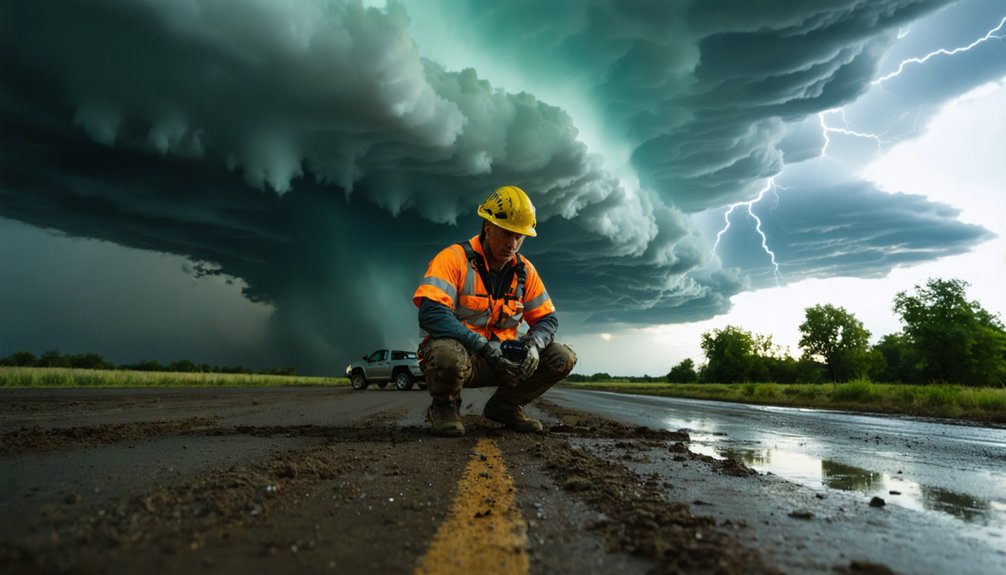
Cell service fails predictably in the remote corridors of Tornado Alley, so your communication strategy can’t depend on it. Two-way radios deliver reliable contact with other chasers and emergency services where cellular networks collapse entirely.
In Tornado Alley’s dead zones, two-way radios keep you connected when cell networks inevitably fail.
Deploy signal boosters to extend your range when you’re operating near coverage boundaries. NOAA weather radio provides continuous storm updates independent of commercial infrastructure.
Your communication strategies must layer multiple redundant systems—never rely on a single channel. Store emergency contacts on devices that don’t require internet connectivity.
Maintain charged power banks specifically dedicated to communication equipment, keeping radios and backup devices operational throughout extended chases. Cash reserves matter here too, since payment systems fail during power outages, and you’ll need resources to reach emergency support when infrastructure breaks down around you.
Powering Your Gear During Extended Multi-Day Chases
When you’re running multi-day chases, power failure isn’t an inconvenience—it’s a safety threat that disables your radar, GPS, and communication devices simultaneously.
You’ll need high-capacity power banks rated at 20,000mAh or higher to sustain cameras, radios, and navigation systems through extended operations without access to vehicle or grid power.
To maximize device battery life, you should disable non-essential background apps, reduce screen brightness, and prioritize charging critical safety equipment—weather radar and communication gear—before supplementary devices.
Portable Power Bank Solutions
Portable power banks are a storm chaser’s lifeline during multi-day operations, keeping cameras, GPS units, radios, and weather radar devices fully charged when you’re far from reliable power sources.
Investing in high-capacity portable power solutions guarantees you maintain operational independence without depending on unstable infrastructure.
Key backup charging options to prioritize:
- High-capacity banks (20,000+ mAh) simultaneously charge multiple devices, extending field time without interruption.
- Solar-compatible power banks harvest energy during clear weather intervals, reducing dependence on pre-stored capacity.
- Multi-port fast-charging units minimize downtime by rapidly restoring device power between storm intercepts.
Don’t let a dead battery compromise your safety or mission.
Redundant charging systems keep your critical equipment functional when conditions intensify and conventional power access becomes impossible.
Maintaining Device Battery Life
Having the right power banks on hand only solves half the problem—how you manage your devices’ battery consumption during extended chases determines whether your gear lasts through a multi-day operation.
Implement battery conservation tips like dimming screen brightness, disabling unused apps, and activating low-power modes when you’re not actively monitoring storm data.
Prioritize device charging strategies that rotate equipment charging cycles, ensuring your GPS, radar systems, and communication devices never simultaneously drain your power reserves. Charge primary devices first, as they’re mission-critical.
Disable Bluetooth and Wi-Fi when cellular data suffices. Keep screens off between active monitoring intervals.
These disciplined habits prevent catastrophic mid-chase power failures that could leave you maneuvering through dangerous conditions without reliable radar, GPS, or communication equipment—compromising your operational independence entirely.
How to Protect Electronics and Documents in Storm Conditions?
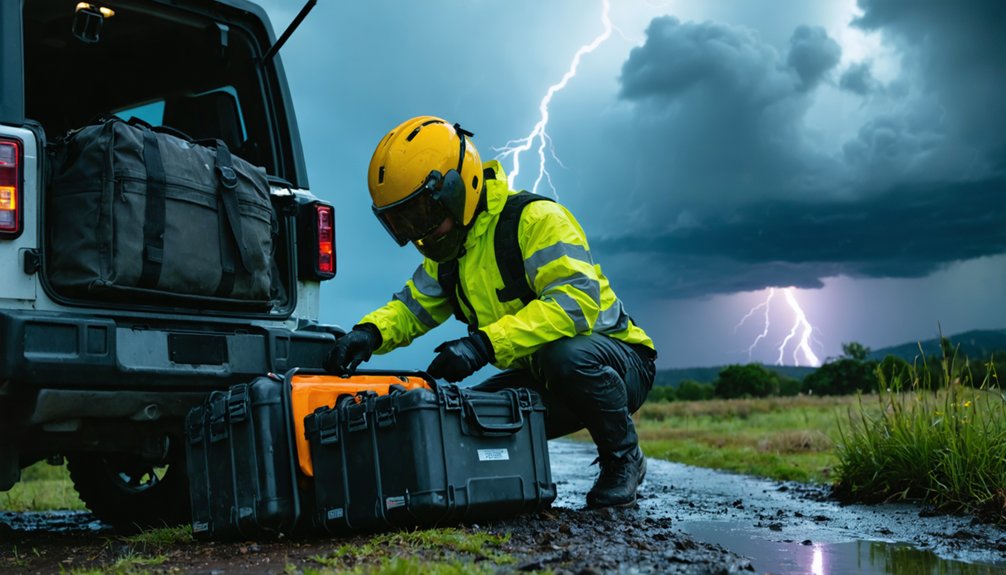
Protecting your electronics and documents during storm chasing requires three core strategies: physical barriers, redundant storage, and proactive organization.
Electronic protection starts with waterproof containers and zip-top bags that shield devices from moisture and debris. Document preservation demands waterproof folders housing your ID, insurance papers, and critical records.
Implement these field-tested measures:
- Seal electronics inside waterproof hard cases rated for submersion before deployment.
- Store document copies digitally across cloud platforms and physical waterproof folders simultaneously.
- Organize by priority, keeping mission-critical items instantly accessible during rapid repositioning.
You can’t afford equipment failure mid-chase. Redundancy isn’t optional—it’s tactical.
Every layer of protection preserves your operational independence when conditions deteriorate without warning.
Essential Medical Supplies Every Storm Chaser Should Carry
When debris flies and conditions deteriorate rapidly, your medical kit becomes the difference between a manageable injury and a life-threatening emergency. Pack first aid essentials including bandages, antiseptics, splints, and emergency blankets to address storm-related trauma immediately.
Injury prevention extends beyond protective gear—you’ll need supplies that handle wounds before professional help arrives. Include a week’s worth of personal medications, since multi-day chases frequently cut you off from pharmacies.
Emergency blankets combat sudden temperature drops, while antiseptics neutralize contamination risks from debris contact.
Work gloves reduce hand injuries during damage assessment, decreasing how heavily you’ll rely on your kit. Combine your medical supplies with a whistle and multi-tool for signaling and basic field repairs when you’re operating in isolated, communication-limited environments.
Emergency Protocols and Last-Resort Gear Every Chaser Should Know
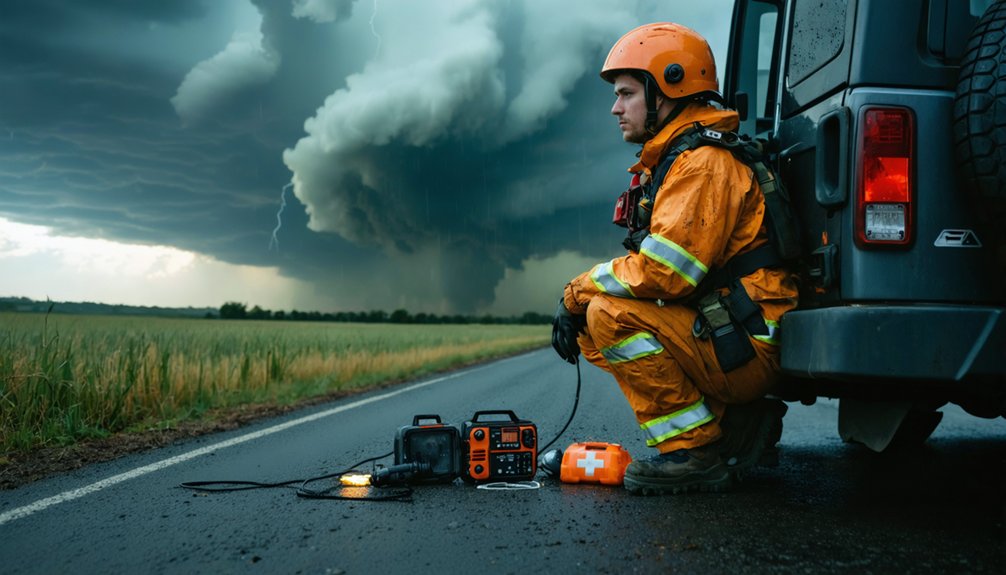
Medical supplies keep you operational after an injury strikes, but knowing what to do—and what to grab—when conditions turn catastrophic separates experienced chasers from those who don’t make it back.
Emergency protocols aren’t optional—they’re your last line of defense when technology fails and escape routes close.
Emergency protocols aren’t a suggestion—they’re survival insurance when your tech dies and every exit disappears.
Your last resort gear and emergency signaling techniques should include:
- Whistle and mirror signals for attracting rescue personnel when electronics fail
- Mylar blankets and compact rain ponchos for surviving sudden temperature drops in exposed terrain
- Two-way radios for maintaining communication with chasers and emergency services beyond cell coverage
Carrying cash, waterproof ID, and insurance documents guarantees you can coordinate rapid emergency response without bureaucratic delays.
Preparedness isn’t paranoia—it’s operational discipline that keeps you free to chase another day.
Frequently Asked Questions
How Do Storm Chasers Obtain Proper Training Before Pursuing Severe Weather Professionally?
Like forging steel, you’ll sharpen your skills through meteorology courses, hands-on storm forecasting simulations, and mentorship programs. You’ll master risk assessment protocols, study atmospheric dynamics, and pursue certifications from established organizations before chasing professionally.
What Legal Permits or Licenses Are Required for Storm Chasing Activities?
You don’t need specific storm chasing regulations or permit requirements to chase storms legally. However, you must respect road laws, private property boundaries, and local emergency management directives while actively pursuing severe weather systems.
How Does Safety Gear Differ Between Amateur and Professional Storm Chasers?
Coincidentally, your budget often determines your safety margin. Amateur equipment covers basic protection, while professional tools include advanced radar systems, redundant communication devices, and specialized protective gear that you’d rely on during high-risk, extended storm-chasing operations.
What Insurance Coverage Do Storm Chasers Typically Need for Their Activities?
As a storm chaser, you’ll need specialized storm chaser insurance covering liability, equipment damage, and medical expenses. Your coverage types should include vehicle protection, gear replacement, and personal accident policies tailored to high-risk meteorological fieldwork.
How Do Storm Chasers Coordinate With Local Emergency Management Agencies During Events?
Like soldiers coordinating on a battlefield, you’ll sync with local emergency management agencies through established communication strategies and emergency protocols, sharing real-time data, reporting hazards, and maintaining two-way radio contact to guarantee coordinated, effective responses during active storm events.
References
- https://store.sirui.com/blogs/guides/essential-equipment-for-storm-chasing-guide-for-2025
- https://www.guardianangeldevices.com/news/essential-gear-and-tips-for-riding-out-a-storm/
- https://www.stormtours.com/information/must-bring-items/
- https://www.youtube.com/watch?v=3GlPEfCqqL0
- https://svinews.com/2024/featured/97765/things-every-storm-chaser-needs-in-their-truck/
- https://www.youtube.com/watch?v=Sr2lz72ZYwM
- https://stormtrack.org/threads/equipment-for-the-newbie.32134/