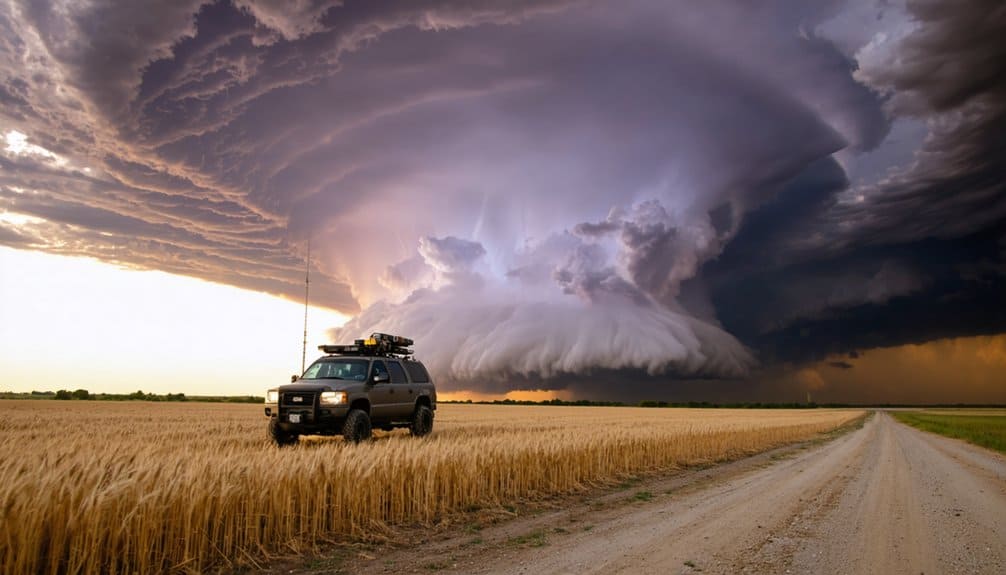
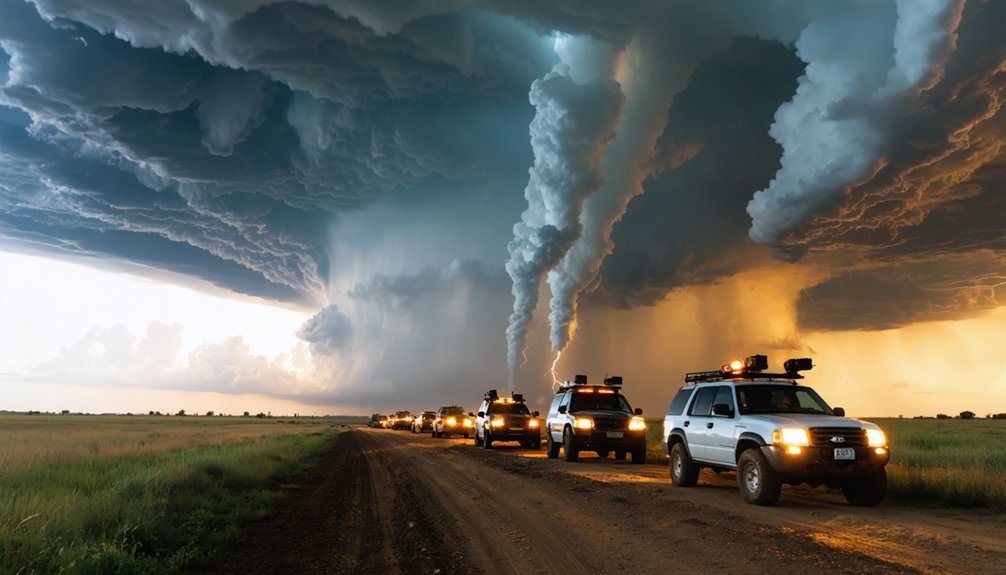
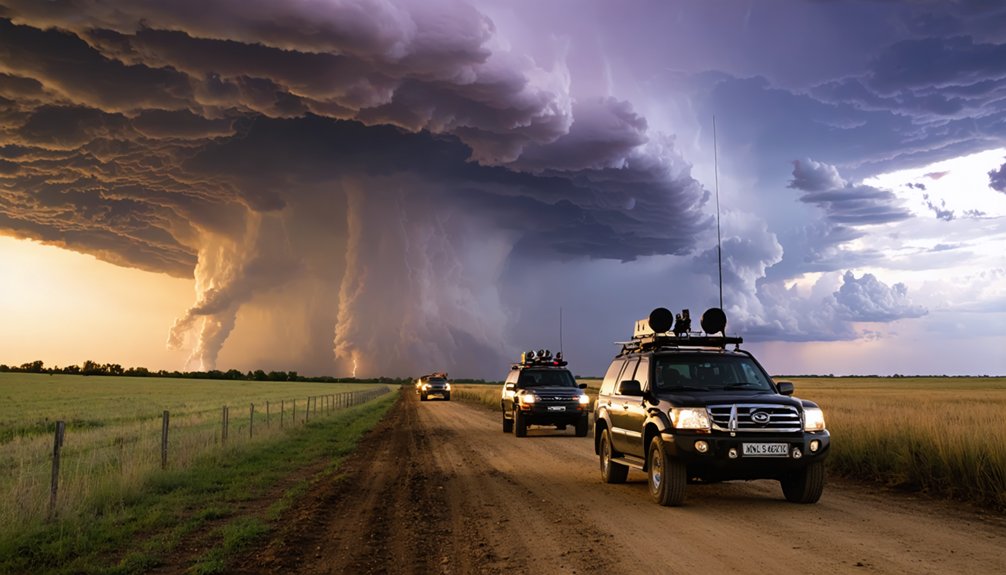
You’ll experience nature’s most powerful atmospheric phenomena firsthand while learning real-time meteorology from expert guides who prioritize your safety. Storm chasing expeditions combine adrenaline-pumping supercell encounters with hands-on weather science education, exceptional photography opportunities using professional camera setups, and deep friendships forged through shared intense experiences. You’ll traverse America’s hidden landscapes—from Capitol Reef to Monument Valley—while developing critical forecasting skills and witnessing rotating mesocyclones overhead. The following sections reveal exactly what makes these expeditions transformative beyond typical outdoor adventures.
Key Takeaways
- Experience nature’s most powerful atmospheric phenomena including supercell thunderstorms and tornadoes with wind speeds exceeding 200 mph.
- Learn meteorological science through hands-on forecasting, data collection with weather balloons, and real-time radar interpretation during active chases.
- Capture stunning weather photography using professional equipment to document dramatic cloud formations, lightning, and tornado structures.
- Build friendships with fellow storm chasers while navigating challenges, sharing data, and witnessing rare meteorological events together.
- Explore America’s diverse landscapes including geological formations, remote wilderness areas, and hidden landmarks between storm systems.
Experience the Ultimate Adrenaline Rush in Nature’s Most Powerful Storms
Storm chasing camping expeditions position you within direct proximity to nature’s most violent atmospheric phenomena, where rotating supercell thunderstorms spawn tornadoes capable of wind speeds exceeding 200 mph. You’ll confront nature’s raw power as mesocyclones develop overhead, generating physiological responses unavailable through sheltered observation.
Storm chasing delivers unfiltered confrontation with atmospheric violence, triggering visceral human responses impossible to replicate from protected distances.
These expeditions challenge personal boundaries by placing you strategically near the 800-1,200 tornadoes occurring annually across Tornado Alley’s central states.
The combination of calculated risk and professional guidance creates empowerment through successful navigation of hazardous conditions. You’ll witness darkened skies, intense wind effects, and the spectacular visual displays of severe weather development.
This direct engagement with meteorological forces—responsible for 80 deaths and $229 million in annual damage—delivers unparalleled experiential outcomes that distinguish active pursuit from passive weather watching.
Learn Weather Science From Expert Meteorologists in Real-Time
Beyond the visceral thrill of witnessing extreme weather, these expeditions transform you into an active participant in atmospheric science through direct mentorship from professional meteorologists. You’ll gain hands-on expertise through extensive training programs that combine classroom theory with field execution.
Your real-time learning experience includes:
- Daily forecast discussions analyzing temperature, moisture, and wind patterns to identify storm targets
- Customized data collection methods using weather balloons and drones to probe storm interiors
- Advanced radar interpretation of velocity and reflectivity products during live chases
- Critical decision-making under pressure as conditions evolve rapidly
You’ll rotate through logistics, equipment, and forecasting roles while launching instruments beyond standard classroom capabilities. This immersive approach develops the instincts and analytical skills that separate amateur observers from skilled storm investigators.
Capture Breathtaking Photography and Once-in-a-Lifetime Visuals
Your camera becomes the bridge between ephemeral atmospheric phenomena and permanent documentation, requiring specialized gear that withstands severe weather while capturing the visual drama unfolding around you.
Full-frame bodies like the Nikon D750 and D850 deliver low-noise performance during storm approaches, while weather-sealed construction protects your investment from wind-driven rain. Wide-angle lenses such as the Tamron 15-30mm f/2.8 frame stunning cloud formations in their entirety, and telephoto options like the Sigma 150-600mm isolate distant tornado structures.
You’ll need sturdy tripods—the Robus RC-5558 handles prairie winds during long exposures that transform lightning into electric artwork. Pack extra batteries, polarizers for enhanced cloud definition, and microfiber cloths. These memorable moments with nature demand equipment that won’t fail when atmospheric conditions turn hostile.
Build Lasting Friendships With Fellow Storm Chasing Enthusiasts
When you spend 10-plus days pursuing supercells across the Great Plains, the people sharing your chase vehicle transform from strangers into trusted companions who understand the unique mix of anticipation, exhaustion, and awe that defines this pursuit.
These bonds strengthen interpersonal connections through:
- Navigating challenging forecasts together while maintaining safety protocols and group communication
- Sharing real-time weather data and decision-making during rapidly evolving storm situations
- Supporting each other through equipment failures and weather-related emergencies on remote highways
- Witnessing rare meteorological phenomena that create memories no photograph fully captures
Extended expeditions deepen personal resilience as you coordinate with meteorologists, experienced chasers, and fellow enthusiasts. Rural gas stations become impromptu meetups where hundreds exchange forecasts and chase reports, expanding your network beyond your immediate team into a nationwide community.
Discover Rural America’s Hidden Landscapes and Cultural Treasures
Storm chasing routes wind through landscapes most travelers never see, placing you face-to-face with geological formations that dwarf any urban skyline. You’ll explore ancient rock formations like Capitol Reef’s 100-mile fold and Monument Valley’s 1,000-foot sandstone buttes while tracking severe weather systems.
Between storm intercepts, you can relax in remote cabins near White Sands’ otherworldly gypsum dunes or Yellowstone’s geothermal features. These expeditions take you beyond tourist corridors into places like Bisti Badlands and Dana Wilderness, where you’ll experience the raw geology that shapes severe weather patterns.
You’re not following guidebooks—you’re traversing by atmospheric conditions, discovering Shoshone Falls’ 212-foot cascade or Goblin Valley’s chimney spires as storm systems dictate your path through America’s untamed backcountry.
Frequently Asked Questions
How Much Does a Typical Storm Chasing Expedition Cost?
You’ll spend $2,499-$5,050 per person for tours, plus $2,000-$5,000 for fuel and food. Financial considerations include deposits of $500-$1,000, while payment options vary by tour length. Couples save $100-$200 each through shared accommodations.
What Should I Pack for a Week-Long Storm Chasing Tour?
Pack appropriate clothing options like convertible pants, rain jackets, and closed-toe shoes. Bring basic storm safety precautions including sunscreen, first-aid supplies, and charged electronics. You’ll need minimal luggage since you’re moving nightly across unpredictable terrain.
Do I Need Previous Weather Knowledge to Join an Expedition?
No, you don’t need weather forecasting skills or previous storm experience. Tour guides handle all technical aspects, positioning, and safety decisions. You’ll just need enthusiasm and willingness to learn—experts manage everything else professionally.
What Happens if No Tornadoes Form During My Tour?
Mother Nature doesn’t take reservations. When unexpected weather patterns prevent tornado sightings, you’ll explore alternate itinerary options like Badlands or Mount Rushmore. Your tour remains a complete adventure—lodging, transportation, and stunning supercell storms included, guaranteeing unforgettable freedom.
Are Storm Chasing Tours Suitable for Children or Elderly Participants?
Tours accept participants 16+ with guardians, though young children aren’t recommended due to demanding conditions. Elderly participants need health clearances, but operators provide accessibility accommodations. All tours maintain strict safety precautions, though long drives and unpredictable weather present inherent challenges.