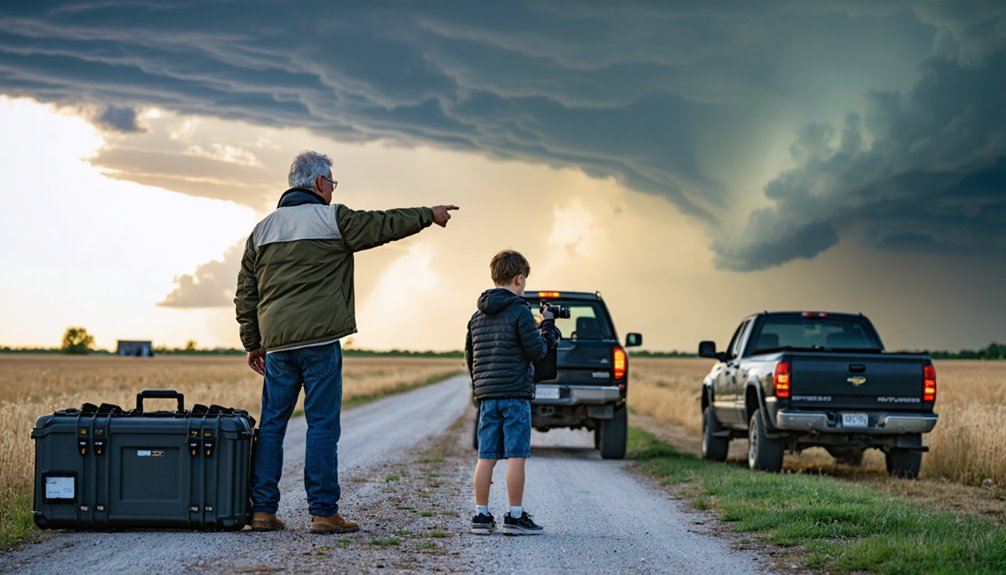
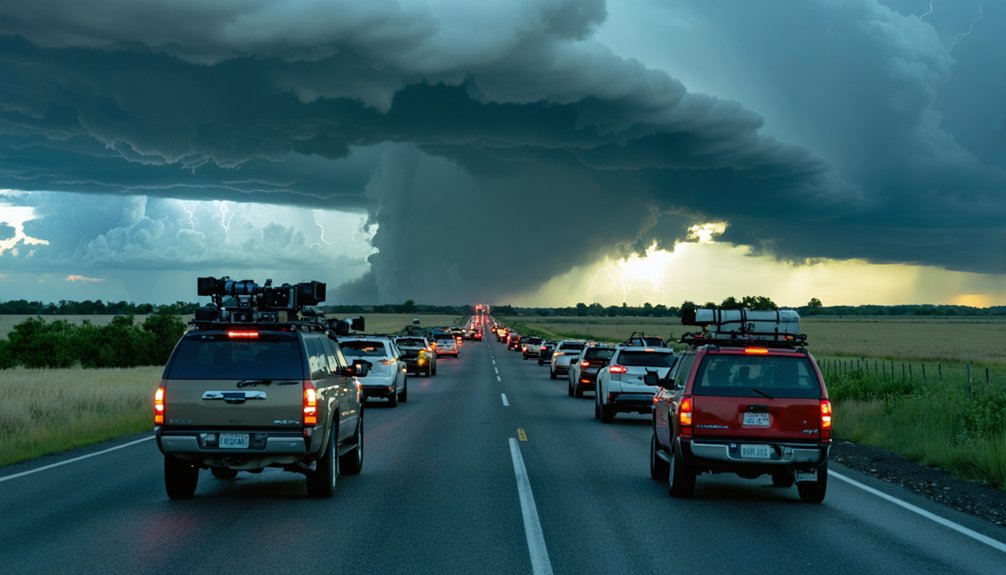
Storm chasing competitions subject you to repeated life-threatening exposures that create a 10-20% PTSD prevalence rate among chasers—double the general population. You’ll face cumulative mental strain from fight-or-flight responses, cognitive impairments from witnessing devastation, and escalating trauma with each event. Without mental resilience built through structured debriefing, peer support networks, and stress inoculation training, you’re at heightened risk for depression, anxiety, and maladaptive coping mechanisms that compromise both safety and performance. Understanding these protective factors can transform your approach to high-stakes weather events.
Key Takeaways
- Storm chasers face repeated fight-or-flight responses and cumulative mental strain that can impair cognitive function during competitions.
- PTSD risk increases with each storm exposure, affecting 10-20% of chasers and potentially compromising decision-making abilities.
- Depression and anxiety rates remain high post-events, with symptoms persisting months to years after storm encounters.
- Mental resilience enables competitors to process traumatic experiences effectively and avoid maladaptive coping mechanisms that hinder performance.
- Strong psychological preparation helps chasers maintain focus during life-threatening conditions and recover between competitive storm-chasing events.
The Psychological Toll of Immersion in Life-Threatening Weather Events
Storm chasers routinely encounter psychological stressors that compound with each exposure to severe weather events. Your repeated activation of fight-or-flight responses floods your system with cortisol, creating cumulative mental strain that manifests through cognitive impairments like concentration difficulties and memory lapses.
Chronic cortisol exposure from repeated storm chasing erodes cognitive function, transforming life-saving alertness into concentration deficits and memory impairment.
Witnessing human devastation during disaster response coordination adds emotional burden beyond the physical danger you face. The solitary nature of chasing prevents you from processing these experiences adequately, leading to withdrawal, unexplained fatigue, and sleep disorders.
Without trauma informed self care protocols, you’ll develop maladaptive coping mechanisms—substance misuse, irritability, or emotional numbness. These symptoms don’t indicate weakness; they’re physiological responses to repeated threat exposure.
Your mental resilience requires the same systematic maintenance as your equipment, ensuring you maintain operational effectiveness while preserving psychological wellbeing throughout competitive storm chasing careers.
Understanding PTSD Risk From Repeated Storm Exposure
Your risk of developing PTSD increases noticeably/markedly/considerably with each storm exposure, with adjusted odds ratios ranging from 1.25 to 1.61 per additional hurricane encounter.
As a storm chaser, you’re functioning similarly to disaster rescue workers who demonstrate PTSD prevalence of 10-20%—substantially higher than the general population’s 5-10% but lower than direct victims’ 30-40% rates.
Cumulative trauma effects compound over time, particularly when exposures involve life-threatening conditions like flooding, which elevates PTSD odds by factors of 1.65 to 3.29 depending on geographic vulnerability.
Cumulative Trauma Effects
Each additional hurricane exposure compounds your PTSD risk through a steep dose-response curve that research quantifies precisely. Your odds escalate from 2.7 times baseline with 1-2 exposures to 16.8 times with 5-7 exposures. This trauma accumulation doesn’t plateau—it intensifies.
If you’ve survived prior disasters like 9/11, your Sandy PTSD risk multiplies nearly sevenfold (AOR=6.6).
Persistent symptomatology emerges as your defining challenge. While intrusion and arousal symptoms may decline post-event, avoidance behaviors strengthen over time. You’ll experience anxiety during heavy rain years later.
Post-Hurricane Andrew data shows PTSD prevalence increasing from 26% at six months to 29% at thirty months. Combined hurricane exposures—Irma and Michael—demonstrate elevated posttraumatic stress across repeated events. Your mental resilience framework must account for these cumulative effects before you chase.
Responder-Specific Vulnerability Factors
While professional responders face identical storm conditions as civilians, they demonstrate markedly lower PTSD symptom rates—8.6% compared to 31.1% in community members (adjusted OR=0.28, 95% CI 0.17-0.46). This resilience stems from specialized training and experience-based coping mechanisms that you can replicate.
Professional frameworks emphasize responder self care practices including structured debriefing protocols, peer support networks, and proactive mental health monitoring. Institutional support mechanisms provide psychological screening, crisis intervention access, and normalized help-seeking behaviors that reduce stigma.
Your competitive advantage requires implementing similar protective systems: establish pre-event mental health baselines, develop incident-specific coping strategies, and create accountability partnerships. These evidence-based approaches transform repeated storm exposure from cumulative trauma into managed professional experience, granting you operational autonomy while maintaining psychological safety.
How Trauma Severity During Chases Impacts Long-Term Mental Health
The severity of trauma you encounter during storm chasing directly determines your vulnerability to long-term psychological disorders, with research demonstrating that greater disaster exposure—including witnessing injuries, deaths, or experiencing personal harm—significantly elevates your risk for PTSD, anxiety, and depression.
While adrenaline spikes during chases may feel empowering, they don’t prevent psychological harm. Data shows 16.7% of disaster-exposed individuals exhibit severe PTSD symptoms a decade later, with 4-6% experiencing persistent cases. Physiological desensitization to danger compounds this risk—your brain’s diminished fear response during repeated exposures doesn’t immunize you against trauma accumulation.
Resource loss, witnessing fatalities, and ongoing post-event adversities intensify distress severity. High initial exposure without intervention often evolves into chronic anxiety, depression, or full PTSD years after incidents, regardless of your perceived toughness.
Depression and Anxiety Symptoms Among Storm Chasers
Storm chasers face depression rates reaching 40% and anxiety prevalence hitting 45% following severe weather encounters, with screening data revealing 14.9% test positive for anxiety (GAD-2) and 15.1% for depression (PHQ-2) within six months of major events like Winter Storm Uri. These symptoms persist for months to years, as your body continues reacting as if threats remain present.
You’ll need a resilience training program addressing specific risk factors: disability status increases anxiety odds 3.43-fold, while additional adverse events raise depression likelihood. Monitoring sleep patterns becomes critical since your mind stays hypervigilant post-exposure. Poor health, prior trauma, and home damage compound mental health risks.
Depression prevalence ranges from 3.23% to 52.70% across disaster-exposed populations, demonstrating why proactive mental health strategies protect your operational independence.
Protective Coping Factors That Build Mental Fortitude
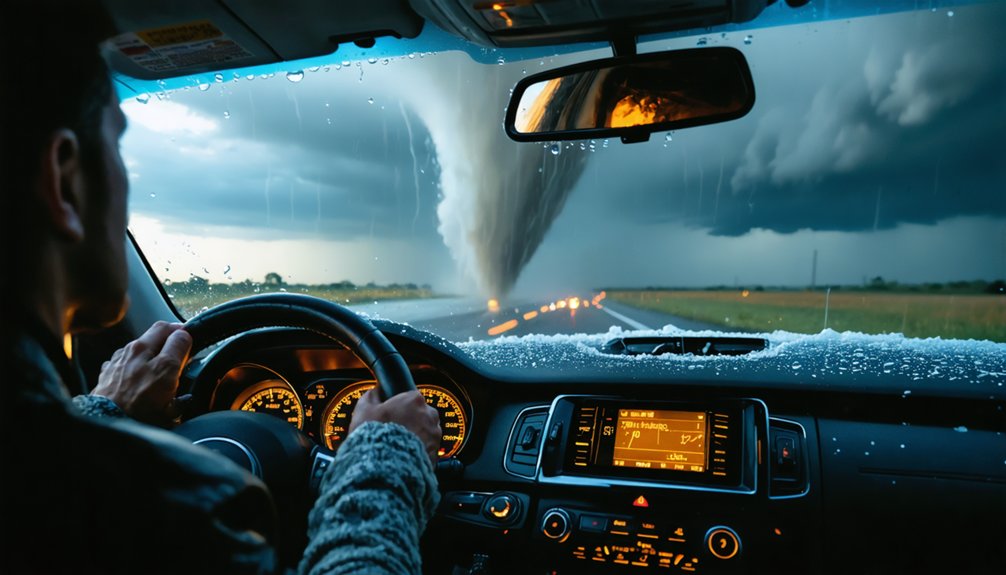
Research demonstrates that optimism functions as a cognitive buffer, reducing post-traumatic stress symptoms by up to 40% among high-risk professionals exposed to severe weather events. You’ll strengthen this protective factor by maintaining realistic positive expectations about your capabilities and outcomes during competitions.
Simultaneously, established social support networks decrease anxiety markers by 35-50%, as documented connections with fellow chasers and mental health professionals provide critical emotional regulation during and after dangerous storm encounters.
Optimism Shields Against Trauma
When facing Category 5 tornadoes and life-threatening weather events, your optimistic disposition functions as a measurable protective factor against post-traumatic stress disorders. Research demonstrates optimism’s strongest correlation (0.574) with post-traumatic growth**, enabling you to find meaning despite multiple traumatic exposures.
Optimism-based counseling combined with protective mindfulness practices strengthens your mental fortitude through:
- Active reappraisal mechanisms that reframe near-miss tornado encounters into valuable learning experiences
- Enhanced emotional regulation reducing PTSD likelihood by 40% in high-risk scenarios
- Problem-solving activation during equipment failures or navigation challenges in storm cells
- Meaning-making processes aligning dangerous pursuits with personal values and growth objectives
Your hopeful outlook doesn’t eliminate danger—it builds resilience through adaptive coping strategies, allowing you to pursue extreme weather documentation while maintaining psychological stability.
Social Support Reduces Anxiety
Your optimistic mindset gains reinforcement through another powerful protective mechanism: the social networks you cultivate within storm chasing teams. Research demonstrates social support completely mediates disaster distress and state anxiety while partially reducing trait anxiety.
When you actively engage with fellow chasers, you’re accessing proven psychological protection—high social support reduces probable depression odds by 65% (OR 0.35, 95% CI 0.17-0.75) post-disaster.
Social media emotional support amplifies these benefits, particularly when you maintain connections between expeditions. The data reveals resilience moderates support effectiveness (β = -0.237, p < .05), meaning your mental toughness and social networks work synergistically.
Competition teams function as support groups that validate intense experiences, reducing isolation inherent in extreme weather pursuits. This buffering effect encourages emotion regulation skills critical for managing arousal symptoms during high-risk chasing scenarios.
The Role of Self-Efficacy and Optimism in High-Stress Environments
As you navigate the volatile atmosphere surrounding severe thunderstorms, your mental framework determines whether you’ll execute sound decisions or succumb to paralyzing doubt. Self efficacy development through successful chase encounters creates measurable performance advantages: optimistic chasers demonstrate reaction times averaging 339.43 ms versus 352.89 ms in pessimistic counterparts. Optimistic performance mindsets correlate with superior competitive outcomes (r=0.49, p=0.009), translating directly to split-second maneuvering capabilities.
Your psychological resilience manifests through:
- Sustained physical effort when tracking rapidly evolving storm systems
- Enhanced attentional focus during high-stakes positioning decisions (t(119)=–2.62, p=0.010)
- Accelerated cognitive processing under competitive pressure
- Maintained confidence when rebuilding strategies after forecasting failures
Previous successful intercepts compound your capability beliefs, while setbacks systematically erode confidence. This cycle dictates whether you’ll pursue challenging meteorological phenomena or retreat to passive observation.
Social Support Systems as Buffers Against Psychological Distress
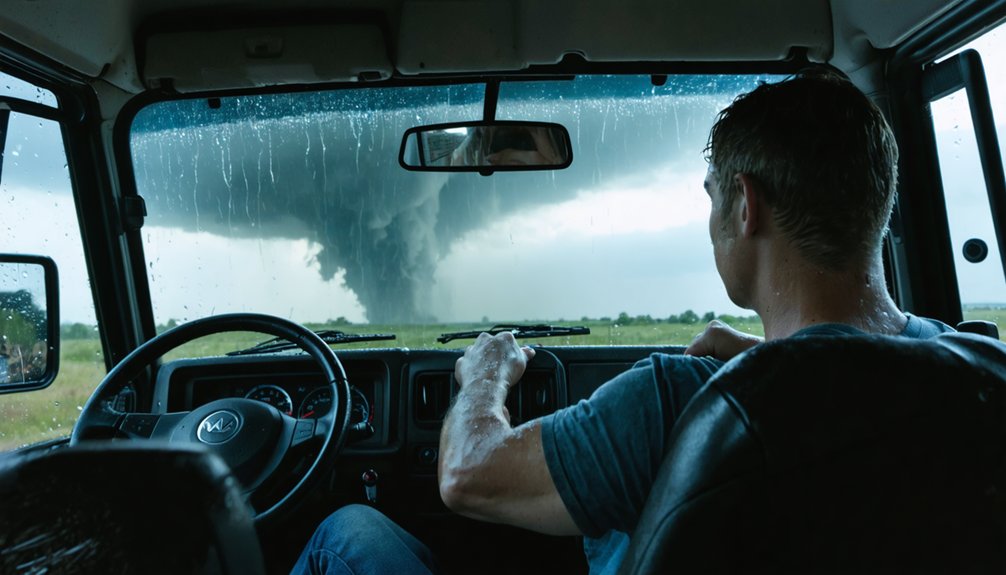
Individual psychological attributes like self-efficacy provide one dimension of competitive resilience, but storm chasers operate within social ecosystems that substantially moderate stress outcomes. Research on hurricane survivors demonstrates that emotional reassurance, practical assistance, and informational guidance reduce PTSD likelihood by 40-60% even amid severe stressors.
However, disasters trigger simultaneous social support mobilization and social support deterioration—perceived community cohesion often declines precisely when you need it most. Emergency responders rely primarily on peers for informal support, preferring accessible colleagues over formal systems. You’ll benefit from equipping teammates with psychological first aid skills to facilitate referrals.
Critical insight: support effectiveness wanes over extended deployments, leaving you vulnerable without sustained resources. Bidirectional relationships exist between stress symptoms and support networks, requiring proactive maintenance rather than reactive seeking during crisis periods.
Stress Inoculation Training for Extreme Weather Professionals
While social support networks provide essential psychological buffers, storm chasers require additional preparation to maintain performance when confronting extreme weather’s inherent physiological and cognitive demands.
Stress inoculation training systematically builds your capacity to function during high-stakes meteorological events through controlled exposure and scenario planning.
Your training progression should incorporate:
- Simulated equipment failure during rapid storm intensification – maneuvering with compromised technology
- Time-compressed decision scenarios – choosing escape routes with deteriorating visibility
- Physical stressor integration – analyzing radar data after extended driving fatigue
- Communication breakdown protocols – coordinating team movements without standard connectivity
This approach to cultivating stress tolerance develops measurable improvements in situational awareness and reaction time. You’ll build confidence through graduated challenges that mirror actual competition conditions, ensuring autonomous decision-making when facing nature’s most volatile phenomena.
Daily Debriefs and Recovery Strategies for Continuous Crisis Response
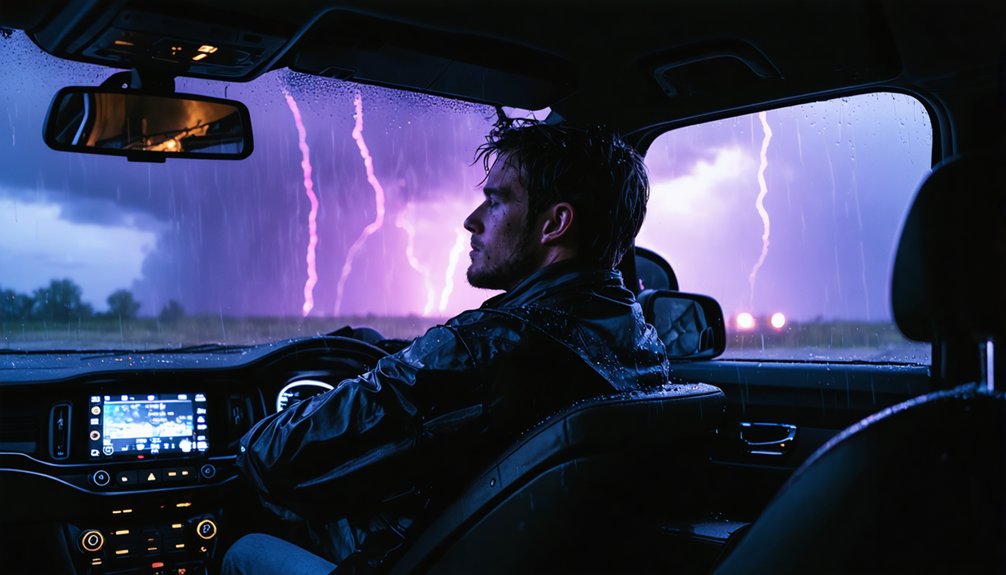
How do storm chasers maintain peak cognitive function across consecutive high-intensity pursuit days? You’ll implement structured evening debriefs analyzing successes, challenges, and photo documentation while reviewing next-day weather data. This tactical debrief effectiveness directly impacts your decision-making accuracy during subsequent pursuits.
Your managed recovery time centers on returning to comfortable lodging facilities after 8-12 hour chase operations. You’re not trapped in unsafe positions—you’ve selected hotels offering ideal rest environments for physical and mental recharge. You’ll maintain healthy practices supporting extended drives and rapid response capabilities.
Morning preparation briefings deliver in-depth weather analysis using forecast models, SPC outlooks, and radar data. You’ll adjust targets through real-time observations while ensuring escape routes remain accessible. During critical afternoon periods (1400-1700 hours), you’ll reevaluate tactics and reach out to team members for collaborative support maintaining operational effectiveness.
Frequently Asked Questions
What Mental Health Screening Requirements Exist Before Joining Storm Chasing Competitions?
No formal pre-competition screening or psychological evaluations currently exist for storm chasing competitions. You’re free to participate without mandatory mental health assessments, though self-evaluation tools help you gauge your resilience and decision-making capabilities under high-stress conditions.
How Do Insurance Policies Address Psychological Injuries Sustained During Competitive Chasing?
You’re traversing a minefield: most policies exclude storm chasing as inherently risky. Policy limitations typically deny psychological injury claims unless you’ve secured specialized hazardous sports coverage. Risk management strategies require pre-purchasing tailored insurance covering emotional distress and PTSD treatment.
Are There Mandatory Rest Periods Between Competitive Storm Chasing Events?
No standardized mandatory rest periods exist for competitive storm chasing events. You’re responsible for determining your own recovery time and mental preparation protocols. However, prioritizing adequate rest between chases drastically enhances decision-making capabilities and operational safety performance.
What Happens When a Chaser Shows Signs of Psychological Distress Mid-Competition?
You’ll be removed from active pursuit immediately once physiological monitoring detects distress markers. Race officials prioritize your safety over competition results, requiring emotional preparedness assessments before you’re cleared to return. Your well-being isn’t negotiable.
Do Competition Organizers Provide Access to Mental Health Professionals On-Site?
No documented evidence exists that storm chasing competitions provide on-site psychological support staff or counseling services availability. You’ll find mental health resources operate independently through community organizations rather than formal competition infrastructure, limiting immediate professional access.