You’ll use drones to intercept severe thunderstorms because they can fly directly into supercells at altitudes between 120 feet and 6 kilometers—atmospheric layers traditional methods can’t safely access. They’ll withstand winds 50 mph higher than standard equipment while transmitting real-time temperature, pressure, and humidity data from storm cores. This targeted atmospheric profiling extends tornado warning times beyond the current 8-13 minute window, and when you examine how networked drone systems integrate with forecasting infrastructure, you’ll discover how these additional minutes translate directly into lives saved.
Key Takeaways
- Drones withstand extreme wind speeds and penetrate supercell regions to collect temperature, pressure, and humidity data beyond ground instruments’ reach.
- Real-time data transmission from drones enables immediate integration with forecasting systems, improving atmospheric modeling and tornado prediction accuracy.
- Drones fly continuously at targeted altitudes and locations, unlike weather balloons that drift uncontrollably or costly manned aircraft operations.
- Enhanced lower-atmosphere observations from drones extend tornado warning times beyond the current 8-13 minutes, directly saving lives.
- Drones capture critical atmospheric boundary layer data and vertical profiles that satellites and ground stations cannot adequately measure.
Collecting Data Where Traditional Methods Can’t Reach
While traditional weather observation networks rely primarily on ground stations and twice-daily balloon launches, weather drones now ascend up to 6 kilometers to capture atmospheric data from critically undersampled regions where severe thunderstorms develop.
Weather drones fill critical observation gaps by ascending 6 kilometers into the atmosphere where severe storms form and traditional monitoring falls short.
You’ll gain access to micrometeorological data capture in the lower and middle atmosphere—precisely where conventional methods leave observation gaps. These systems perform vertical atmospheric profiling continuously, day and night, recording measurements at 4 to 20 readings per second.
You’re no longer constrained by fixed ground infrastructure or limited balloon schedules. Drone-collected measurements of temperature, humidity, and wind speed match weather balloon accuracy while providing the fine vertical structure of atmospheric conditions at different altitudes.
This high-resolution data reveals the atmospheric boundary layer’s complexity that satellites and ground stations simply can’t address.
Flying Directly Into the Heart of Dangerous Storms
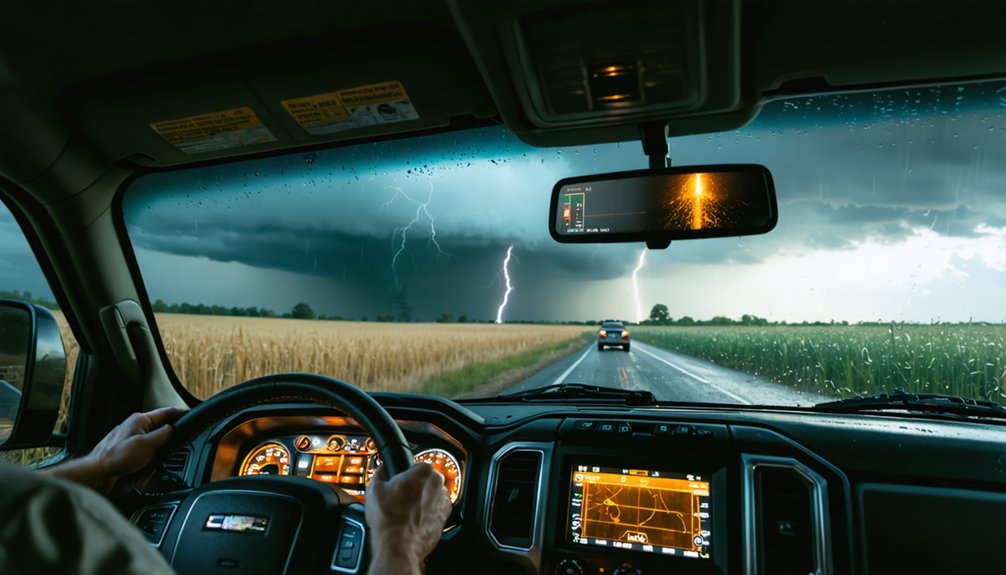
High-resolution atmospheric profiling becomes exponentially more valuable when sensors penetrate storm cores where tornadic supercells and severe weather originate. You’ll deploy drones capable of withstanding tempest conditions that ground traditional measurement systems, accessing temperature, pressure, and humidity data from supercell regions beyond ground instruments’ reach. This storm chasing innovation eliminates manned aircraft risks while maintaining operational capability in hazardous zones where helicopters can’t venture.
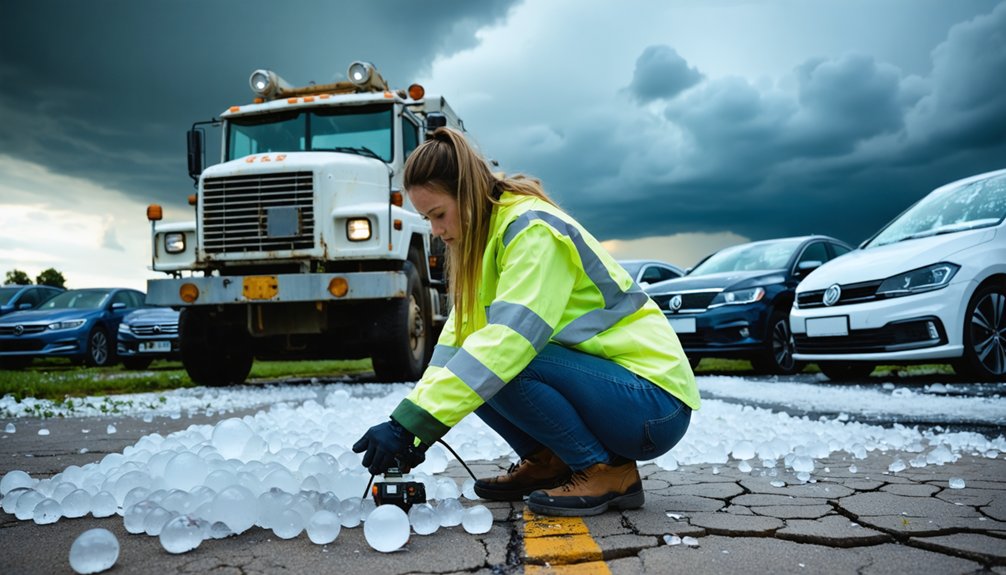
Storm penetration challenges demand robust engineering—your fiberglass-shelled drones withstand wind speeds 50 mph higher than foam alternatives, flying as low as 120 feet above ground in active thunderstorms. You’re investigating ice formation miles above ground and capturing data from hailstorm centers, gathering measurements from the rear flanks of dangerous systems. Mobile ground stations enable swift launches, putting sensors precisely where tornadic development occurs without pilot endangerment.
Transmitting Critical Information in Real-Time
Real-time telemetry transforms atmospheric data collection from post-mission analysis into actionable intelligence during active storm intercepts. Your CopterSonde-3D establishes immediate data transmission from lower atmosphere levels, streaming temperature, pressure, humidity, and wind speed measurements directly to ground stations. Onboard computing correlates sensor readings with GPS and inertial data, enabling continuous mission planning adjustments during flight operations.
The Meteodrone Ground Control Station processes telemetry feeds for instant visual display and examination. You’ll achieve seamless system integration through NOAA partnerships that feed operational data directly into National Weather Service forecasting systems. Multiple sensor arrays—thermal cameras, UV sensors, and visibility detectors—transmit comprehensive extensive datasets minute-by-minute. This networked deployment approach supports autonomous relay stations, transforming individual drone observations into nationwide atmospheric monitoring infrastructure that enhances forecasting accuracy without restrictive operational delays.
Extending Warning Times and Saving Lives
Tornado warnings currently provide only 8 to 13 minutes of advance notice, a narrow window that determines whether families reach shelter before a mile-wide funnel obliterates their homes. Drones extend this critical timeframe by improving local atmospheric modeling through real-time measurements of temperature, pressure, and wind velocity at specific storm coordinates.
Projects like TORUS, deploying drones into supercells across Colorado, Texas, Nebraska, Kansas, and Oklahoma, gather data for predicting storm evolution with unprecedented precision. The CopterSonde-3D’s 1,700 flights demonstrate how targeted lower-atmosphere observations identify thunderstorms likely to spawn tornadoes.
When drones fed data into forecasting models during the 2023 Rolling Fork tornado outbreak, they provided additional minutes—minutes that translate directly into lives saved when you’re racing toward basement stairs.
Overcoming the Limitations of Weather Balloons and Manned Aircraft
Weather balloons drift where wind currents carry them, releasing data at predetermined intervals regardless of whether those measurements capture the atmospheric dynamics meteorologists need most. You can’t redirect balloons into critical storm sectors or retrieve them for repeated deployments.
Manned aircraft operations cost exponentially more and expose pilots to severe turbulence, hail, and lightning hazards that ground entire missions.
Drones deliver multi layered atmospheric sensing by targeting specific altitude ranges and geographic coordinates where supercell development occurs. You’ll access enhanced storm monitoring through continuous boundary layer profiles impossible with single-point balloon releases.
Networked drone swarms equipped with AI-driven navigation penetrate previously unsampled regions near tropical storm genesis zones, collecting real-time wind shear, temperature gradients, and moisture content data that traditional platforms can’t safely obtain.
Frequently Asked Questions
What Specific Drone Models Are Used in Severe Thunderstorm Research Projects?
You’ll find CopterSonde-3D multirotor platform capabilities and fixed-wing TORUS drones deployed with ideal sensor configurations measuring temperature, pressure, humidity, and wind speeds. NOAA’s 3D-printed Shark drone and Meteodrones deliver critical atmospheric data you need for independent storm analysis.
How Much Do Weather Research Drones Typically Cost to Operate?
You’ll find weather research drones cost approximately $20 per flight hour, but their exceptional fuel efficiency and extended operational lifespan drastically reduce your long-term expenses compared to manned aircraft, delivering unmatched cost-per-data-point freedom in severe storm research.
What Training Do Pilots Need to Fly Drones Into Tornadoes?
You’ll need specialized drone operator training beyond Part 107 certification, including weather data collection protocols, severe storm meteorology, emergency contingency procedures, and simulation exercises replicating extreme downdrafts, turbulence, and rapidly changing atmospheric conditions encountered near tornadoes.
Can Drones Predict Tornado Strength Before It Forms on the Ground?
Drone-based atmospheric sampling can’t predict tornado strength before ground formation yet, but drone-mounted weather sensors collect critical supercell data that’ll extend your warning times and improve forecast models through detailed vertical atmospheric profiling you’ve never had access to before.
How Do Drones Handle Lightning Strikes During Storm Intercepts?
You’ll find drones use conductive metal cages that redirect 150 kA currents radially, ensuring drone durability through 98% of lightning conditions. Their lightning detection capabilities trigger protective systems, maintaining flight stability even when cage components partially melt during direct strikes.