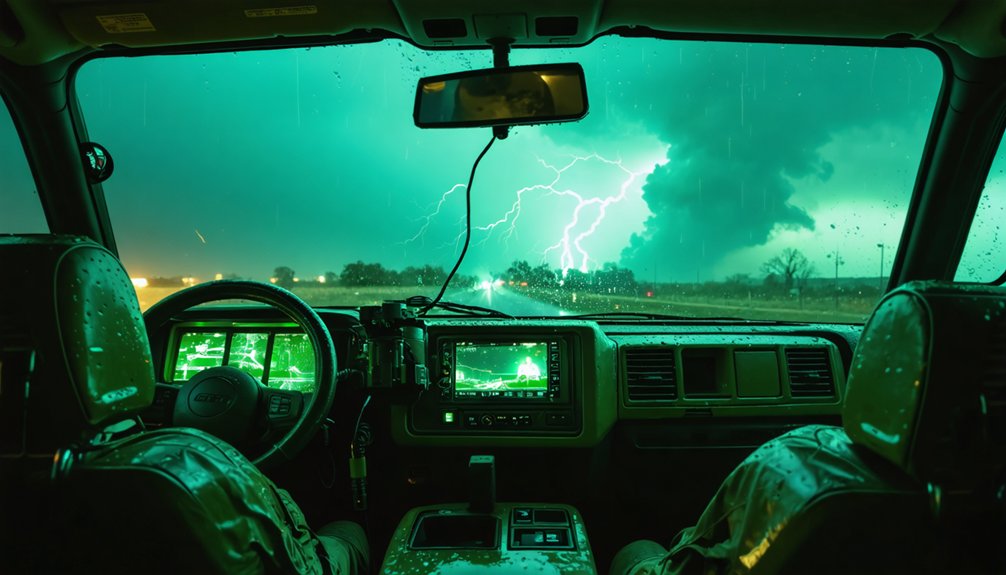
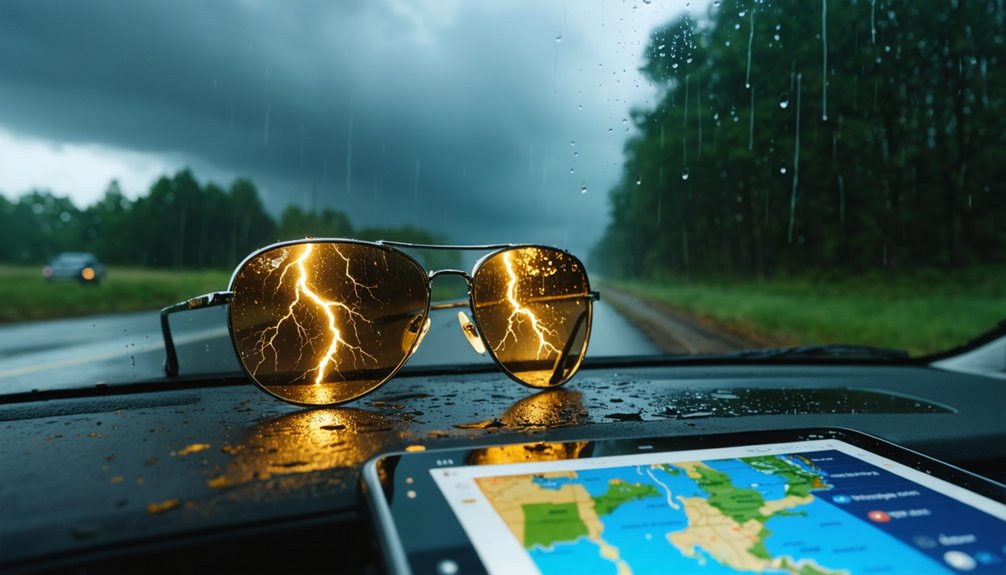
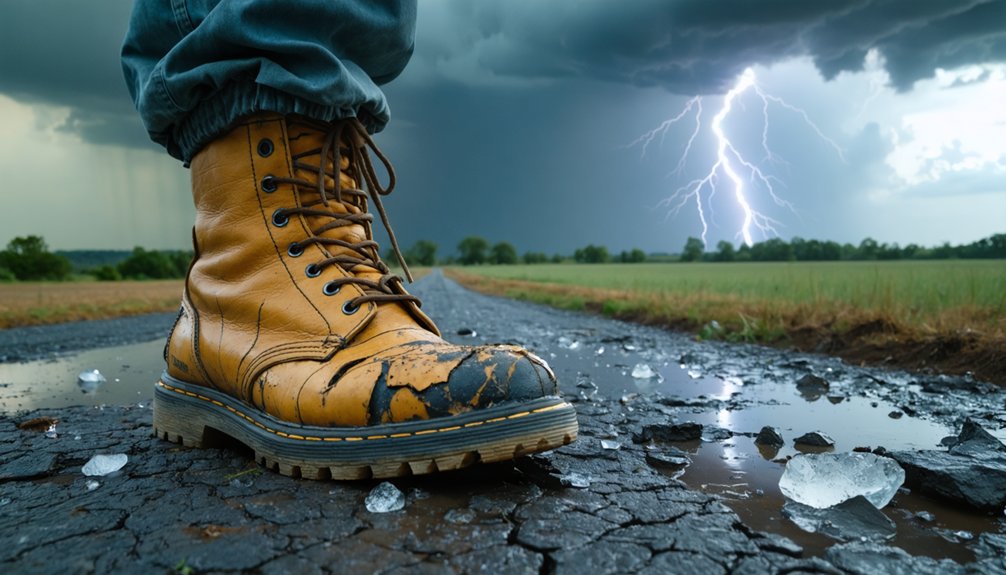
For storm chasing, you’ll need three critical pieces of safety gear: Gore-Tex waterproof shells to block moisture penetration under sustained precipitation, polycarbonate or Kevlar-rated helmets to deflect high-velocity debris, and a satellite communicator to maintain connectivity when cellular infrastructure fails. Don’t rely on marketing claims — spec sheets and performance data determine survival outcomes. Each piece serves a measurable function under extreme conditions, and there’s considerably more to understand about optimizing your full kit.
Key Takeaways
- The Salomon Quest 4D 3 GTX boots offer Gore-Tex waterproofing, aggressive traction, and ankle support for unpredictable storm terrain.
- A polycarbonate or Kevlar-rated helmet protects against high-velocity debris while maintaining clear visibility during severe weather.
- RadarScope Pro delivers professional-grade radar interpretation, providing actionable real-time data for safer storm chasing decisions.
- Gore-Tex shells provide essential waterproofing and protection, making them critical gear for surviving extreme storm conditions.
- The Baron Mobile Threat Net offers real-time radar tracking and situational awareness, enhancing safety and informed decision-making.
Storm Chasing Gear Specs That Separate Safe From Dangerous
When your life depends on gear performing under extreme conditions, specifications aren’t optional reading—they’re survival criteria. Storm gear effectiveness hinges on measurable performance thresholds: waterproofing ratings, impact resistance classifications, and connectivity reliability metrics.
You’re not selecting recreational equipment—you’re building a system that counters 100+ mph winds, airborne debris, and communication blackouts simultaneously.
Safety gear evolution has transformed storm chasing from reckless pursuit into calculated science. Gore-Tex membranes rated above 20,000mm hydrostatic head, polycarbonate helmets meeting ANSI Z89.1 standards, and satellite devices maintaining signal beyond cellular infrastructure aren’t upgrades—they’re baseline requirements.
Storm chasing isn’t reckless anymore—it’s calculated science built on Gore-Tex membranes, certified helmets, and satellite connectivity.
Every specification gap becomes a vulnerability that extreme weather exploits without hesitation. Evaluate each gear component against documented performance data, not manufacturer marketing language, before committing to field deployment.
Top 3 Storm Chasing Gear Picks for 2024
Three gear picks dominate 2024’s storm chasing market by delivering verified performance where specifications meet real-world extreme conditions.
Your storm chasing essentials start with the Salomon Quest 4D 3 GTX boots, which deliver Gore-Tex waterproofing, aggressive traction, and ankle support on unpredictable terrain.
Second, Baron Mobile Threat Net provides real-time radar tracking with precision storm positioning data, giving you actionable situational awareness before conditions escalate.
Third, a polycarbonate or Kevlar-rated helmet with integrated anti-fog goggles protects against high-velocity debris while maintaining clear visibility during rapid repositioning.
Together, these three components form ideal gear combinations that address mobility, intelligence, and protection simultaneously.
Each pick carries measurable performance advantages, ensuring you operate decisively rather than reactively when severe weather intensifies around your location.
The Safety Gear Serious Storm Chasers Actually Rely On
Serious storm chasers don’t gamble on untested equipment when severe conditions demand reliable performance across every gear category. You need storm preparedness essentials that function under extreme pressure: Gore-Tex shells, waterproof boots with aggressive traction, and polycarbonate helmets rated for high-velocity debris impact.
Critical gear innovations have transformed how you track and respond to rapidly evolving storm systems. RadarScope Pro delivers professional-grade radar interpretation, while satellite communicators maintain connectivity beyond cellular infrastructure.
Portable lightning detectors like StrikeAlert HD provide quantifiable early warnings, giving you actionable data rather than guesswork.
Your vehicle kit must include tow straps, tire repair supplies, and a thorough first aid kit. Reliable gear isn’t optional equipment — it’s the operational foundation that keeps you mobile, informed, and alive in the field.
Frequently Asked Questions
What Training Courses Are Recommended Before Attempting Storm Chasing for Beginners?
Before attempting storm chasing, you’ll want to complete NWS skywarn training and Tornado Alley-focused coursework. These storm chasing essentials build vital meteorological foundations. Prioritize beginner safety tips through CoSS or university-based severe weather field programs.
How Much Does a Complete Professional Storm Chasing Safety Gear Setup Cost?
You’ll spend $3,000–$10,000+ on a complete professional setup. Top gear brands like Salomon and Gore-Tex dominate quality tiers, but budget options exist, letting you customize your kit without sacrificing critical safety standards.
Are There Legal Permits Required for Storm Chasing in Certain States or Regions?
Permit prerequisites practically don’t exist for storm chasing laws federally, but you’ll need to navigate regional regulations carefully. Certain states restrict road access during emergencies, so always check local jurisdictional rules before deploying.
How Do Storm Chasers Coordinate Safely With Emergency Responders During Active Storms?
You’ll coordinate effectively using storm communication strategies like weather radios with SAME technology and satellite phones. Maintain emergency response coordination by monitoring official frequencies, sharing real-time GPS positions, and avoiding active rescue zones during operations.
What Insurance Coverage Options Exist Specifically for Professional Storm Chasing Activities?
You’ll need specialized policies combining liability coverage and storm damage protection. Seek insurers offering professional hazard riders, equipment coverage, and vehicle policies tailored for high-risk meteorological fieldwork—standard plans won’t adequately cover your unique operational exposures.
References
- https://crazystormchasers.com/thunderstorm-safety-gear-recommendations/
- https://crazystormchasers.com/best-protective-gear-for-storm-chasers/
- https://store.sirui.com/blogs/guides/essential-equipment-for-storm-chasing-guide-for-2025
- https://stormtrack.org/threads/recommended-chaser-equipment-list.23013/
- https://www.reddit.com/r/stormchasing/comments/1o53b49/worn_gear_for_storm_chasing/
- https://www.facebook.com/groups/2454081528094611/posts/3092696097566481/
- https://www.instagram.com/p/DTorLBtjAfu/
- https://www.youtube.com/watch?v=3GlPEfCqqL0
- https://www.stormtours.com/information/must-bring-items/
- https://www.netweather.tv/weather-forecasts/news/9783-what-to-pack-for-storm-chasing-a-kit-list-for-tornado-alley-the-usa-or-canada