Your storm shelter works best when it’s built underground, positioned beneath a garage, backyard, or basement to maximize protection and stable temperatures for food storage. You’ll want to stock freeze-dried meals, vacuum-sealed nuts, canned goods, and sealed mylar bags with desiccants to keep supplies fresh long-term. Allocate roughly 10 square feet per person, separating living space from supply zones. Keep exploring to uncover everything you need for a fully prepared, dual-purpose shelter.
Key Takeaways
- Underground shelters double as food storage units, stocking freeze-dried meals, canned goods, and vacuum-sealed nuts for long-term emergency preparedness.
- Allocate 10 sq ft per person, separating occupant space from supply zones along walls or beneath seating areas.
- Use sealed mylar bags with desiccants and airtight containers to combat humidity, pests, and temperature fluctuations in underground environments.
- Avoid storing fresh vegetables, crackers, and root vegetables, as moisture and pests cause rapid spoilage in underground conditions.
- Conduct monthly inspections to rotate stock, check ventilation, test emergency devices, and ensure all containers remain properly sealed.
Underground Storm Shelters Built for Food Storage
Underground storm shelters aren’t just for riding out tornadoes—they’re one of the smartest dual-purpose investments you can make for emergency preparedness. With the right shelter design, you can store commercially canned goods, freeze-dried foods, vacuum-sealed nuts, and dry goods in sealed mylar bags with desiccants for long-term reliability.
You’ll want to prioritize ventilation systems that maintain safe airflow without modification—any structural changes are strictly off-limits. Instead, use thermometers to monitor temperature fluctuations and select foods that perform well under variable conditions.
Schedule monthly inspections to catch moisture, pests, or spoilage early. By treating food storage as a strategic bonus within your existing shelter setup, you maximize your self-sufficiency without compromising safety or structure. That’s real preparedness freedom.
How Much Space Do You Actually Need in a Storm Shelter?
When planning your storm shelter, you’ll need to account for every occupant’s space requirements, ensuring each person has enough room to move comfortably during an extended stay.
You should also allocate dedicated areas for bulk emergency supplies like food, water, medical kits, and flashlights, since cramped storage reduces both safety and accessibility.
If you have pets, factor in their space needs too, because overlooking this detail can leave your shelter dangerously overcrowded when it matters most.
Occupant Capacity Planning
Planning your storm shelter’s occupant capacity isn’t just about squeezing everyone inside—it’s about ensuring enough room for people, pets, and critical supplies. You’ll need to calculate realistic space per person, typically 10 square feet minimum, then add dedicated areas for food, water, and medical kits.
Don’t overlook pets—they need designated space too. Larger families must invest in expanded units rather than compromising safety through overcrowding.
When your shelter isn’t serving emergency purposes, smart interior touches like decorative lighting can make the space functional for storage or quiet retreats. Clear emergency signage posted inside keeps every family member oriented and action-ready when seconds matter.
Prioritize capacity planning early—it directly determines how effectively your shelter protects your household’s freedom to survive any storm independently.
Supply Storage Allocation
Calculating how much space you’ll actually need starts with separating occupant space from supply space—they’re two distinct allocations that compete directly for the same square footage. Smart shelter design accounts for both without sacrificing either.
Reserve roughly 10 square feet per person for movement and comfort, then build your supply zone separately along walls or beneath bench seating. Stock that zone with non-perishables, bottled water, first aid kits, and emergency lighting—batteries drain faster than you’d expect during extended stays.
Don’t forget pet supplies if your household includes animals. Every cubic foot counts, so use stackable containers and labeled bins to maximize vertical space.
Monthly checks keep your stored supplies rotated, organized, and ready when you need them most.
Pet Space Considerations
Pets need dedicated space just as much as people do, and skipping that calculation is a mistake you’ll feel fast once the doors close. Factor in your pet’s full body size, movement range, and stress behavior during loud storms. A frightened dog pacing or a cat hiding behind supplies creates real hazards in tight quarters.
Allocate a defined corner for pet safety, keeping their zone separate from your food and medical supplies. Store a three-day supply of pet food in airtight containers within that area, rotating stock monthly alongside your human provisions. Include a leash, waste bags, and a familiar blanket to reduce animal anxiety.
Smart space planning keeps everyone, including your pets, safer and calmer when it matters most.
The Best Non-Perishable Foods for Storm Shelter Storage
Stocking your storm shelter with the right non-perishable foods means the difference between enduring a crisis comfortably and scrambling to survive it. Your shelter insulation affects temperature stability, so choose foods that tolerate fluctuations without spoiling. Keep emergency lighting accessible near your food storage area for quick inventory checks during high-stress situations.
Choosing the right non-perishable foods for your storm shelter can mean the difference between comfort and chaos.
Prioritize these three proven options:
- Freeze-dried emergency meals — lightweight, long shelf life, and minimal preparation required
- Vacuum-sealed nuts and dried legumes — calorie-dense, protein-rich, and stored efficiently in airtight containers
- Commercially canned goods — jams, boiled vegetables, and pickles that require zero refrigeration
Inspect your supply monthly, rotating older stock forward. You’re building self-reliance, so every food choice should maximize nutrition, longevity, and practicality.
Foods That Fail in Underground Shelter Conditions
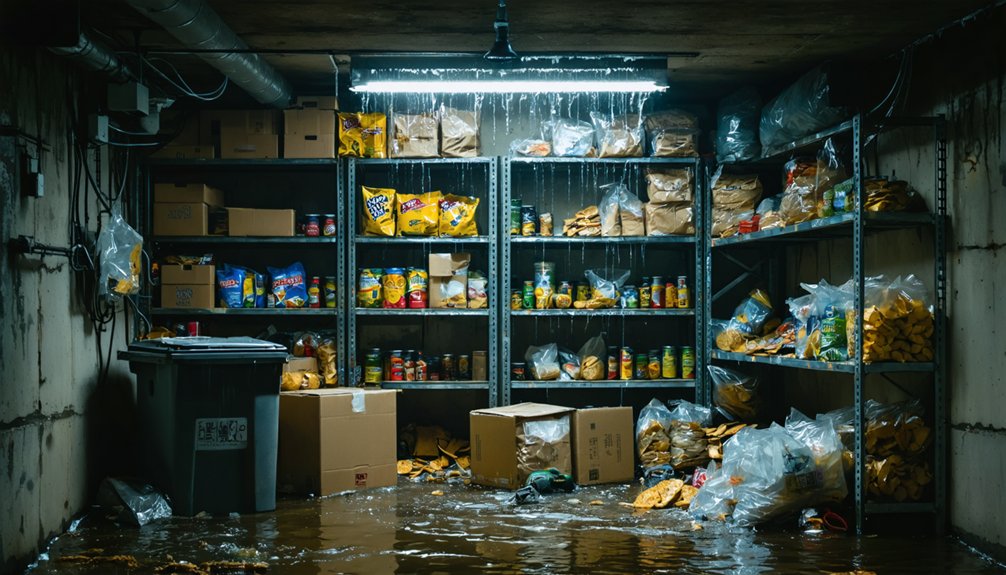
When stocking your underground shelter, you’ll want to avoid fresh vegetables, as they spoil rapidly without proper refrigeration or humidity control.
Humidity-sensitive foods like crackers, open grains, and certain dried goods absorb moisture in underground environments, leading to mold and spoilage.
Root vegetables stored in breathable bags may seem practical, but they attract pests and deteriorate too quickly to justify the storage space.
Fresh Vegetables Spoil Quickly
Fresh vegetables spoil quickly in underground storm shelters because these environments can’t maintain the specific humidity and temperature levels that produce requires. Without proper controls, you’re risking foodborne illness and wasted resources when cooking safety depends on reliable ingredients. Poor emergency lighting also makes it harder to spot early spoilage signs.
Avoid storing these fresh items in your shelter:
- Leafy greens – Wilt and rot within 24–48 hours without refrigeration or controlled humidity.
- Tomatoes and cucumbers – Break down rapidly, creating moisture that accelerates mold growth nearby.
- Root vegetables in breathable bags – Deteriorate faster than expected and attract pests that compromise your entire food supply.
Stick to freeze-dried or vacuum-sealed alternatives that give you real independence during extended emergencies.
Humidity-Sensitive Foods Fail
Underground storm shelters trap moisture, and that humidity silently destroys certain foods before you ever need them. Crackers, chips, and open cereals absorb ambient moisture quickly, turning stale or moldy within weeks. Brown sugar clumps into hard blocks, and powdered milk clots into unusable paste. Salt and baking powder cake together, losing their functional properties entirely.
You shouldn’t rely on humidity-sensitive foods when your outdoor security and survival depend on reliable provisions. Instead, prioritize vacuum-sealed packages and mylar bags with desiccants, which actively resist moisture damage.
Conduct monthly inspections using a thermometer and hygrometer to track shelter conditions accurately.
Your emergency lighting setup should illuminate storage areas clearly during inspections, helping you spot early signs of spoilage, swelling, or pest intrusion before supplies become compromised.
Root Vegetables Show Limitations
Root vegetables like carrots, potatoes, and beets seem like practical shelter staples, but they require specific humidity levels and airflow that underground storm shelters can’t reliably provide. Their storage limitations make them unreliable when you need food security most.
Here’s why root vegetables struggle in shelter conditions:
- Moisture imbalance — Shelters trap humidity inconsistently, causing rot or premature drying that destroys your supply quickly.
- Pest vulnerability — Breathable storage bags invite rodents and insects, compromising both the vegetables and surrounding provisions.
- Short usable window — Without controlled temperature and airflow, root vegetables deteriorate within weeks, not months.
You deserve a shelter stocked with dependable provisions. Skip root vegetables and prioritize freeze-dried foods, sealed grains, and vacuum-packed options that genuinely withstand unpredictable underground conditions.
How to Store Grains and Dry Goods Without Spoilage
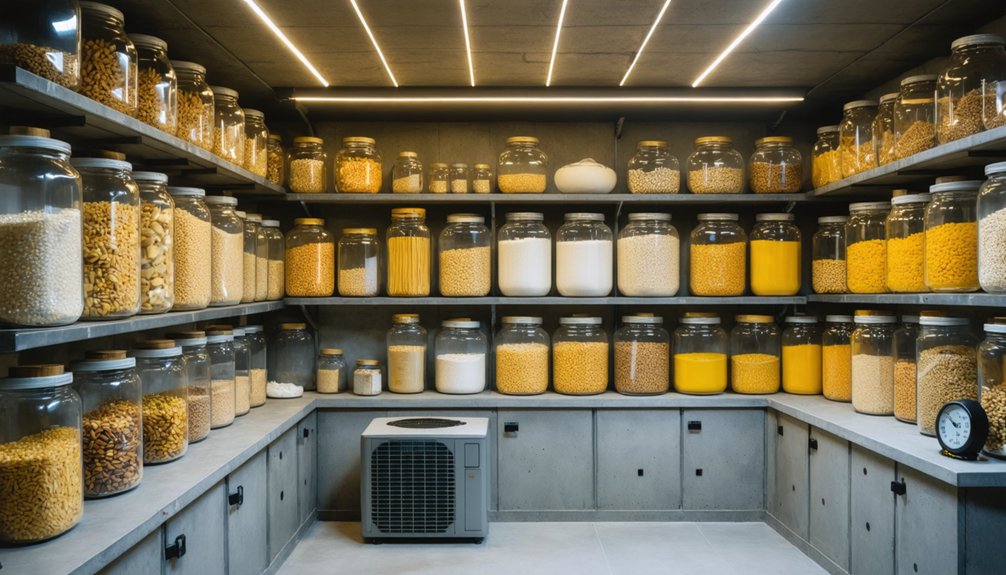
Storing grains and dry goods properly in your storm shelter prevents spoilage and guarantees your food supply remains viable when you need it most. Sealed mylar bags with desiccants represent one of the most reliable food preservation techniques available, blocking moisture and oxygen that accelerate decay.
Sealed mylar bags with desiccants block moisture and oxygen, keeping your storm shelter food supply viable when it matters most.
You’ll want to pair these with airtight containers for an additional protective layer.
Eco friendly packaging options, like recycled aluminum canisters or BPA-free bins, let you protect your supplies without compromising your values. Store dried beans, rice, and legumes away from direct contact with shelter walls, where condensation accumulates.
Label every container with storage dates so you can rotate stock efficiently. Conduct monthly inspections to catch moisture intrusion or pest activity before it compromises your entire supply.
Environmental Controls That Protect Your Storm Shelter Food Supply
Adequate airflow and ventilation keep your storm shelter’s environment stable, directly impacting how long your stored food remains safe. Inspect your ventilation systems monthly to clear debris, dust, or pest blockages that compromise air quality and accelerate spoilage.
Here’s what you’ll need to control:
- Temperature – Use a thermometer to monitor fluctuations and prioritize freeze-dried or vacuum-sealed foods that tolerate variable conditions.
- Moisture – Place desiccants near stored grains and sealed mylar bags to prevent humidity buildup that breeds mold.
- Shelter lighting – Use battery-powered LED lights during inspections to spot early signs of pest activity, moisture damage, or compromised packaging.
You’re building independence through preparation—keeping these environmental factors in check protects everything you’ve stockpiled.
Monthly Maintenance Checks Every Storm Shelter Owner Should Do
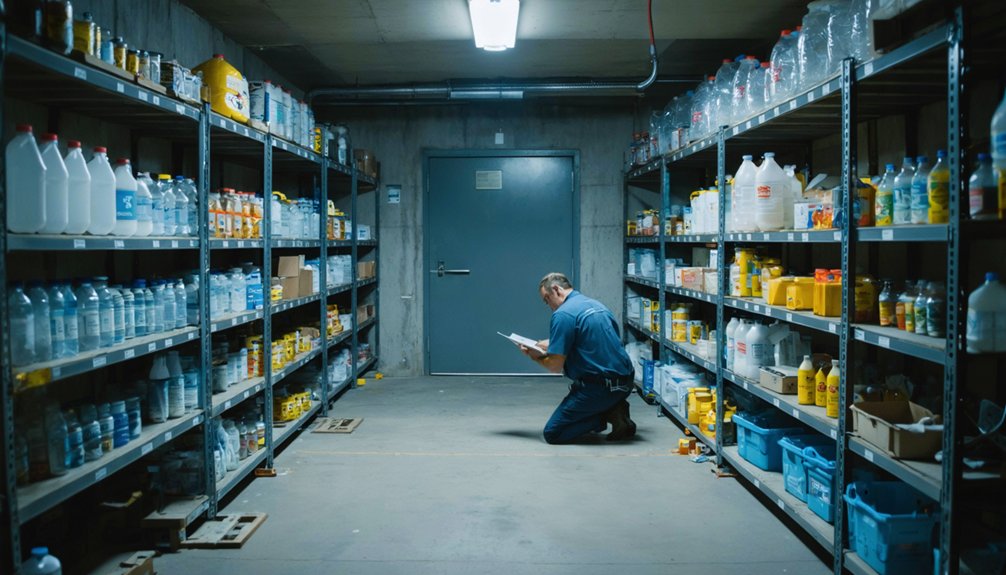
Monthly inspections keep your storm shelter functional and your food supply reliable when it matters most. Each month, check ventilation openings for debris, dust, or pest intrusion that could compromise air quality. Rotate your food stock, discarding anything past expiration, and confirm that airtight containers remain properly sealed.
Test your emergency communication devices, replacing batteries in radios and power banks as needed. Verify that waterproof document containers stay dry and intact. Inspect your rainwater harvesting setup if you’ve integrated one, ensuring collection points remain uncontaminated and filters are clean.
Look for moisture buildup on walls or floors, which signals potential spoilage risks. Document every finding during each visit. Staying consistent with these checks means your shelter performs exactly as intended when a storm demands it.
Frequently Asked Questions
What Alternative Locations Can Serve as Effective Disaster Shelters?
You’ve got solid options: campgrounds, parking garages, subway stations, remote cabins, and mountain huts. Make certain each location has functional ventilation systems and emergency lighting to keep you safe, informed, and resourcefully prepared during any disaster.
Can Storm Shelters Double as Guest Rooms or Conference Spaces?
Over 60% of shelters sit unused year-round. You can absolutely optimize your space through Multi-Purpose Design and Space Optimization, converting it into a guest room or conference area when emergencies aren’t active—maximizing your freedom and investment.
Which Essential Documents Should Be Stored Inside a Storm Shelter?
Store your identification, insurance policies, and emergency contacts in waterproof containers for document safety. You’ll want proper storage organization to keep these essentials accessible, ensuring you’re ready to act quickly and independently when emergencies strike.
Are Pets Accommodated Within Standard Storm Shelter Design Plans?
You’ll want to guarantee pet safety by planning ahead, as standard designs don’t always include dedicated pet space. Prioritize shelter accessibility for your animals by selecting larger units that comfortably accommodate both occupants and pets.
What Communication Devices Are Recommended for Storm Shelter Use?
Your lifeline in the storm’s chaos—communication devices like emergency radios and portable power banks keep you informed and free. You’ll want battery-powered emergency radios ensuring you’re never cut off from critical updates during crises.
References
- https://tornadomaster.com/creative-ways-to-use-your-storm-shelters-to-get-the-value-of-your-investment/
- https://www.lakemartinstormshelters.com/news/choose-right-storm-shelter-home-family
- https://survive-a-storm.com/blog/top-tornado-shelter-companies/
- https://www.youtube.com/watch?v=mIKE30w3uQA
- https://www.spraguesbackhoe.com/blog/can-a-storm-shelter-be-used-as-a-root-cellar/