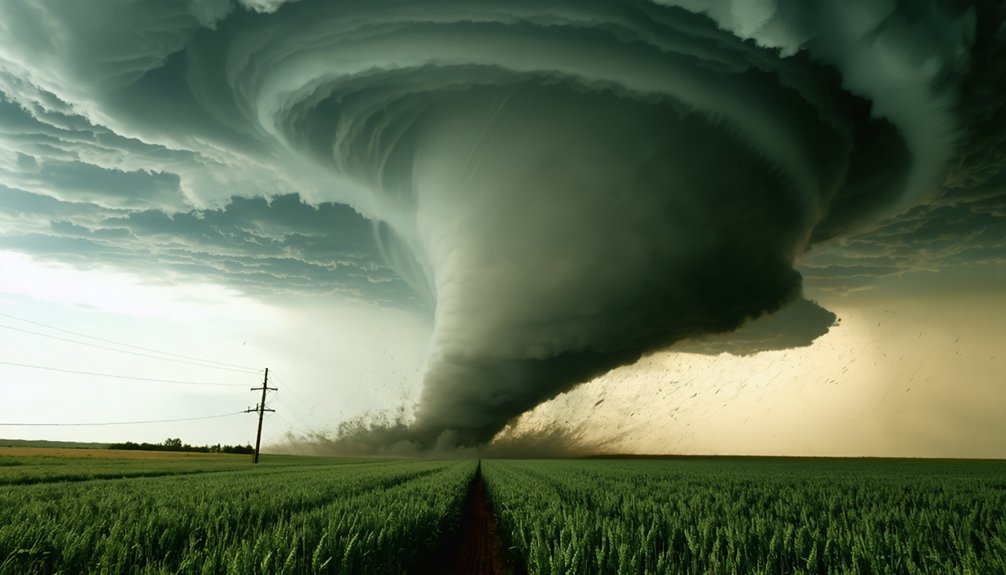
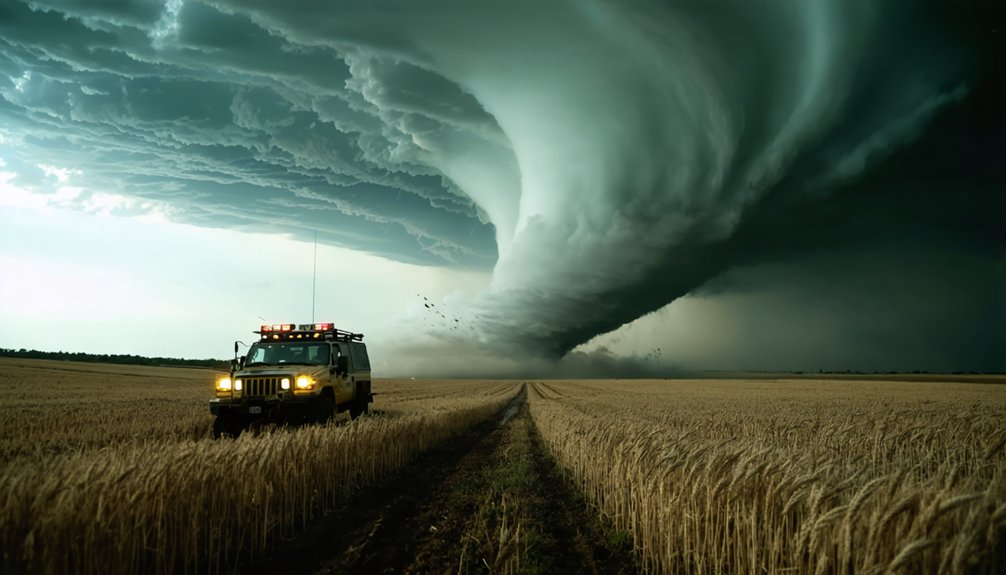
You’ll find exceptional storm chasing documentation in three distinct films: *Storm of Passion* presents a 57-minute observational study of familial dynamics within Tornado Alley’s meteorological theater. *Tornado Chasers Episode 1* showcases Reed Timmer’s November 2011 EF4 intercept near Tipton, Oklahoma, demonstrating precision deployment tactics. *The Chasers of Tornado Alley* delivers seven years of 4K supercell analysis, examining mesocyclone formation and vertical wind shear mechanics. Each documentary provides quantifiable atmospheric data and chase methodology that’ll expand your understanding of severe weather pursuit beyond surface-level observation.
Key Takeaways
- “Storm of Passion” follows a family team through Tornado Alley using pure observational techniques without sensationalism over 57 minutes.
- “Tornado Chasers Episode 1” features Reed Timmer’s 2011 EF4 tornado intercept, earning two Webby Awards for documentary excellence.
- “The Chasers of Tornado Alley” provides seven years of 4K supercell documentation examining mesocyclone formation and tornado genesis.
- All three documentaries showcase extreme weather pursuit while highlighting different aspects: family bonds, rapid deployment strategies, and scientific analysis.
- The films balance thrill-seeking elements with educational content on storm dynamics, chase methodology, and public safety contributions.
Storm of Passion: A Family’s Journey Through Tornado Alley
Released on November 23, 2025, *Storm of Passion* represents a 57-minute 38-second observational documentary that tracks a family-operated storm chasing team through Tornado Alley’s supercell environments. You’ll witness the father son bond forged through extreme weather pursuit, including direct tornado intercepts in Medil where vortex lowering occurred under active warning sirens.
Director Jesse Gillett employs pure observational techniques without sensationalism, documenting nine volunteers dedicated to preservation of TIV 2 legacy—Sean Casey’s 2008-built armored interceptor featuring deployable wind flaps, anchoring spikes, and multi-layered steel-Kevlar-polycarbonate protection. The footage captures genuine risks: vehicle rollover incidents, debris-strewn escape routes, and split-second navigation decisions.
Available free on YouTube, this technical exploration appeals to those seeking unfiltered documentation of tornado interception methodology and the engineering behind close-range severe weather cinematography.
Tornado Chasers Episode 1: Grass Roots – Reed Timmer’s Extreme Pursuits
The episode showcases November 7, 2011’s violent EF4 close range tornado intercept near Tipton, Oklahoma, where Timmer’s team executed rapid deployment strategies without operational hesitation. Elite driver Dickie “Drama” McGowan demonstrated precision maneuverability through fastest three-point turn execution under vortex pressure.
Team dynamics emerged as critical variables, with Joel Taylor and Ginger Zee introducing operational friction regarding chase positioning. Despite coordination challenges on bust days, shared meteorological passion superseded interpersonal conflict. This self-funded production earned two-time Webby Award recognition for documentary excellence and technical editing precision.
The Chasers of Tornado Alley: Touching the Sky – Inside the Storm Chasing World
Spanning seven years of meteorological documentation across America’s most volatile weather corridor, Martin Lisius’s *The Chasers of Tornado Alley: Touching the Sky* delivers unprecedented 4K analysis of supercell dynamics and operational chase methodology. You’ll access heart pounding adrenaline rushes through immersive cinematographic experiences that contrast Hollywood fiction with empirical storm tracking protocols.
The documentary examines mesocyclone formation patterns, vertical wind shear mechanics, and tornado genesis processes that define Tornado Alley’s severe weather phenomena. Lisius structures chapters around scientific inquiry rather than sensationalism, presenting stabilized telephoto captures alongside mobile pursuit footage.
You’ll discover chasers’ data collection objectives—atmospheric pressure readings, rotation velocity measurements, damage assessment protocols—that inform National Weather Service forecasting models. This evidence-based approach reveals storm chasing’s contribution to public safety systems while showcasing nature’s raw electromagnetic and kinetic energy displays.
Frequently Asked Questions
What Equipment Do Storm Chasers Need to Start Pursuing Tornadoes Safely?
Despite initial costs, you’ll need radar systems providing real-time Doppler velocity data, satellite imagery for mesoscale convective analysis, GPS navigation units, mobile power solutions, two-way communications equipment, and 4WD vehicles—enabling autonomous meteorological pursuit operations.
How Much Does a Typical Storm Chasing Season Cost Annually?
You’ll spend $7,000-$10,000 annually on storm chasing, requiring diligent budget planning and expense management. Fuel consumes $1,500-$6,200, cellular data adds $1,000, and lodging/meals fluctuate considerably. First-year costs reach $13,700 with vehicle expenses included.
What Meteorological Training Is Required to Become a Professional Storm Chaser?
You’ll need an undergraduate meteorology degree as your educational background, since 85% of professional chasers hold formal atmospheric science credentials. However, you’ll gain critical field experience through SKYWARN certification and mentorship programs before chasing independently.
Which Months Are Best for Storm Chasing in Tornado Alley?
You’ll find ideal storm chasing seasons peak from late May through early June when favorable weather patterns converge. This window delivers maximum tornado frequency across Tornado Alley, offering you the highest probability for intercepting supercells and witnessing nature’s raw power.
Can Amateur Chasers Join Professional Teams or Guided Storm Tours?
Yes, you can join guided storm chasing tours operated by professional companies like Extreme Tornado Tours and StormGroup Chasers. They’ll mitigate storm chasing risks through commercial-grade safety protocols while providing meteorological training, though tours cost $2,500-$3,500.