If you’re learning storm chasing basics on YouTube, start with Storm Chasing 101 for structured, safety-first fundamentals, then move to Reed Timmer for PhD-level meteorological insight paired with real intercept footage. Pecos Hank balances technical precision with field storytelling, while Live Storms Media sharpens your real-time decision-making instincts. Texas Storm Chasers adds regional pattern recognition for beginners. Each channel targets a different skill layer, and knowing which to watch first makes the difference between passive viewing and actual field preparation.
Key Takeaways
- Reed Timmer’s channel offers PhD-level meteorological insights, safety protocols, and hands-on storm footage ideal for beginners learning chasing fundamentals.
- Storm Chasing 101 provides structured, safety-focused playlists including an 8-minute crash course in predicting severe storms.
- Pecos Hank balances visual storytelling with technical precision, offering field-based learning through real intercept scenarios for new chasers.
- Live Storms Media connects theoretical knowledge with practical application through real-time field updates and active storm intercepts.
- MetEd UCAR offers free structured courses on forecasting skills, Skew-T diagrams, and moisture analysis for foundational storm prediction knowledge.
Best YouTube Channels for Storm Chasing in 2026
Whether you’re a beginner or a seasoned spotter, the right YouTube channel can sharpen your field skills faster than any textbook. In 2026, five channels dominate the storm chasing learning curve: Reed Timmer, Live Storms Media, Pecos Hank, Storm Chasing Video, and Texas Storm Chasers.
Reed Timmer delivers PhD-level meteorological insight alongside raw extreme weather photography and storm chaser equipment walkthroughs inside his Dominator vehicles.
Live Storms Media offers real-time field updates directly from active intercepts.
Pecos Hank balances visual storytelling with technical precision.
Storm Chasing Video keeps you current with tactical chasing updates.
Texas Storm Chasers rounds out the list with regional expertise you can apply immediately.
Each channel gives you unfiltered access to professionals making real-time decisions under pressure—exactly the education no classroom replicates.
Which Storm Chasing Channels Are Best for Absolute Beginners?
If you’re an absolute beginner, channels like Storm Chasing 101 and Reed Timmer give you structured, safety-focused content built around core forecasting concepts and field decision-making.
You’ll find playlists covering everything from 8-minute crash courses in predicting severe storms to practical tips experienced chasers wish they’d known from day one.
Prioritizing channels that emphasize safety protocols and real-world data interpretation will accelerate your learning curve while keeping you grounded in smart, professional practices.
Top Beginner-Friendly Channels
Starting your storm chasing education on YouTube doesn’t have to be overwhelming, especially when a few channels stand out as genuinely beginner-focused. These YouTube Recommendations give you structured entry points without requiring prior meteorology knowledge.
Reed Timmer delivers hands-on footage covering tornado intercepts, hurricane landfalls, and data capture techniques, making complex concepts visually accessible.
Pecos Hank and Texas Storm Chasers round out strong Beginner Insights, offering field-based learning grounded in real intercept scenarios.
For foundational structure, Storm Chasing 101 playlists break down core concepts systematically, including an 8-Minute Crash Course in Predicting Severe Storms.
Live Storms Media adds real-time field updates that contextualize theoretical knowledge.
Together, these channels let you build storm identification skills, understand positioning strategy, and develop situational awareness independently, on your own schedule.
Learning Storm Chasing Basics
Before diving into intercepts or radar analysis, you’ll need channels that teach storm structure, basic forecasting, and field safety from the ground up.
Storm Chasing 101’s playlist delivers exactly that, covering storm dynamics through its 8-Minute Crash Course in Predicting Severe Storms and essential field wisdom in *I Wish I Knew These Five Things When I Started Storm Chasing*.
Reed Timmer’s content bridges meteorological data with real-world chasing strategies, connecting atmospheric parameters to observable storm behavior.
Pair these channels with MetEd UCAR’s free Skew-T diagram training to sharpen your forecasting foundation.
The Safety Tips, Tools & How to Chase Storms Like a Professional playlist reinforces smart decision-making protocols critical for beginners.
These resources collectively build the technical literacy you’ll need before entering the field independently.
Safety-Focused Channel Picks
Safety isn’t a secondary concern in storm chasing—it’s the operational framework everything else builds on, which is why your first channel selections should prioritize it explicitly.
Reed Timmer’s channel delivers technical breakdowns covering safety equipment deployment, storm preparedness protocols, and real-time situational awareness under active intercept conditions.
You’ll observe how professionals execute route planning decisions when environments deteriorate rapidly.
Storm Chasing 101’s Safety Tips playlist directly addresses risk assessment, emergency protocols, and team communication strategies beginners consistently underestimate.
The free Safety Ebook from Storm Chaser Coaching reinforces these fundamentals through eight structured rules.
Trey’s content emphasizes repositioning early and maintaining constant weather monitoring—disciplines that preserve your operational freedom by keeping you alive and mobile.
Prioritize these channels before you ever leave your driveway.
Top Playlists That Teach Storm Chasing Step by Step
Whether you’re brand new to storm chasing or building on basic field experience, structured playlists cut through the noise and deliver sequenced, actionable instruction.
Two playlists stand out for mastering storm chasing techniques and storm prediction strategies efficiently.
- Storm Chasing 101 opens with an 8-minute crash course in predicting severe storms, giving you immediate forecasting leverage.
- “I Wish I Knew These Five Things” delivers hard-earned field wisdom compressed into digestible lessons.
- Safety Tips, Tools & How to Chase Storms Like a Professional walks you through preparation, decision-making, and professional execution.
- Chaser Training Ep 1 targets forecasting resources directly, connecting you to SPC discussions, MetEd UCAR, and StormTrack.org simultaneously.
These playlists build your knowledge systematically, so you’re chasing smarter, not harder.
Where Storm Chasing YouTubers Send You to Learn Forecasting
Most storm chasing YouTubers don’t keep their forecasting knowledge in-house—they point you directly to the same external tools they rely on.
For storm prediction, they consistently recommend MetEd UCAR, a free platform offering structured courses on moisture, instability, and Skew-T diagram interpretation—skills critical for reading atmospheric setups.
SPC forecast discussions sharpen your forecasting techniques by exposing you to real tornadic threat analysis written by professional meteorologists.
StormTrack.org delivers community-driven knowledge where experienced chasers break down forecast setups openly.
TheWeatherPrediction.com offers Haby hints that reinforce foundational concepts.
Bart Comstock’s Tumblr uses weather maps and illustrations to make complex patterns visual and digestible.
These aren’t supplementary resources—they’re the actual tools chasers use operationally.
Mastering them gives you genuine forecasting independence before you ever leave your driveway.
Field Safety Lessons the Top Storm Chasing Channels Actually Teach
Field safety on YouTube isn’t theoretical—the top storm chasing channels embed real operational decision-making into their content.
You’ll watch experienced chasers execute live field awareness and risk assessment under actual storm conditions, not simulations.
- Reed Timmer narrates escape routes while hailstones hammer his vehicle.
- Trey’s footage shows real-time repositioning decisions before dangerous wrapping rain cuts visibility.
- The Safety Tips playlist breaks down preparation checklists and abort triggers.
- Brandon Copic’s 17 years of LIVE intercepts demonstrate sustained situational awareness across shifting storm structures.
These channels don’t just show you tornadoes—they show you the thinking behind surviving them.
You’ll absorb decision frameworks organically: when to reposition early, when to hold position, and when no footage justifies the exposure.
How to Go From Viewer to Field-Ready Storm Chaser
You start by mastering storm fundamentals through free resources like MetEd UCAR and SPC forecast discussions before you ever step into the field.
From there, you build operational skills by working through structured playlists like Storm Chasing 101 and Chaser Training episodes that cover forecasting, positioning, and equipment.
Once your knowledge base is solid, you apply it safely by following proven protocols from channels like Reed Timmer and the Safety Tips playlist, which translate classroom theory into field-ready decision-making.
Start Learning Storm Basics
Before you chase your first storm, you’ll need to build a foundation in meteorological basics—and the right YouTube channels make that shift from passive viewer to field-ready chaser far more structured than self-study alone.
These beginner resources deliver storm basics through precise, visual instruction.
- Storm Chasing 101 offers an 8-minute crash course in predicting severe storms.
- MetEd UCAR provides free animated courses covering moisture, instability, and Skew-T diagram interpretation.
- Chaser Training Ep. 1 breaks down essential forecasting resources used by active chasers.
- SPC forecast discussions train your eye to recognize tornadic storm setups in real data.
Each resource targets specific knowledge gaps, letting you move independently through the learning curve on your own schedule.
Build Field-Ready Skills
Knowing storm theory gets you through the front door—but field readiness demands a separate skill set built around situational awareness, repositioning strategy, and real-time decision-making under pressure.
Trey’s video content hammers this point directly—keep your head on a swivel, reposition early, and never let complacency override your exit window.
Your skill development accelerates fastest when you study active intercept footage with tactical intent.
Watch how experienced chasers read storm structure shifts, identify escape routes, and adjust positioning relative to motion vectors.
Brandon Copic’s 17 years of live intercept streams offer unfiltered, real-time examples of these decisions executing under pressure.
Pair that footage study with Storm Chaser Coaching’s free eight-rule Safety Ebook.
It converts raw enthusiasm into disciplined field protocol—exactly what separates prepared chasers from dangerous ones.
Chase Storms Safely
Moving from passive viewer to active field chaser requires a structured progression, not a leap of faith.
Storm chaser safety isn’t optional—it’s your operational foundation. Emergency preparedness separates informed chasers from dangerous ones.
These channels deliver field-tested protocols you can apply immediately:
- Reed Timmer demonstrates real-time repositioning decisions amid hailstones and storm surges.
- Safety Tips, Tools & How to Chase Storms Like a Professional playlist covers complete chase protocols.
- Trey’s videos emphasize early repositioning, constant situational awareness, and keeping your head on a swivel.
- Storm Chasing 101 includes eight hard-learned lessons beginners consistently overlook.
Study these resources before you ever leave your driveway.
Your freedom in the field depends entirely on the discipline you build before reaching it.
Which Storm Chasing Channels to Watch First and in What Order
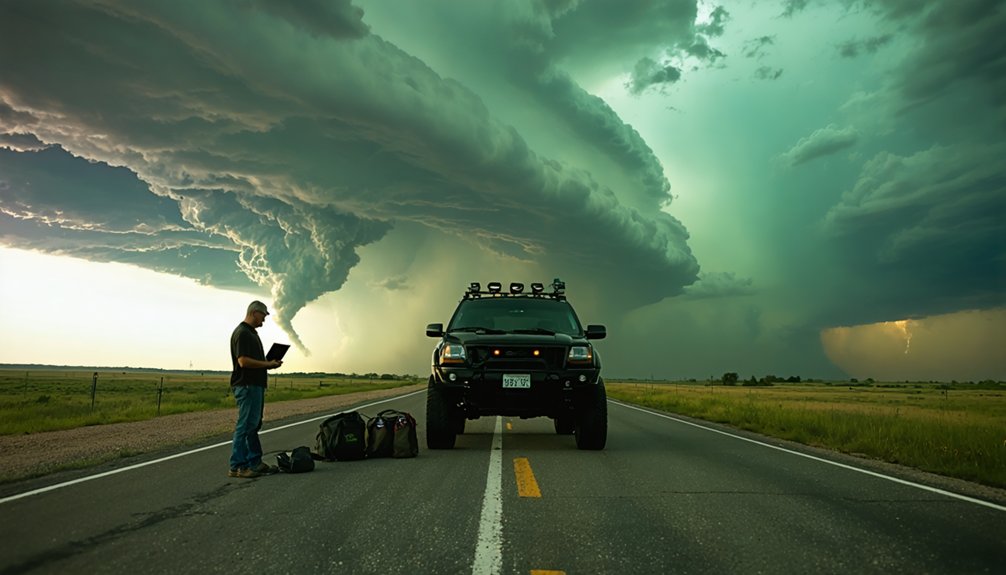
When you’re starting out, channel selection and viewing order can considerably accelerate your learning curve.
Begin with Storm Chasing 101 to build foundational storm chasing techniques, then progress to Reed Timmer’s channel for data-driven storm prediction methods and meteorological depth. His PhD-level insights bridge theory and field application effectively.
Next, incorporate Live Storms Media for real-time field updates that reinforce what you’ve studied.
Follow with Pecos Hank and Texas Storm Chasers to observe varied chasing styles and regional strategies.
Finally, add Brandon Copic’s live intercepts to your rotation — 17 years of extreme weather streaming delivers raw, unfiltered situational awareness you can’t replicate in a classroom.
This structured sequence moves you systematically from core concepts to advanced field execution without wasted detours.
Frequently Asked Questions
Do Storm Chasing Youtubers Offer Paid Mentorship or One-On-One Coaching Programs?
Some storm chasing YouTubers do offer paid mentorship and one-on-one coaching. You’ll find Storm Chaser Coaching provides a free Safety Ebook, while Freddy McKinney delivers structured chaser training episodes—check their platforms for premium personalized coaching options.
Can Watching Storm Chasing Youtube Channels Count Toward Any Official Certification?
Like scattered storm cells on radar, YouTube’s online learning won’t directly count toward certification programs. You’ll need structured courses like MetEd UCAR or Basic Skywarn Spotter Class, but these channels sharpen your foundational knowledge independently.
Are There Storm Chasing Youtube Communities Where Beginners Can Ask Questions Directly?
Yes, you’ll find active storm chasing forums like StormTrack.org where you can ask questions directly. Channels like Freddy McKinney’s also offer communities sharing beginner tips, helping you connect with experienced chasers who’ll guide your development.
What Equipment Do Beginner Storm Chasers Need Before Going Into the Field?
Before heading into the field, you’ll need essential gear: a weather radio, GPS, dashcam, and mobile data device. Follow safety tips from Storm Chaser Coaching’s free ebook, covering eight critical rules to keep you protected.
Do Any Storm Chasing Youtubers Collaborate With Universities or Meteorology Programs?
Yes, you’ll find Reed Timmer’s PhD meteorology background drives storm chasing partnerships with academic circles, while MetEd UCAR’s free courses support educational outreach, giving you direct access to university-level storm science content independently.
References
- https://www.youtube.com/watch?v=6otZLjSZvPU
- https://videos.feedspot.com/storm_chaser_youtube_channels/
- https://www.stormchasingusa.com/blog/learning-the-basics-about-tornadic-storm-forecasting/
- https://www.youtube.com/playlist?list=PLg23mPRzqQAo68M87-pgdgOpA7rlHq0om
- https://www.youtube.com/playlist?list=PLVEuvNuSbsGgOY0ipyHTGM2FjG8Xd6KxV
- https://www.youtube.com/watch?v=1_IcFAp3huQ
- https://www.youtube.com/watch?v=Ky-Qr9LwiS4
- https://www.youtube.com/@BrandonCopicWx