Storm chasing demands you master CPR, wound management, and fracture stabilization before you ever hit the road. You’ll need to recognize shock symptoms fast and apply pressure to bleeding wounds without hesitation. Pack sterile bandages, splints, antiseptics, and emergency blankets in a dedicated medical kit you know how to use under pressure. Complete certified First Aid and CPR training regularly to stay sharp. The skills and strategies ahead could mean the difference between life and death.
Key Takeaways
- Master CPR and wound management techniques, as these are critical skills for addressing life-threatening injuries during storm chasing emergencies.
- Learn fracture stabilization using splints and secure bandaging to immobilize injuries until professional medical assistance becomes available.
- Recognize and manage shock by deploying emergency blankets and controlling bleeding through direct pressure with clean bandages.
- Build and carry a medical kit containing sterile bandages, antiseptics, splints, and emergency blankets for immediate storm-related injuries.
- Complete certified First Aid and CPR training regularly, practicing skills to ensure confident, effective responses under high-pressure conditions.
First Aid Skills Every Storm Chaser Must Know
Storm chasing exposes you to a range of life-threatening hazards—tornado debris, lightning strikes, flash flooding, and high-impact collisions—making first aid proficiency as essential as any meteorological tool in your kit.
You can’t rely on emergency services reaching you quickly in remote or disaster-stricken areas, so you’ve got to be self-sufficient.
Master CPR, wound management, fracture stabilization, and shock prevention. These aren’t optional skills—they’re your frontline defense when professionals are unavailable.
Injury prevention starts before you deploy: pack bandages, antiseptics, splints, and emergency blankets, and know how to use each one decisively.
Emergency preparedness also means completing certified First Aid and CPR training regularly. Outdated skills fail under pressure.
When destruction surrounds you, competent, practiced hands—yours—can be the difference between survival and loss.
Pack a Medical Kit Built for Storm Chasing Realities
When you’re operating in remote terrain with no immediate access to emergency services, your medical kit isn’t a backup plan—it’s your primary resource.
Storm readiness demands that you build your kit around real field conditions, not generic emergencies.
Your kit essentials should include sterile bandages, antiseptics, splints, and emergency blankets. Bandages and antiseptics address cuts from broken glass and exposed nails. Splints stabilize fractures caused by flying debris or sudden falls. Emergency blankets counter shock and hypothermia in bleeding victims.
Don’t overlook a dust mask—tornadic debris creates dangerous air conditions.
Pair your supplies with current First Aid and CPR certification. Knowledge without materials fails you. Materials without knowledge fail you equally. Combine both, and you’re genuinely prepared for what storm chasing delivers.
Avoid Secondary Hazards While Providing First Aid at a Storm Scene
Rendering aid at a storm scene exposes you to dangers that can injure or kill responders just as readily as the initial event.
Secondary hazards demand your constant vigilance before and during any first aid intervention.
Stay clear of downed power lines — assume they’re live until confirmed otherwise. Avoid structurally compromised buildings that can collapse without warning.
Don’t enter flood-damaged areas where hidden sinkholes, submerged debris, or contaminated water threaten your safety.
Scan for gas leaks indicated by odor or hissing sounds. Don’t use open flames nearby.
Watch for sharp debris underfoot and overhead.
You can’t help others if you become a casualty yourself.
Assess the storm scene systematically, eliminate immediate threats, then render aid from a position of controlled, informed safety.
Handle Tornado Injuries on the Scene Before Medics Arrive
Tornado injuries can overwhelm a scene before professional medical help arrives, so you must act decisively with the skills and supplies you have on hand.
Assess victims quickly for cuts, fractures, and trauma caused by tornado debris. Apply bandages and antiseptics to open wounds, and use splints to stabilize suspected fractures.
Don’t move anyone showing signs of back or neck injury unless immediate danger demands it. Deploy emergency blankets to counter shock in bleeding or hypothermic victims.
For trapped individuals, prioritize emergency signaling using whistles, banging, or text messages rather than shouting.
After stabilizing injuries, seek professional medical assistance immediately. Your preparedness, training, and well-stocked kit determine outcomes when professional responders haven’t yet reached the scene.
Stop Bleeding and Stabilize Fractures After Tornado Impacts
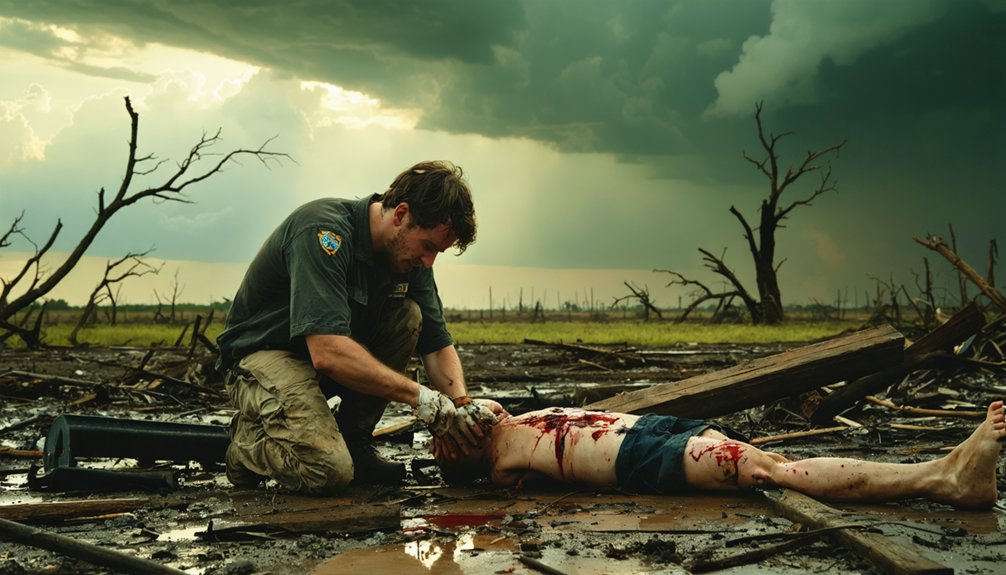
Bleeding and fractures rank among the most immediately life-threatening injuries you’ll encounter after a tornado impact.
For bleeding control, apply direct pressure using clean bandages and maintain it consistently until bleeding stops. Don’t remove soaked dressings—layer additional material on top. Elevate wounded limbs when possible to reduce blood loss.
For fracture stabilization, immobilize the injured area using splints, padding, and secured bandaging. Don’t attempt to realign bones yourself. Stabilize the joints above and below the fracture site to prevent further damage from movement.
Emergency blankets counter shock in victims experiencing significant blood loss or exposure.
After stabilizing injuries, seek immediate professional medical assistance. Your kit and training buy critical time, but they don’t replace definitive care from qualified emergency personnel.
Frequently Asked Questions
How Do Storm Chasers Coordinate With Local Emergency Services During Disasters?
Like a town crier broadcasting alerts, you coordinate with local emergency services by mastering communication strategies and following emergency protocols—you’re reporting real-time conditions, sharing locations, and syncing with dispatch to guarantee rapid, effective disaster response.
What Legal Liabilities Exist When Providing First Aid as a Storm Chaser?
When you provide first aid, Good Samaritan laws offer legal protections against liability. You’ll face consent issues with unconscious victims, but acting reasonably limits exposure. Liability waivers don’t typically apply, so document your actions carefully.
Can Storm Chasers Obtain Professional Medical Certifications Specific to Field Work?
Ironically, you don’t need a tornado to pursue excellence—you can obtain medical training through certification programs like Wilderness First Responder or EMT courses, equipping you with professional, field-specific skills that’ll keep you genuinely self-sufficient.
How Does Extreme Weather Affect the Shelf Life of Medical Supplies?
Extreme temperatures drastically shorten your medical supplies’ shelf life. You’ll need to regularly inspect and rotate medications, bandages, and antiseptics, as heat and cold degrade their effectiveness, potentially compromising critical first aid interventions during storm-chasing emergencies.
What Mental Health Resources Exist for Storm Chasers After Traumatic Events?
Like a storm that passes, trauma lingers—you’ll find healing through counseling, peer support groups, and crisis hotlines. Embrace these trauma support resources and coping strategies to reclaim your mental freedom after chasing nature’s most violent events.
References
- https://svinews.com/2024/featured/97765/things-every-storm-chaser-needs-in-their-truck/
- https://www.livingskytours.com/storm-chasing-101/
- https://www.redcross.org/get-help/how-to-prepare-for-emergencies/types-of-emergencies/tornado.html
- https://www.weathercentertx.com/weather-101-different-types-of-weather/storm-chasing-101/
- https://texasstormchasers.com/safety/tornado/
- https://stormtrack.org/threads/chasers-as-first-responders.10038/