When *Twister* grossed $494 million in 1996, it didn’t just dominate box offices—it reshaped an entire scientific field. You can trace a direct line from the film’s release to a doubling of University of Oklahoma’s meteorology enrollment, jumping from 225 to 450 students within two years. It also launched a storm-chasing tourism industry still thriving today. The film’s cultural and scientific ripple effects run far deeper than most people realize, and the full picture might surprise you.
Key Takeaways
- *Twister* transformed storm chasing from an obscure scientific pursuit into a widely recognized, thrilling cultural phenomenon inspiring real careers.
- University of Oklahoma’s meteorology enrollment doubled within two years, growing from 225 to 450 students after the film’s release.
- The film sparked a 10 percent rise in U.S. meteorology majors and launched a thriving storm-chasing tourism industry.
- Hollywood’s use of meteorological consultants pushed for greater scientific accountability, influencing future productions to prioritize technical accuracy.
- *Twister* accelerated technological advancement in storm chasing, now featuring mobile radar apps, GPS tracking, and portable instrumentation.
Why Twister Became a Cultural Phenomenon
The film’s cinematic realism—however dramatized—made tornado science feel visceral and accessible.
The film’s raw, dramatized realism made tornado science feel immediate, urgent, and impossible to ignore.
Slate marks it as a definitive turning point, shifting storm chasing from obscure fieldwork into recognizable cultural territory.
The dramatic visuals didn’t just entertain you; they repositioned extreme weather as something worth pursuing.
That’s a measurable shift in public framing, one that moved storm chasing from research footnotes into everyday conversation and inspired real-world consequences you’ll see throughout this article.
What Twister Got Right (and Wrong) About Storm Chasing
If you watched *Twister* in 1996, the tornado visuals likely felt viscerally convincing—and meteorologists confirm the film captured the raw, chaotic energy of severe storm systems with reasonable authenticity.
However, the radar and computer technologies depicted are now considered outdated, as modern forecast models process observational data far faster and more accurately than the systems shown on screen.
The film also can’t escape one glaring implausibility: as CBC notes, real storm chasing today involves crowded roads packed with chasers, not the isolated, lone-vehicle pursuits you see throughout the movie.
Accurate Tornado Visual Drama
However, cinematic exaggeration quickly surfaces on closer inspection. Real tornadoes don’t roar like freight trains on cue, and survivors rarely stand meters from an EF5 without fatal consequences.
The film compresses dangerous exposure times dramatically. You’d recognize the visual structure as authentic, but the survivable proximity? That’s pure storytelling license, not atmospheric science.
Outdated Radar Technology Depicted
Beyond tornado visuals, *Twister*’s radar and computer technology now looks laughably primitive. The film’s outdated systems reflect 1996’s actual capabilities—clunky interfaces, delayed data feeds, and radar limitations that forced chasers to rely heavily on visual confirmation rather than real-time digital analysis.
Today, you’d access mobile apps delivering live, high-resolution radar sweeps directly to your phone. Modern forecast models process atmospheric observations faster and more accurately than anything depicted in the film.
What once required a van full of equipment now fits in your pocket.
Scientific American confirms the radar and computer technologies shown in *Twister* are genuinely obsolete by current standards. That gap between Hollywood’s 1996 tech and today’s tools illustrates precisely how dramatically storm chasing’s technological infrastructure has evolved over the past three decades.
Unrealistic Chaser Road Solitude
That crowding directly shapes storm chase ethics today. You’re not just steering a violent storm — you’re steering competing vehicles, overlapping routes, and split-second decisions made under pressure.
Inexperienced chasers inspired by Hollywood’s lone-wolf imagery enter the field unprepared for this chaos.
The freedom to chase comes with responsibility: understanding that real roads are shared, dangerous, and nothing like the cinematic open stretches *Twister* romanticizes.
How Real Meteorologists Responded to the Film
When *Twister* hit theaters, real meteorologists gave it mixed reviews—criticizing its scientific inaccuracies while acknowledging its power to generate public interest. You can trace the tension in their responses: they pushed back against Hollywood exaggeration, yet they also recognized that the film doubled enrollment in programs like the University of Oklahoma’s meteorology department, growing it from 225 to 450 students.
That dynamic ultimately pushed later productions, like *Twisters*, to bring in National Severe Storms Laboratory consultants and more realistic instrumentation, showing that scientific pressure on Hollywood could produce measurable results.
Scientists Critique Hollywood Accuracy
Modern science has pushed tornado warning lead times to an average of 15 minutes, a precise, data-driven achievement the film never captured authentically.
CBC meteorologists also pointed out that real chase operations involve crowded roads, not dramatic isolated pursuits.
You can appreciate *Twister* as entertainment while understanding it compressed, exaggerated, and occasionally invented the science driving actual severe weather research.
Meteorologists Embrace Public Interest
Despite the scientific inaccuracies, many meteorologists didn’t dismiss *Twister*—they leveraged it. Rather than fighting meteorological myths born from cinematic influence, they channeled surging public curiosity into recruitment and education.
The University of Oklahoma’s meteorology program doubled enrollment within two years of the film’s 1996 release, growing from 225 to 450 students. Nationally, U.S. meteorological majors increased roughly 10 percent by the late 1990s.
You can trace a direct pipeline from theater seats to university classrooms. Scientists recognized that Hollywood had accomplished what textbooks couldn’t—mass emotional engagement with atmospheric science.
Instead of issuing corrections alone, leading meteorologists partnered with productions like *Twisters* as consultants, ensuring future portrayals moved closer to operational reality. They turned a blockbuster into a recruitment tool.
Pushing For Greater Realism
That shift matters because public perception of storm chasing directly affects how communities respond to warnings and how policymakers fund research.
You can’t afford distorted narratives when average tornado warning lead times sit at roughly 15 minutes—every second counts.
Critics still note exaggerations, like chase vehicles implausibly alone on open roads, but the trajectory is clear: *Twister*’s cultural impact forced Hollywood to treat storm chasing as a discipline worth portraying honestly.
How Twister Doubled Meteorology Enrollment
The film fused weather forecasting with cultural spectacle, transforming tornado mythology into academic motivation. You can trace a direct pipeline from theater seats to university lecture halls.
Students who once viewed storm science as obscure suddenly saw it as thrilling and viable.
Storm science shed its obscure reputation overnight—suddenly it felt electric, urgent, and worth pursuing.
That enrollment surge produced a measurable workforce shift. More trained meteorologists entered the field, accelerating research and improving public warning systems.
*Twister* didn’t just spark curiosity—it converted that curiosity into credentials.
The Rise of Storm-Chasing Tourism After Twister
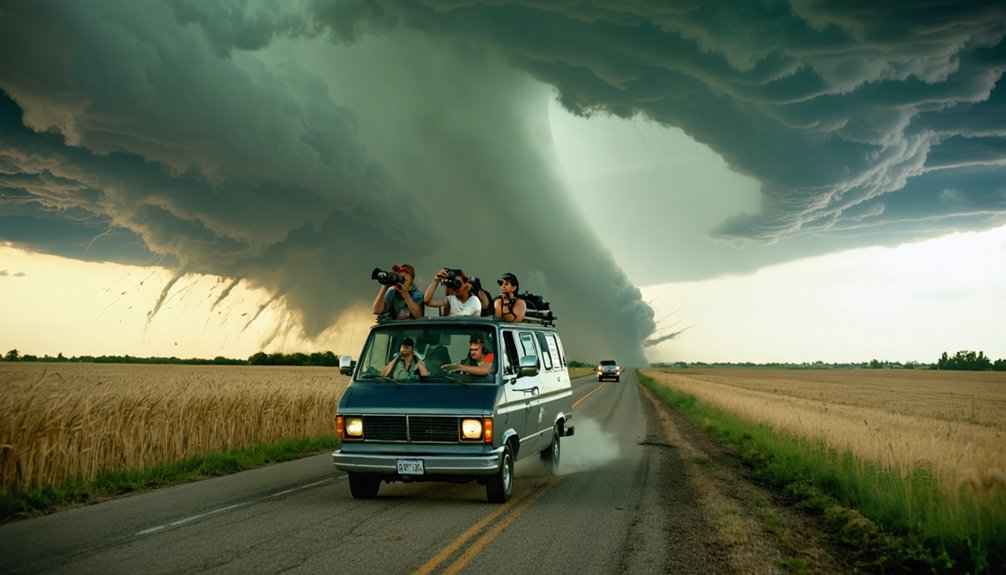
Storm safety became a necessary framework within these commercial operations—companies had to balance the thrill you were purchasing against genuine atmospheric danger.
The film fundamentally created an industry where none had existed before.
How Storm-Chasing Technology Has Changed Since Twister
Today’s key advantages include:
Today’s storm chasers hold powerful advantages in their hands that previous generations could only dream about.
- Mobile apps delivering live radar updates instantly
- Forecast models processing atmospheric data faster and more accurately
- GPS integration enabling precise positioning relative to storm cells
- Portable instrumentation replacing bulky vehicle-mounted equipment
These advancements mean you don’t need a university research team to track a tornado effectively.
Modern storm tracking puts actionable, precise data directly into your hands, giving you the freedom and situational awareness that 1996 chasers could only imagine.
Did Twister Inspire a More Dangerous Generation of Chasers?
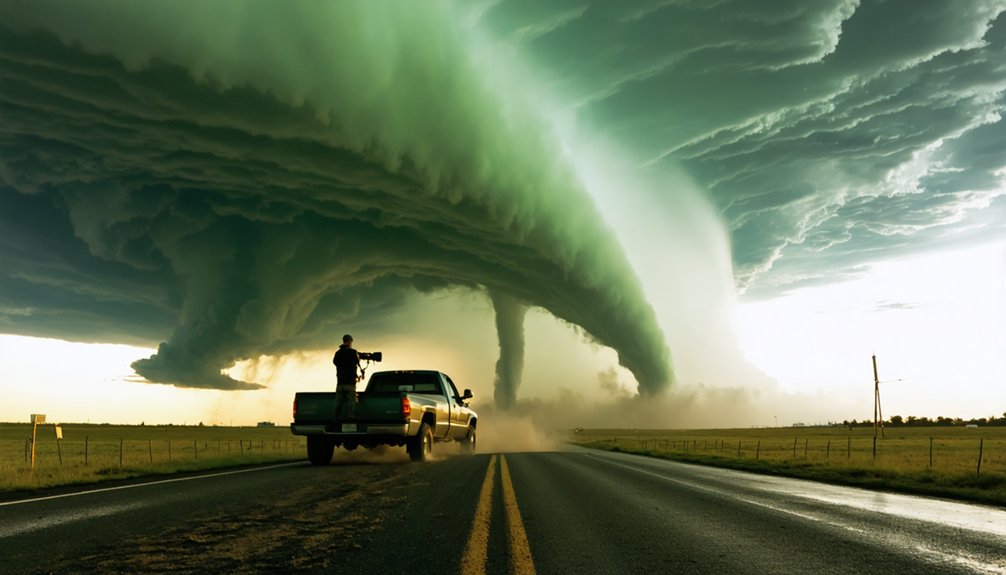
The film inspired real scientists, but it also handed dangerous confidence to unprepared enthusiasts. You can’t separate those two outcomes.
*Twister*’s cultural footprint made storm chasing accessible and, for some, lethally underestimated.
How Hollywood Made Storm Chasing More Scientific
That accountability pushed meteorology education into sharper public focus. You can trace measurable outcomes from Hollywood’s influence:
That accountability reshaped meteorology education—Hollywood’s influence left measurable, lasting marks on how science gets taught.
- University of Oklahoma’s meteorology program doubled enrollment post-*Twister*, growing from 225 to 450 students.
- U.S. meteorological majors increased roughly 10 percent nationally during the late 1990s.
- *Twisters* deployed multiple meteorological consultants to guarantee technical accuracy.
- Modern tornado warning lead times now average 15 minutes, reflecting genuine scientific advancement.
Hollywood didn’t just dramatize storm chasing—it accidentally created pressure toward scientific rigor it never originally intended.
Twister’s Lasting Impact on Weather Science and Pop Culture
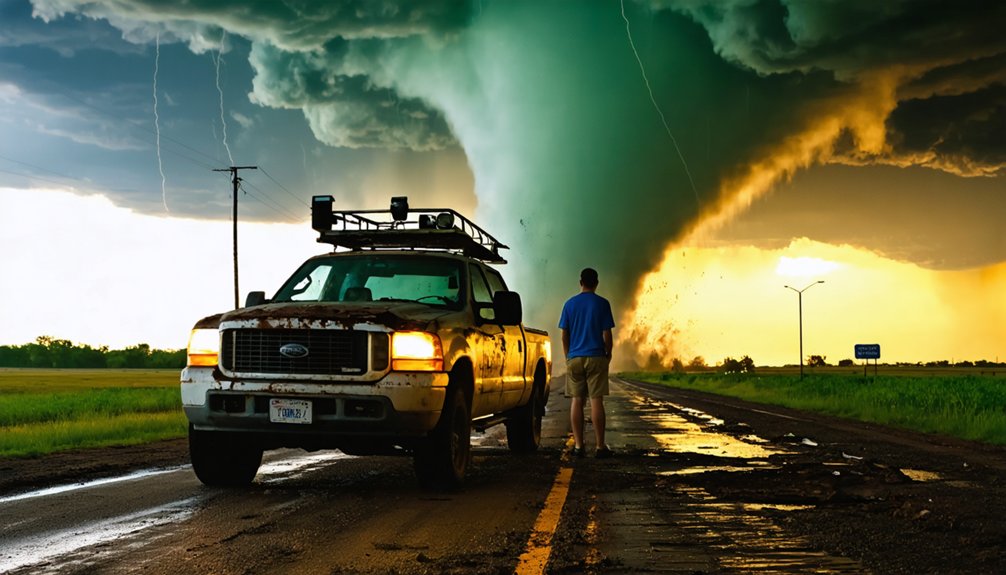
Few films have reshaped a scientific field the way *Twister* did. Its cinematic storytelling turned a niche research pursuit into a cultural force, doubling enrollment at the University of Oklahoma’s meteorology program within two years of release and pushing U.S. meteorology majors up roughly 10 percent nationally.
Storm symbolism embedded in the film’s dramatic sequences made tornadoes feel both terrifying and conquerable, inspiring countless viewers to chase that edge themselves. Tour companies launched consumer chase experiences almost immediately after the film’s 1996 release.
Technology has since outpaced *Twister*’s radar systems entirely, with mobile apps and real-time data now accessible to anyone. Yet the film’s core impact remains measurable: it converted passive fascination into active careers, academic programs, and an entire storm-chasing tourism industry you can still book today.
Frequently Asked Questions
How Much Did the Original Twister Movie Cost to Produce?
The knowledge base doesn’t give you the production budget, but Twister’s groundbreaking special effects and practical filming locations across Oklahoma demanded enormous resources. You’d need an external source to find that precise cost figure.
Who Were the Real Storm Chasers Consulted During Twister’s Filming?
The knowledge base doesn’t name the specific real storm chasers consulted during *Twister’s* filming — that detail’s a blind spot. You’d need to dig deeper into storm chasing techniques, tornado safety protocols, and production records to uncover those exact consultants.
Did Any Cast Members Personally Experience Tornadoes Before Filming Twister?
The available knowledge doesn’t confirm cast members’ personal tornado experiences pre-filming. You’d find storm chasing ethics and tornado myths shaped their preparation more than firsthand exposure, with meteorological consultants bridging real data and Hollywood dramatization effectively.
How Long Did It Take to Film Twister’s Most Iconic Tornado Scenes?
The exact duration isn’t documented in available data. Yet filming challenges demanded months of production work to achieve tornado realism. You’d appreciate knowing practical effects, wind machines, and meticulous technical setups drove every iconic, breathtaking scene’s creation.
Has Twister Ever Been Used as an Educational Tool in Schools?
You won’t find direct data confirming Twister’s formal classroom integration, but its educational impact is measurable—it doubled University of Oklahoma’s meteorology enrollment post-release, suggesting educators leveraged it to spark student interest in atmospheric science.
References
- https://www.reddit.com/r/tornado/comments/1cn8tx7/how_many_people_turned_to_weather_chasing_because/
- https://www.vox.com/culture/359689/storm-chasing-twister-tornado-expert
- https://www.facebook.com/reedtimmer2.0/posts/storm-chasers-perspective-on-twisters-the-movie-and-fact-versus-fiction-twisters/1189010759248280/
- https://en.wikipedia.org/wiki/Twisters_(film)
- https://slate.com/culture/2024/07/twisters-new-twister-movie-2024-1996-glen-powell.html
- https://en.wikipedia.org/wiki/Twister_(1996_film)
- https://www.npr.org/transcripts/1198912940
- https://www.cbc.ca/radio/thecurrent/twisters-storm-chasing-1.7282511
- https://www.scientificamerican.com/article/between-twister-and-twisters-tornado-science-has-improved-a-lot-in-three/
- https://www.scientificamerican.com/article/how-twisters-brought-the-science-of-storm-chasing-to-the-big-screen/