Building a positive reputation in the storm chasing community starts with your safety habits, positioning decisions, and situational awareness—experienced chasers notice everything. Complete SpotterNetwork.org’s training before fieldwork, study StormTrack.org’s forums, and ride along with vetted chasers to learn proper field etiquette. Report accurate data to the NWS promptly, protect your footage responsibly, and treat ethical decision-making as non-negotiable. Master these fundamentals, and the community will take you seriously—keep going to learn exactly how.
Key Takeaways
- Prioritize safety habits by maintaining proper positioning, clear escape routes, and situational awareness to signal credibility among experienced chasers.
- Complete formal training through SpotterNetwork.org and study StormTrack.org forums before attempting fieldwork to demonstrate genuine competence.
- Practice ethical field conduct by yielding roads, reporting accurate data, and maintaining transparency about your target areas.
- Manage footage responsibly by watermarking raw clips, sharing storm warnings first, and accurately crediting community-sourced materials.
- Build team trust by establishing check-in protocols, reporting timely NWS observations, and consistently delivering reliable storm intelligence.
Your Safety Habits Are the First Thing Chasers Judge
When experienced chasers size you up in the field, your safety habits are the first metric they’re measuring. Your positioning relative to storm structure, your escape routes, your situational awareness — these signal whether you’re an asset or a liability to everyone nearby.
Safety protocols aren’t bureaucratic constraints; they’re the foundation of your credibility. Chasers who maintain rigorous check-in schedules, avoid convergence points, and position responsibly earn immediate respect. Those who don’t get noticed — and not favorably.
Ethical behavior starts before you deploy. First aid training, vehicle preparedness, and communication discipline demonstrate that you’ve earned your place in the field.
The community rewards chasers who treat safety as non-negotiable, and it quietly marginalizes those who treat it as optional.
Train Like SpotterNetwork and Experienced Chasers Actually Expect
Reputation in this community isn’t built on enthusiasm — it’s built on demonstrated competence, and experienced chasers can tell immediately whether you’ve done the actual work.
Complete SpotterNetwork.org’s training techniques, including quizzes and graphical weather models, before entering the field.
Study StormTrack.org’s introductory forums to understand field expectations from chasers who’ve earned their credibility over decades.
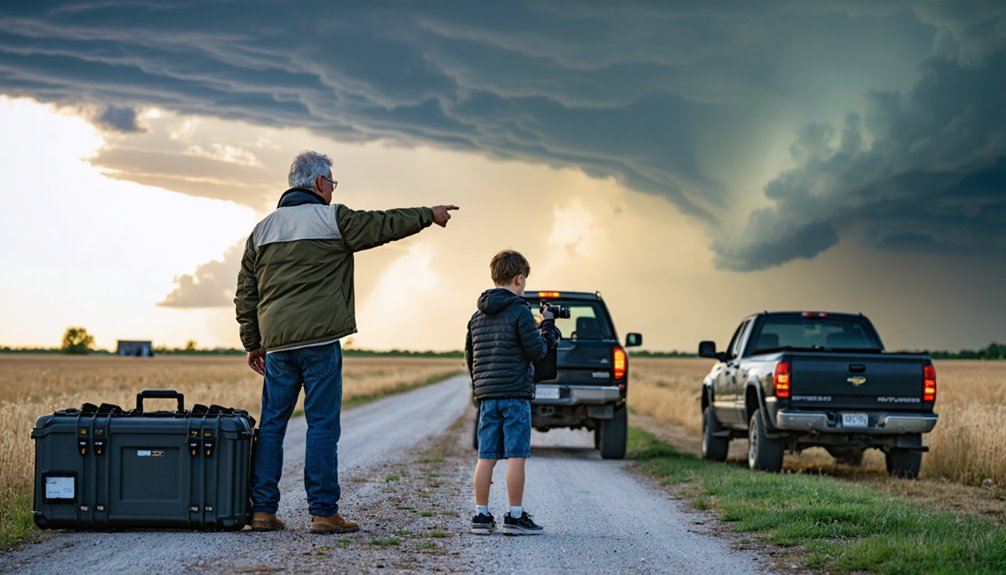
Ride along with experienced chasers before operating independently — you’ll absorb storm etiquette, positioning decisions, and real-time judgment calls that no classroom replicates.
Collaborative efforts matter here; seasoned chasers respect those who contribute meaningfully to team dynamics rather than chasing personal glory.
Consider joining reputable tours or research projects like VORTEX.
Your training foundation signals whether you’re a serious asset or a liability the community must manage.
Act Right in the Field and the Community Will Remember It
Field conduct isn’t abstract — it’s a public record the community builds on you in real time. Every decision you make under a rotating wall cloud gets noticed — by peers, by veterans, by newcomers watching how it’s done.
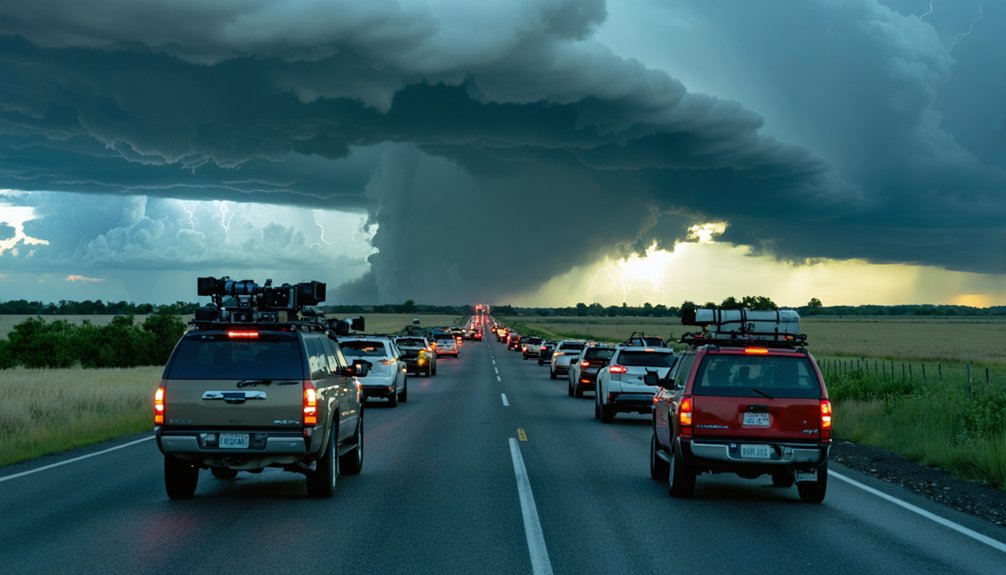
Ethical behavior means yielding roads, not blocking emergency vehicles, and reporting accurate data to the National Weather Service without embellishment.
Community respect isn’t awarded through gear or highlight reels. It’s built through consistency — checking in with your team, crediting shared footage, calling out reckless behavior professionally rather than publicly shaming.
When you post target areas in advance and act transparently, you demonstrate accountability. The chasers who earn lasting reputations do it by making sound decisions repeatedly, not dramatically.
Your field conduct defines your standing long after the storm dissipates.
Rare intercept footage carries real monetary and scientific value, so you’ve got to treat it with the same discipline you apply to your forecasting process. Footage security isn’t optional — it’s part of owning your work and controlling your narrative in this community.
Rare intercept footage holds real value — protect it with the same discipline you bring to every forecast.
- Watermark raw clips immediately after capture to prevent unauthorized repurposing or monetization by third parties.
- Practice ethical sharing by posting storm warnings through social media and weather radio alerts before distributing dramatic visual content.
- Credit community-sourced materials accurately and expect the same respect returned to your work.
When you lead with responsibility over sensationalism, your reputation compounds over time. Chasers and meteorologists remember who operates with integrity, and that credibility opens doors that raw footage alone never will.
Be the Chaser Your Team and the NWS Can Count On
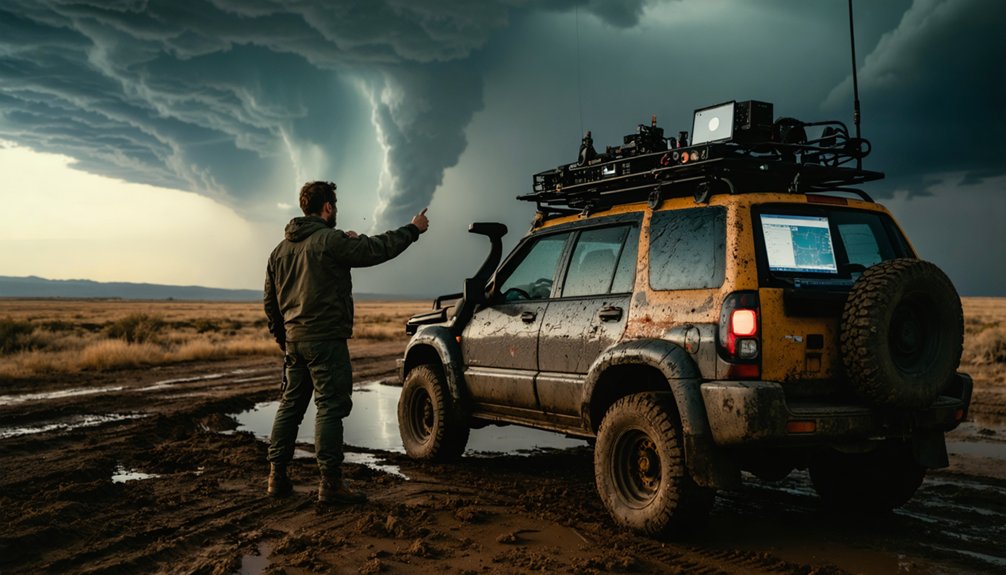
When your team and the National Weather Service rely on you for accurate, timely data, you can’t afford inconsistency. Establish check-in protocols, rotate leadership responsibilities, and hold every member to identical performance standards.
Ethical decision making isn’t optional—it’s the operational baseline that keeps teamwork dynamics functional under pressure.
Report ground-truth observations directly to the NWS without embellishment or delay. Coordinate position updates with your crew so no one operates as a weak link. When you spot rotation, hail size, or damage, communicate it precisely and immediately.
Accountability compounds over time. Chasers who consistently deliver reliable intel earn trust from both colleagues and meteorologists.
That trust translates into collaborative opportunities, research partnerships, and a reputation the entire storm chasing community respects.
Frequently Asked Questions
How Do Storm Chasers Handle Disagreements With Experienced Mentors Professionally?
When a rookie questions Brett Adair’s route choice, you don’t argue publicly — you’d use respectful communication privately first. Then offer constructive feedback through StormTrack.org forums professionally, preserving relationships while maintaining your integrity and independence.
What Role Does Social Media Presence Play in Building Your Reputation?
Your social media etiquette directly shapes your credibility. Post target areas in advance, share content ethically, and avoid sensationalism. Consistent, honest online engagement positions you as a trusted, valuable voice within the storm chasing community.
How Should Beginners Approach Joining Established Storm Chasing Tour Groups?
When joining tour groups, you’ll gain invaluable mentorship benefits by observing skilled forecasters firsthand. Embrace storm group dynamics, absorb every technique, ask questions respectfully, and demonstrate accountability—these habits establish your credibility and reputation within the community.
Can Ethical Storm Chasing Footage Be Monetized Without Damaging Your Reputation?
You can pursue ethical monetization of your storm chasing footage without damaging your reputation. Prioritize transparent footage sharing, always credit collaborators, avoid sensationalism, and maintain community trust by ensuring your content serves public safety awareness first.
How Do Chasers Balance Calculated Risks Without Appearing Reckless to Peers?
You chase danger, yet you stay disciplined. Master risk assessment by pre-posting targets, using check-ins, and training rigorously. Your methodical approach shapes peer perception, proving you’re calculated, not reckless, while preserving your freedom to chase boldly.
References
- https://stormtrack.org/threads/storm-chasing-ethics-and-safety.26831/
- https://time.com/7317970/storm-chasing-weather-leadership-lessons/
- https://www.foxweather.com/learn/storm-chasing-advice-from-the-pros
- https://www.youtube.com/watch?v=Ky-Qr9LwiS4
- https://www.youtube.com/watch?v=PHcQu8L5nMw
- https://www.stormchasingusa.com/blog/learning-the-basics-about-storm-chasing/