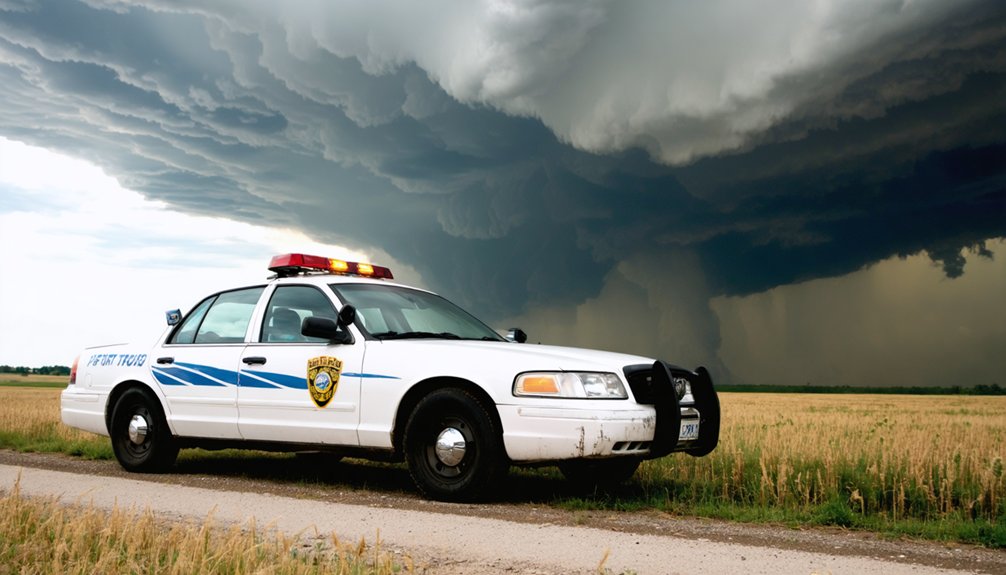
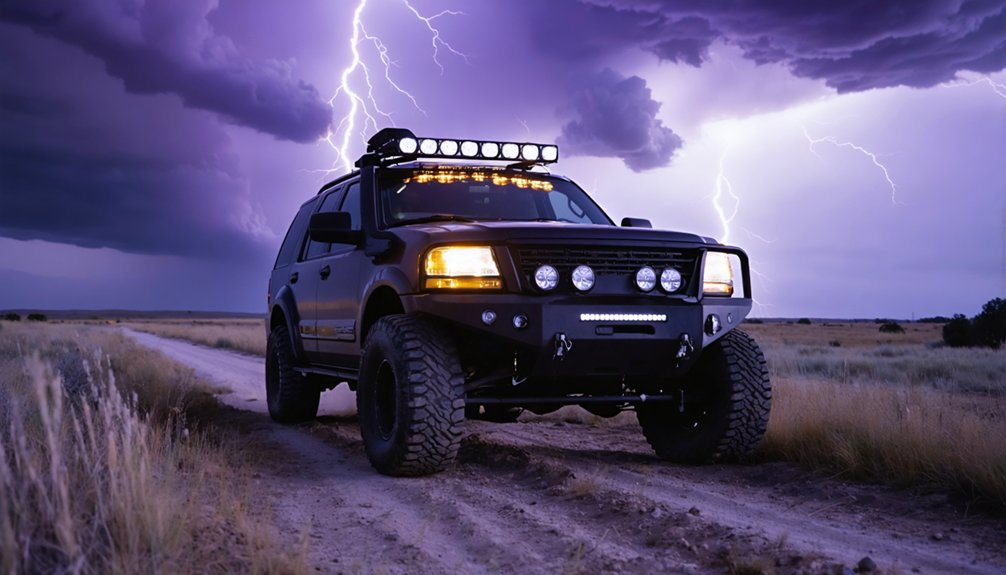
Enhancing a storm chasing truck for extreme weather means upgrading nearly every system on the vehicle. You’ll need a high-torque V8, 4×4 drivetrain, reinforced roll cages, and hydraulic anchoring spikes to counter wind uplift. Pair those with 35-inch all-terrain tires, adaptive suspension, and FLIR thermal cameras to maintain operational control in volatile conditions. Each modification builds on the last, and the full technical breakdown ahead covers every critical upgrade in precise detail.
Key Takeaways
- A 385-horsepower V8 engine with 4×4 drivetrain and adaptive suspension ensures maximum stability and control across shifting extreme weather terrain.
- Hydraulic spike systems deploy hardened steel anchors into the ground, securing the vehicle against powerful wind uplift during intense storms.
- Roll cages, certified steel tubing, and reinforced bumpers protect crew members from structural failures caused by debris and extreme forces.
- 35-inch all-terrain tires combined with a two-inch body lift improve ground clearance, preventing immobilization across flooded or debris-covered roads.
- Integrated weather radar, FLIR cameras, GPS navigation, and satellite systems provide real-time storm tracking and continuous communication during deployments.
Engine Power and Drivetrain Specs That Handle Tornado Terrain
When you’re traversing tornado terrain, raw engine power and drivetrain capability aren’t optional — they’re survival requirements. A Ford F-250’s 385-horsepower V8 delivers the torque management necessary for sudden directional changes under load.
You’ll need drivetrain efficiency maximized through a 4×4 configuration, ensuring power distributes precisely across all four wheels when conditions deteriorate.
Engine modifications targeting enhanced cooling systems prevent thermal failure during prolonged high-RPM operation in extreme heat. Proper weight distribution across upgraded suspension keeps your 35-inch all-terrain tires planted, while traction control systems compensate for shifting mud and debris fields.
Maintain ideal tire pressure for terrain-specific grip without sacrificing fuel efficiency during extended remote operations. Your drivetrain isn’t just mechanical infrastructure — it’s your operational freedom when conventional roads disappear entirely.
The Right Tires and Ground Clearance for Storm Chasing Trucks
When equipping your storm chasing truck, you’ll need 35-inch all-terrain tires to handle the unpredictable mix of mud, debris, and damaged roadways that tornado zones present.
A two-inch body lift optimizes your ground clearance, letting you push into areas that standard vehicles simply can’t access.
You can also integrate suspension airbags and hydraulic lowering systems to actively adjust your vehicle’s height, improving stability on shifting terrain while reducing wind uplift risk during high-intensity storm approaches.
All-Terrain Tire Selection
Selecting the right tires for a storm chasing truck directly determines how well the vehicle handles unpredictable and punishing terrain.
You’ll need 35-inch all-terrain tires that prioritize tire durability under sustained stress from debris, flooding, and fractured pavement.
Evaluate tread design carefully — aggressive traction patterns improve off-road performance across mud, gravel, and saturated ground.
Weather adaptability matters across shifting conditions, so choose compounds that maintain grip in both extreme heat and cold.
Factor in noise reduction for clearer crew communication during active operations.
Weight management affects fuel efficiency and suspension load, so avoid unnecessarily oversized options.
Inflation systems allow real-time pressure adjustment, preserving size compatibility with your lift configuration.
All-terrain versatility isn’t optional — it’s foundational to keeping you mobile when conditions collapse around you.
Ground Clearance Optimization
Ground clearance directly determines whether your storm chasing truck clears debris fields, crests flooded road edges, or bottoms out when conditions deteriorate fastest. A two-inch body lift combined with 35-inch all-terrain tires delivers measurable ground clearance benefits, repositioning your undercarriage above obstacles that would otherwise immobilize your operation.
Suspension adjustments extend your capability further. Airbag-based systems let you raise or lower ride height adaptively, matching terrain demands in real time.
When wind loads intensify, hydraulic lowering systems drop the entire vehicle to pavement within seconds, reducing your profile and preventing uplift.
You’re not guessing when you’ve engineered these systems correctly — you’re making calculated decisions. Optimized ground clearance keeps you mobile, independent, and positioned exactly where severe weather demands your presence.
Lift Systems For Stability
Lift systems do more than raise your truck — they stabilize it against the dynamic forces that severe weather generates. A two-inch body lift increases ground clearance while lowering your vehicle’s vulnerability to debris impact.
Suspension airbags deliver adaptive height adjustment, letting you respond instantly to shifting terrain conditions without sacrificing structural integrity.
The real lift system benefits emerge when conditions deteriorate rapidly. Hydraulic lowering systems can drop your entire vehicle to ground level within seconds, dramatically reducing wind-load exposure during peak tornado intensity.
These stability enhancements give you operational control that rigid, fixed-height systems simply can’t match.
You’re not just surviving extreme conditions — you’re maneuvering through them strategically. Precise lift management transforms your truck into a responsive platform, not merely a vehicle.
Roll Cages, Bumpers, and Frame Reinforcements That Protect Crews
When storm chasers push into the path of a tornado or hurricane, the structural integrity of their vehicle becomes the last line of defense between the crew and catastrophic injury.
Roll cage benefits include absorbing rotational forces during rollovers, preventing cabin collapse under extreme lateral pressure. You’ll want certified steel tubing welded to the vehicle’s core frame, not bolted aftermarket units that separate under stress.
Bumper durability depends on front steel construction with integrated winches and tubular push bars, protecting critical mechanical components from debris impact.
Frame stability requires bedcap reinforcement distributing load stress across the chassis during violent weather exposure.
Together, these systems deliver crew safety by ensuring your vehicle withstands forces most trucks weren’t engineered to survive.
Prioritize certified, purpose-built reinforcements over generic modifications.
How Hydraulic Spikes and Anchoring Systems Prevent Wind Uplift

When you activate the hydraulic spike system, hardened steel anchors deploy downward from beneath the vehicle’s shell structure, driving into asphalt or compacted terrain to create a fixed mechanical connection between the truck and the ground.
This anchoring mechanism directly counters the vertical lift forces that extreme wind events—particularly tornadoes and hurricane-force gusts—exert on a vehicle’s chassis and body panels.
You’re fundamentally transforming a mobile platform into a temporarily fixed structure, distributing wind load forces into the ground rather than allowing them to act against the vehicle’s lateral and vertical surfaces.
Hydraulic Spike Deployment Mechanics
Hydraulic spikes embedded beneath the shell structure deploy downward on command, driving steel anchoring points into the pavement to prevent lateral movement and wind uplift during extreme storm exposure.
You’ll activate spike deployment through a centralized control system, triggering hydraulic pressure that forces hardened steel points through designated ports in the undercarriage.
Once engaged, the spikes penetrate asphalt or compacted surfaces, creating mechanical resistance against horizontal and vertical wind forces. This wind resistance capability becomes critical when sustained winds exceed safe operational thresholds.
The system responds within seconds, allowing you to secure the vehicle before conditions intensify. Pressure sensors monitor spike engagement depth, confirming full anchoring before you commit to stationary broadcasting or data collection operations inside an active storm corridor.
Anchoring Against Wind Forces
Deploying the spikes is only half the equation — understanding how they actually resist wind forces explains why the system works under the most punishing storm conditions.
Once driven into pavement, the hydraulic spikes create mechanical resistance against both vertical uplift and lateral displacement. Wind resistance isn’t merely countered through vehicle weight; it’s defeated through distributed anchoring techniques that transfer aerodynamic load directly into the ground.
Each spike absorbs shear forces independently, meaning no single point carries catastrophic stress. You’re fundamentally pinning the vehicle’s frame to the surface, eliminating the rotational moment that extreme winds exploit.
The system’s redundancy lets you maintain position even when gusts shift direction unpredictably. Combined with lowered suspension, these anchoring techniques give you genuine stability when atmospheric pressure differentials become dangerously aggressive.
Suspension and Lift Systems That Adapt to Extreme Conditions
Storm chasing trucks need suspension systems that don’t just absorb punishment—they actively adapt to whatever the environment demands.
Suspension adaptability gives you precise control over ride height, allowing real-time adjustments as terrain shifts from paved roads to saturated mud paths. Airbag suspension systems let you raise or lower the chassis within seconds, keeping you mobile and responsive.
Lift system advantages become critical when you’re maneuvering through debris-strewn roads or positioning the vehicle for ideal storm approach angles.
A two-inch body lift combined with 35-inch all-terrain tires dramatically improves ground clearance without sacrificing stability.
When wind forces intensify, hydraulic lowering systems drop the entire vehicle to ground level fast, reducing your profile and preventing dangerous uplift.
You control the vehicle; the storm doesn’t.
Weather Radar and GPS Tools That Keep Storm Chasers Ahead
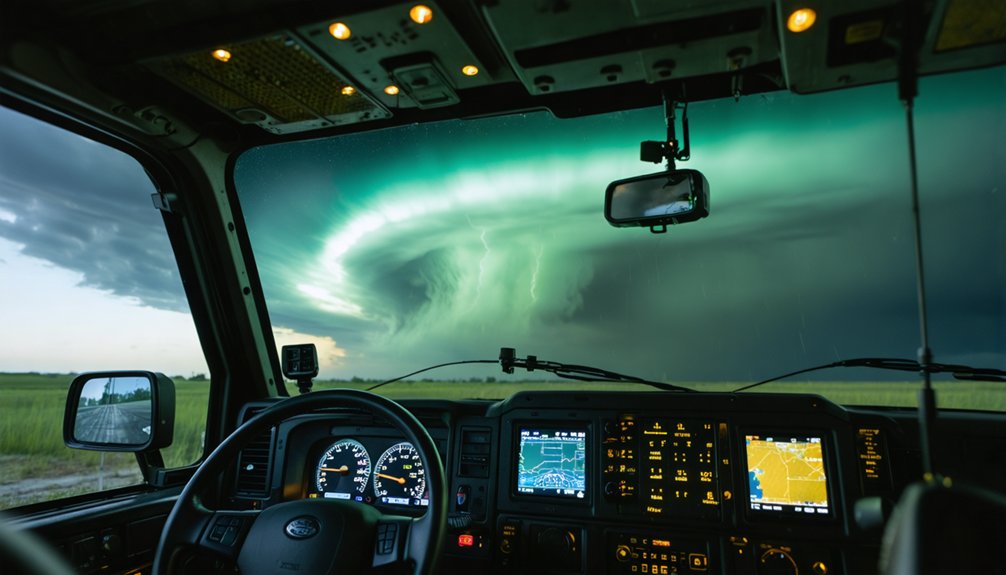
Adaptive suspension keeps your truck mobile, but staying ahead of a storm depends just as much on what you’re reading on your screens as on how your vehicle handles the terrain.
Reliable weather radar delivers real-time storm tracking data, letting you anticipate directional shifts and intensity changes before they become hazards. You’re not reacting—you’re positioning.
GPS navigation drives navigation efficiency by routing you through unfamiliar regions, accounting for road closures and deteriorating conditions instantly. When infrastructure fails around you, GPS rerouting keeps your operational window open.
Together, these systems give you autonomous decision-making capability in the field. You’re reading the storm, interpreting its movement, and adjusting your position—all without depending on external coordination.
That independence is what separates effective storm chasers from compromised ones.
FLIR Cameras and Thermal Imaging Mounted on Storm Chasing Trucks
Where radar and GPS define your strategic positioning, FLIR cameras extend your sensory reach into conditions where standard optics fail. Infrared technology captures temperature variations invisible to conventional lenses, giving you actionable storm detection data regardless of visibility degradation.
Optimal camera positioning on a 360-degree roof mount maximizes environmental monitoring coverage around your vehicle. FLIR capabilities deliver thermal advantages that transform raw heat signatures into precise data analysis opportunities:
Precision roof-mounted FLIR systems convert raw thermal data into actionable storm intelligence, maximizing 360-degree environmental coverage.
- Image clarity remains consistent through rain, debris, and low-light conditions
- Visual enhancements reveal storm wall structures and precipitation boundaries
- Temperature variation mapping identifies dangerous pressure differentials within rotating systems
- Real-time thermal feeds integrate directly into your broadcasting infrastructure
You’re not guessing what’s developing around you—you’re reading it with precision.
Communication and Live Broadcasting Tech for Storm Chasing Trucks
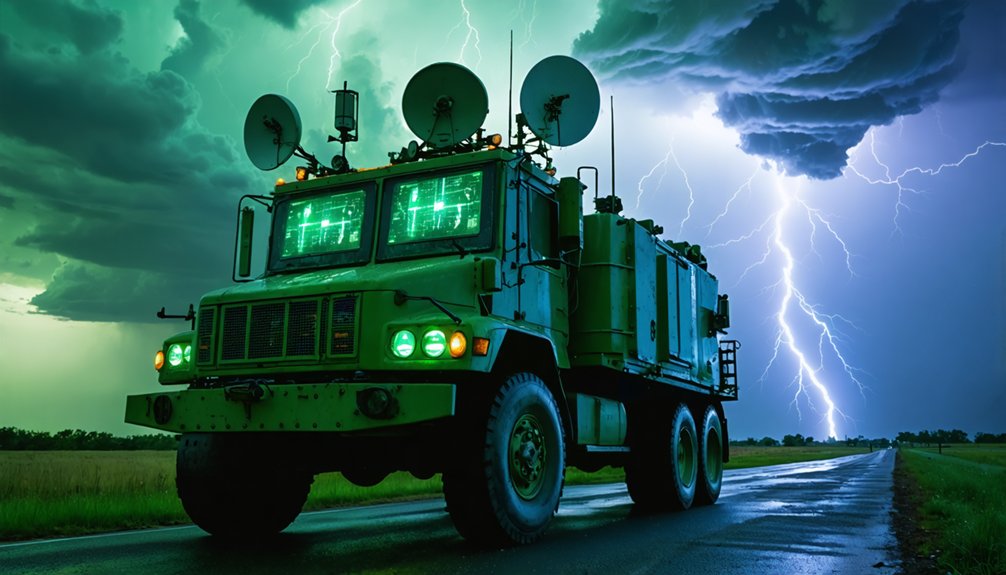
When you’re chasing storms, your communication and live broadcasting tech determines whether your data reaches meteorologists and viewers in real time or gets lost in the chaos.
You’ll rely on cellular transmission paired with IP satellite equipment to maintain continuous streaming coverage, even when ground infrastructure fails in hurricane or tornado zones.
Integrating real-time weather radar data directly into your broadcast feed lets you deliver precise, actionable storm intelligence while you’re actively tracking in the field.
Live Storm Broadcasting Technology
Broadcasting live from the heart of a tornado or hurricane demands cutting-edge communication technology capable of sustaining continuous, high-quality transmission under extreme conditions.
Your storm coverage depends on integrated systems working simultaneously to deliver uninterrupted live broadcasting to audiences everywhere.
Key technologies powering your setup include:
- Cellular transmission equipment maintaining signal integrity through multi-network redundancy
- IP satellite systems providing independent uptime when ground infrastructure fails
- 360-degree FLIR roof cameras capturing real-time thermal storm imagery
- Waterproof 4K pullout monitors enabling direct outdoor reporting in harsh conditions
Your custom electrical bus architecture ties these components together, supporting simultaneous data transmission and broadcast operations.
This infrastructure guarantees you’re delivering accurate, real-time storm documentation regardless of what conditions you’re driving through.
Satellite and Cellular Transmission
Maintaining uninterrupted transmission during active storm pursuit requires both cellular and IP satellite systems operating in tandem.
You’ll depend on cellular connectivity for low-latency data bursts when tower infrastructure remains intact, while satellite reliability becomes your primary lifeline once ground-based networks fail.
These redundant systems don’t compete—they complement each other, automatically switching based on signal strength and environmental conditions.
Your custom electrical bus integrates both transmission pathways into a unified broadcast infrastructure, eliminating manual switching during critical coverage windows.
When a tornado corridor disrupts regional cell towers, your IP satellite link sustains continuous streaming without interruption.
This dual-system architecture gives you operational independence, ensuring your live broadcast capability remains functional regardless of how severely the storm degrades surrounding communication infrastructure.
Real-Time Weather Data Integration
Key integration components include:
- Weather radar systems that monitor real-time storm intensity and directional changes
- GPS rerouting that automatically adjusts navigation around road closures and impassable terrain
- Data visualization displays presenting complex atmospheric conditions in immediately actionable formats
- Intercom systems with noise-controlled headsets ensuring crew communication remains clear during peak storm activity
With real time integration working across all systems, your truck becomes an analytical instrument rather than just transportation.
You’re not simply chasing storms — you’re interpreting them with precision and responding with calculated confidence.
Winches, Fuel Storage, and Emergency Gear Every Storm Truck Needs
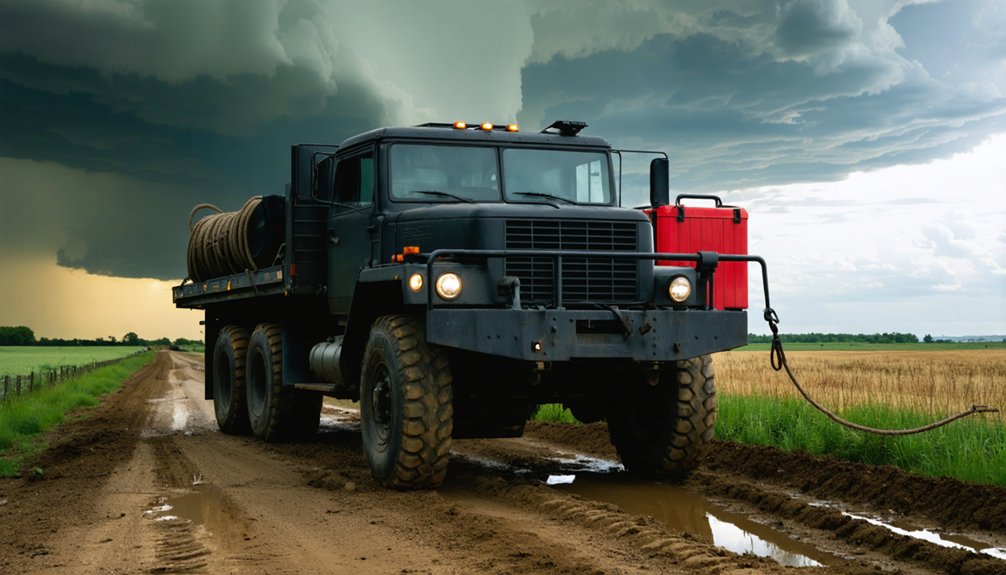
Storm chasing demands that your truck carries the right operational support gear to sustain extended missions in remote, high-risk environments.
Prioritize winch maintenance to guarantee reliable extraction of your vehicle or stranded civilians during active storm tracking. Fuel efficiency planning paired with expanded tank capacity extends your operational range when supply access is compromised.
Emergency supplies—including medical kits, water storage, and communication backups—directly support crew safety during prolonged deployments.
Stocking medical kits, water reserves, and communication backups keeps your crew operational when conditions turn critical.
Strategic equipment organization prevents critical gear loss during rapid repositioning. Your vehicle modifications should integrate custom storage solutions that secure maps, data systems, and live-casting hardware simultaneously.
Executing sound operational strategies means anticipating logistical failures before they occur, keeping your team mobile, self-sufficient, and mission-ready regardless of what conditions the storm delivers.
How Storm Chasing Trucks Use Sirens to Warn Civilians
Beyond keeping your truck self-sufficient with fuel and emergency gear, your vehicle serves a direct public safety function through its integrated siren systems.
Siren effectiveness depends on strategic deployment as you approach danger zones, giving civilians critical seconds to seek shelter.
Your siren system enhances civilian awareness through these operational functions:
- Audible alerts cut through ambient storm noise, signaling imminent tornado proximity to surrounding residents.
- Directional broadcasting targets specific neighborhoods along your tracked storm path.
- Variable tone patterns distinguish tornado warnings from general severe weather notifications.
- Mobile deployment reaches rural areas where fixed warning infrastructure doesn’t exist.
You’re extending the public warning network beyond stationary systems.
Your truck becomes a moving alert mechanism, actively protecting lives in the storm’s direct trajectory while you maintain your position.
Frequently Asked Questions
How Much Does It Cost to Fully Build a Storm Chasing Truck?
You’ll typically spend $50,000–$150,000+ on truck modifications and storm chasing equipment, depending on specs. Costs vary based on communication systems, reinforced structures, suspension upgrades, and advanced weather monitoring technology you’re integrating.
How Many Crew Members Typically Operate Inside a Storm Chasing Truck?
You’ll typically operate with 2–4 crew members, each fulfilling distinct crew roles — driver, navigator, and meteorologist. You must enforce strict safety protocols ensuring every occupant’s secured, maintaining coordinated, efficient performance during active, high-risk storm-chasing operations.
What Certifications or Training Do Storm Chasers Need Before Deployment?
Before the storm hits, you’ll need certification requirements met: complete meteorology training programs, master safety protocols, and follow strict operational guidelines—ensuring you’re equipped to chase responsibly, analyze conditions precisely, and make split-second decisions that protect your crew and civilians.
How Long Can a Storm Chasing Truck Operate During a Single Mission?
You’ll extend your mission duration considerably with extra fuel capacity and optimized fuel efficiency systems. Monitor your battery life closely, as custom electrical bus infrastructure supports continuous operations across extended storm-tracking deployments without interruption.
Are Storm Chasing Trucks Ever Used Outside of Tornado and Hurricane Seasons?
Yes, you’ll find storm chasing trucks actively deployed for off-season usage, supporting weather research initiatives year-round. They’re utilized for flood monitoring, wildfire tracking, and atmospheric data collection, ensuring you maximize your vehicle’s operational capabilities beyond traditional tornado and hurricane seasons.
References
- https://www.foxweather.com/weather-news/fox-weather-beast-storm-chasing-vehicle
- https://svinews.com/2024/featured/97765/things-every-storm-chaser-needs-in-their-truck/
- https://stormtrack.org/threads/storm-chasing-vehicle-project-and-suggestions.27826/
- https://www.youtube.com/watch?v=qi8ffPqDkFE
- https://acceleratedmt.com/tactical-news-trucks/
- https://makezine.com/article/science/storm-chasers-real-twister-tech/
- https://www.youtube.com/watch?v=2bzlkru8fCU