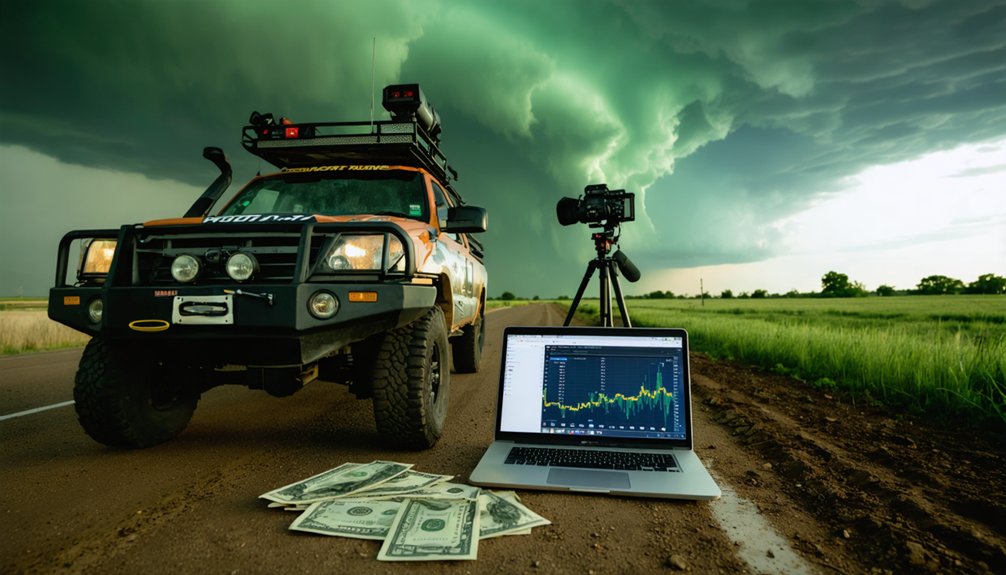
Funding your storm chasing passion requires combining multiple income and savings strategies. You’ll want to build a dedicated chase fund, split costs with reliable partners, and ask friends and family to contribute toward specific expenses. Monetizing your footage through licensing platforms, running targeted crowdfunding campaigns, and pursuing brand sponsorships can offset significant seasonal costs. Serious chasers spend $5,000 to $20,000 per season, so treating it like a business makes every dollar work harder — and there’s much more to unpack ahead.
Key Takeaways
- Open a dedicated chase account and automate monthly transfers to systematically build funds for fuel, gear, lodging, and other seasonal expenses.
- Split costs with a compatible chase partner to significantly reduce per-trip expenses, but document financial agreements beforehand to prevent disputes.
- Launch a crowdfunding campaign using storytelling, budget transparency, and reward incentives to engage backers and generate meaningful contributions.
- Monetize storm footage by licensing content through news networks, Getty, or Storyblocks while growing audiences through consistent social media engagement.
- Treat storm chasing like a business by pursuing sponsorships, building a media kit, and diversifying income through branded content and partnerships.
Why Storm Chasing Costs More Than Most People Expect
Storm chasing looks straightforward on the surface—drive toward the storm, capture the footage, and head home—but the actual cost structure is far more complex than most newcomers anticipate.
You’re funding fuel, lodging, gear maintenance, and weather forecasting tools simultaneously. Safety precautions require dedicated equipment that isn’t cheap. Understanding atmospheric science demands paid data subscriptions and software.
Photography tips rarely mention that professional camera systems cost thousands to build and maintain. Chasing ethics and legal considerations may require legal consultation when operating near restricted zones or evaluating storm damage in local communities.
Environmental impact planning adds another layer of operational responsibility. Every serious chaser discovers quickly that the financial commitment extends well beyond the road—it’s a structured, ongoing investment that demands deliberate planning from day one.
Build a Dedicated Storm Chasing Fund Before Your First Trip
Opening a dedicated chase account separates your storm funding from everyday expenses, making it easier to track progress and resist spending temptation.
Set a realistic monthly contribution target based on your projected seasonal costs, including fuel, lodging, gear, and data subscriptions.
From your first outing, log every chase-related expense so you can identify patterns, adjust your savings rate, and build an accurate budget for future seasons.
Start a Chase Account
Before you book your first chase trip, you’ll need a financial foundation that keeps storm chasing costs from bleeding into your everyday budget. Open a dedicated savings account exclusively for chasing—this separation is one of the most effective chase account benefits you’ll experience early on.
Apply straightforward savings account strategies: automate monthly transfers, even small ones, to build momentum without relying on discipline alone.
Solid budgeting techniques mean tracking every anticipated expense—fuel, lodging, gear, and data subscriptions—before the season arrives.
Sound financial planning gives you the freedom to chase on your terms, without scrambling for cash mid-season. Treat this account as non-negotiable infrastructure.
Consistent contributions, not large windfalls, build the financial runway serious storm chasing demands.
Set Monthly Savings Goals
Once your chase account is open, you’ll need a monthly savings target that reflects your actual operating costs. Start with cost estimation: calculate fuel, lodging, gear maintenance, and data subscriptions.
Divide projected annual expenses by twelve to establish your monthly budgeting baseline.
Use a savings tracker to monitor contributions against your target. Financial planning works best when it’s systematic, not reactive. Expense management requires honest accounting—don’t underestimate vehicle wear or insurance costs.
Build savings milestones into your timeline. Hitting specific targets by set dates reinforces financial discipline and confirms your chase season is actually funded.
Expect to make budget adjustments as gear ages or fuel prices shift. Flexibility within structure keeps your funding strategy both realistic and sustainable.
Track Every Chase Expense
Setting savings goals gives you a target, but tracking every expense tells you whether your numbers are actually holding up in the field. Log fuel stops, lodging, food, tolls, and gear costs the moment they occur.
Don’t rely on memory—use dedicated budgeting tools like spreadsheets, YNAB, or Mint to capture real-time spending. Expense tracking reveals patterns you’d otherwise miss, such as consistently underestimating fuel costs across long chase days or overspending on last-minute lodging.
Once you’ve completed a season, review your totals category by category. This data sharpens your next budget cycle and protects your financial independence.
Accurate records also support any business deductions if you’re monetizing your chasing. Precision here directly expands your freedom to chase longer and farther.
Split Storm Chasing Costs by Finding the Right Chase Partner
Finding the right chase partner is one of the most effective ways to cut your operational costs without sacrificing storm access.
When you split fuel, lodging, and vehicle wear with a compatible chaser, you can reduce your per-trip expenses by nearly half.
Storm chasing forums and community groups regularly connect drivers seeking partners, making it easier than ever to find someone whose chase goals, risk tolerance, and schedule align with yours.
Finding Compatible Chase Partners
Splitting chase costs with a compatible partner can dramatically reduce your per-trip expenses across fuel, lodging, and vehicle wear—but the financial benefit only materializes when you’re paired with someone whose skill level, decision-making style, and risk tolerance align with yours.
Mismatched chase personality types create friction that derails both the budget and the mission. Before committing, evaluate shared goals, experience levels, and driving preferences openly.
Establish communication strategies and safety protocols in advance—not mid-storm. Clarify equipment sharing arrangements, including who owns what and who’s liable for damage.
Confirm scheduling flexibility early, since last-minute conflicts waste both money and opportunity. Build in conflict resolution agreements so disputes don’t collapse the partnership mid-season.
Partner compatibility isn’t just personal—it’s operationally and financially critical to a sustainable chase program.
Shared Costs, Greater Savings
When you chase with the right partner, the financial arithmetic changes immediately—fuel costs divide in half, lodging expenses drop by fifty percent or more, and vehicle wear spreads across shared mileage.
These shared expenses compound into meaningful annual savings, particularly across multi-day Tornado Alley deployments.
Effective budget strategies require upfront agreements covering fuel splits, meal costs, equipment responsibilities, and lodging selections.
Document these terms before departure to prevent friction mid-chase.
Beyond finances, partners contribute navigational support, spotter coverage, and fatigue rotation—operational advantages that independently reduce costly errors and fuel waste from missed intercepts.
Storm chasing forums and community groups regularly feature partner requests.
Evaluate compatibility carefully: mismatched risk tolerance or scheduling conflicts erode both the financial and operational benefits that cooperative chasing delivers.
Ask Friends and Family to Fund Your Chase Season

One of the most overlooked funding strategies is simply asking the people closest to you to contribute directly to your chase season. Instead of receiving gifts you don’t need, redirect those family contributions toward real expenses.
Before birthdays or holidays, open chase discussions early so people understand exactly where their money goes.
Give them clear options:
- Fuel fund contributions covering hundreds of miles per chase day
- Lodging costs averaging $80–$150 per night in storm corridors
- Equipment upgrades like batteries, memory cards, or mounts
- Data plan costs for real-time radar and weather modeling tools
When people understand the mission, they’re more likely to invest in it. A direct, honest ask beats hoping someone guesses what you actually need.
Run a Crowdfunding Campaign That Actually Gets Funded
Crowdfunding works when you give potential backers a reason to care, and storm chasing campaigns fail most often because they skip that step.
Your storytelling techniques must frame the mission clearly: what you’re chasing, why it matters, and exactly how funds get used.
Budget transparency builds trust, so itemize fuel, lodging, and gear costs directly in your campaign.
Apply smart goal setting by targeting realistic amounts rather than inflated figures that discourage early donors.
Reward incentives, such as exclusive footage or photo prints, strengthen donor engagement considerably.
Your campaign promotion requires consistent social media outreach across multiple platforms before and during the funding window.
Combine these crowdfunding strategies with direct outreach to your existing community, and your campaign gains real traction fast.
Turn Storm Footage Into a Real Income Stream
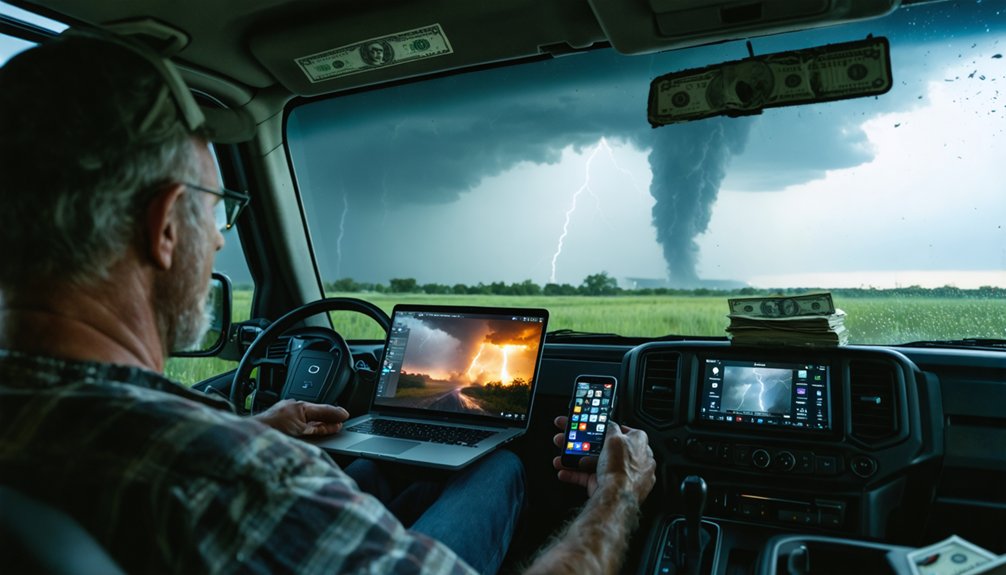
Storm footage you’ve already captured can generate real revenue if you approach distribution with the same discipline you apply to the chase itself.
Footage licensing through wire services and news networks pays directly for broadcast-quality clips. Pair that with content diversification across niche platforms to multiply exposure.
Licensing your storm footage to wire services and news networks turns broadcast-quality clips into direct, dependable income.
Build sustainable income by combining these strategies:
- Submit storm photography and video to licensing marketplaces like Getty or Storyblocks
- Grow audience engagement through social media marketing and online tutorials covering video editing techniques
- Pursue brand partnerships and affiliate marketing once your channel demonstrates consistent reach
- Distribute across niche platforms where weather enthusiasts actively seek specialized content
Each stream reinforces the others.
Treating your footage as a media asset rather than a personal archive transforms your passion into a self-funding operation.
Land Sponsorships and Media Deals With Your Chase Content
Licensing footage and building platform audiences lays the groundwork for something more structured: direct sponsorships and media deals. Once you’ve demonstrated consistent reach and quality content, sponsorship opportunities become realistic.
Gear manufacturers, weather data providers, and outdoor brands actively seek credible chasers whose audiences align with their products.
Approach potential sponsors with a media kit that includes your analytics, audience demographics, and past coverage examples. Be specific about what you’re offering — branded content, product placement, or co-branded expeditions.
Media collaborations with regional news outlets or documentary producers can also generate both income and exposure.
Negotiate contracts clearly, protect your creative control, and don’t undervalue your work. Sponsorships reward chasers who operate professionally, maintain transparency with their audiences, and consistently produce high-quality storm documentation.
Treat Storm Chasing Like a Part-Time Business

Build your framework around these core pillars:
- Develop branding strategies that make your chase identity recognizable across platforms.
- Pursue networking opportunities within meteorology, media, and outdoor adventure communities.
- Commit to consistent content creation that drives long-term audience engagement.
- Track every operational cost to understand your true profit margins.
This approach won’t guarantee full income replacement, but it dramatically increases your odds of funding the freedom to chase storms on your own terms.
Combine Every Strategy Into a Full Chase Season Budget
Running a chase operation like a business gives you the cost-tracking foundation you’ll need to build a realistic full-season budget.
Apply every available chase budget strategy simultaneously rather than relying on one funding source. Use expense tracking tools to monitor fuel, lodging, gear, and data costs in real time.
Pursue multiple income diversification methods — content monetization, footage sales, and merchandise — while actively seeking funding opportunities through sponsorships and creative fundraising ideas.
Leverage chase collaboration benefits by coordinating cost sharing techniques with trusted partners to reduce per-person overhead.
Strengthen your position through community engagement tips found in chaser forums, where partners and resources surface regularly.
When you stack savings, shared costs, media income, and outside support together, a full chase season becomes financially achievable.
Frequently Asked Questions
Can Storm Chasing Costs Be Deducted on Personal Income Taxes?
You can’t deduct storm chasing as personal expenses on income taxes unless it’s a legitimate business. For tax benefits, treat it as a side business, enabling financial planning and valid tax deductions against documented storm chasing income.
What Credit Cards Offer the Best Rewards for Storm Chasing Travel?
While travel rewards cards seem ideal, their true value depends on your chase planning priorities. You’ll maximize benefits by selecting cards offering fuel efficiency rebates, local accommodations discounts, and safety gear purchase points aligned with weather forecasts and networking opportunities.
How Does Storm Chasing Insurance Differ From Standard Auto Coverage?
Storm chasing insurance covers storm damage, vehicle modifications, and safety equipment standard policies exclude. You’ll need specialized coverage addressing unique travel logistics, forecasting tools, and strict insurance requirements that protect you when you’re actively pursuing severe weather.
Are There Storm Chasing Grants Available Through Meteorological Organizations?
Like striking lightning, grant eligibility through meteorological organizations is rare but possible. You’ll find funding sources primarily through academic or research-affiliated channels, so align your storm chasing with scientific goals to improve your chances considerably.
What Budgeting Apps Work Best for Tracking Storm Chasing Expenses?
You’ll find YNAB and Mint excel at expense tracking and budget allocation for chasing resources. Both apps let you categorize fuel, gear, and lodging for precise cost management, keeping your chase funds clearly separated and controlled.
References
- https://www.stormchasingusa.com/blog/i-want-to-go-storm-chasing-but-it-is-too-expensive/
- https://www.facebook.com/groups/fansoftexasstormchasers/posts/2807171976136832/
- https://stormtrack.org/threads/the-real-cost-of-storm-chasing-and-how-to-fund-it.27891/
- https://www.facebook.com/KryptoniteWeather/posts/how-do-storm-chasers-make-moneywe-get-asked-this-question-a-lot-to-be-honest-sto/1162954352502683/
- https://www.youtube.com/watch?v=K1gkje3ic2Q
- https://www.reddit.com/r/stormchasing/comments/1eha8mw/birthday_gift_ideas_for_future_stormchaser/
- https://www.foxweather.com/learn/storm-chasing-advice-from-the-pros
- https://www.onlinedegree.com/careers/life-physical-science/storm-chaser/
- https://finance.yahoo.com/news/much-storm-chasers-really-090000031.html
- https://www.stormgroupchasers.com/about-us