You can legally chase tornadoes on public roads in the U.S., since no federal law prohibits the activity. However, you’re still bound by standard traffic regulations and reckless driving statutes in every state. Law enforcement can close roads during active emergencies, and no personal justification overrides those closures. States like Oklahoma are also introducing licensing frameworks that distinguish professional chasers from recreational ones—details that every chaser should understand before heading out.
Key Takeaways
- Storm chasing on public roads is legal in the U.S., with no federal laws prohibiting the activity.
- Chasers must comply with standard traffic regulations, including reckless driving laws that apply universally.
- Law enforcement road closures are strictly off-limits, with no exceptions granted for storm chasers.
- Oklahoma’s HB2426 grants licensed professionals additional privileges, while recreational chasers retain basic legal road access.
- Dangerous behaviors like running red lights or blocking emergency routes can result in serious legal consequences.
Is It Legal To Chase Tornadoes On Public Roads?
Chasing tornadoes on public roads is legal in the United States, as no federal law prohibits the activity. You’re free to pursue storms on public roadways, provided you comply with standard traffic regulations.
Reckless driving laws apply universally, meaning your freedom to chase carries direct legal accountability. Storm chasing ethics reinforce this accountability, emphasizing responsible positioning and minimal disruption to emergency responders.
Safety considerations demand that you avoid blocking intersections, impeding evacuations, or creating hazardous conditions for other drivers.
Oklahoma’s HB2426 reflects growing legislative attention toward professional trackers, though it imposes no restrictions on recreational chasers. No state currently bans storm chasing outright on public roads.
Your right to chase remains intact, but exercising that right irresponsibly exposes you to existing reckless driving penalties.
Storm Chasers Don’t Need a Federal License: But Local Laws Still Apply
Although no federal agency licenses or regulates storm chasers, you’re still fully subject to state and local traffic laws wherever you operate. Reckless driving, running red lights, and blocking emergency vehicles carry real legal consequences regardless of your intent.
Storm safety isn’t just personal — your positioning directly affects responders and the public around you.
Chasing ethics reinforce what the law demands: don’t impede traffic, don’t endanger others, and don’t imitate authorized emergency personnel without proper credentials.
Oklahoma’s HB2426 reflects a broader enforcement trend, targeting professionals who need special road access while leaving amateur chasers free to operate legally. Your freedom to chase remains intact — but only when you’re operating within the traffic laws governing every public road you use.
What HB2426 Actually Changes for Storm Chasers in Oklahoma?
Oklahoma’s HB2426 doesn’t ban storm chasing — it creates a two-tier system that separates licensed professionals from everyone else.
If you’re chasing recreationally, nothing changes. You retain full legal access to public roads under existing traffic laws.
The license implications only affect those seeking elevated privileges — specifically media personnel and university researchers.
With a Severe Weather Tracker License issued by the Oklahoma Insurance Department, these professionals gain professional access to police-restricted roads, can run flashing emergency lights, and may legally exceed speed limits without endangering others.
You’re not prohibited from chasing without one. However, you won’t receive those operational privileges either.
HB2426 fundamentally codifies a distinction that already existed in practice — rewarding credentialed professionals while leaving amateur rights legally untouched.
Which Roads Are Off-Limits to Storm Chasers Under Oklahoma Law
When does a public road become legally off-limits during a severe weather event?
Under Oklahoma law, you lose access to any road that law enforcement has officially closed.
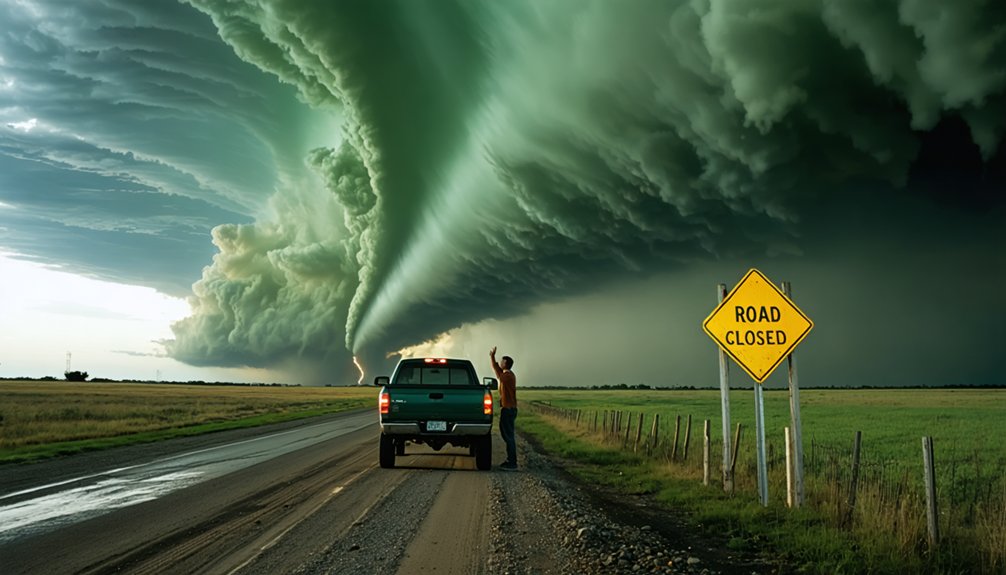
Under Oklahoma law, any road officially closed by law enforcement is immediately off-limits — no exceptions.
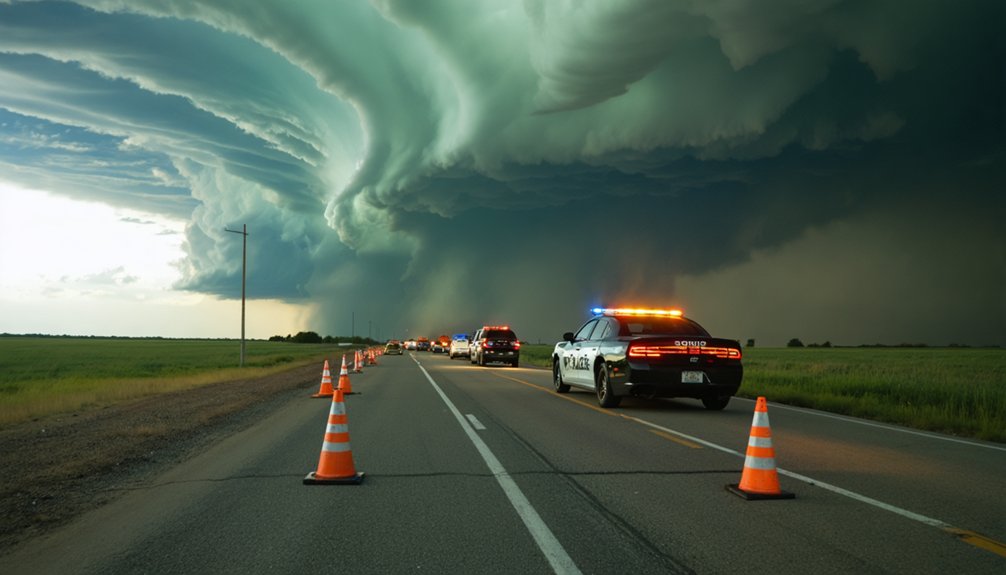
Police can seal highways and local roads during active emergencies, and those closures apply to everyone without emergency access authorization — including storm chasers.
HB2426 directly addresses this boundary.
Without a Severe Weather Tracker License, you can’t legally proceed past officer-controlled closures. Licensed professionals, however, gain emergency access to those off-limits roads when operating under qualifying severe weather conditions.
For you as an unlicensed chaser, the practical rule is straightforward: if law enforcement has physically closed it, you’re legally barred from it.
No watch, no warning, and no personal justification overrides an officer-enforced road closure under existing Oklahoma traffic law.
What Behaviors Get Storm Chasers Charged With Reckless Driving
Road access restrictions define one legal boundary, but your driving behavior defines another. Reckless behaviors behind the wheel expose you to criminal charges regardless of your intent to gather data or document storms.
Running red lights without stopping, exceeding safe speeds near pedestrians, blocking intersections, and cutting off emergency access routes all trigger reckless driving statutes. Oklahoma law doesn’t distinguish between a thrill-seeker and a dedicated researcher when evaluating dangerous conduct on public roads.
You can legally chase on open highways and still face charges if your driving endangers others. Licensed professionals under HB2426 receive narrow exemptions, but those privileges don’t cover generalized recklessness.
Your safest legal position requires separating the storm’s unpredictability from your own deliberate, controlled decision-making behind the wheel.
Frequently Asked Questions
Can Storm Chasing Tour Companies Operate Legally Under Oklahoma’s HB2426?
Yes, you can operate storm chasing tour companies legally under HB2426, as it doesn’t ban or regulate them. The bill’s storm chasing regulations and tornado safety measures target only media outlets and university research programs.
How Much Does Oklahoma’s Severe Weather Tracker License Cost to Renew?
Renewing your rigorous, regulated license requires a $250 renewal fee. You’ll navigate the renewal process smoothly by meeting Oklahoma’s license requirements through the Insurance Department, keeping your Severe Weather Tracker License active and your freedom to track intact.
Does HB2426 Allow Licensed Trackers to Run Red Lights Legally?
Yes, HB2426 lets you legally proceed through red lights as a licensed tracker, but you must slow down first. These chasing regulations balance your access rights with public safety requirements during severe weather events.
Are University Research Programs Eligible for the Severe Weather Tracker License?
You’ve hit the jackpot! Yes, university research programs are explicitly eligible for the severe weather tracker license under HB2426, granting you university permissions aligned with research ethics to pursue professional storm-tracking access legally.
What Risk Level Triggers HB2426 Privileges for Licensed Severe Weather Trackers?
Under HB2426, you’ll trigger licensed privileges at a slight risk level 2 or higher, or during a tornado/severe thunderstorm watch. Understanding these risk assessment thresholds helps you navigate the legal implications confidently.
References
- https://www.youtube.com/watch?v=HXAdm670rs8
- https://www.iweathernet.com/storm-chasers/license-storm-chaser
- https://www.okhouse.gov/posts/news-20250206_2