Mastering emergency coordination as a storm chaser means building layered communication systems, establishing clear protocols before each operation, and equipping your team with the right gear. You’ll need redundant radio, mobile, and satellite channels to prevent single points of failure. Pre-plan multiple escape routes, maintain updated emergency contacts, and coordinate directly with local authorities. Sync your radar data, GPS tools, and drone technology for real-time situational awareness — and there’s far more tactical depth ahead.
Key Takeaways
- Use layered communication systems—radios, mobile networks, and satellite comms—to eliminate single points of failure during active storm operations.
- Pre-plan multiple escape routes and continuously reassess them as storm dynamics rapidly shift to avoid entrapment.
- Carry first aid supplies, CPR equipment, and high-calorie provisions stored in waterproof, easily accessible containers for emergencies.
- Deploy UAV technology post-storm for rapid damage assessment, capturing geotagged aerial footage to share with local authorities.
- Build credibility by collaborating with emergency managers pre-season, ensuring authorities trust your data and respect your operational presence.
Storm Chaser Communication Systems That Work in Real Time
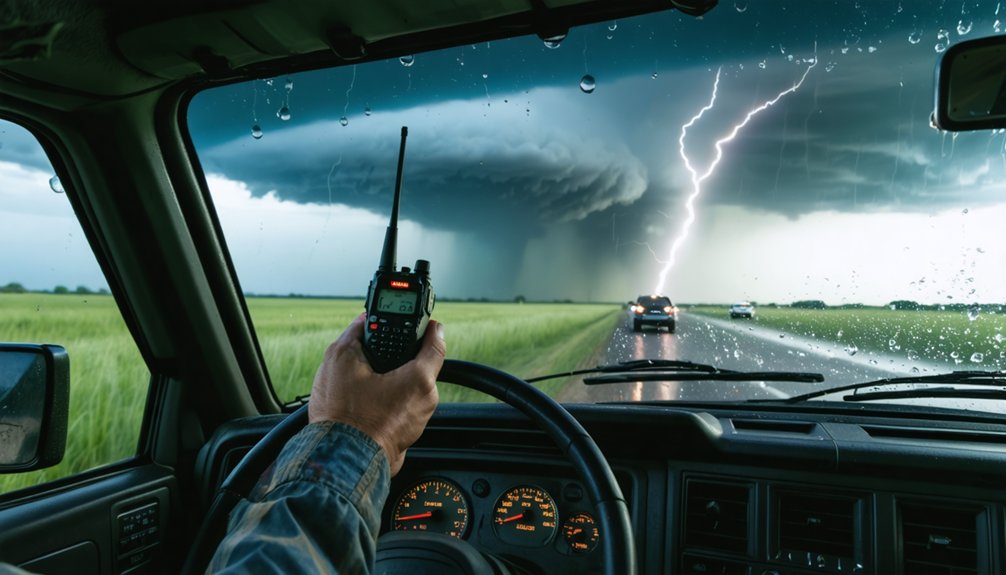
When severe weather strikes, your communication systems can mean the difference between a coordinated response and a catastrophic breakdown. You need layered redundancy—radios, mobile networks, and satellite communication working simultaneously to eliminate single points of failure.
Maintain an updated emergency contact list with clear protocols defining message frequency and content. Share real-time storm data directly with local authorities to synchronize responses as conditions evolve rapidly.
Keeping your emergency contact list current and your protocols sharp ensures synchronized, real-time coordination when conditions change fast.
Don’t wait for an actual emergency to test your systems. Regular emergency drills expose critical vulnerabilities before they become fatal weaknesses in the field. Practice switching seamlessly between communication channels under pressure.
Your operational freedom depends entirely on reliable information flow. When one channel fails, you must activate the next without hesitation, keeping your team coordinated and your escape options open.
Emergency Kit Essentials Every Chase Team Must Carry
Your emergency kit must include a well-stocked first aid supply cache with bandages, antiseptics, tourniquets, and CPR equipment. Ensuring at least one team member holds active CPR certification.
Pack non-perishable food items alongside water purification tablets to sustain your team when supply lines are compromised during extended chase operations.
These essentials aren’t optional—they’re the baseline requirements that keep your team operational and alive when conditions deteriorate rapidly.
Essential Medical Supply Kits
Every chase team must carry a well-stocked medical supply kit as a non-negotiable operational standard. You’re operating in remote, high-risk environments where professional medical help isn’t immediately accessible, so self-sufficiency isn’t optional — it’s crucial.
Your kit must include bandages, antiseptics, tourniquets, trauma dressings, and CPR masks. Don’t overlook prescription medications, pain relievers, and treatment supplies for burns or lacerations.
First aid readiness directly determines survival outcomes in critical moments.
Beyond equipment, medical training is equally essential. Ensure at least one team member holds current CPR and wilderness first aid certification. You can’t rely solely on gear when real emergencies demand skilled hands.
Regularly audit your kit, replace expired items, and run practical drills so your team responds decisively when seconds matter most.
Critical Food And Water
Sustaining operational readiness in the field demands more than equipment — it demands fuel. Pack non-perishable foods with high caloric density — energy bars, jerky, and vacuum-sealed meals optimized for food preservation in fluctuating temperatures. Don’t rely on refrigeration; assume grid infrastructure won’t exist.
Water sourcing becomes critical when municipal supplies are compromised post-storm. Carry sufficient bottled water plus water purification tablets as a redundant backup system. Calculate a minimum of one gallon per person daily.
Store provisions in waterproof, easily accessible containers positioned for rapid deployment. You’re operating in unpredictable environments where resupply isn’t guaranteed, so treat every resource as finite.
Your team’s cognitive performance and physical endurance depend directly on consistent nutrition and hydration — don’t compromise either.
Safety Protocols That Prevent Entrapment and Lightning Strikes
When steering near severe convection, you’ll need to plan escape routes before you’re close enough for entrapment to become a risk. Identify multiple exit paths and continuously reassess them as storm dynamics shift. Never assume a single route remains viable — storms move fast, and roads flood faster.
For lightning safety, move immediately to shelter the moment cloud-to-ground strikes occur within one mile of your position. Don’t wait for conditions to worsen before acting.
Entrapment prevention also means avoiding core punching entirely. Driving through a storm’s heavy precipitation core eliminates visibility, exposes you to large hail, and cuts off your escape options simultaneously.
Maintain situational awareness, trust your radar data, and never let urgency override calculated decision-making. Your freedom depends on disciplined restraint, not reckless proximity.
When you deploy mobile radar systems, you gain detailed storm tracking capabilities that let you pinpoint movement patterns and make faster, smarter routing decisions.
You’ll integrate GPS guidance tools to secure accurate positioning and streamline route planning as conditions shift rapidly around you.
Together, these technologies sharpen your situational awareness and reduce the margin for error when navigating near severe convection.
Mobile Radar Deployment Strategies
Mobile radar systems give you a decisive edge in storm tracking, letting you monitor cell movement and intensity with a level of detail that static radar networks can’t match.
Position your unit on elevated terrain to maximize sweep range and minimize ground clutter distortion.
Radar calibration is non-negotiable before every deployment. Skipping it compromises data accuracy when you need reliable readings most.
Run full diagnostic checks and verify beam alignment against known reference points.
Signal interference from power lines, towers, and dense terrain can degrade your returns significantly.
Identify interference sources before positioning your system, and adjust your elevation angle accordingly.
Cross-reference your mobile radar feeds with real-time weather apps to validate storm movement patterns.
This dual-source approach sharpens your situational awareness and keeps your escape route planning grounded in verified, precise data.
GPS Navigation Tool Integration
GPS navigation tools transform your storm-tracking capability by delivering accurate real-time positioning that keeps your team precisely oriented relative to storm cells, escape corridors, and local road networks. You’ll leverage route optimization algorithms to calculate the fastest, safest paths away from deteriorating conditions before entrapment becomes a threat.
Waypoint accuracy guarantees your pre-planned escape routes remain reliable even when rapidly evolving storms force split-second decisions. Program critical waypoints—fuel stations, shelters, staging areas—before deployment so you’re never searching under pressure.
Integrate GPS with your mobile radar platform to synchronize positioning data with storm movement projections. This combination gives you a tactical operational picture that eliminates guesswork, sharpens your situational awareness, and preserves your freedom to maneuver decisively when conditions shift unexpectedly.
Coordinating With Local Authorities During an Active Chase
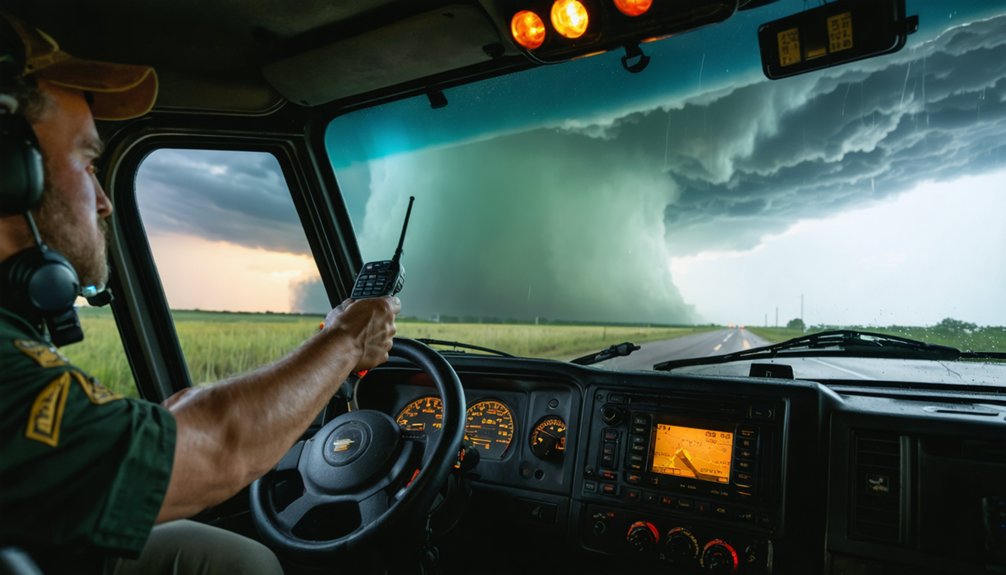
During an active chase, how you coordinate with local authorities can mean the difference between a streamlined emergency response and a chaotic one. You’ll need established joint protocols before you’re ever in the field. Community engagement and legal considerations aren’t optional—they’re foundational to operating effectively and responsibly.
- Report severe weather data immediately via NWS phone lines, amateur radio networks, or social media to keep officials informed in real time.
- Respect jurisdictional boundaries and law enforcement directives; ignoring legal considerations jeopardizes your access and credibility.
- Participate in pre-season task forces with emergency managers and meteorologists to build trust through genuine community engagement.
When authorities trust your data and respect your presence, coordinated responses improve dramatically—protecting both the public and your operational freedom.
Drone Imaging and Data Logging for Post-Storm Damage Assessment
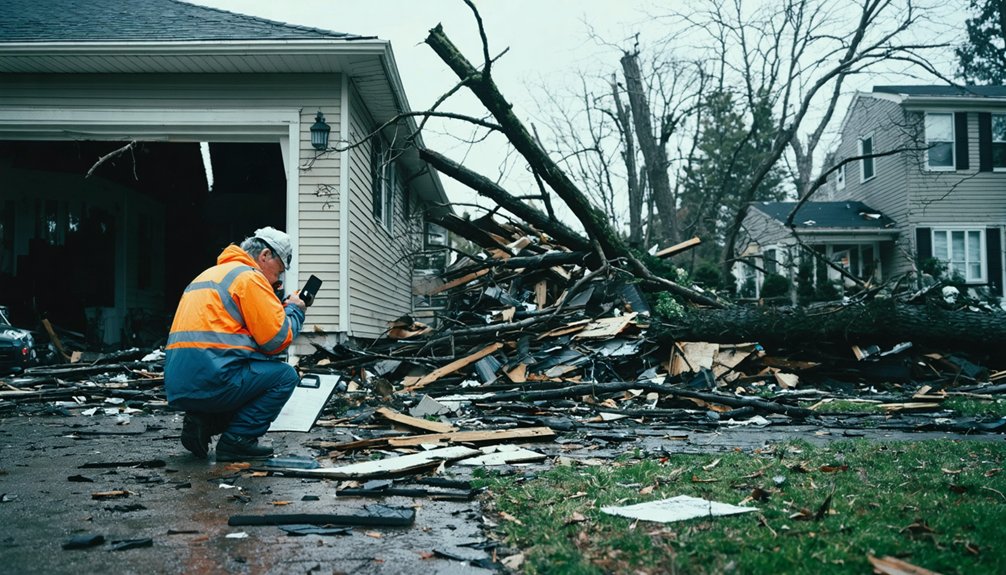
Once the storm passes, drone imaging and data logging become your most powerful tools for rapid, accurate damage assessment. Deploy your UAV immediately to capture high-resolution aerial footage, enabling precise storm damage documentation without exposing your team to ground-level hazards.
Post-storm UAV deployment delivers rapid, precise damage assessment while keeping your team safe from ground-level hazards.
You’ll identify structural failures, flooding patterns, and debris fields faster than any ground survey allows.
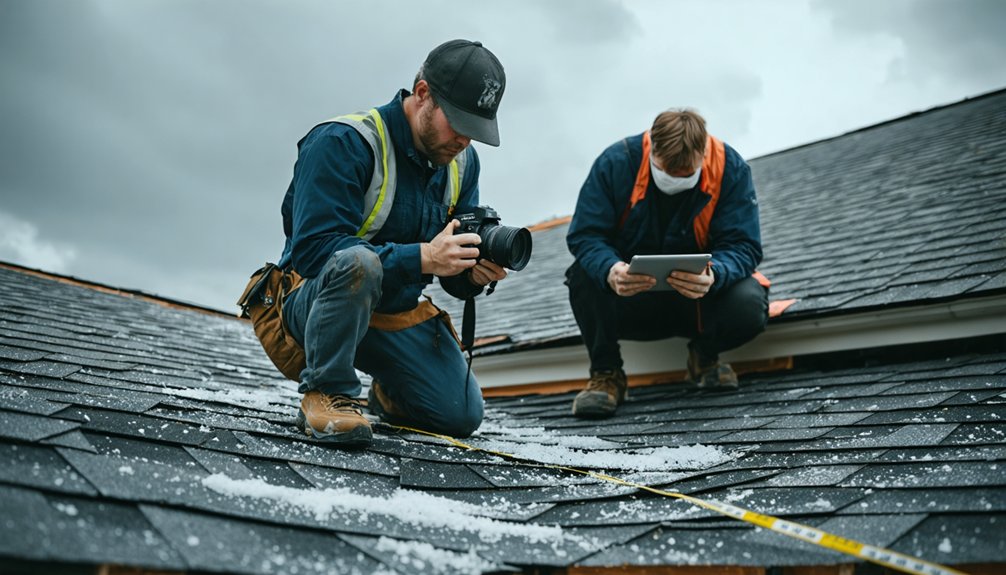
Sync your drone’s data feed with logging software to timestamp and geotag every image, creating a verifiable record for emergency managers and insurance assessors. This dataset also supports weather pattern analysis, helping you refine predictive models for future deployments.
Don’t wait — upload your findings to your collaboration platform immediately, sharing actionable intelligence with local authorities. Accurate, real-time data keeps response efforts coordinated, targeted, and efficient when every minute counts.
Frequently Asked Questions
How Do Storm Chasers Manage Team Conflicts During High-Stress Chase Operations?
Keep your cool—you’ll resolve conflicts by activating clear communication protocols and pre-established conflict resolution strategies, ensuring your team stays synchronized, decisive, and operationally effective during high-stress chase scenarios without compromising safety or mission integrity.
What Psychological Training Helps Chasers Maintain Focus During Extreme Weather Events?
You’ll build cognitive resilience through stress inoculation drills and mindfulness techniques, sharpening situational awareness under pressure. Practice scenario-based training regularly, so you’re processing rapidly evolving storm data decisively, maintaining operational clarity when extreme conditions demand immediate, confident action.
How Do Chasers Handle Legal Liability When Operating Near Active Emergency Zones?
You’re truly free when you’re protected—secure liability insurance and maintain strict legal compliance by coordinating with local authorities, following established joint protocols, and reporting activities immediately through proper channels to safeguard yourself near active emergency zones.
What Insurance Coverage Options Are Recommended for Professional Storm Chase Teams?
You’ll need specialized insurance policies covering vehicle damage, liability, and equipment loss. Evaluate coverage options including commercial auto, inland marine, and umbrella policies to protect your team’s assets during high-risk storm chasing operations.
How Do Storm Chasers Financially Sustain Their Operations Between Major Weather Events?
You sustain operations by diversifying income through weather forecasting consulting, media licensing, and speaking engagements. Prioritize equipment maintenance schedules to reduce costs, ensuring you’re financially resilient and operationally ready when the next major storm event emerges.
References
- https://www.ksnt.com/news/local-news/marshall-county-calls-for-statewide-storm-chaser-safety-discussion/
- https://crazystormchasers.com/storm-chaser-emergency-response-coverage/
- https://www.atms.unca.edu/cgodfrey/courses/swfex/pdf/ChasingSafety.pdf
- https://en.wikipedia.org/wiki/Storm_chasing
- https://crazystormchasers.com/leveraging-technology-for-response-coordination/
- https://www.weather.gov/oun/stormspotting