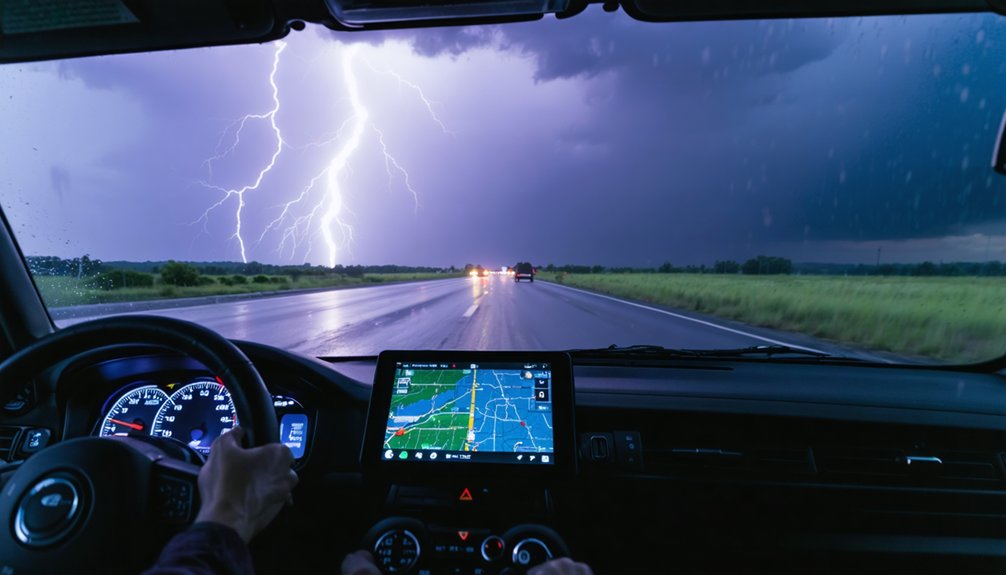
Storm Chasers places you in a methodical meteorological simulation where you’ll photograph tornadoes and deploy data probes across a 625-square-kilometer Tornado Alley recreation. You’ll master proximity-based scoring that rewards debris-filled shots under 320 feet while managing focus mechanics and wind interference. The game gates competitive multiplayer (1v1, 2v2, 4v4) behind tutorial missions, ensuring you understand radar systems and fuel management before facing opponents. While technically competent, its risk-reward calculations and steep learning curve favor dedicated players over casual thrill-seekers. The guide below breaks down essential strategies for competitive success.
Key Takeaways
- Storm Chasers features competitive multiplayer (1v1, 2v2, 4v4) where eight players compete for tornado photography points across multiple game modes.
- Scoring rewards close-range tornado shots under 320 feet, with debris-filled frames providing substantial bonus multipliers for high-risk photography.
- The 625-square-kilometer map authentically replicates Tornado Alley regions with dynamic weather systems, dashboard radar, and deployable PODS probes.
- Players earn currency from photographic achievements and probe data to unlock vehicle customization, consumables, and workshop repairs.
- Singleplayer missions serve as gated tutorials, systematically teaching mechanics like focus control, debris positioning, and fuel management before multiplayer access.
What Is Storm Chasers and How Does It Work?
Storm Chasers positions players as meteorological thrill-seekers in an online multiplayer environment where the core loop revolves around risk-reward calculations. You’ll photograph tornadoes while managing proximity-based scoring mechanics—closer shots yield higher points, with debris-filled frames offering bonus multipliers.
The game converts your photographic achievements and probe data into currency for vehicle customization options like reinforced tires and fuel supplies. Competition manifests through multiplayer leaderboards supporting up to eight players across various versus configurations.
Built on Unity with Direct3D 11 requirements, the technical foundation demands modest hardware specifications while delivering environmental hazards including wind physics, debris trajectories, and dynamic weather systems. Little Cloud Games released this Early Access title in 2019, implementing core survival mechanics that force strategic decisions between aggressive tornado proximity and self-preservation.
Game Modes: From Solo Missions to Competitive Multiplayer
Before accessing competitive multiplayer modes, you’ll navigate through four mandatory singleplayer missions that function as gated tutorials rather than standalone content. These missions systematically introduce core mechanics—from close-range tornado photography with limited exposures to radar-equipped truck deployment and probe activation. The progression feels restrictive, barring multiplayer behind instructional gates rather than offering immediate choice.
Once accessible, multiplayer supports 1v1, 2v2, or 4v4 formats where you compete for ideal camera angles and storm interception. Scoring rewards risk assessment: balancing proximity against debris hazards while evaluating photo quality through distance, focus, and visible debris metrics. Points convert to in-game currency, creating competitive forecasting battles.
Multiple modes—Photography, Outbreak, Tornado Control—add variety, though the mandatory tutorial barrier undermines player agency in a game ostensibly about chasing freedom across Tornado Alley’s open landscapes.
Mastering the Photography System and Scoring Mechanics
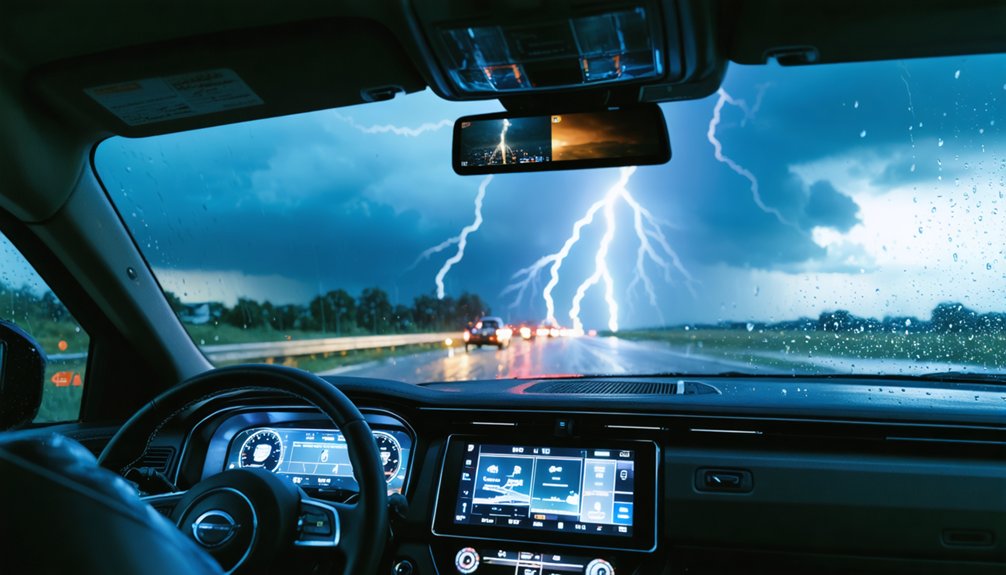
The photography system’s scoring algorithm calculates points based on your proximity to weather phenomena and image sharpness, rewarding storm chasers who maintain ideal focus while capturing wall clouds, funnels, and tornadoes.
Visible debris within your frame triggers substantial bonus multipliers, incentivizing close-range documentation despite increased risk to your virtual safety. These accumulated points convert directly into in-game currency at predetermined exchange rates, funding vehicle upgrades and equipment purchases essential for competitive progression.
Distance and Focus Factors
Focus mechanics abandon handholding entirely. You’ll establish autofocus acquisition once, immediately switching to manual to prevent atmospheric refocusing errors.
Wind exceeding 60mph introduces motion blur beyond 15-second thresholds, forcing constant focal plane verification. The system respects real-world optical physics rather than arcade accessibility, rewarding technical competence over reflexive button-mashing.
Debris Visibility Bonuses
Manual focus mastery means nothing without understanding Storm Chasers’ most impactful scoring variable: debris documentation. The game’s scoring algorithm heavily weights airborne debris visibility, creating point multipliers that dwarf basic tornado photography.
Strategic debris trajectory positioning separates competent players from leaderboard contenders—placing your vehicle where flying structures, farm equipment, and building materials cross your frame compounds point accumulation exponentially.
Debris field density analysis becomes essential for competitive play. Single debris objects provide modest bonuses, but capturing multiple airborne elements simultaneously triggers multiplicative scoring effects. The developers deliberately scattered destructible assets throughout maps, rewarding players who position themselves near active destruction zones rather than maintaining safe distances.
This risk-reward calculation fundamentally shapes ideal gameplay strategy, particularly in multiplayer matches where debris capture skill directly determines ranking outcomes.
Converting Points to Currency
Once you’ve captured high-scoring tornado photographs through ideal debris positioning and exposure settings, Storm Chasers converts your accumulated points into in-game currency through a tiered conversion system that fundamentally undermines the photography mechanics it supposedly rewards.
Converting scoring points to in-game currency reveals arbitrary multipliers that devalue technical proficiency—your meticulously configured f/8 aperture shots earn disproportionately less than lucky proximity captures.
The cash out rewards for tournament winnings follow inconsistent ratios, punishing players who master ISO management and shutter speed optimization.
This disconnect between photographic excellence and monetary compensation exposes the game’s failure to honor skill-based achievement.
You’ll find yourself abandoning proper exposure techniques for exploitative positioning strategies, since the conversion system prioritizes random encounter bonuses over deliberate camera work, effectively negating the depth of its own photography simulation.
Essential Tools: Radars, PODS, and Weather Detection Equipment
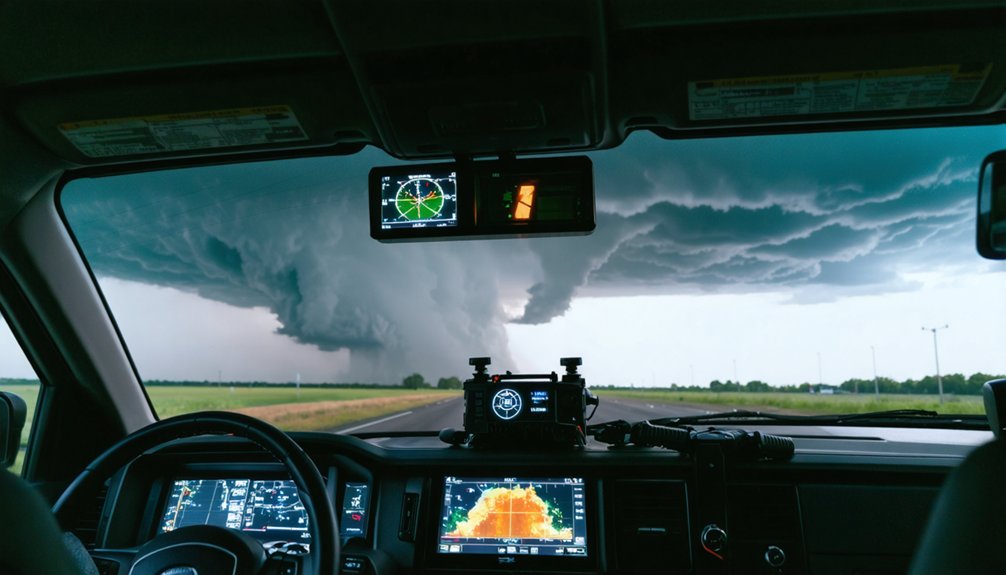
Storm Chasers equips players with three core instruments that define the gameplay loop: a dashboard radar system, deployable PODS probes, and a camera with limited exposures. The radar tracks precipitation patterns and tornado warnings across your mini-map, letting you forecast interception points without hand-holding.
PODS function as your primary data collection techniques—you’ll activate them manually, drop them in the twister’s path, and watch destruction metrics convert to mission points. The camera’s restricted film count forces deliberate composition choices, rewarding close-range shots under 320 feet that capture airborne debris and lightning strikes.
These simulator capabilities work in tandem: radar guides positioning, probes harvest wind data, cameras document the chaos. Night vision extends your operational window, though the current build’s basic radar interface awaits post-Early Access refinement.
Exploring the Tornado Alley Map and Environmental Features
Your equipment proves worthless without understanding the 625-square-kilometer arena where you’ll deploy it. The map authentically replicates Tornado Alley’s Plains, Midwest, and Dixie Alley regions, featuring highways, farmlands, trailer parks, and drive-ins—all strategically designed with destructible assets for maximum tornado interaction. You’ll navigate terrain elevation changes and hazardous road conditions while tracking multiple storm rotations through toggleable radar overlays showing reflectivity, velocity, and surface data.
The environment responds dynamically: flying debris, destructible buildings, and realistic tornado physics create genuine danger. Weather warnings and forecast polygons help you predict storm paths, though you’re free to ignore official guidance. Active weather radio integration, customizable vehicle FM stations, and night-spawning tornadoes add operational complexity that separates successful chasers from reckless observers.
Singleplayer Mission Walkthrough and Progression Guide

The campaign’s seven-mission structure introduces mechanics through mandatory tutorials before escalating to time-pressured objectives that demand 200 to 500+ point thresholds alongside simultaneous tasks like probe deployment.
You’ll face compounding constraints across missions—vehicle damage forces foot navigation in Mission 2’s forested terrain, while Mission 3’s heavy rain degrades visibility as you balance photography scoring with precise tornado path prediction.
Each completed objective grants access to equipment upgrades and vehicle access, though the progression system withholds critical tools until you’ve demonstrated proficiency with the complex photo evaluation algorithm that weighs distance, focus quality, and debris visibility.
Early Mission Objectives Explained
Jumping straight into Storm Chasers’ campaign reveals a methodical tutorial structure that spans three foundational missions before opening up the full eight-mission roster. You’ll tackle increasingly demanding objectives: Mission 1 requires 20+ points photographing a weak tornado on foot, Mission 2 demands 300+ points while traversing forest obstacles within 230 feet of the funnel, and Mission 3 pushes you toward 500+ points deploying probes in a heavy rain environment with seven-minute constraints.
The escalation exposes critical mechanics—photo zoom optimization, proximity scoring thresholds, and tornado path prediction—while highlighting gear customization options like enhanced footwear for faster repositioning. Mission retry strategies become essential as you’ll frequently restart to nail probe placements or achieve scoring benchmarks, particularly when managing vehicle-free locomotion or avoiding off-road penalties that compromise timing.
Unlocking Tools and Rewards
Your progression opens:
- Multiple vehicle options including VK2, Dominator 3, and Extreme Tornado Tours variants with paint customization
- Essential consumables like gas cans and tire replacements purchased through the shop interface
- Workshop access for repairing damage sustained during off-road pursuits
- Enhanced probe technology for maximizing data collection scores
The server-side save system secures your progression online, preventing offline grinding. Expect progression resets before full release, so don’t invest emotionally in current opens. Focus on mastering mechanics rather than accumulating rewards.
Multiplayer Strategies: Competing Against Other Chasers
While Storm Chasers’ single-player mode establishes core mechanics, multiplayer competition fundamentally alters strategic priorities through direct player opposition. You’ll need advanced storm tracking techniques to anticipate supercell formations before opponents claim ideal vantage points. Radar interpretation becomes critical—identifying tornado potential early grants positioning advantages that passive forecasting can’t match.
Effective in game competition strategies demand fuel management calculated against intercept distances. Stockpiling jerry cans enables aggressive positioning without gas station detours that surrender territorial control. Deploy probes strategically at maximum proximity thresholds, balancing risk against scoring potential. Vehicle preservation matters since damage limits mobility when racing competitors to emerging storms.
Public matchmaking offers quick sessions, while private servers accommodate coordinated team tactics in 2v2 or 4v4 formats. Leaderboard performance reflects consistent execution of these principles across varied meteorological conditions.
Become the Tornado Mode and Special Features
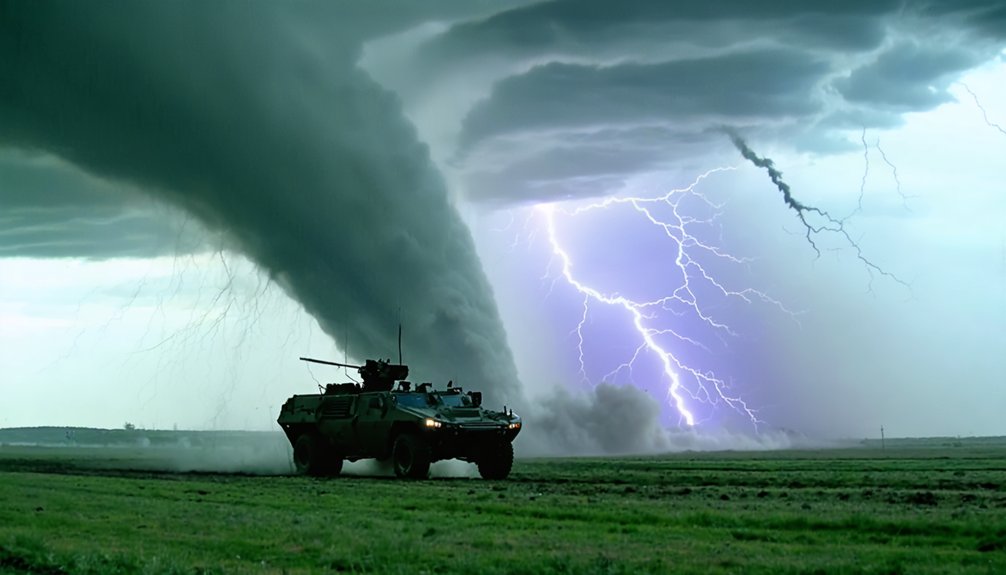
The “Become the Tornado” mode transforms Storm Chasers’ core gameplay loop by placing you in control of destructive EF-scale vortices rather than documenting them. You’ll progress through intensity categories while demolishing structures and expanding your wind field exponentially, creating a physics-driven destruction sandbox that contrasts sharply with the simulation’s traditional chase mechanics.
This feature, alongside lobby mini-games that occupy players between storm scenarios, represents the developers’ attempt to diversify content beyond photographic documentation missions.
Playing as the Tornado
Storm Chasers’ most audacious feature inverts conventional disaster game design by placing you in direct control of nature’s deadliest phenomenon. Available through specific missions and multiplayer modes, you’ll master tornado control techniques while pursuing destruction effectiveness metrics that demand strategic target selection.
Your objectives center on accumulating 2,000+ points within ten-minute windows through calculated devastation:
- Direct pathfinding toward high-value structures like gas stations and dense neighborhoods
- Intensity escalation from initial formation to EF5 classification mid-session
- Multiplayer confrontation against storm chasers piloting interceptor vehicles
- Cascading destruction chains triggering explosions, power flashes, and debris vortexes
The mode’s freedom-focused design rewards aggressive experimentation. You’ll navigate between towns, destroy infrastructure, and leverage environmental reactions to maximize your devastation rating while maintaining performance stability during large-scale demolition sequences.
Lobby Mini-Game Entertainment
Between catastrophic tornado sessions, you’ll discover Storm Chasers’ multiplayer infrastructure extends beyond pure destruction mechanics into a surprisingly robust social framework. Lobbies function as genuine waiting rooms where you’ll access chase vehicles like the Dominator through opened doors, though barricaded houses remain inaccessible to other players.
The time skipping feature addresses downtime efficiently, letting you advance cycles while organizing team compositions for 1v1, 2v2, or 4v4 matches.
Photography mode introduces objective-based competition through distance and focus algorithms, while Tornado Control and Outbreak modes diversify gameplay loops. You’ll deploy probes, earn XP warning civilians, and track weather conditions cycles with realistic physics simulations.
The editable FM radio station and flying cow Easter eggs provide unexpected levity. Ten-minute missions with leaderboards transform casual sessions into competitive speedruns, proving the developers understand player autonomy.
Recent Updates and Beta Improvements
Since launching into Early Access on 28 June 2019, Storm Chasers has maintained its core design philosophy while systematically expanding its feature set through multiplayer modes, refined mechanics, and additional maps. The developers deployed multiple updates in January 2026, though detailed patch notes remain distinctly absent from official channels.
Public beta announcements for v0.9 emerged through Steam Community in late June, signaling ongoing development momentum.
Critical updates include:
- January 2026 depot changes tracked exclusively through SteamDB
- v0.9 public beta developments announced for post-June release
- Nexus Mods February 2026 roundup highlighting speed and reliability improvements
- New Collections browsing method introduced for community modifications
While the development team demonstrates consistent activity, the lack of extensive changelogs limits player transparency regarding specific mechanical adjustments and balance changes.
Tips for Maximizing Points and Unlocking Customization Options
While Storm Chasers’ core gameplay loop centers on spectacular tornado encounters, maximizing your scoring potential requires methodical understanding of its interconnected systems. Efficient data collection demands strategic probe placement in tornado paths—ideally under 320 feet for forest missions requiring 300+ points. You’ll need to balance proximity risks against photo scoring algorithms that reward close-range shots (21 points at ideal angles versus 20-point minimums).
Converting points into currency funds essential supplies: gas at $3 per gallon, replacement probes, and tire repairs from off-road damage. Maximizing mission rewards accelerates XP accumulation, opening up vehicle options and customizations while building leaderboard-worthy scores like the 590-point benchmark.
Competition modes (1v1, 2v2, 4v4) double XP gains when you outscore opponents through combined photography, probe data, and resident warnings.
Frequently Asked Questions
Can I Play Storm Chasers Offline Without an Internet Connection?
Yes, you can play Storm Chasers offline. While online modes demand connectivity, you’ll access singleplayer missions freely without internet. However, the game lacks local multiplayer mode, and offline gameplay features remain limited—no leaderboards or competitive elements available when disconnected.
What Are the Minimum PC System Requirements to Run the Game?
You’ll need Windows 7 (64-bit), Intel Core i3, 4GB RAM, and Nvidia GTX 680 for minimum hardware specifications. Performance optimization requires DirectX 11 compatibility and 4GB storage. These baseline requirements grant you entry-level access without constraints.
Is Storm Chasers Available on Consoles or Just Steam?
Storm Chasers remains Steam-exclusive with no console ports available. Curiously, you’ll find single player mode functionality and multiplayer server availability only on PC, while PlayStation and Switch offer separate storm-chasing titles from different developers entirely.
Does the Game Support VR Headsets for Immersive Storm Chasing?
No, Storm Chasers doesn’t support VR headsets despite its realistic weather simulation. You won’t find VR compatibility features in this Unity-based game—no motion controls, stereoscopic rendering, or headset tracking exist, limiting your immersive storm-chasing freedom.
How Much Does Storm Chasers Cost During Early Access?
Storm Chasers costs $12.99 during Early Access, with no price changes since launch. The developer’s community feedback indicated this rate stays fixed throughout development, though you’ll find it may increase after full release.