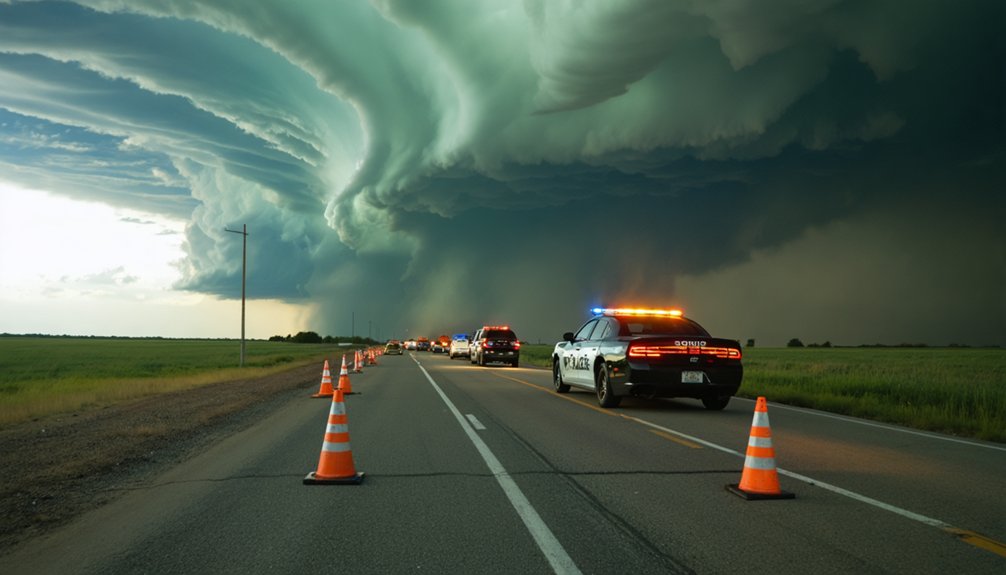
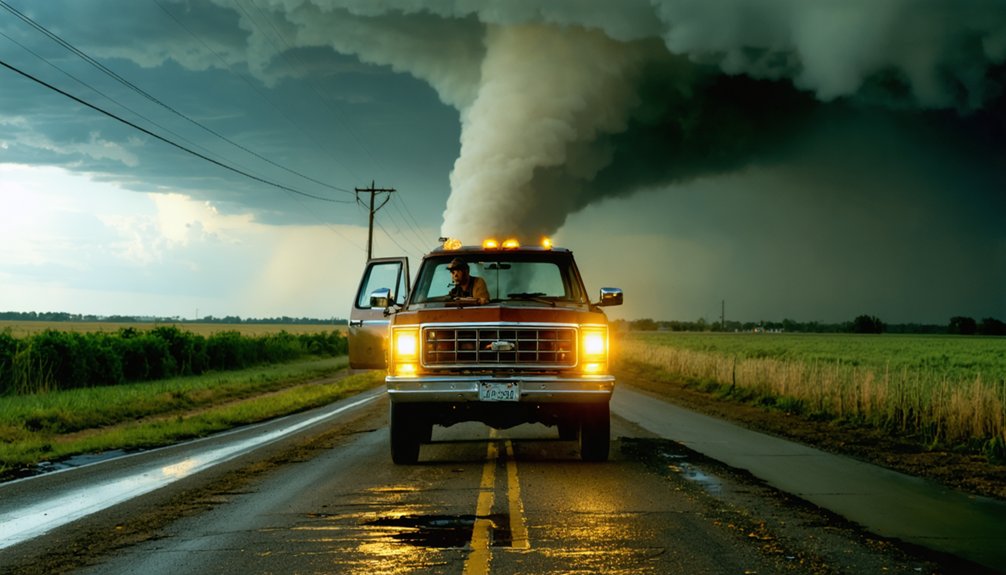
You’ll find storm chasing remains largely unregulated across the U.S., with no federal framework governing the activity. Oklahoma’s proposed legislation stands as the nation’s only significant attempt to establish licensing requirements, though Senate Bill 158 remains stalled after approval. Most states lack specific statutes addressing storm chasing, creating a legal gray area where standard traffic laws apply. Amateur chasers maintain complete operational freedom, while professional trackers face potential licensing requirements. Understanding each jurisdiction’s specific regulations and enforcement approaches will help you navigate this evolving legal landscape.
Key Takeaways
- Most U.S. states have no specific storm chasing laws, leaving the activity largely unregulated with no federal framework.
- Oklahoma leads with House Bill 2426, establishing the first state licensing program requiring $500 initial fees and professional endorsements.
- Licensed professional chasers in Oklahoma gain special privileges including emergency lights, roadblock access, and modified traffic law exemptions.
- Amateur storm chasers remain exempt from licensing requirements in all states, operating under standard traffic laws and insurance regulations.
- SKYWARN certification offers voluntary, free training through the National Weather Service without professional affiliation requirements nationwide.
Current Legal Status of Storm Chasing Across the United States
While storm chasing remains largely unregulated across most of the United States, you’ll find a patchwork of emerging legislation that varies considerably by jurisdiction. Oklahoma’s House Bill 2426 represents the first significant legislative attempt to restrict storm chasing activities, establishing legal precedence of storm chasing regulation at the state level.
You’re currently operating in a legal gray area where no federal framework exists, and most states haven’t enacted specific statutes addressing chase activities. However, constitutional challenges to storm chasing regulations are anticipated as states begin implementing restrictive measures. These challenges will likely center on First Amendment protections for newsgathering and freedom of movement.
The Oklahoma measure would create optional special licenses for storm trackers, granting them flashing roof lights and priority over other motorists while still requiring them to yield to emergency vehicles. The bill specifically targets stormchasers working for TV/radio stations, allowing them enhanced reporting capabilities during severe weather events. You must monitor your state’s legislative developments, as the regulatory landscape is shifting from complete freedom toward potential licensure requirements and operational restrictions.
Oklahoma’s Proposed Severe Weather Tracker License Program
Oklahoma’s Senate Bill 158, formally designated as the Oklahoma Emergency Weather Response and Tracking Regulatory Act of 2025, establishes the nation’s first extensive licensing framework for professional severe weather trackers. You’ll face a $500 initial application fee and $250 annual renewals through Service Oklahoma, requiring endorsements from FCC-regulated media outlets or research institutions, criminal background checks, and vehicle insurance verification.
Licensed trackers receive emergency flashing light privileges and roadblock access during severe weather events. License holders must display license and sponsor numbers on their vehicles to remain compliant with program requirements. Violations of these requirements can result in a $500 fine or complete license revocation. The measure encountered potential industry backlash from storm chasers like Reed Timmer, prompting legislators to pause implementation despite 53-45 House approval.
Public education initiatives will commence during fall interim studies to clarify the program’s optional nature—amateur chasers retain unrestricted tracking rights without mandatory licensing requirements.
Licensing Requirements and Application Process for Professional Chasers
As of 2025, no state beyond Oklahoma has implemented mandatory licensing requirements for professional storm chasers, though Oklahoma’s Senate Bill 158 remains tabled following legislative approval. If enacted, you’d need endorsement from an FCC-regulated media outlet or university, plus pass a criminal background check and submit vehicle insurance proof.
The license application requirements include a $500 initial fee and $250 annual renewals, processed through Service Oklahoma or the Oklahoma Insurance Department. You’d display license and sponsor numbers on your vehicle while maintaining reporting standards set by your affiliated organization. The process verifies professional employment rather than restricting amateur chasers.
SKYWARN certification through the National Weather Service offers voluntary training without fees or professional affiliation mandates, focusing on severe weather spotting skills. Critics of the licensing proposal argue it could limit who can legally participate in storm chasing activities. The bill would have granted licensed trackers permission to exceed speed limits and proceed through red lights during severe weather events.
Special Privileges Granted Under Licensed Storm Tracking
Under Oklahoma’s proposed Severe Weather Tracker License framework, you’d gain emergency responder-level privileges that fundamentally alter your operational capabilities during active storm events. HB2426 authorizes exceeding posted speed limits after yielding, proceeding through red lights and stop signs, and accessing closed roadways—capabilities designed for emergency response coordination.
You’ll activate flashing green and yellow lights while maintaining priority over civilian traffic. The optional license ($500 initial, $250 renewal) restricts these privileges to professionally employed media personnel or university affiliates, addressing liability concerns through verified credentialing. Applicants must secure endorsement from meteorologists or academic officials to demonstrate professional legitimacy and expertise in severe weather tracking. However, enforcement provisions include $500 fines and potential revocation for misuse.
The bill remains paused for interim study following bipartisan passage (53-45), specifically examining law enforcement concerns about expanded road authority in Oklahoma’s Tornado Alley. Representative Fetgatter cited a local storm tracker’s intervention that enabled residents to seek shelter before a tornado struck their area.
Impact on Amateur and Hobbyist Storm Chasers
How does proposed storm chasing legislation affect your ability to pursue severe weather as a hobbyist? You’ll retain complete operational freedom under current and proposed regulations. Oklahoma’s Senate Bill 158 explicitly excludes amateurs from licensing requirements, establishing no restrictions on your chase activities across state lines.
Impact on hobbyist liability remains unchanged—standard vehicle insurance and traffic laws apply without additional burdens.
Your chasers’ responsibilities amid legislation involve self-directed safety preparation and voluntary SKYWARN training through local NWS offices. Free training classes are held in March and April, typically in the evenings, with no pre-registration required. The training typically lasts about 2 hours and covers thunderstorm development, storm structure, and severe weather safety. You can’t access closed roads or install emergency lighting on personal vehicles. Professional licensing systems target only media-affiliated and university-connected operators requiring criminal background checks.
You maintain unrestricted pursuit capabilities while distinguishing yourself from designated emergency responders operating under official protocols.
Opposition and Concerns From Law Enforcement and Legislators
Oklahoma’s Department of Public Safety formally opposed House Bill 2426, questioning whether licensed storm chasers require emergency vehicle privileges to perform their mission safely. Law enforcement agencies expressed skepticism about the bill’s necessity, noting that existing traffic laws already permit media and research teams to operate during severe weather events.
These readiness concerns prompted legislators to pause the measure for interim study, with critics arguing the proposed licensing framework addresses a problem that doesn’t require emergency status privileges to solve.
Readiness and Necessity Questions
Despite passing the Oklahoma House by a narrow 53-45 margin on March 25, House Bill 2426 faced significant pushback from legislators who questioned both its readiness for implementation and its fundamental necessity.
Rep. Michelle McCane stated extensive work remained before advancing legislation, while Rep. Scott Fetgatter tabled the bill for interim study to address unclear safety parameters and road access issues.
Sen. Mark Mann planned additional refinement of specifics, acknowledging potential overregulation concerns raised by critics who argued the bill was fundamentally misunderstood. Fetgatter clarified his intent wasn’t deterring out-of-state chasers but addressing road congestion that hindered emergency response.
Mann viewed licensing as enabling quick severe weather feedback from qualified trackers. The bill author ultimately ordered further study, preventing implementation this storm season while stakeholders develop reasonable solutions.
Public Safety Department Opposition
The Oklahoma Department of Public Safety‘s formal opposition to HB 2426 represented one of the most significant obstacles to the bill’s advancement. Safety officials raised specific concerns about road access protocols during severe weather events, citing public safety risks that could emerge from exempting licensed chasers from traffic restrictions.
Rep. Tom Gann emphasized the weight of these legislative objections, noting that multiple safety departments united against the measure. Rep. Michelle McCane questioned whether adequate preparation had occurred before introducing such regulatory changes.
The narrow 53-45 House passage demonstrated lawmakers’ divided stance on balancing chaser freedoms with community protection. This opposition ultimately forced the bill into interim study, requiring additional consultation with law enforcement and emergency management officials before reconsidering the licensing framework you’d operate under.
State-by-State Variations in Storm Chasing Regulations
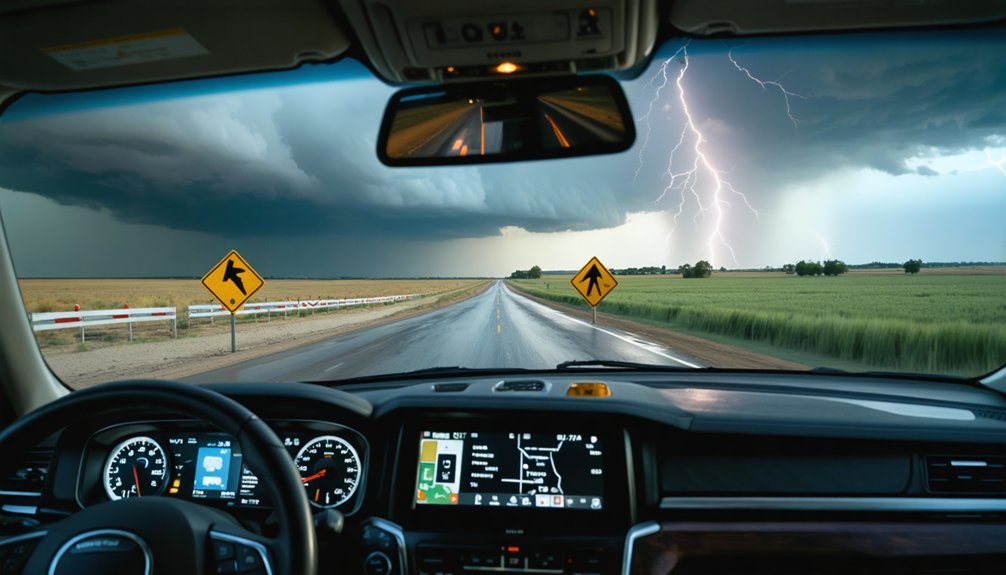
Currently, no U.S. state has enacted mandatory licensing requirements for storm chasers, though Oklahoma’s HB2426 represents the most advanced legislative effort to date. This optional licensing program progression targets only professionals employed by media outlets or university research programs, leaving amateur chasers unaffected.
You’ll face standard traffic laws nationwide, with reckless driving prosecutions establishing chasing liability standards through cases like the 2017 Texas fatal collision. Oklahoma’s proposed framework grants emergency vehicle privileges—speed limit exemptions, red light passage after yielding—exclusively to licensed professionals during active tracking. The bill’s interim study status reflects ongoing negotiations between legislators and law enforcement regarding safety protocols.
Out-of-state chasers operate under their home jurisdictions’ regulations, with no reciprocity agreements currently established for cross-border severe weather pursuits.
Best Practices and Safety Recommendations for All Chasers
You’ll need standardized safety equipment including helmets, first aid supplies, mobile weather radios, and GPS navigation systems with offline maps to maintain operational capability during severe weather events.
Establish redundant communication protocols by monitoring NOAA Weather Radio, local emergency management frequencies, and mobile data networks to receive real-time warnings and coordinate with other chasers.
Your road positioning strategy must prioritize visibility angles that maintain sight lines to rotation features while ensuring multiple escape routes perpendicular to storm motion, keeping you outside the debris danger zone within a 2-mile radius of identified circulation.
Essential Safety Equipment Checklist
Storm chasing demands specialized equipment that can mean the difference between a safe chase and a dangerous situation. You’ll need ANSI-compliant reflective vests for visibility and hail goggles for eye protection during severe weather encounters.
Protecting vehicle from damage requires spare tires, recovery straps, and extensive mechanics toolkits including ratchet sets and tire irons.
Your emergency preparedness kit must include first aid procedures supplies with wound care materials, one gallon of water per person daily, and sanitation items. Install dashcams with secure mounts like StickyPod, avoiding airbag deployment zones. Power redundancy systems—inverters, power banks, and multiple charging cables—ensure continuous documentation capability.
Safety helmets, work gloves, and Guardian Angel Elite Series lights provide protection during roadside operations. Flashlights, preferably Streamlight tactical models, and waterproof headlamps like Petzl 450 Aria 2 enable night operations while maintaining situational awareness.
Weather Communication Protocols
When severe weather systems develop rapidly, effective communication protocols become your primary defense against life-threatening situations in the field. Your communication planning should establish multiple redundant channels before deployment, ensuring you’re never isolated when conditions deteriorate.
Implement these core protocols for real time coordination:
- Pre-deployment briefings covering forecast updates, designated communication channels, and GPS location logging with your team
- Continuous field communication using HAM radios, two-way systems like Midland MXT115, and NOAA Weather Radios as cellular backup
- Standardized reporting procedures including timestamped logs, exact GPS coordinates for emergency services, and direct collaboration with NWS or Spotter Network
Maintain power backups, share live tracking data, and document all communications. You’ll preserve operational autonomy while ensuring coordinated responses during critical weather events.
Road Positioning Strategy
Beyond establishing reliable communication systems, your physical positioning relative to severe weather cells determines both observation quality and survival probability. Position yourself 3-5 miles southeast of supercells, maintaining visual contact with the updraft while staying south of hail cores and east-southeast of tornado formation zones.
Safety monitoring requires constant radar assessment and partner spotting—drivers focus on road conditions while passengers track sky changes. Your driving adaptations must prioritize paved highways like US routes over gravel dead-ends that limit escape velocity.
Always establish north-northeast escape routes before storms arrive, avoiding core-punching into precipitation zones where visibility drops and large hail threatens vehicle integrity. Park off-highway in designated areas, never blocking traffic flow during critical observation periods when storm motion accelerates unexpectedly.
Frequently Asked Questions
What Insurance Coverage Is Recommended Specifically for Storm Chasing Activities?
Don’t let storms catch you off guard—you’ll need hazardous sports travel insurance plus minimum $1 million liability coverage requirements to protect against weather related injury risks, equipment damage, and commercial-level financial exposure during chasing operations.
Can Licensed Storm Chasers From One State Operate in Other States?
Currently, you can operate across state lines without reciprocal licensing since most states haven’t enacted storm chasing regulations. However, you’ll need to monitor evolving legislation and verify local permit requirements, particularly for commercial operations or accessing restricted areas.
What Penalties Exist for Unlicensed Chasers Impersonating Licensed Professionals?
Unauthorized chase tactics trigger misdemeanor charges: you’ll face up to one year jail and $1,000 fines. Legal liability concerns escalate during emergencies—third-degree felony penalties reach five years imprisonment, $5,000 fines for impersonating licensed professionals with emergency equipment.
How Do Municipalities Handle Liability When Licensed Chasers Cause Accidents?
Traversing municipal liability is monumentally complex. You’ll find municipalities require licensed chasers to maintain substantial liability coverage requirements and follow strict community notification protocols, shifting accident responsibility to individual operators rather than absorbing governmental risk themselves.
Are There Tax Deductions Available for Professional Storm Chasing Expenses?
Yes, you’ll find professional storm chasing expenses are deductible under Section 162. Deductible equipment purchases like cameras and vehicle modifications reduce income taxes when you’re operating profit-driven activities with proper documentation substantiating ordinary and necessary business expenditures.
References
- https://journalrecord.com/2025/04/11/legislators-table-storm-chaser-licensing-bill-for-further-study/
- https://www.iweathernet.com/storm-chasers/license-storm-chaser
- https://www.clearhq.org/news/oklahoma-considers-severe-weather-tracker-licensure-2-6-25
- https://www.youtube.com/watch?v=uWyzyuXRgYA
- https://stormtrack.org/threads/state-of-the-chase-season-2026.33322/
- https://abc7amarillo.com/news/local/oklahoma-storm-chasers-oppose-licensing-bill-fear-increased-danger-bary-nusz-house-bill-2426-tornadoes-severe-weather
- https://www.kosu.org/local-news/2025-04-11/lawmakers-say-oklahoma-storm-chasing-license-measure-on-pause-for-now
- https://www.youtube.com/watch?v=TO9grOIYhG0
- https://www.weather.gov/skywarn/
- https://talkweather.com/threads/oklahoma-bill-to-force-licenses-to-storm-chasers.2341/