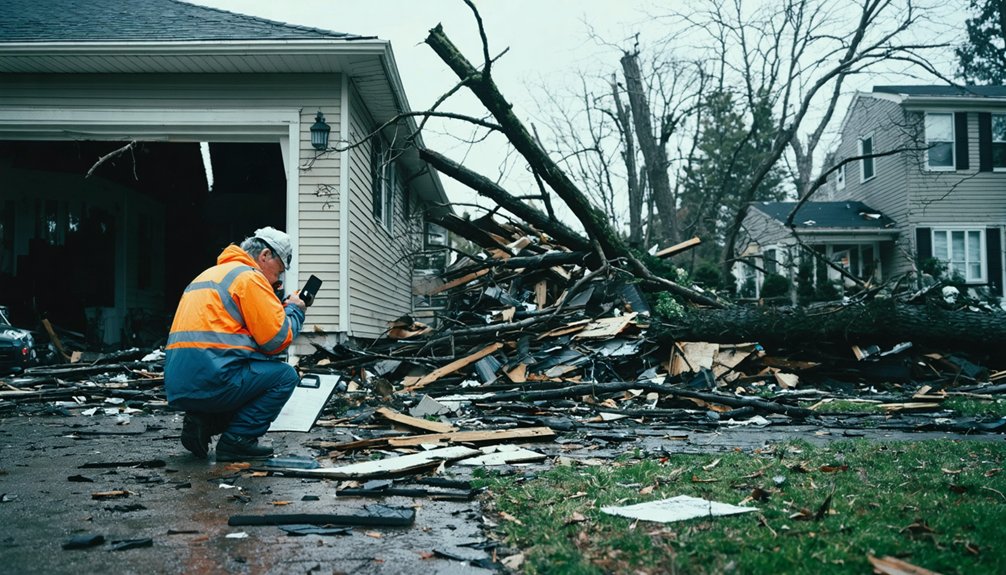
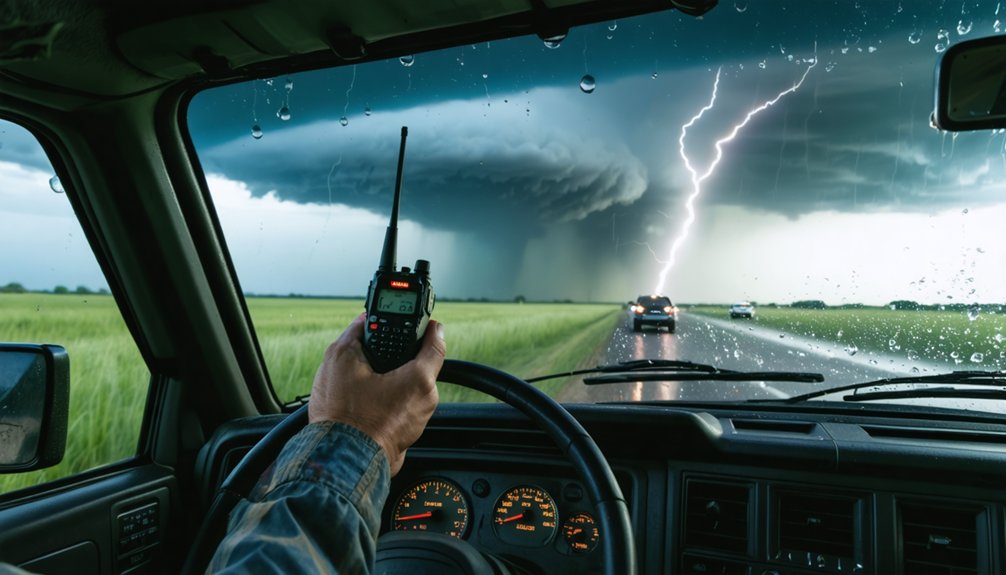
Climate change is forcing you to rethink how emergency response coordination works from the ground up. Historical hazard data no longer reliably predicts future disasters, supply chains face growing instability, and cascading events increasingly demand multi-agency coordination you can’t improvise mid-crisis. Staff fatigue, economic strain, and novel health threats are compounding the pressure. Adaptive planning, research partnerships, and flexible capacity-building aren’t optional anymore—they’re operational necessities. What follows breaks down exactly how you can respond.
Key Takeaways
- Climate change renders historical hazard data unreliable, forcing emergency coordinators to adopt real-time climate projections and probabilistic risk modeling.
- Cascading climate-driven disasters overwhelm single-agency response capacity, making pre-established multi-agency coordination frameworks essential.
- Expanding disaster seasons and simultaneous regional crises strain supply chains, disrupting equipment availability during emergency response.
- Shifting hazard patterns require emergency systems to prioritize flexibility, interoperability, and continuous plan updates over static protocols.
- Climate uncertainty drives economic costs upward, pressuring agencies to integrate financial impact forecasts into coordination and resource planning.
Why Emergency Response Coordination Can No Longer Rely on Old Assumptions
Climate change has fundamentally disrupted the historical patterns that emergency response coordinators once depended on, making past data an unreliable baseline for future planning. You can’t afford to design response frameworks around what hazards used to look like — their frequency, severity, and cascading interactions are actively shifting.
You must now plan across a broader range of scenarios, assigning updated probabilities to events that historical models underestimated or ignored entirely. Technological innovation enables more accurate hazard forecasting, giving you actionable intelligence rather than outdated assumptions. Integrate these tools directly into your risk assessment processes.
Community engagement is equally non-negotiable. Resilient response systems require informed, prepared populations — not passive recipients of emergency alerts. Update your planning protocols continuously, treating climate adaptation as an operational standard, not an exception.
Why Historical Hazard Data No Longer Predicts Future Disasters
When you rely on historical hazard data to guide emergency planning, you’re building your response framework on a foundation that climate change has already made obsolete.
You must recognize that shifting weather patterns, intensifying storm cycles, and emerging cascading events now produce disaster scenarios that past records simply don’t capture.
To stay operationally effective, you’ll need to adapt your planning approach by integrating climate-driven risk models that account for hazards with no reliable historical precedent.
Shifting Historical Hazard Patterns
For decades, emergency managers relied on historical hazard data to forecast disaster probabilities, allocate resources, and design response frameworks—but climate change has fundamentally disrupted that reliability. Historical patterns no longer reflect current or projected hazard shifts, meaning the models you’ve built around past flood cycles, wildfire seasons, or storm frequencies are increasingly inaccurate.
Climate-induced changes are altering both the timing and intensity of events, forcing you to abandon static risk assumptions. You can’t afford to anchor your planning to datasets that no longer represent reality.
Instead, you must integrate dynamic climate projections into your risk assessments, update your hazard identification processes continuously, and coordinate with climate research groups to stay ahead of evolving threat landscapes.
Adaptive planning isn’t optional—it’s operationally essential.
Climate-Driven Disaster Unpredictability
What once gave emergency managers a reliable forecasting foundation—decades of historical hazard data—no longer holds predictive validity in a climate-altered world. Climate uncertainty has fundamentally disrupted traditional risk modeling, forcing you to plan beyond established precedent.
Disaster unpredictability now demands you to account for scenarios that historical datasets never captured:
- Storms intensify faster, giving communities less time to evacuate safely
- Cascading events combine hazards simultaneously, overwhelming coordinated response systems
- Geographic risk zones shift unexpectedly, exposing previously low-risk populations
- Seasonal disaster windows expand, stretching your resources beyond sustainable limits
You must integrate real-time climate research into your Hazard Identification and Risk Assessment process. Engaging proactively with climate scientists isn’t optional—it’s operationally essential for building response frameworks that protect community freedom and survivability under rapidly evolving threat conditions.
Adapting Emergency Planning Approaches
Although historical hazard data once anchored your emergency planning cycles, climate change has invalidated its predictive reliability—you can’t build forward-looking response frameworks on backward-looking datasets.
You must now adopt probabilistic risk modeling, integrating real-time climate projections into your Hazard Identification and Risk Assessment processes.
Shift your planning toward an all-hazards approach that prioritizes adaptive capabilities over static protocols.
Leverage technological innovation—predictive analytics, remote sensing, and AI-driven scenario modeling—to anticipate cascading event combinations your historical records never captured.
Community engagement isn’t optional; it’s operationally critical. Your local networks provide ground-level intelligence that no dataset replicates.
Embed community feedback loops directly into your planning cycles.
Coordinate proactively with climate research groups, ensuring your response frameworks continuously incorporate updated hazard forecasts rather than waiting for the next disaster to expose outdated assumptions.
The Rising Economic Costs Straining Emergency Response Resources
As climate-driven disasters grow more frequent and severe, you’re facing escalating economic costs that stretch emergency response budgets beyond traditional limits.
You must account for supply chain vulnerabilities that threaten the availability of critical equipment, materials, and funding streams your operations depend on.
Adapting your resource allocation strategies to address these compounding financial pressures isn’t optional—it’s an operational necessity.
Escalating Disaster Economic Impacts
The economic toll of climate-driven disasters continues to climb, placing mounting pressure on emergency response systems already stretched thin. You’re facing a reality where fiscal sustainability demands proactive adaptation, not reactive spending.
Climate-driven economic impacts you can’t ignore:
- Supply chains collapse, leaving responders without critical equipment when communities need them most
- Infrastructure failures multiply, forcing emergency managers to stretch shrinking budgets across widening crises
- Rebuilding cycles accelerate, draining public funds before economic resilience can take hold
- Insurance markets retreat, shifting catastrophic financial burdens directly onto local agencies and taxpayers
You must integrate economic impact forecasting into your emergency planning frameworks now. Waiting amplifies costs exponentially.
Strengthening coordination between financial planners and emergency managers builds the fiscal sustainability necessary to maintain operational readiness against increasingly frequent climate-driven disasters.
Supply Chain Funding Vulnerabilities
Supply chain vulnerabilities now directly threaten your capacity to sustain emergency operations during climate-driven disasters. When critical equipment and materials become unavailable, your response timelines extend, and community outcomes worsen. You must audit your procurement systems regularly, identifying single-source dependencies before a crisis exposes them.
Funding challenges compound these risks profoundly. As disaster frequency increases, your budget allocations stretch across competing operational priorities, leaving procurement reserves depleted. You need diversified supplier networks and pre-negotiated contracts that activate automatically during declared emergencies.
Integrate supply chain resilience directly into your financial planning cycles. Coordinate with regional partners to share stockpiles and reduce redundant expenditures. Proactive investment in supply redundancy now protects your operational independence later, ensuring climate-driven disruptions don’t compromise your ability to deliver effective emergency response.
Why Emergency Supply Chains Are Now at Risk
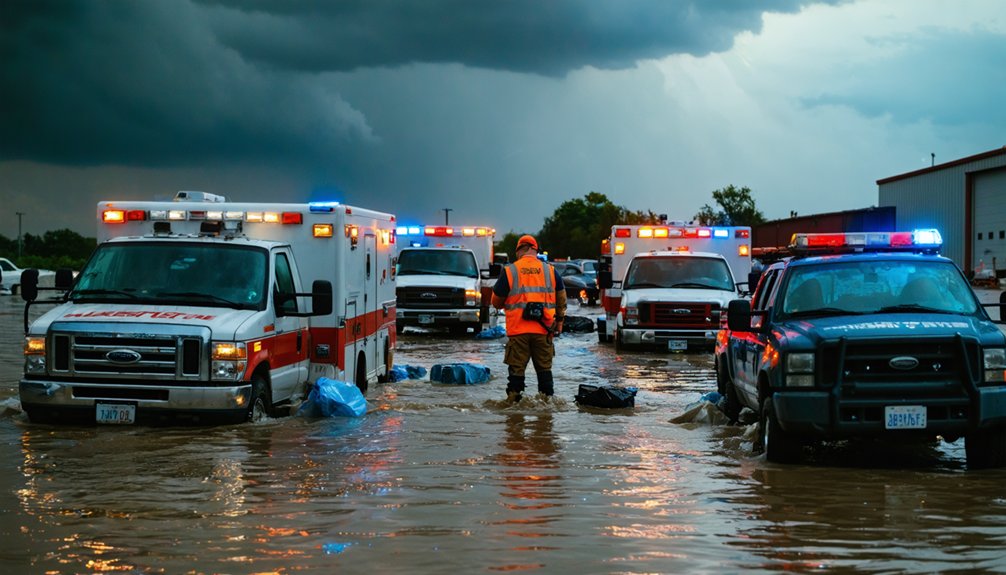
Climate change is actively destabilizing emergency supply chains by amplifying the frequency and overlap of disasters, leaving procurement systems unable to recover between events. Supply chain vulnerabilities now threaten your access to critical equipment when it matters most. Resource scarcity isn’t hypothetical—it’s already reshaping emergency logistics.
Climate change isn’t disrupting emergency supply chains someday—it’s happening now, and procurement systems are already falling behind.
You’re now facing compounding risks:
- Suppliers overwhelmed by simultaneous regional disasters can’t fulfill emergency contracts
- Transportation infrastructure fails precisely when delivery is most urgent
- Manufacturing disruptions eliminate backup sourcing options entirely
- Stockpiles deplete faster than replenishment cycles can compensate
You can’t rely on traditional procurement timelines anymore. Climate-driven demand spikes outpace conventional supply models, forcing emergency coordinators to diversify sourcing strategies, pre-position critical materials, and build redundancy into every procurement decision before the next disaster hits.
How Cascading Events Force Multi-Agency Emergency Coordination
When cascading events strike, you can’t rely on a single agency to manage the full scope of the response—interoperability between emergency services becomes a non-negotiable operational requirement.
You’ll need to coordinate joint planning efforts that account for how one disaster triggers another, stressing multiple systems simultaneously.
Building these multi-agency frameworks in advance guarantees you’re not establishing communication protocols and resource-sharing agreements in the middle of a crisis.
Cascading Events Demand Interoperability
As climate change intensifies the frequency and complexity of extreme weather events, cascading disasters—where one event triggers another—force emergency agencies to move beyond siloed operations and adopt interoperable frameworks. You can’t afford communication breakdowns when a wildfire triggers a flood evacuation simultaneously.
Interoperability demands that agencies coordinate across:
- Shared communication protocols that prevent life-threatening information gaps
- Technological innovation enabling real-time data exchange across jurisdictions
- Community engagement strategies that empower residents rather than leave them dependent
- Joint training exercises preparing personnel for unfamiliar, compounding scenarios
You must integrate these elements into your emergency planning now. Climate-driven cascading events won’t wait for bureaucratic restructuring. Building interoperable systems today means your community retains the capacity to respond, adapt, and recover on its own terms.
Joint Agency Planning Essentials
Interoperability frameworks only hold when agencies have already mapped out how they’ll share authority, resources, and decision-making under pressure. Cascading climate events don’t wait for jurisdictional negotiations—you need pre-established joint agency protocols that define command structures before conditions deteriorate.
Build your coordination architecture around three priorities: unified command integration, resource-sharing agreements, and synchronized communication channels. Technological innovation strengthens each layer—shared situational awareness platforms let agencies track real-time developments across jurisdictions without redundant reporting chains.
Community engagement isn’t peripheral here. Local organizations hold critical intelligence about vulnerable populations and infrastructure gaps that centralized agencies miss. Embed community representatives directly into your planning cycles.
Run joint exercises that simulate cascading scenarios specifically. Stress-test your authority-sharing agreements under realistic pressure. Gaps you identify during training won’t cost lives—gaps discovered during actual events will.
How Climate-Driven Health Crises Are Overwhelming Emergency Response Systems
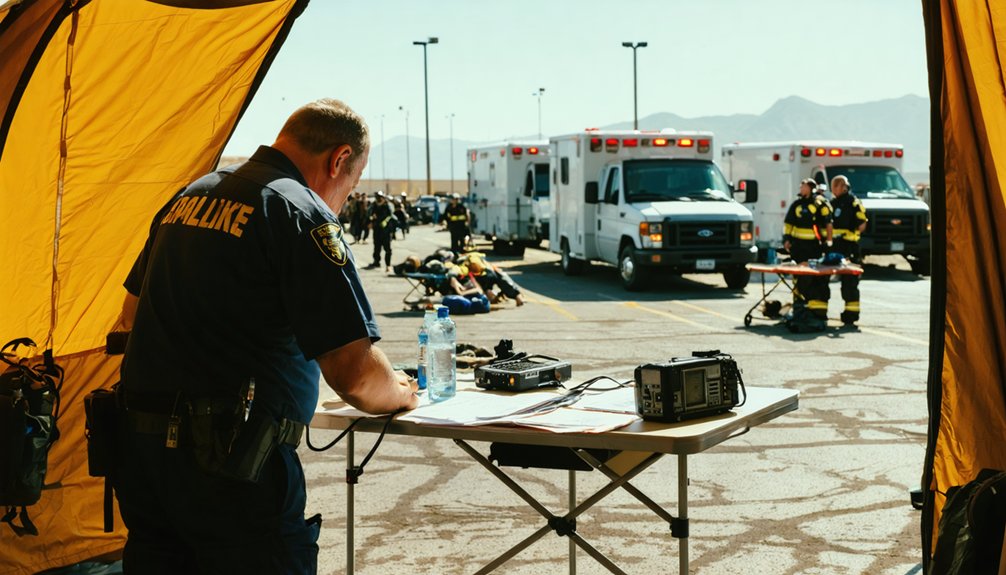
Climate-driven health crises are pushing emergency response systems past their operational limits, forcing coordinators to rethink capacity thresholds and triage protocols. You’re now operating in an environment where climate resilience isn’t optional — it’s a functional requirement for maintaining health infrastructure under sustained pressure.
Climate resilience is no longer aspirational — it’s the baseline requirement for keeping emergency health systems functional.
Cardiac events, respiratory emergencies, and redistributed infectious diseases are compounding your workload simultaneously. Recognize these mounting realities:
- Acute temperature spikes are triggering cardiac and respiratory surges that overwhelm triage capacity
- Zoonotic disease migration is introducing unfamiliar pathogens into your response jurisdiction
- Staff fatigue accumulates faster when cascading health events offer no operational recovery window
- Undertrained personnel face scenarios that existing protocols weren’t designed to handle
Adapt your training programs continuously. Your coordination systems must evolve faster than the threats targeting them.
Staff Fatigue and Mental Health Risks in Climate-Era Emergency Response
When cascading climate events eliminate operational recovery windows, your staff don’t just get tired — they break down systematically. Staff burnout compounds across successive deployments, degrading decision-making capacity precisely when precision matters most.
You can’t treat this as incidental. Climate-driven scenarios introduce unfamiliar hazard profiles, forcing personnel to operate beyond established training frameworks. That cognitive load accelerates deterioration faster than traditional disaster cycles ever did.
Build mental resilience into your operational structure — not as a wellness supplement, but as a core capability. Implement mandatory rotation protocols, integrate psychological debriefing post-deployment, and design exercises that simulate novel climate events before personnel encounter them live.
Your response capability is only as durable as your people. Protect that asset with the same rigor you apply to equipment and logistics planning.
Why Risk-Based Capacity Planning Is Replacing One-Size Frameworks
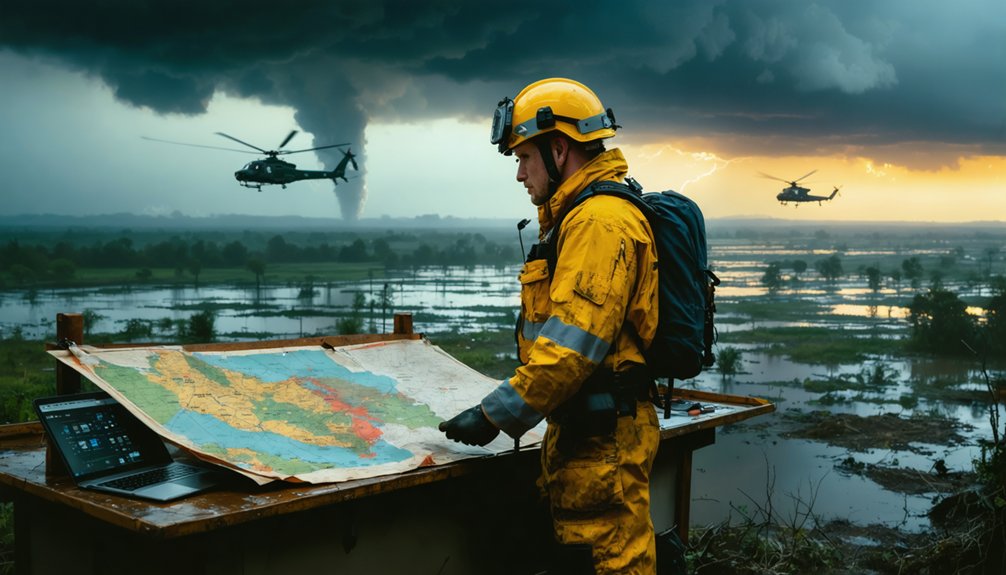
Because historical hazard data no longer reflects current risk trajectories, one-size emergency frameworks are structurally failing. You can’t coordinate effective responses using static templates when climate threats shift seasonally, regionally, and in severity.
Risk-based capacity planning lets you build adaptive systems calibrated to actual, evolving hazard profiles.
This approach demands:
- Community engagement that feeds local knowledge directly into risk assessments, restoring your autonomy over safety decisions
- Technological innovation that enables real-time threat modeling, replacing outdated probability tables
- Flexible resource thresholds that scale with cascading event complexity, not bureaucratic averages
- Capability-based protocols that empower responders to act decisively without waiting for top-down authorization
You’re not abandoning structure—you’re replacing rigid uniformity with precision. That distinction determines whether your coordination succeeds or collapses under pressure.
How Emergency Managers Can Plan for Threats That Don’t Exist Yet
Planning for threats that don’t yet have names requires you to shift from scenario-based thinking to capability-based thinking. Instead of building response plans around known events, you build them around transferable capacities — communication, logistics, triage, and coordination — that function across unfamiliar conditions.
Engage proactively with climate research groups to anticipate hazard trajectories before they materialize operationally. Use risk assessments to identify capability gaps, then develop adaptive strategies that close those gaps without locking your agency into rigid procedures.
Future resilience depends on your willingness to train personnel for novel scenarios, stress-test interoperability with partner agencies, and revise plans continuously as new data emerges.
You can’t predict every threat, but you can build systems flexible enough to absorb what you haven’t yet imagined.
How Research Partnerships Sharpen Emergency Hazard Forecasting

Accurate hazard forecasting depends on your agency’s ability to translate climate science into operational intelligence. Innovative partnerships with climate research groups give you access to predictive analytics that historical data alone can’t provide. These collaborations sharpen your Hazard Identification and Risk Assessment process by integrating real-time modeling into your planning cycles.
Engage proactively with research institutions to gain:
- Earlier warning windows that protect your responders and communities
- Scenario modeling that prepares your teams for threats not yet experienced
- Data-driven resource positioning that reduces reactive decision-making
- Adaptive forecasting tools that evolve as climate conditions shift
You’re not waiting for disasters to define your strategy. You’re building intelligence frameworks that keep your agency ahead of emerging threats and operationally free to respond effectively.
Frequently Asked Questions
How Does Climate Change Specifically Affect Volunteer Recruitment in Emergency Services?
Congratulations—you’ve volunteered during a climate crisis! Volunteer motivation dwindles as recruitment challenges intensify; you’ll face increased fatigue, mental health strain, and safety risks, forcing emergency services to continuously adapt their strategies to retain your commitment.
What Legal Frameworks Govern Emergency Responder Liability During Climate-Related Disasters?
You’ll navigate liability regulations that shift as climate risks evolve, demanding legal accountability through adaptive frameworks. You must stay current with federal, state, and local laws governing your operational decisions during climate-related disaster responses.
How Do Insurance Providers Assess Coverage for Climate-Impacted Emergency Response Organizations?
When a wildfire doubles your call volume, insurers reassess your coverage fast. They’ll scrutinize your insurance underwriting profile, evaluating risk mitigation protocols, staffing resilience, and operational capacity to determine if you’re still an acceptable liability risk.
Which International Models Best Demonstrate Successful Climate-Adaptive Emergency Coordination Systems?
You’ll find the EU’s Copernicus Program and Australia’s AIIMS framework best demonstrate successful international collaboration. They’ve built adaptive protocols that let you dynamically reallocate resources, coordinate cross-border responses, and continuously recalibrate strategies against evolving climate-driven threats.
How Does Community Demographics Influence Climate Emergency Response Planning Priorities?
Who’s most vulnerable? You’ll find demographic analysis shapes community resilience priorities—tailoring evacuation routes, resource allocation, and communication strategies to age, income, and language barriers guarantees your emergency plans adapt effectively to diverse population needs.
References
- https://pmc.ncbi.nlm.nih.gov/articles/PMC6069477/
- https://centaur.reading.ac.uk/109042/
- https://files-em.em.vic.gov.au/public/EMV-web/AFAC-Climate-Change-Discussion-3July2018FINAL.pdf
- https://nccarf.edu.au/wp-content/uploads/2019/05/EmertencyManagement-LiteratureReview-2013.pdf
- https://www.worldscientific.com/doi/10.1142/S2689980922500026
- https://www.cna.org/reports/2010/IIM-2017-U-016078-Final.pdf