You can contact emergency services during severe weather through five critical methods: dial 911 for life-threatening situations like lightning strikes or flash flooding, receive Wireless Emergency Alerts automatically on your mobile device, use NOAA Weather Radio for continuous updates on VHF frequencies, call local non-emergency hotlines like 2-1-1 for storm information and shelter locations, and monitor broadcast channels plus social media for National Weather Service advisories. Guaranteeing, Ascertaining, or Verifying that each communication channel works will confirm you’re never isolated when conventional systems fail.
Key Takeaways
- Dial 911 immediately for life-threatening emergencies like lightning strikes or flash flooding during severe weather events.
- Receive Wireless Emergency Alerts automatically on your mobile device for urgent weather warnings in affected areas.
- Use NOAA Weather Radio for continuous severe weather updates and automatic emergency alerts during power outages.
- Call local non-emergency hotlines or 2-1-1 for storm information, shelter locations, and non-critical assistance.
- Monitor broadcast channels and National Weather Service social media for real-time weather advisories and safety guidance.
Dialing 911 for Life-Threatening Emergencies
When severe weather threatens your safety or the safety of others, dial 911 immediately for life-threatening emergencies. Emergency dispatchers handle approximately 240 million calls annually, prioritizing them based on severity and immediacy.
During life-threatening weather emergencies, call 911 immediately—dispatchers prioritize 240 million annual calls based on severity and imminent danger.
They’ll respond fastest when you’re properly evaluating threat severity—situations like lightning strike victims needing CPR, individuals trapped in flash flooding, or anyone facing immediate danger.
Don’t call 911 for power outages unless there’s a genuine emergency. Avoiding non-emergency calls guarantees dispatchers can focus on critical situations where lives hang in the balance.
With most 911 centers answering over 94% of calls within 15 seconds, your ability to distinguish true emergencies from inconveniences directly impacts response effectiveness. Lightning can strike twice, floods can turn deadly in seconds—that’s when you need emergency services.
Receiving Wireless Emergency Alerts on Your Mobile Device
Your mobile device serves as a critical link to life-saving information through Wireless Emergency Alerts (WEA), a nationwide system that broadcasts urgent notifications directly to cell phones in affected areas. You’ll receive these alerts automatically on WEA-compatible devices without charge or subscription requirements.
The system delivers presidential announcements, imminent threats (extreme and severe), AMBER alerts, and weather warnings from the National Weather Service through cell tower broadcasts. Your device will emit a distinctive tone even when silenced, guaranteeing you’re notified of tornadoes, flash floods, and other hazards.
While you can’t register for these geographically-targeted alerts, you should verify your alert settings customization to confirm reception. Additionally, consider emergency contact registration with local authorities for supplementary notifications. Since 2018, alerts include embedded hyperlinks providing detailed information beyond the initial message.
Using Weather Radios and Mobile Apps for Real-Time Updates
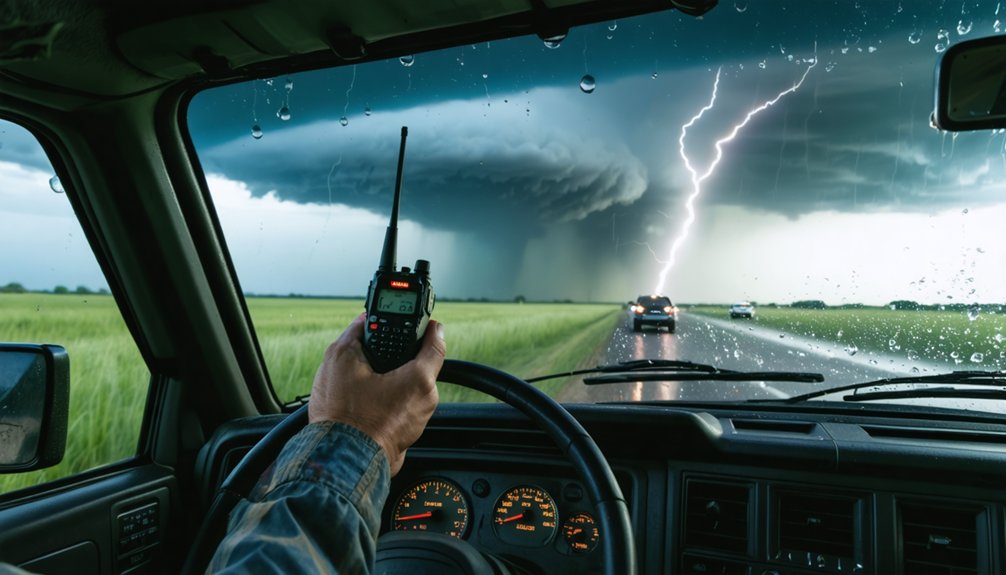
While mobile technology provides convenient access to weather information, NOAA Weather Radio remains the most reliable method for receiving continuous severe weather updates and automatic emergency alerts. You’ll need a receiver capable of picking up VHF frequencies between 162.400 and 162.550 MHz, available for around $30. Battery life considerations are critical—select models with backup power to maintain operation during outages when warnings matter most.
Antenna placement strategies become essential if you’re beyond 30 miles from transmitters; external antennas substantially improve reception quality.
SAME technology automatically activates your radio during watches and warnings, transmitting alerts regardless of time. Beyond weather threats, you’ll receive notifications for AMBER alerts, chemical releases, and nuclear emergencies. Hearing-impaired individuals can connect specialized alerting devices for vibration or strobe notifications.
Reaching Local Non-Emergency Hotlines for Storm Information
Before dialing 911 during severe weather events, determine whether your situation constitutes a true emergency requiring immediate response. For non-emergency storm information, you’ll find dedicated resources that won’t tie up critical emergency lines.
Reserve 911 for life-threatening emergencies only—alternative resources exist for general storm updates and non-urgent weather-related questions.
Start by calling municipal police departments directly. Oakland, New Jersey maintains a non-emergency number at 201-337-XXXX, while Willingboro’s Police Department operates 609-877-3000 for local storm-related support.
Accessing county-specific hotlines connects you with localized guidance. Burlington County and similar offices provide real-time warming center listings and Code Blue Alert information through their emergency management web pages.
New Jersey’s 2-1-1 service operates 24/7, offering multilingual preparedness information statewide. The Statewide Homeless Hotline (1-877-652-1148) connects vulnerable individuals with shelter during severe weather conditions.
Monitoring Broadcast Channels and Social Media for Weather Advisories
Beyond direct phone contact with local authorities, multiple broadcast and digital channels deliver weather advisories that keep you informed throughout severe weather events. Tracking broadcast stations remains your most reliable method—television and radio networks receive official National Weather Service warnings through the Emergency Alert System, ensuring timely, credible information reaches you when conditions deteriorate.
NOAA Weather Radio operates continuously on VHF frequencies (162.400-162.550 MHz), providing 24/7 updates accessible with special receivers that activate automatically during emergencies. Leveraging social media channels supplements traditional broadcasts, offering real-time situational awareness from emergency management teams and weather services.
These combined channels empower you to make independent, informed decisions about shelter, evacuation, and safety protocols without relying solely on government directives during rapidly changing weather conditions.
Frequently Asked Questions
What Should I Do if My Phone Battery Dies During Severe Weather?
Don’t put all your eggs in one basket—maintain portable chargers beforehand. Practice battery conservation by dimming screens and closing apps. You’ll access landlines, NOAA weather radios, or neighbors’ phones while sheltering safely until conditions improve.
Can I Text 911 if I’m Unable to Make a Voice Call?
You can text 911 in many areas, but text-to-911 availability varies by location. Check your county’s capability beforehand, as emergency texting limitations exist. Always call if possible—texting should be your backup option when voice calls aren’t feasible.
How Do I Report Downed Power Lines Blocking My Street?
Call 911 immediately to report the hazard and your utility provider’s emergency line. Check your utility company’s outage map online first. Report the downed line to your power provider with exact location details for fastest response.
Are Emergency Services Available in Languages Other Than English?
Yes, you’ll find multilingual emergency hotlines available through most 911 centers. They use non-English speaking assistance protocols including professional interpreters and Language Line services, ensuring you’re understood regardless of your primary language during emergencies.
What if Cellular Networks Are Overloaded and Calls Won’t Go Through?
You’ll need alternative communication channels like Text-to-911, satellite messengers, or NOAA Weather Radio with backup power options. Two-way radios and landline phones often work when cellular networks fail, ensuring you’re not trapped without emergency contact.