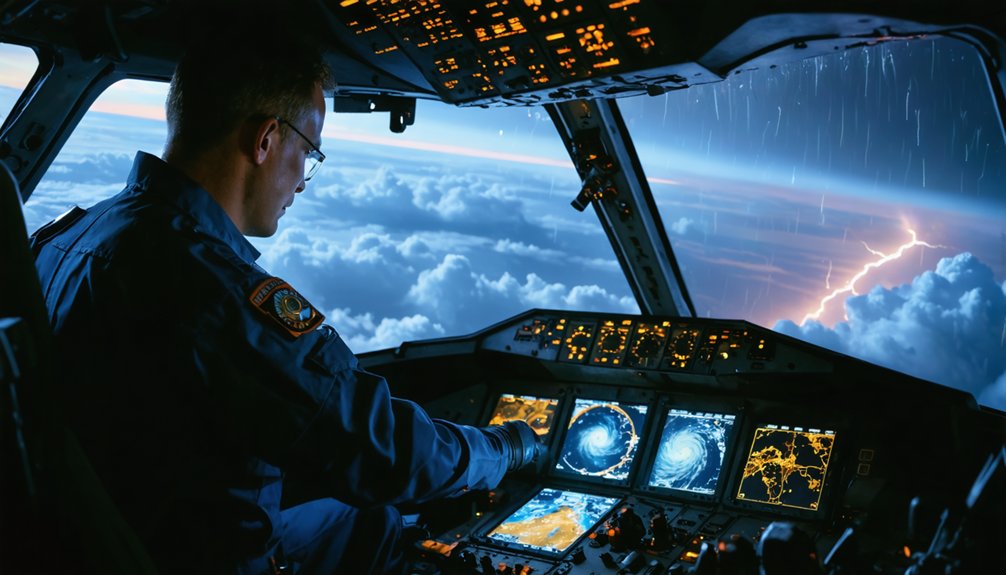
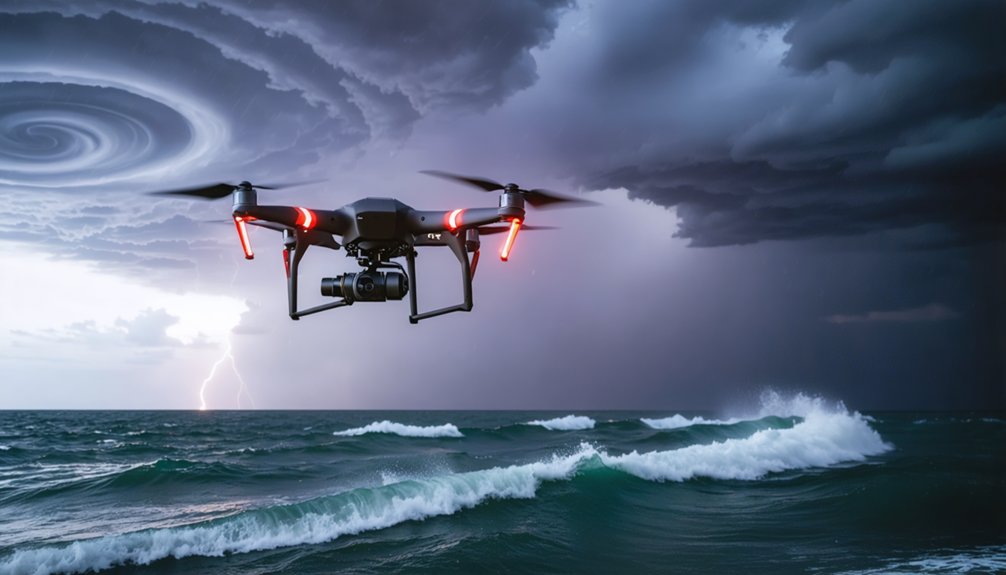
Hurricane hunter planes are specialized reconnaissance aircraft that fly directly into tropical cyclones to gather critical meteorological data you can’t obtain from satellites. They’re operated by NOAA and the U.S. Air Force Reserve’s 53rd Weather Reconnaissance Squadron, using WC-130J Hercules, WP-3D Orions, and Gulfstream IV-SP jets equipped with advanced sensors. You’ll find these aircraft deploying GPS dropsondes, Doppler radar, and microwave radiometers to measure wind speed, pressure, temperature, and humidity as they penetrate eyewalls. This real-time data transmission to the National Hurricane Center improves forecast accuracy by approximately 20 percent, and there’s considerably more to understand about their sophisticated operations.
Key Takeaways
- Hurricane hunter aircraft are specialized planes operated by NOAA and the U.S. Air Force that fly directly into tropical storms to collect critical data.
- These aircraft deploy GPS dropsondes that parachute through storms, transmitting real-time atmospheric pressure, temperature, humidity, and wind measurements to forecasters.
- NOAA’s WP-3D Orions penetrate hurricane eyewalls at 10,000 feet using Doppler radar and cloud physics probes to measure storm structure and intensity.
- High-altitude Gulfstream jets fly at 45,000 feet to track upper-level winds and steering currents that determine a hurricane’s path and development.
- Hurricane hunter data improves forecast accuracy by 20 percent, helping meteorologists predict storm track, intensity, and potential landfall locations more precisely.
What Are Hurricane Hunter Planes?
Hurricane hunter planes comprise four primary aircraft types operated by the U.S. military and scientific agencies. You’ll find the USAF WC-130J Hercules equipped with palletized weather instrumentation for direct storm penetration.
NOAA operates two WP-3D Orion turboprops—Kermit (N42RF) and Miss Piggy (N43RF)—alongside the high-altitude Gulfstream IV-SP jet Gonzo (N49RF), which reaches 45,000 feet.
NASA’s unmanned Global Hawk provides 30-hour endurance capabilities. These aircraft integrate specialized sensors including dropsondes, Doppler radar systems, and Stepped Frequency Microwave Radiometers for measuring critical atmospheric parameters.
Storm chasing procedures require coordinating multiple platforms simultaneously, while flight planning challenges demand real-time adaptation to rapidly evolving meteorological conditions. Each aircraft serves distinct reconnaissance roles within the thorough hurricane surveillance network.
Which Organizations Operate Hurricane Hunter Aircraft?
Two primary organizations maintain operational hurricane reconnaissance capabilities in the United States: the National Oceanic and Atmospheric Administration (NOAA) and the U.S. Air Force Reserve’s 53rd Weather Reconnaissance Squadron.
NOAA operates WP-3D Orion aircraft and a G-IV jet from their Aircraft Operations Center in Lakeland, Florida, with crews comprising NOAA Corps officers, civilians, and specialized engineers.
NOAA’s hurricane reconnaissance fleet launches from Lakeland, Florida, staffed by a specialized mix of officers, civilians, and engineers.
The 53rd WRS, based at Keesler Air Force Base in Mississippi, maintains 10 WC-130J Super Hercules aircraft with 20 authorized aircrews.
Aircraft procurement continues evolving—NOAA contracted Lockheed Martin for two C-130J replacements in September 2024, scheduled for 2030 service entry.
Both organizations coordinate through the National Hurricane Center, which schedules missions and monitors data.
Pilot training requirements remain rigorous, supporting surveillance operations across Atlantic, Caribbean, Gulf of Mexico, and Pacific regions.
Types of Aircraft Used for Storm Reconnaissance
Hurricane reconnaissance operations employ three distinct aircraft platforms, each optimized for specific atmospheric data collection requirements.
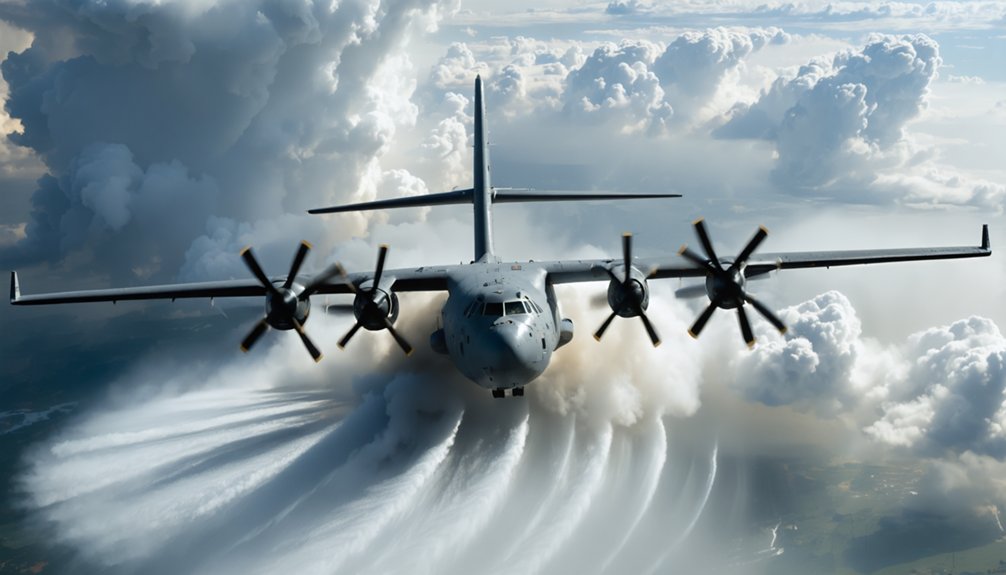
You’ll find NOAA’s WP-3D Orion turboprops configured as flying laboratories that penetrate storm centers with specialized Doppler radar systems, while the Air Force’s WC-130J Super Hercules performs tactical weather reconnaissance missions through tropical disturbances.
The fleet’s high-altitude component consists of a Gulfstream IV-SP jet that circumnavigates storms at 45,000 feet to measure upper-level steering currents that determine hurricane trajectories.
NOAA’s Orion Flying Laboratories
During missions, GPS dropwindsondes transmit pressure, temperature, humidity, and wind data while descending to ocean surface. Flight directors verify measurements and coordinate real-time transmission to the National Hurricane Center.
Airborne expendable bathythermographs conduct environmental assessment by measuring ocean temperature stratification. Knollenberg cloud physics probes characterize microphysical properties using laser diode arrays, providing extensive atmospheric data acquisition you won’t find elsewhere.
Air Force Super Hercules
While NOAA’s specialized Orion aircraft provide extensive oceanographic and atmospheric measurements, the Air Force Reserve’s 53rd Weather Reconnaissance Squadron operates a dedicated fleet of 10 WC-130J Super Hercules aircraft for tropical cyclone surveillance. These platforms monitor Atlantic Ocean, Caribbean Sea, Gulf of Mexico, and central Pacific Ocean systems year-round.
The WC-130J’s high wing configuration enables stable flight through severe turbulence while palletized data gathering equipment measures critical meteorological parameters. You’ll find these aircraft penetrating hurricane eyewalls at 10,000 feet, deploying dropsondes that transmit wind speed, temperature, humidity, and pressure readings directly to National Hurricane Center computers. This real-time data improves forecast accuracy by 20 percent, enhancing your ability to make informed decisions about storm timing, rainfall intensity, and landfall locations without government-imposed information restrictions.
High-Altitude Gulfstream Jet Operations
Since 1997, NOAA’s Gulfstream IV-SP jet—designated NOAA49 and nicknamed “Gonzo”—has operated at altitudes reaching 45,000 feet to document the upper-atmospheric dynamics that govern hurricane trajectory and intensification. This modified business jet deploys GPS dropwindsondes that descend through the atmosphere, measuring critical parameters while you track real-time data via public platforms like FlightAware.
Core operational capabilities include:
- Tail Doppler radar producing three-dimensional storm structure analysis
- Synoptic flow surveillance mapping steering currents around cyclones
- Day-night dropsonde deployments capturing pressure, temperature, wind speed, and humidity
- Coordinated missions with WP-3D aircraft for thorough atmospheric profiling
NOAA’s planned G550 replacement—operational by 2030—will feature sensor upgrades and infrastructure additions, maintaining your access to enhanced tropical cyclone forecasting through continued high-altitude reconnaissance missions.
How Hurricane Hunters Locate and Measure Storms
Hurricane hunter aircraft employ sophisticated instrumentation suites to penetrate storm systems and extract critical meteorological data that satellites can’t capture from space. Your real-time atmospheric profiling begins with dropsondes—GPS-enabled devices descending at 15 m/s through storm cores, transmitting pressure, temperature, humidity, and wind velocity measurements.
The stepped-frequency microwave radiometer (SFMR) directly measures surface winds by detecting microwave radiation from seafoam, while determining precipitation rates simultaneously. Multi-radar arrays map internal architecture: eye, eyewall, and rainband structures through Doppler velocity analysis.
Aerial storm observation tactics include Alpha pattern missions with 194.5 km legs, penetrating the eye twice for four-quadrant wind assessment. You’ll transmit data via satellite to forecasters, enabling accurate intensity classification and evacuation decisions that preserve lives without government restrictions on movement.
Understanding Different Flight Patterns
Each aircraft type executes distinct flight geometries optimized for specific data collection objectives within tropical cyclone environments.
Mission planning determines your approach:
- WP-3D Orion low-level penetrations slice through eyewalls at 8,000-12,000 feet during 8-10 hour missions, deploying dropsondes while enduring violent updrafts and downdrafts to capture direct wind and pressure measurements.
- WC-130J Hercules multi-penetration profiles operate between 500-10,000 feet, executing rapid eyewall entries across Atlantic and Pacific theaters with 4-hour turnaround capabilities.
- G-IV Gulfstream high-altitude surveillance circumnavigates storms at 41,000-45,000 feet, mapping steering currents across thousands of square miles through GPS dropwindsondes.
Crew coordination maintains real-time adjustments as Flight Directors leverage radar imagery to navigate dynamic storm structures, ensuring continuous atmospheric profiling that feeds forecast models.
The Role of Advanced Radar Systems
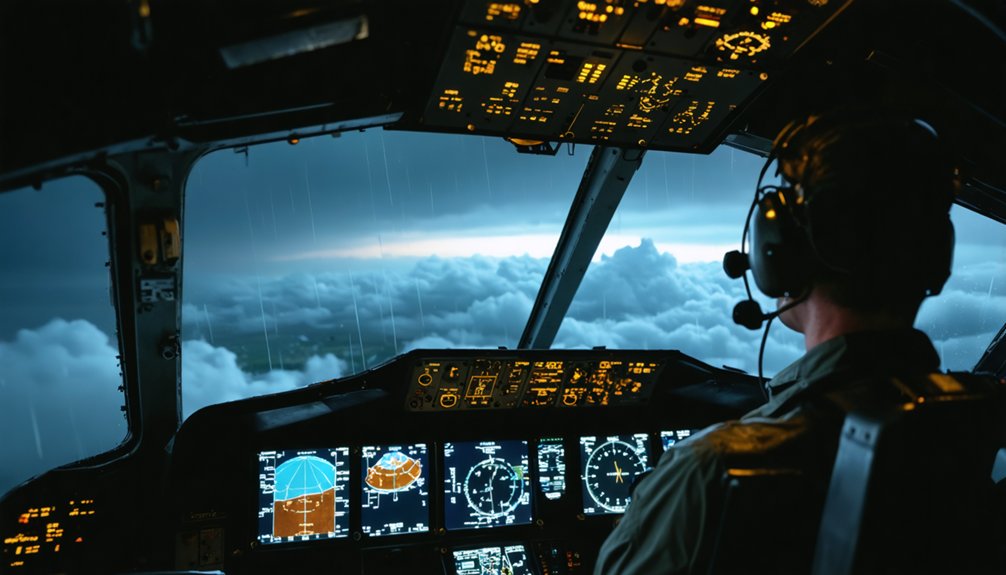
While flight patterns determine where hurricane hunters go, radar systems reveal what they find inside the storm. You’ll encounter multiple configurations optimized for different data collection needs.
The WC-130J deploys nose-mounted C-band radar for forward scanning, a 300-mile range belly system providing 360-degree coverage, and tail-mounted X-band radar measuring vertical cloud heights. WP-3D Orions integrate tail Doppler radar for vertical profiling with lower fuselage units capturing horizontal storm structure.
The Gulfstream IV-SP mounts an 8,000-watt tail Doppler system measuring wind speeds through microwave radiation shifts. These configurations enable simultaneous multi band scanning across different electromagnetic frequencies while facilitating rapid storm feature tracking.
Onboard computers process scattered electromagnetic radiation from precipitation, calculating wind velocities and rainfall rates. SATCOM links transmit raw data immediately to ground stations, eliminating information loss during mission operations.
Dropsondes and Weather Data Collection
Radar systems map the storm’s structure from above, but understanding its vertical characteristics requires direct measurement instruments deployed into the hurricane itself. You’ll find dropsondes—16-inch Pringles-can-sized sensors—performing this critical function during hurricane hunter aircraft operations. Released from 10,000 feet, these expendable devices parachute through the storm, transmitting measurements twice per second.
Dropsondes parachute through hurricanes from 10,000 feet, transmitting vital atmospheric measurements twice per second where aircraft cannot safely venture.
Dropsondes’ unique data characteristics include:
- High-resolution vertical profiles measuring temperature, pressure, humidity, and GPS-derived winds from release altitude to ocean surface
- Real-time transmission during 10-15 minute descent via radio to aircraft overhead
- In-situ measurements documenting conditions where aircraft can’t safely operate below 2-3 miles
- Immediate satellite relay to National Hurricane Center forecast models after quality-checking
Each storm receives 20-40 deployments, with concentrated coverage near the eyewall where precision matters most.
Mission Categories and Their Purposes
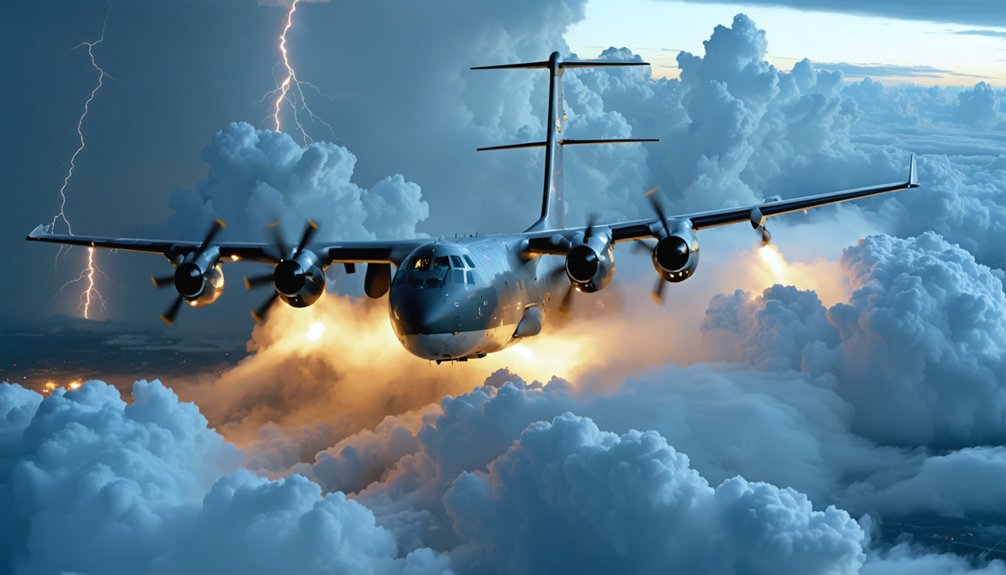
Hurricane hunter aircraft execute five distinct mission categories, each engineered for specific meteorological objectives and storm conditions. Fixed missions target designated tropical systems, deploying Alpha patterns to pinpoint circulation centers and measure critical variables satellites can’t accurately capture.
Invest missions probe weaker disturbances using X, Delta, and Box patterns at altitudes between 500-1,000 feet, with Air Force and NOAA rotating surveillance coverage. Reconnaissance operations span the Atlantic, Caribbean, Gulf of Mexico, and central Pacific, where WC-130J crews spend 3-4 hours penetrating storm cores during 8-12 hour sorties.
Research missions employ NOAA’s specialized WP-3D Orion and Gulfstream IV-SP aircraft, gathering high-altitude data exceeding 41,000 feet. Synoptic missions document upper- and lower-level wind patterns influencing cyclone trajectories, supporting both tropical and winter storm reconnaissance operations.
How Hurricane Hunter Data Improves Forecasts
Hurricane hunter aircraft transmit real-time atmospheric data directly to the National Hurricane Center via satellite, enabling immediate integration into forecasting models. This continuous data stream—including pressure readings, wind measurements, and vertical soundings—reduces forecast errors for wind speed and sea-level pressure by 10-15% compared to satellite-only observations.
The enhanced storm prediction models assimilate flight-level observations, dropsonde profiles, and SFMR measurements to improve both track forecasts by up to 20% and intensity predictions by up to 15%.
Real-Time Data Collection
While aircraft penetrate a hurricane’s core, sophisticated onboard systems transmit flight-level data to the NOAA National Hurricane Center every second through coded formats. Onboard computer processing handles observations every 30 seconds with navigation system integration ensuring precise geolocation. Dropsondes beam atmospheric measurements multiple times per second during their descent, creating vertical profiles from flight level to ocean surface.
Your real-time access to critical storm data includes:
- Temperature, pressure, humidity, and wind speed measurements transmitted instantaneously
- 1,000 to 1,500 dropsondes deployed throughout an average hurricane season
- Four to six releases through the storm’s eye during each penetration
- Simultaneous processing by both airborne and ground-based computer systems
This unfiltered data stream feeds directly into forecast models, enabling you to make informed decisions without bureaucratic delays in storm warnings.
Enhanced Storm Prediction Models
The Hurricane Analysis and Forecast System (HAFS) represents a paradigm shift in tropical cyclone prediction, leveraging reconnaissance aircraft data to achieve 10-15% better track and intensity accuracy on forecast days 3-5 compared to its predecessors.
You’ll find HAFS employs nested grids with resolutions targeting sub-kilometer scales, enabling precise simulation of eyewall dynamics and rapid intensification techniques that captured Hurricane Erin’s development seven days before formation.
The model’s ensemble forecasting benefits emerge through 20-member configurations that quantify uncertainty across different atmospheric conditions, revealing steering patterns not yet observable.
Enhanced intensity forecasts reach 40% improvement over default systems, while the advanced EDMF-TKE planetary boundary layer scheme—derived from large-eddy simulations—accurately reproduces complex inner-core features during rapid intensification events offshore.
The Future of Hurricane Reconnaissance Aviation
Advanced atmospheric reconnaissance capabilities are rapidly evolving as NOAA prepares to deploy two C-130J Hercules aircraft by 2030, replacing its aging WP-3D Orions with platforms funded through the 2023 Disaster Relief Supplemental Appropriations Act. These next generation reconnaissance aircraft feature Multi-Mode Radar, automated dropsonde launchers, and vertically scanning Doppler systems that’ll improve hurricane track forecasts by 15-20% and intensity predictions by 10-15%.
NOAA’s C-130J Hercules aircraft will revolutionize hurricane forecasting with advanced radar and automated systems, delivering significantly improved prediction accuracy by 2030.
Hurricane drone integration represents the operational frontier, with AI-powered ALTIUS systems spiraling autonomously into storm eyes while operating 275 miles from crewed aircraft.
You’ll see expanded capabilities through:
- Land-launched Dragoon Coriolis systems conducting pre-landfall reconnaissance beyond visual line of sight
- Real-time data streaming to emergency management agencies
- Satellite calibration missions for atmospheric rivers and fire weather
- Worldwide deployment flexibility for rapid disaster response
Frequently Asked Questions
How Dangerous Is It to Fly Directly Into a Hurricane?
You’re threading the needle between extreme weather risks and hurricane tracking accuracy—it’s remarkably safe. Since 1966, no Air Force Reserve aircraft’s been lost. You’ll experience violent turbulence, but engineered tolerances and real-time SATCOM data keep crews protected.
How Long Does a Typical Hurricane Hunting Mission Last?
A typical hurricane hunting mission duration spans approximately 8 hours, allowing you to complete multiple flight patterns through the storm’s eye. This timeframe enables extensive data collection while maintaining operational flexibility for consecutive missions by rotating crews.
What Qualifications Do Hurricane Hunter Pilots Need?
You’ll need a bachelor’s degree in meteorology or atmospheric science, commercial pilot certification with extensive flight experience, exceptional navigation skills through severe weather, and you must pass rigorous physical examinations including vision standards correctable to 20/20.
Have Any Hurricane Hunter Planes Ever Crashed During Missions?
No hurricane hunter planes have crashed during missions since NOAA’s program began. You’ll find zero documented plane malfunctions or crew injuries in operational records, despite thousands of eyewall penetrations through Category 5 systems over eight decades.
How Much Does It Cost to Operate Hurricane Hunter Aircraft?
You’ll face operational costs of $12,000-$15,000 per flight hour for hurricane hunter missions. Budgetary considerations include $42 million upgrade allocations, aircraft acquisition expenses, and maintenance demands that challenge NOAA’s funding autonomy for critical atmospheric research operations.