Chasing a hurricane exposes you to a multi-day gauntlet of compounding hazards that tornadoes simply don’t produce. Storm surge can rise 6–20 feet within hours, cutting off your escape routes before peak winds even arrive. Embedded tornadoes form with almost no radar warning, and floodwaters trap your vehicle long after the storm passes. Driver fatigue, debris fields, and systematic road closures narrow your options with every hour. The sections ahead break down exactly why each hazard stacks against you.
Key Takeaways
- Hurricanes combine wind, storm surge, flooding, and embedded tornadoes, creating a complex, layered hazard environment that persists across entire regions for days.
- Storm surge can raise water levels 6–20 feet within hours, rapidly cutting off escape routes before chasers can reposition safely.
- Flooded roads, debris, and road closures make repositioning during hurricanes extremely difficult, often making movement more dangerous than staying put.
- Extended duration increases fatigue, fuel dependency, and decision pressure, reducing a chaser’s ability to react effectively to evolving threats.
- Vehicles become the most statistically dangerous element, as prolonged high-risk driving conditions and hydroplaning significantly increase indirect fatality risk.
Hurricane Chasing vs. Tornado Chasing: Which Is More Dangerous?
When comparing the two, hurricane chasing carries a broader and more sustained risk profile than tornado chasing. You’re not just facing wind — you’re steering through storm surge, prolonged flooding, debris-laden roads, and compromised urban infrastructure across wide geographic zones. That exposure compounds over hours, sometimes days.
Hurricane chasing isn’t just wind — it’s surge, flooding, and compounding danger stretched across days.
Tornado chasing concentrates risk into a smaller window. You’re dealing with intense but localized hazards that typically resolve within minutes. Repositioning is often feasible.
Hurricane chasing strips away those options. Flooded roads cut escape routes, and poor emergency preparedness across affected regions can leave you trapped without viable exits.
Statistically, the scale confirms the danger — Cyclone Nargis killed over 138,000 people, while the deadliest 21st-century tornado claimed 158 lives. The numbers reflect fundamentally different threat architectures.
How Hurricane Scale Turns One Chase Into a Multi-Day Ordeal
Unlike a tornado chase that collapses into a single afternoon of repositioning, a hurricane chase can stretch across multiple days before the storm even makes landfall. That scale complexity redefines every logistical calculation you make.
Tornado chases typically demand hours of road exposure. Hurricane chases demand days, compounding fatigue, fuel dependency, and decision-making pressure across an extended timeline.
Duration impact becomes measurable fast. Each additional day on the road multiplies your exposure to flooding corridors, debris fields, and deteriorating escape routes.
A hurricane’s destructive core can extend tens of miles across and persist for hours upon landfall. You’re not threading through a brief, localized event. You’re steering through a slow-moving, region-wide system that progressively eliminates your options the longer you stay engaged.
Storm Surge Cuts Off Escape Routes Faster Than Most Chasers Expect
Scale and duration compress your margin for error over days. Storm surge, however, compresses it within hours. You can’t outmaneuver a wall of seawater rising across multiple road corridors simultaneously.
Coastal vulnerability isn’t abstract — it’s the direct elimination of your exit options before wind speeds even peak.
Evacuation challenges compound fast. Storm surge doesn’t follow road maps; it floods low-lying highways, bridges, and causeways in sequence, cutting off inland routes you planned to use.
Data from past landfalls shows surge advancing faster than many chasers anticipate, sometimes outpacing vehicle repositioning entirely.
Unlike a tornado’s localized footprint, surge spreads laterally across miles of coastline. You’re not dodging one hazard — you’re navigating a dynamic, expanding flood zone where every delayed decision shrinks your viable escape corridors further.
Why Flooding Kills More Hurricane Chasers Than Wind Does
Wind gets the headlines, but flooding ends the chase. Flooding fatalities consistently outpace wind-related deaths in hurricanes, and surge inundation transforms familiar roads into death traps within minutes. You can dodge a gust — you can’t always outrun rising water.
- Floodwater as shallow as 12 inches can sweep a vehicle off-road
- Surge inundation can raise water levels 6–20 feet in hours
- Flooding fatalities account for the majority of hurricane-related deaths
- Submerged road markings eliminate your ability to navigate escape routes
- Rainfall flooding persists long after peak winds, extending your exposure window
Once you’re surrounded by water, your options collapse fast. Wind damage is visible and avoidable.
Flood zones expand silently, cutting off retreat before you’ve recognized the threat.
Hurricanes Spawn Hidden Tornadoes in Their Outer Rainbands
Hurricanes don’t just carry their own destructive toolkit — they actively generate tornadoes in their outer rainbands, adding a layered hazard that most chasers don’t anticipate. Rainband dynamics create localized wind shear cells that can spin up hidden tornadoes with minimal warning, often before radar operators even flag rotation.
These aren’t the open-field tornadoes you’d track across a Kansas plain — they’re brief, low-contrast, and embedded within heavy rain and poor visibility. You’re already managing surge, flooding, and debris when one drops without notice.
Unlike supercell tornadoes, rainband-spawned tornadoes give you almost no repositioning window. Your escape routes may already be compromised.
Recognizing that a hurricane landfall effectively multiplies your threat count is critical before you ever commit to a chase position.
Can You Reposition During a Hurricane the Way You Can a Tornado?
Repositioning during a tornado chase typically means a short, calculated move — a few miles to gain a better viewing angle or escape a closing wedge. During a hurricane, your repositioning challenges are categorically different.
- Flooding cuts escape routes across entire counties simultaneously.
- Storm surge can trap you between water and debris fields within minutes.
- Road closures accumulate faster than you can reroute.
- Fuel availability collapses as stations close pre-landfall.
- Safety margins shrink as wind-driven rain reduces visibility to near zero.
You’re not maneuvering around a localized, short-lived vortex. You’re navigating a system spanning hundreds of miles that’s actively degrading your options in real time.
Tornado repositioning rewards decisiveness. Hurricane repositioning often punishes movement entirely — staying mobile can expose you to more hazards than holding position.
How Road Closures and Debris Trap Hurricane Chasers
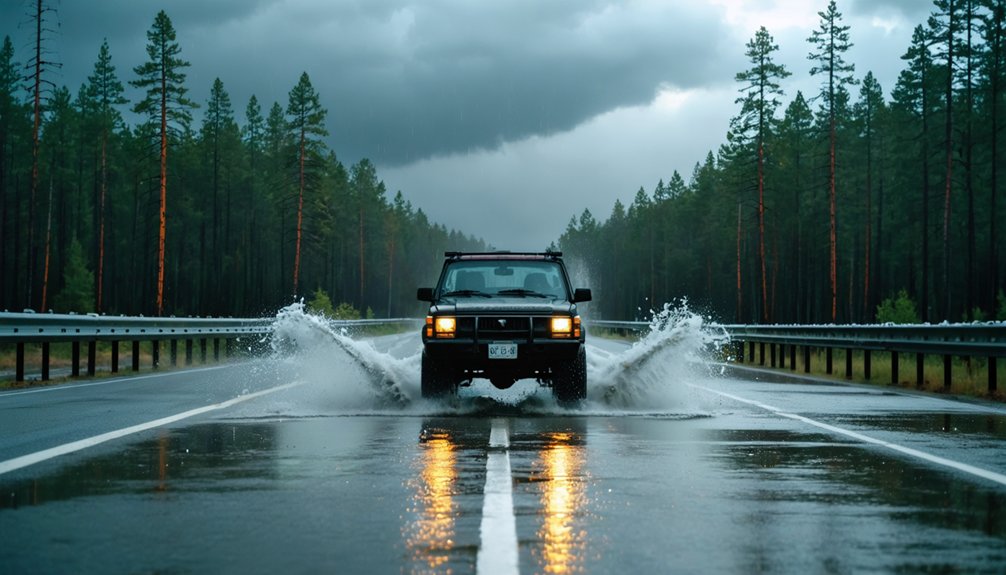
When storm surge floods coastal roads, you lose your primary escape routes before the storm’s worst winds even arrive.
Debris fields scattered across multiple lanes can force you into detours that lead directly into flooded low-lying areas, turning a repositioning attempt into a trap.
Unlike a tornado chase—where you can often punch through or around a localized hazard—a hurricane’s simultaneous surge, flooding, and debris coverage can lock your vehicle in place with no viable exit.
Storm Surge Blocks Roads
Storm surge doesn’t just damage structures — it actively cuts off your escape routes. Once surge water spreads across flooded roads, your options collapse fast.
- Surge can flood roads within minutes, leaving no viable exit.
- Debris hazards — displaced vehicles, downed lines, broken infrastructure — block key corridors.
- Storm surge lingers long after peak winds, extending your entrapment window.
- Spawned tornadoes in outer rainbands can strike while you’re already pinned down.
- Emergency services can’t reach you if surge has severed access routes.
You’re not just fighting the storm — you’re fighting geography. Every road you lose narrows your decision space. Unlike tornado chasing, where repositioning is often possible, a surge-locked hurricane chase can eliminate your freedom to move entirely.
Debris Limits Escape Routes
Unlike tornado chasing — where repositioning is often just a matter of reading the next county road — hurricane chasing buries you under a compounding debris field that systematically closes off your exits. Structural vulnerabilities in buildings, power lines, and older infrastructure collapse progressively as wind loads intensify, scattering material across multiple road corridors simultaneously.
You’re not dodging one blocked route — you’re solving a shrinking grid where each failed exit narrows your remaining options. Emergency preparedness protocols warn that post-landfall debris accumulation accelerates faster than most chasers anticipate, turning a planned egress into a dead end.
Tornadoes leave destruction in a concentrated path. Hurricanes distribute hazards across entire counties, stripping your freedom to maneuver precisely when sustained wind, rain, and fatigue are already degrading your decision-making capacity.
Flooding Traps Chase Vehicles
Flooding doesn’t just damage your surroundings — it methodically eliminates the road network you depend on to survive. Flooded intersections cut off your exit options faster than you can reroute, leaving trapped vehicles with no viable path out.
Key flooding threats that compromise your mobility:
- Storm surge can inundate roads within minutes, outpacing your ability to react
- Flooded intersections often appear passable but conceal dangerous depth variations
- Rainfall continues flooding roads long after peak winds subside
- Trapped vehicles become life-threatening when water rises around stationary cars
- Evacuation routes shared with fleeing residents create gridlock during critical escape windows
Unlike tornado chasing, where hazards are brief and localized, hurricane flooding systematically dismantles your freedom of movement across entire regions for extended periods.
The Driving Risks That Make Hurricane Chasing Uniquely Lethal
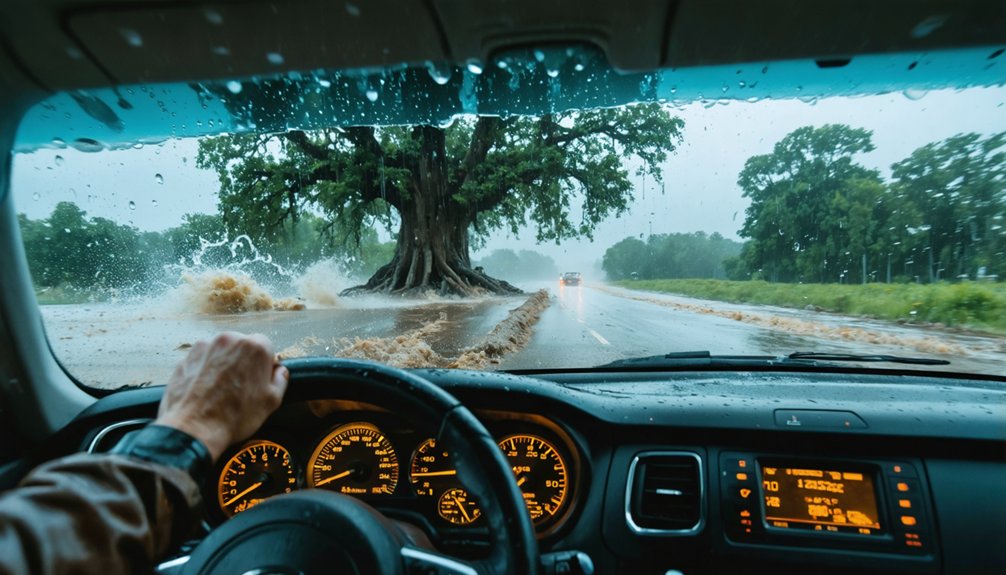
Driving kills more storm chasers than the storms themselves, and hurricane chases amplify that risk in ways tornado chases typically don’t. You’re spending far more hours behind the wheel, steering debris-strewn highways, flooded underpasses, and compromised road surfaces across a wide operational area.
Road hazards multiply as surge and rainfall spread unpredictably, eliminating exit options you’d normally rely on. Driver fatigue compounds the problem—extended chase durations push you deep into high-risk decision-making territory where reaction time degrades and judgment slips.
Hydroplaning on rain-saturated roads has contributed to a significant share of indirect chaser fatalities. Tornado chases concentrate risk into shorter bursts with more repositioning flexibility.
Hurricane chases lock you into prolonged exposure across compromised infrastructure, making the vehicle itself your most statistically dangerous variable.
What Fatality Numbers Reveal About the Hurricane vs. Tornado Risk Gap
When you compare raw fatality numbers, the hurricane vs. tornado risk gap becomes impossible to ignore. The deadliest 21st-century tornado—the 2011 Joplin storm—killed 158 people.
While Cyclone Nargis alone surpassed 138,000 fatalities. You’ll find that flooding and storm surge, not wind, drive most of those hurricane deaths, which means the danger persists long after peak winds subside.
Raw Death Toll Comparisons
Raw death toll comparisons make the hurricane vs. tornado risk gap hard to dispute. When you examine meteorological impacts across both storm types, the numbers speak clearly.
- Cyclone Nargis killed over 138,000 people in a single event.
- The Joplin tornado, the deadliest 21st-century U.S. twister, caused 158 fatalities.
- Hurricane deaths stem from flooding, surge, and wind combined.
- Tornado casualties concentrate in small impact zones, limiting total exposure.
- Faulty evacuation procedures during hurricanes dramatically amplify death counts.
You’re looking at a gap measured in orders of magnitude, not percentages. Tornadoes strike hard but small. Hurricanes consume entire regions for days.
As a chaser, that distinction isn’t academic — it directly shapes your survival window and your ability to exit safely.
Flooding Drives Hurricane Fatalities
Those raw death counts don’t tell the full story on their own — the *cause* of hurricane fatalities is what makes them uniquely dangerous for chasers. Most hurricane deaths aren’t from wind — they’re from flood damage and storm surge. That distinction matters enormously when you’re operating a vehicle in the field.
When you chase a hurricane, you’re not just dodging gusts; you’re steering through roads that flooding can cut off without warning, sometimes trapping you completely. Evacuation challenges compound the threat — outbound routes get gridlocked or submerged while you’re still trying to reposition.
Tornadoes kill within a tight corridor and dissipate quickly. Hurricanes saturate entire regions for days, keeping flood hazards active long after peak winds pass. That extended exposure window is what shifts the risk calculus against you.
Hurricanes Stack Hazards. Tornadoes Usually Don’t
Tornadoes concentrate their destruction into a single, short-lived hazard: extreme wind. Hurricanes stack multiple threats simultaneously, compressing your escape options at every turn. Understanding these tornado distinctions helps clarify why hurricane hazards demand greater respect.
When you chase a hurricane, you’re steering through:
- Wind damage stretching tens of miles across, lasting hours
- Storm surge cutting off coastal roads before peak winds arrive
- Rainfall flooding persisting long after the storm passes
- Spawned tornadoes embedded within outer rainbands after landfall
- Debris fields spreading across entire regions, not isolated corridors
A tornado gives you one threat to assess. A hurricane gives you five operating simultaneously. Your situational awareness can’t compartmentalize that volume of risk the way it can during a focused, short-duration tornado intercept.
Frequently Asked Questions
What Gear Do Experienced Hurricane Chasers Recommend for Staying Safe?
You’ll need reliable hurricane tracking tools, emergency communications, and flood-ready gear. Follow strict safety protocols: pack high-clearance vehicles, water supplies, first aid kits, and always maintain evacuation routes before storm surge cuts off your escape.
How Do Hurricane Chasers Coordinate With Emergency Management Officials During Chases?
You’ll share meteorological data and follow established communication protocols with emergency managers. You’re reporting road conditions, storm positioning, and hazards in real time, giving officials actionable intelligence while you maintain independence and situational awareness throughout your chase.
Are There Legal Restrictions on Where Chasers Can Go During a Hurricane?
Think freedom’s unlimited? Legal restrictions and chase regulations can block your access—authorities actively enforce road closures, mandatory evacuations, and restricted zones during hurricanes, meaning you’ll face real barriers that limit where you can legally operate.
How Do Chasers Protect Their Vehicles From Hurricane-Force Wind and Debris?
You’ll park in reinforced structures for hurricane sheltering and use debris mitigation strategies like positioning vehicles away from trees and signage. You’re relying on situational awareness, real-time wind data, and rapid repositioning to minimize structural damage risk.
Do Insurance Policies Typically Cover Storm Chasers Injured During Hurricane Chases?
Like a gambler betting against the house, you’re often unprotected: standard policies rarely cover storm chasers. Insurance claims get denied as “high-risk activity,” and liability coverage gaps leave you personally exposed when hurricane chasing turns catastrophic.
References
- https://www.reddit.com/r/stormchasing/comments/xqe302/hurricanes_vs_tornadoes_which_is_more_deadly/
- https://profession.americangeosciences.org/collections/geoscience-faq/how-does-damage-hurricanes-compare-tornadoes/
- https://www.youtube.com/watch?v=prG9Izd23VM
- https://gpm.nasa.gov/resources/faq/what-difference-between-tornado-and-hurricane
- https://en.wikipedia.org/wiki/Storm_chasing
- https://www.pbs.org/newshour/science/inside-the-dangerous-and-unpredictable-science-of-storm-chasing
- https://stormhighway.com/tornadoes_dangerous_storm_chasing_myth.php
- https://www.reddit.com/r/stormchasing/comments/1q0jufg/hey_nonchaser_here_what_is_the_reason_people_are/
- https://www.flame.org/~cdoswell/chasesums/Chase_FAQ/ChaseFAQ.html