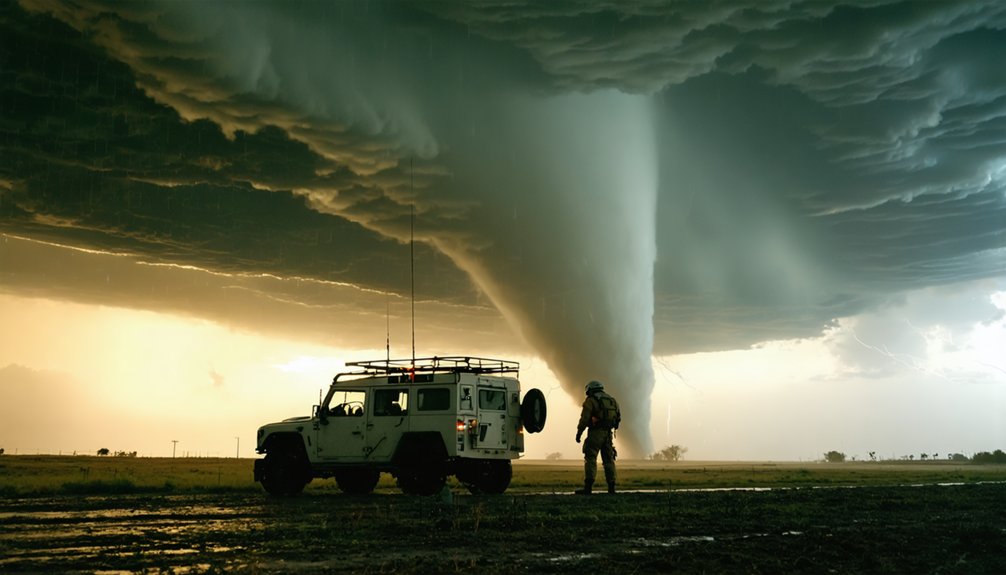
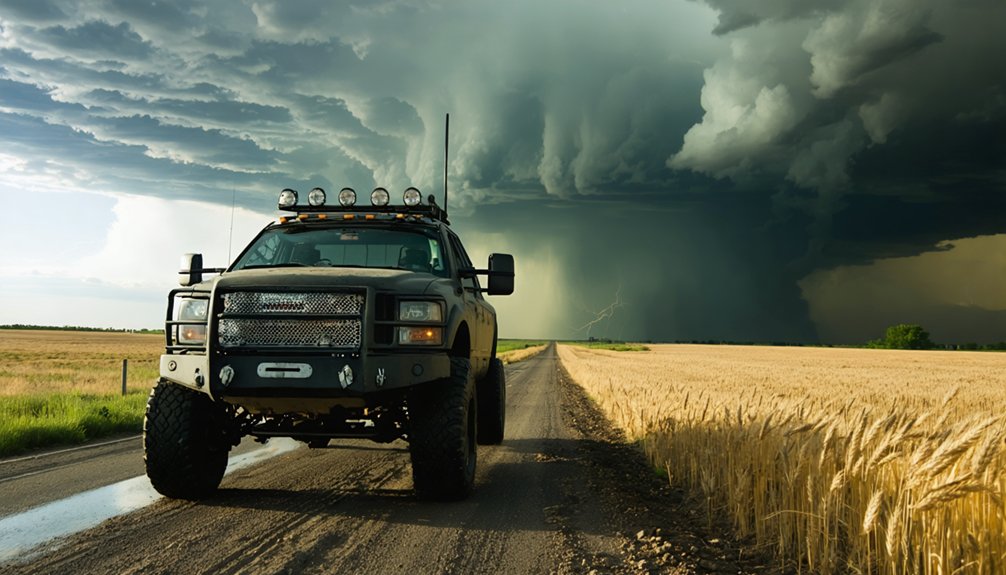
To chase storms effectively, you’ll need gear across six core categories: a capable AWD or 4WD vehicle with high ground clearance, real-time radar tools like RadarScope, redundant communication systems including HAM and CB radios, a reliable power setup with inverters and battery packs, cameras for documentation, and field sustenance supplies covering water, food, and protective clothing. Budgets range from $50 entry-level kits to $5,000+ professional rigs. Every category covered ahead breaks down exactly what you need.
Key Takeaways
- AWD or 4WD vehicles with high ground clearance and off-road tires provide essential mobility across storm-damaged terrain.
- RadarScope and a GPS device deliver real-time storm positioning, motion vectors, and critical threat identification data.
- HAM radio, a cell booster, and satellite communicators ensure reliable contact when cellular networks fail in remote areas.
- A power inverter, portable battery packs, and solar panels keep essential electronics running throughout extended chase operations.
- Build gear incrementally, starting with safety essentials before advancing to professional camera setups and vehicle upgrades.
Essential Storm Chaser Gear: What Belongs in Every Kit
Whether you’re running a single-vehicle operation or part of a coordinated team, your kit needs to cover six core categories: vehicle readiness, navigation and weather tracking, communication and power, safety and emergency supplies, camera and documentation gear, and personal sustainment. Each category addresses a specific operational vulnerability.
Every kit lives or dies by six categories—and every category exists to eliminate one specific way you fail in the field.
Weather pattern analysis demands real-time radar access, reliable cellular connectivity, and a laptop or tablet for continuous data monitoring. Storm formation theories mean nothing in the field without the tools to act on them.
Your vehicle needs AWD or 4WD capability, quality tires, and recovery gear. Communication redundancy through amateur radio and portable power keeps you operational when infrastructure fails.
Safety supplies, documentation gear, and personal sustainment round out a kit built for sustained, independent field operations with zero single points of failure.
Storm Chaser Vehicle Setup: AWD, Clearance, and Tires
Your vehicle is the platform everything else depends on, so it’s where setup decisions carry the most operational weight. AWD or 4WD systems deliver measurable traction advantages on wet, muddy, or debris-covered roads where rear-wheel setups fail.
High ground clearance reduces undercarriage contact risk on flood-damaged or rough terrain, and off-road suspension upgrades extend your operational range beyond paved routes.
Vehicle modifications targeting lift height and skid plate coverage directly improve survivability in field conditions.
Tires remain your highest-priority contact point with the ground, so prioritize quality compounds rated for mixed terrain.
Carry a tire iron, bottle jack, and air pump because roadside repairs happen in remote areas.
A tow strap adds extraction capability when soft ground or drainage ditches claim traction.
Once you’re rolling, your ability to track storm motion in real time depends on having the right radar and navigation tools within reach.
Apps like RadarScope give you live storm positioning and motion data that goes well beyond what standard weather apps provide, and a laptop or tablet keeps you connected to full model data and mapping while you’re in the field.
Pair those with a USB GPS puck or dedicated navigation device, and you’ve got the location awareness and connectivity needed to stay ahead of rapidly shifting storm tracks.
Real-Time Radar Apps
Real-time radar apps are your primary tool for tracking storm position, motion, and intensity while in the field. Apps like RadarScope leverage advanced storm tracking algorithms and radar calibration data to give you precise, actionable intelligence—not guesswork.
Key capabilities to prioritize in your app:
- Dual-polarization radar data for distinguishing precipitation types and debris signatures
- Tilt-by-tilt scanning to analyze storm structure at multiple atmospheric levels
- Storm motion vectors for projecting track and intercept positioning
- Mesocyclone and tornado vortex signature overlays for rapid threat identification
You’re operating in dynamic, high-risk environments where outdated data costs you positioning—or worse. Keep cellular connectivity strong, refresh intervals short, and understand what you’re reading.
Raw radar intelligence, properly interpreted, keeps you mobile and ahead of the storm.
GPS and Connectivity Tools
Staying ahead of a fast-moving storm requires more than radar data—you need reliable GPS positioning and cellular connectivity to act on that data in real time. A USB GPS puck paired with mapping software gives you precise location awareness even when cell signals drop.
Satellite connectivity options, including mobile hotspots and signal boosters, extend your reach into rural chase corridors where standard LTE coverage fails. Data synchronization across your phone, tablet, and laptop keeps your radar feeds, model overlays, and positional data aligned without manual updating.
A dedicated GPS navigation device adds redundancy if your primary setup goes down. Don’t rely on a single point of failure—stack your connectivity tools deliberately so your situational awareness stays sharp when storm positioning demands split-second routing decisions.
Storm Chaser Communication Gear for Dead Zones
When you’re chasing storms in rural corridors, cellular dead zones aren’t a possibility—they’re a near-certainty. Redundant communication layers keep you operational when networks fail.
Core dead-zone communication gear includes:
- Amateur radio (HAM) – enables direct contact with other chasers and emergency traffic outside cellular range
- CB radio – connects you with truckers and local traffic for real-time road condition intel
- Cell phone booster – amplifies weak rural signals, extending your network reach profoundly
- Satellite communication device – transmits emergency signal data and GPS coordinates when zero infrastructure exists
Don’t treat these as optional redundancies. A single communication failure during a rapidly evolving tornado event can compromise your safety and positioning entirely.
Stack your systems, verify functionality before deployment, and never depend on one channel alone.
Power Gear That Keeps Storm Chasing Equipment Running
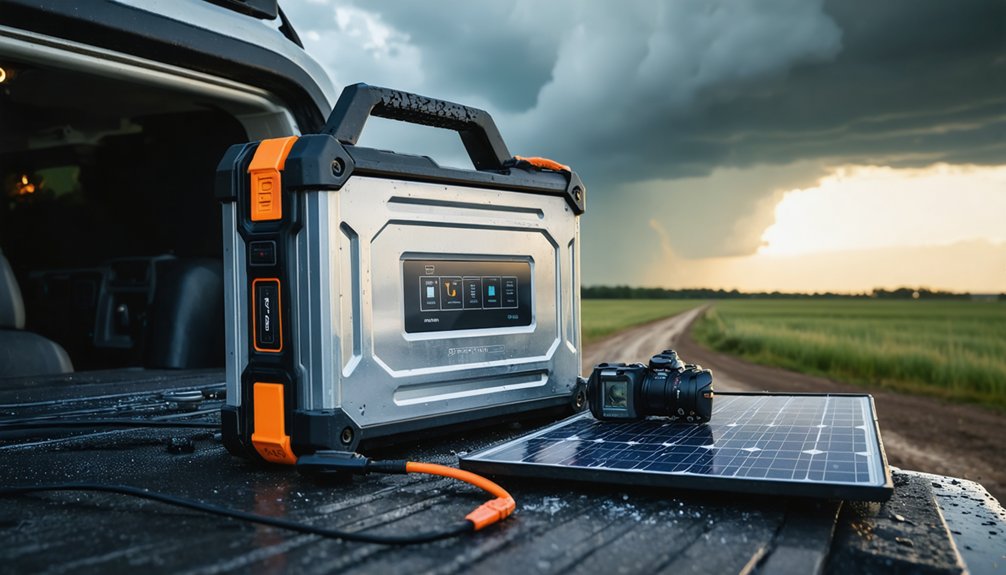
All that communication hardware keeping you connected in dead zones runs on one thing—power. Without a reliable power strategy, your radios, laptops, and cameras go dark mid-chase.
Your radios, laptops, and cameras are only as reliable as the power keeping them alive.
Start with a power inverter—it converts your vehicle’s 12V output into usable AC power for laptops and camera chargers. Add portable battery packs rated at 20,000mAh or higher for device redundancy. Wireless charging pads eliminate cable management issues inside a moving vehicle.
For extended deployments, solar panels mounted on your roof rack deliver continuous trickle charging, keeping auxiliary batteries topped off without engine dependency. Pair panels with a 100Ah lithium battery for off-grid storage capacity.
Carry spare fuses and electrical tape—small failures cascade fast. Your power system isn’t optional gear; it’s your operational backbone in the field.
Safety Supplies Every Storm Chaser Needs in the Field
Power gear keeps your electronics alive, but safety supplies keep you alive. Storm safety isn’t optional—it’s operational. Every chase deployment demands a dedicated kit built for real field conditions.
Your core storm safety loadout should include:
- First aid kit – handle cuts, sprains, and trauma without waiting for help
- Flashlight or headlamp – maintain visibility during night operations or blackouts
- Reflective vest and road flares – stay visible near active roadways and storm scenes
- Work gloves, rain jacket, and safety glasses – protect against debris, wind, and driving rain
Gear maintenance matters too. Inspect your kit before each deployment. Expired supplies, dead batteries, and missing components create field vulnerabilities. You’re operating in unpredictable environments—your safety gear must be ready before the storm is.
Storm Chaser Cameras and Field Documentation Tools
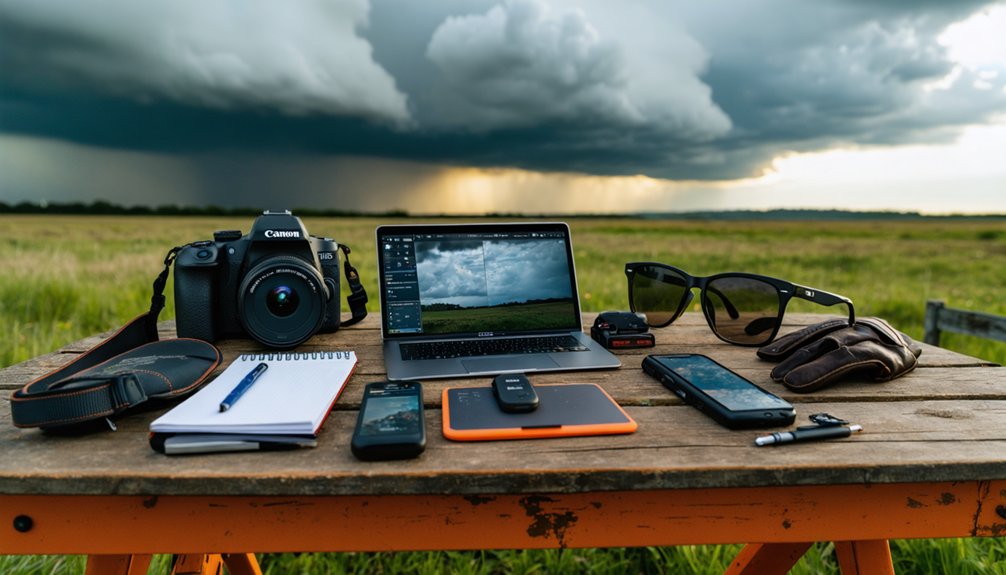
Safety gear protects you in the field—documentation gear captures why you’re there. Storm photography demands reliable equipment that performs under pressure. Carry a video camera for continuous structure recording and a digital still camera for high-resolution detail shots that video misses.
Mount a GoPro to your vehicle for wide-angle coverage without occupying your hands. Use a tripod and remote trigger for lightning and long-exposure documentation techniques—handheld shots in wind rarely produce usable data.
Keep a rocket blower in your kit to clear dust and debris from lenses before critical moments. Every piece of footage and imagery you collect builds a documented record of storm behavior, structure, and movement—material that holds real scientific and operational value beyond the chase itself.
Sustenance and Comfort Gear for Long Storm Chase Days
Long chase days routinely stretch eight to twelve hours, so you’ll need adequate water, high-calorie snacks, and ready-to-eat meals to sustain focus and physical performance in the field.
Pack backup cash to cover fuel and food when card systems fail during widespread outages.
Sunscreen, polarized sunglasses, a hat, and layered clothing let you adapt quickly to shifting field conditions without losing operational time.
Hydration and Food Essentials
When you’re spending 8–12 hours or more in a vehicle covering hundreds of miles across the plains, hydration and food management become operational priorities, not afterthoughts. Poor nutrition and dehydration degrade decision-making exactly when you need it most.
Follow these hydration tips and food preservation principles to stay mission-ready:
- Water: Carry at least 1 gallon per person daily minimum; insulated containers maintain temperature across long hauls
- Electrolytes: Supplement plain water with electrolyte packets to offset sweat loss during exterior operations
- Food preservation: Use a compact cooler with ice packs to extend perishable food viability 12–24 hours
- Ready-to-eat options: MREs, protein bars, and trail mix require zero prep and deliver sustained energy
Keeping your body fueled keeps your chase viable.
Comfort Gear for Chasers
Hydration and nutrition keep your body functional, but comfort gear keeps fatigue from compounding across a 10–12 hour field day. Pack outdoor clothing in layers — moisture-wicking base layers, insulating mid-layers, and a waterproof shell handle rapidly shifting conditions without restricting movement.
Polarized sunglasses cut glare during extended daylight operations, reducing eye strain over long drives. A wide-brim hat minimizes UV exposure when you’re outside the vehicle. Sunscreen rated SPF 30 or higher is non-negotiable during spring and summer chase seasons.
Extra socks and a dry change of clothes matter more than most chasers anticipate — wet gear degrades performance and focus. Weather preparedness extends beyond forecasting; it includes managing your own physical condition throughout the deployment so you stay sharp when decisions count.
How Much Does Storm Chasing Gear Actually Cost?
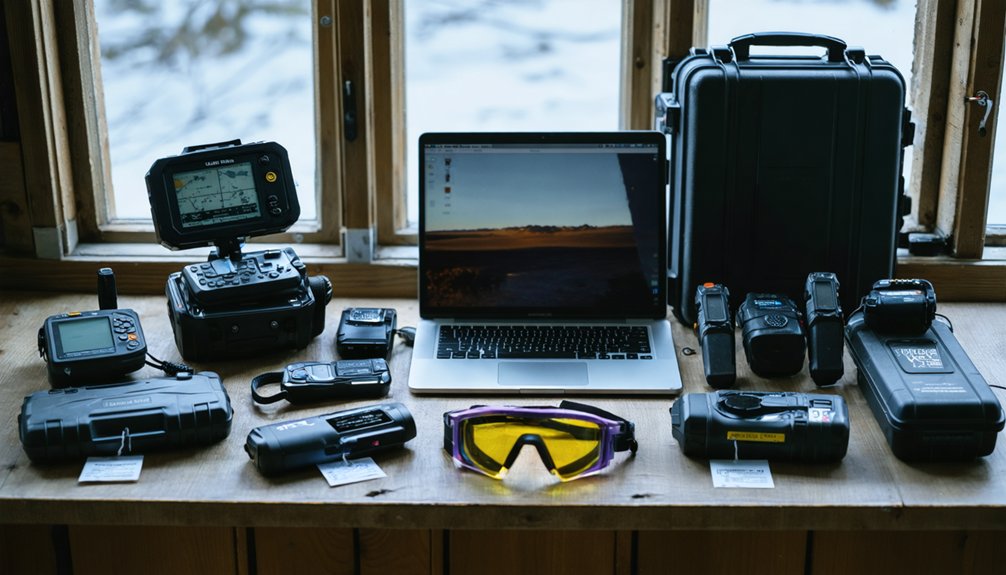
Storm chasing gear spans a wide cost range, and what you spend depends heavily on how seriously you’re pursuing the hobby. Storm chasing safety and weather prediction techniques both require investment. Here’s a practical cost breakdown:
- Basic entry setup (weather radio, first aid kit, radar app subscription): $50–$150
- Mid-tier kit (RadarScope Pro, dash cam, portable charger, recovery strap): $300–$600
- Advanced setup (quality DSLR, laptop, cell booster, amateur radio): $1,500–$3,500
- Full professional rig (4WD vehicle upgrades, full camera kit, inverter, GPS gear): $5,000+
You don’t need to start at the top. Build incrementally, prioritizing tires, navigation, and safety supplies first.
Smart gear selection lets you chase effectively without overextending your budget.
Storm Chaser Kit Budgets From Entry-Level to Pro
Building a functional storm chasing kit doesn’t require a massive upfront investment, but your budget directly shapes what you can safely and effectively operate in the field.
At the entry level, expect to spend $500–$1,500 covering quality tires, a basic radar app subscription, a weather radio, first aid kit, and portable charger. This foundation supports storm safety without overextending finances.
Mid-range builds run $2,000–$5,000, adding a laptop, cell booster, amateur radio, recovery straps, and a capable camera setup for field documentation.
Pro-level kits exceed $10,000, incorporating dedicated weather forecasting software, advanced radar hardware, high-clearance AWD vehicles, professional camera systems, and full communication redundancy.
Prioritize traction, navigation, and communication first. You can expand your kit incrementally as your experience and operational demands grow.
Frequently Asked Questions
Do Storm Chasers Need Special Licenses or Permits to Operate Legally?
You don’t need special licenses to chase storms, but you’ll want to follow storm chasing ethics, respect traffic laws, and sharpen your weather prediction techniques to operate responsibly and maintain your freedom in the field.
How Do Storm Chasers Coordinate With Official Emergency Management Agencies?
You’ll coordinate through amateur radio networks, share storm tracking data with local emergency managers, and use hazard communication protocols to relay real-time positioning, rotation reports, and ground-truth observations directly to NWS offices and county EOCs.
What Insurance Coverage Do Professional Storm Chasers Typically Carry?
Over 60% of professional storm chasers carry specialized insurance policies including liability coverage for third-party damages. You’ll also need commercial auto coverage, since standard personal policies won’t cover storm-chasing activities deemed high-risk professional operations.
Are There Formal Training Programs or Certifications for Storm Chasers?
No formal certification exists, but you’ll benefit from NWA or AMS courses covering weather prediction tools and storm chasing etiquette. Organizations like Storm Chasing Adventure Tours also offer structured field training to sharpen your real-world skills.
How Do Storm Chasers Handle Mental Stress After Dangerous Chase Encounters?
Like a barometer resetting after a storm passes, you rebuild through mental resilience. You’ll manage stress by debriefing with peers, journaling close calls, and seeking professional counseling when dangerous chase encounters leave lasting psychological weight.
References
- https://www.benholcomb.com/storm-chasing/equipment/
- https://www.reddit.com/r/meteorology/comments/f0o9p1/storm_chasers_of_reddit_what_are_your_essentials/
- https://science.howstuffworks.com/nature/climate-weather/storms/storm-chaser3.htm
- https://www.facebook.com/groups/fansoftexasstormchasers/posts/2807461269441236/
- https://www.stormtours.com/information/must-bring-items/
- https://store.sirui.com/blogs/guides/essential-equipment-for-storm-chasing-guide-for-2025
- https://www.youtube.com/watch?v=Sr2lz72ZYwM
- https://crazystormchasers.com/essential-storm-chasing-gear-list/
- https://crazystormchasers.com/top-storm-chaser-gear-reviewed-rated/
- https://www.benholcomb.com/storm-chasing/equipment/items-in-my-storm-chase-vehicle/