Personal protective equipment is critical because you’re operating in environments where hailstones generate kinetic energy sufficient to fracture skulls and cause ocular trauma, while wind-driven debris becomes lethal projectiles exceeding 100 mph. You’ll face lightning strikes within 6-10 miles, reduced visibility conditions, and structural collapse dangers during documentation efforts. Without polycarbonate helmets, ballistic eye protection, ASTM F2413-18 footwear, and waterproof ANSI/ISEA 107-certified gear, you’re transforming from weather observer into casualty statistic—understanding proper equipment selection and deployment protocols guarantees your survival during severe weather operations.
Key Takeaways
- PPE protects against lethal meteorological threats including lightning strikes, hail projectiles, wind-driven debris, and structural collapse during rescue operations.
- Helmets and ballistic eye protection prevent skull fractures and ocular trauma from hailstones that cause $10 billion in annual damage.
- Certified waterproof clothing with high-visibility standards ensures protection from severe weather while maintaining breathability and mobility during storm operations.
- Proper footwear and gloves meeting ASTM standards provide waterproof protection, impact resistance, and tactile sensitivity for navigating dangerous post-storm terrain.
- PPE enables storm chasers to maintain situational awareness and operational effectiveness while minimizing injury risks in unpredictable severe weather environments.
Understanding the Unique Dangers Storm Chasers Face
While storm chasing delivers unparalleled meteorological observations, it exposes personnel to lethal hazards that demand systematic risk mitigation. You’ll encounter severe weather perils including lightning strikes that kill annually, hail projectiles requiring protective eyewear, and wind-driven debris traveling at dangerous velocities.
Proximity to tall objects, fences, and power lines amplifies electrocution risk during electrical storms. Large hail cores threaten head injuries without helmets, while flying debris necessitates eye and hand protection.
Vehicle hazards compound when traversing through reduced visibility conditions and unstable terrain. Post-storm operations involve sharp debris and structural collapse dangers during rescue efforts.
Effective situational awareness strategies require real-time threat assessment and immediate access to protective equipment. Your survival depends on recognizing these interconnected dangers and implementing appropriate safety protocols before deployment.
Visibility Gear That Keeps You Seen in Hazardous Conditions
When storm conditions deteriorate visibility to dangerous levels, ANSI-compliant reflective traffic vests transform you from a roadside silhouette into a 360-degree detection target. Class 2 vests require 775 square inches of background material and 201 square inches of reflective tape placement for traffic under 50 mph, while Class 3 delivers maximum protection with 1,240 square inches background and 310 square inches reflective striping for high-hazard environments.
You’ll need Type R gear for roadway work with serious traffic risks. Fluorescent color options in safety yellow or orange combine with retroreflective tape to guarantee detection in day and night conditions.
Full-body coverage extends beyond vests—add reflective hard-hat stickers, armbands, and leg gaiters for complete visibility during storm cleanup operations.
Protecting Your Eyes and Head From Hail Impact
Baseball-sized hail traveling at velocities exceeding 150 mph generates kinetic energy sufficient to fracture skulls and rupture ocular tissues—a threat profile that demands impact-rated head and eye protection during storm chase operations.
Hail kinetic energy evaluation reveals golf ball-sized stones deliver blunt force trauma equivalent to projectile impacts, necessitating helmets constructed from polycarbonate or heavy-duty composites.
Material impact resistance analysis guides selection of eye shields meeting ballistic protection standards, preventing corneal abrasions and vision loss when you’re conducting close-range observations.
Strong side-winds amplify hailstone trajectories into unpredictable patterns, making goggles with wraparound coverage essential.
You’ll maintain operational freedom while mitigating the $10 billion annual damage potential that extends to human targets—prioritizing PPE transforms high-risk documentation scenarios into manageable encounters with severe weather phenomena.
Essential Waterproof Protection Against Severe Weather Elements
Your waterproof jacket must meet ANSI/ISEA 107 certification standards while providing sealed seams against wind-driven precipitation during storm core penetration.
Slip-resistant footwear with high-traction soles becomes critical when traversing debris-covered surfaces in hurricane-force winds and flash flood conditions.
Before deploying protective gear, you’ll need to secure vehicle windows against hail impact through proper treatment and emergency repair protocols.
Waterproof Jacket Selection Criteria
Since storm chasers regularly encounter torrential rainfall and severe weather systems, selecting a waterproof jacket with appropriate membrane technology becomes critical for maintaining core body temperature and operational effectiveness. Understanding waterproof membrane options helps you make informed decisions—ePTFE fabrics like Gore-Tex feature pores 20,000 times smaller than water droplets, while polyurethane films offer lighter, stretchier alternatives. Fabric coating performance directly impacts your protection level during severe weather exposure.
Key selection criteria include:
- Layer construction: 3L designs provide maximum storm protection with fused liners, while 2.5L configurations balance weather resistance with reduced weight
- Seam integrity: 100% seam sealing prevents water infiltration at stress points during torrential conditions
- Material durability: DWR-coated ripstop nylon withstands high-elevation conditions and repeated storm exposure
- Breathability trade-offs: Triple-layer systems reduce moisture venting but excel in extended cold-climate operations
Wet Condition Footwear Requirements
How effectively can storm chasers maintain operational mobility when flash flooding transforms terrain into hazardous wetlands within minutes? Your footwear’s waterproof membrane quality determines whether you’ll extract critical data or abort missions prematurely.
TEK2.5® and GORE-TEX membranes deliver durably waterproof protection to collar height, while PFC/PFAS-free DWR coatings enhance water resistance without environmental compromise. Impact resistance durability comes from waterproof leather uppers with rubberized toe reinforcement—essential when traversing debris fields during active storm phases.
VertiGrip rubber outsoles with deep lugs provide all-weather traction on wet pavement, muddy paths, and standing water. Two-hundred-gram PrimaLoft® insulation combats hypothermia risk during extended deployments. This rugged construction eliminates break-in time, letting you chase unrestricted while avoiding metal components that increase lightning strike vulnerability.
Window Treatment and Repairs
While waterproof boots protect your mobility during ground operations, your vehicle’s glass surfaces face a different threat profile—direct impacts from hailstones traveling at terminal velocity exceeding 100 mph. You’ll need engineered protection systems that maintain operational capability.
Critical window protection configurations:
- Polycarbonate covers replace standard windshields on chase vehicles like Honda Fits, utilizing 4’x8′ drag racing-grade sheets that withstand baseball-sized impacts while maintaining driveability through hail cores
- DIY hail shields mount via roof racks with double-wrapped chicken wire or plastic mesh secured by bungee cords, creating standoff distance that prevents window contact during deflection
- Pool noodles reinforced with Flex Tape over sunroofs and front corners absorb impacts from near 6-inch diameter stones on tornado-warned supercells
- Improvised rubber floor mats and folded blankets provide immediate coverage for critical glass surfaces during rapid-onset threats
Vehicle Safety Equipment for Hail and Debris Damage
Hard-top vehicles provide critical protection against hail up to golf ball size, considerably diminishing the risk of penetration damage that soft-top or convertible vehicles can’t withstand.
You’ll need to maintain scratch-resistant tempered glass windshields treated with anti-fog and water-repellent coatings like Rain-X to guarantee visibility during severe weather encounters.
Keep clear plastic film, tape, and emergency repair supplies readily accessible for temporary window fixes if debris compromises your vehicle’s protective envelope during chase operations.
Hard-Top Vehicle Protection
Storm chasers face significant hail and debris hazards during severe weather intercepts, requiring robust vehicle protection systems to prevent catastrophic damage to windows, windshields, and bodywork.
Essential Hard-Top Protection Systems:
- Sunroof defense systems utilize pool noodles secured with Flex Tape around edges and front corners, successfully tested against 6-inch diameter hailstones near Burwell, Nebraska
- Heavy duty cargo covers feature tear-resistant, storm-grade materials designed for larger vehicles like Chevy Suburbans, providing all-encompassing coverage of windows, mirrors, and hoods
- Roof rack hail guards employ Thule racks with retractable plastic mesh frames, creating deployable windshield protection that’s withstood 7000+ miles of storm chasing
- Armored truck modifications integrate Rhino lining, ARE camper shells, and dually stances for enhanced stability in high winds while protecting vulnerable components
Window Repair Solutions
Golf ball-sized hailstones traveling at 100+ mph velocities generate sufficient kinetic energy to shatter vehicle windshields and windows, transforming glass into high-velocity projectiles that threaten occupant safety during active chase operations. Temporary windshield reinforcement through two-layer flex tape configurations enables continued pursuit by containing fragments and preventing cabin intrusion. You’ll maintain operational capability until permanent solutions become accessible.
Professional repair guidelines mandate OEM-grade glass replacement with manufacturer-specified sealing protocols. ADAS recalibration guarantees sensor accuracy within one-degree tolerances post-installation. Custom hail guards utilizing double-wrapped chicken wire configurations provide proactive protection, reducing replacement frequency and enabling closer storm approaches. Insurance providers typically process storm damage claims without investigating chase activities, though repeated submissions may trigger policy scrutiny. Documentation through photographs and repair estimates supports claim substantiation.
Lightning Strike Protocols and Protective Measures
When thunder roars during your chase operations, you’ve got approximately 6-10 miles of lightning threat radius to account for—a distance that demands immediate action rather than casual observation. Your vehicle becomes your primary fortress when substantial buildings aren’t accessible, but you’ll need to implement proper protocols.
Thunder within earshot means lightning strikes are active within 6-10 miles—seek shelter in your vehicle or substantial building immediately.
Deploy lightning detection technology to track distant threats before they’re audible, and establish lightning threat communication protocols with your team.
Critical protection measures:
- Calculate strike distance using Flash to Bang method: divide seconds between flash and thunder by 5
- Maintain 30-minute safety buffer after final thunderclap before resuming exposed operations
- Keep windows closed in hard-topped metal vehicles; avoid touching metal components
- Position yourself 100+ yards from water bodies and isolated tall objects during active strikes
First Aid Supplies Every Storm Chaser Should Carry
Your mobile command center requires complete medical resources because severe weather pursuit exposes you to hazards ranging from vehicular accidents to debris-related trauma in environments where emergency medical services face significant response delays.
Establish field treatment protocols incorporating adhesive bandages, sterile gauze pads, antibiotic ointment, and nonlatex gloves for immediate wound intervention. Your kit demands sterile dressing applications using absorbent compress dressings and roller bandages for hemorrhage control.
Include antiseptic wipes, tweezers for debris extraction, and triple antibiotic ointment to prevent infection in contaminated environments. Stock acetaminophen and ibuprofen for pain management, diphenhydramine for allergic reactions, and instant cold compresses for trauma response.
Maintain a digital thermometer, breathing barrier, and triangular bandages. This extensive configuration enables autonomous medical intervention when professional emergency services remain inaccessible during active weather operations.
Proper Footwear and Hand Protection for Field Operations
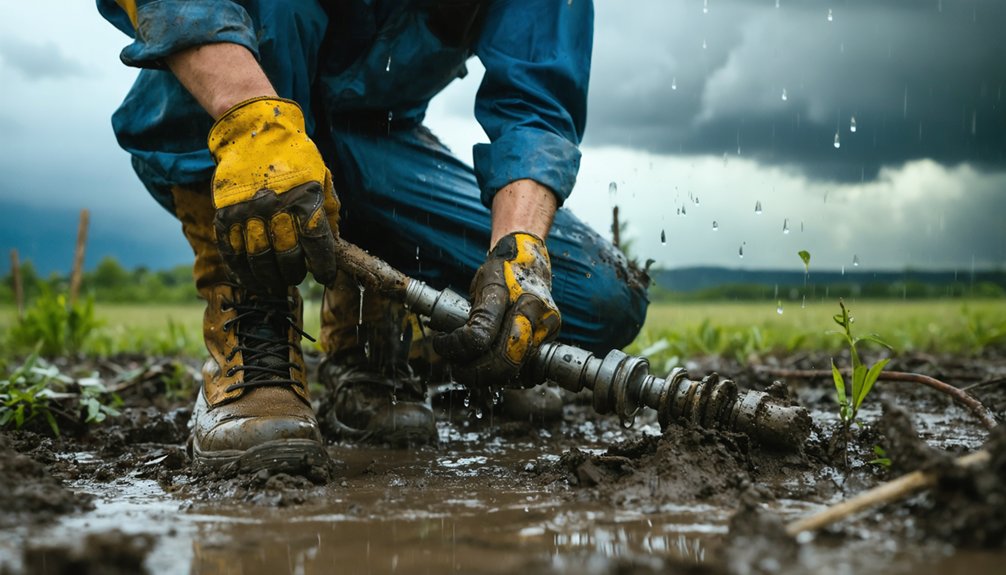
Your field operations demand footwear meeting ASTM F2413-18 standards with non-slip soles rated for wet conditions and reinforced toe caps providing I/75 impact resistance against falling equipment or hail.
Storm environments expose you to sharp debris, flooded terrain, and slick surfaces where traction failures create significant injury risks. Complement waterproof, high-traction boots with cut-resistant gloves rated for handling damaged structures, glass fragments, and metal debris encountered during post-storm assessments.
Slip-Resistant Shoes for Safety
- Rugged rubber construction providing stability on snow, slush, and ice-covered driveways
- Waterproof leather uppers with TEK2.5 membrane preventing moisture penetration
- SolarCore foam insulation protecting against cold, wet ground contact
- Secure ankle fit blocking debris entry during emergency response operations
Field-tested by 150,000+ companies, these specifications guarantee operational mobility when conditions deteriorate rapidly.
Gloves for Hazard Protection
Field operations demand multi-layered hand protection that addresses simultaneous exposure to moisture, impact hazards, and temperature extremes. You’ll need gloves featuring HiPora 3-layer waterproof membranes combined with PrimaLoft Gold insulation for thermal regulation without compromising dexterity enhancement.
AX Suede synthetic palms and genuine goatskin leather provide abrasion resistance across high-wear zones, while sonic-welded TPR protectors shield against impact events. Super-stretch Lycra fourchettes maintain tactile sensitivity essential for equipment manipulation during time-critical operations. Touchscreen-compatible fingertips enable device operation without exposure risk.
The neoprene cuff with hook-and-loop closure prevents debris ingress while allowing rapid donning. This integrated protection system guarantees you maintain operational capability across variable meteorological conditions without sacrificing the manual precision required for autonomous field decision-making.
Emergency Signaling and Communication Tools
When cellular networks go down during severe weather events, storm chasers rely on dedicated emergency signaling and communication tools to maintain contact with team members, coordinate with weather agencies, and transmit distress calls if conditions deteriorate. PTT two-way radios like the Midland MXT575 establish remote communication links between chase vehicles across multiple coverage areas.
Satellite communicators including the Garmin inReach Mini 2 transmit SOS signals with GPS coordinates when you’re operating beyond conventional network range.
Essential communication equipment includes:
- Satellite systems like DataStorm provide disaster backup systems with high-speed Internet connectivity post-event
- Amateur radios relay spotter observations to National Weather Service and SkyWarn networks
- Panic buttons on devices like Peak PTT-84G send automated distress calls with location data
- CB radios access real-time storm intelligence from truckers experiencing conditions ahead
The ACES Concept and Prioritizing Personal Safety
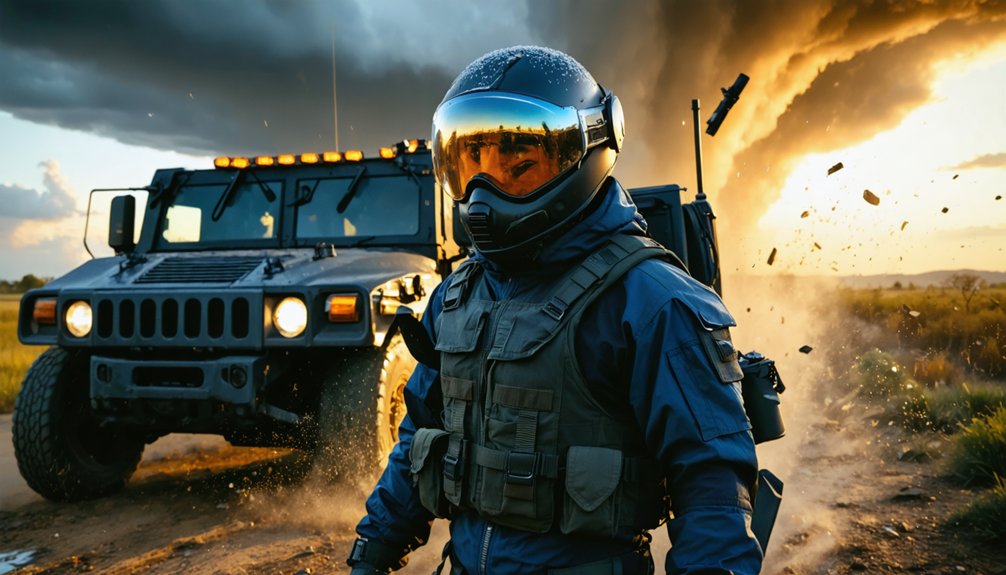
While storm chasing demands attention to meteorological phenomena, the ACES framework—Awareness, Communication, Escape Routes, and Safe Zones—establishes the foundational protocol that separates professional spotters from reckless thrill-seekers. The importance of situational awareness can’t be overstated: you’ll monitor NOAA Weather Radio continuously, maintain buffer zones from storm systems, and identify hazards like flooded roadways before they become critical threats.
Guaranteeing communication protocols ensures you’re submitting real-time reports to the National Weather Service on wall clouds, funnels, and hail activity. You’ll position yourself at four-way intersections for multiple escape routes, avoiding direct storm paths and circulation zones. Your ultimate autonomy depends on identifying safe zones—sturdy structures with basements rather than vehicles—while maintaining defensive driving techniques matched to conditions.
Frequently Asked Questions
What Type of Clothing Material Is Best for Storm Chasing Gear?
You’ll need lightweight ripstop nylon and Gore-Tex for ideal storm chasing gear. These weatherproof materials provide 100% windproof protection while breathable fabrics like polyester blends wick moisture efficiently, ensuring you’ll maintain mobility and safety during extreme weather pursuits.
How Often Should PPE Equipment Be Inspected or Replaced?
Want freedom without compromising safety? You should inspect PPE daily before use and replace it annually or after impact. Follow a proper maintenance schedule and storage recommendations to guarantee equipment reliability when you’re pursuing storms independently.
Are There Specific PPE Requirements for Photographing or Filming Storms?
You’ll need waterproof jackets, slip-resistant footwear, and safety glasses as baseline PPE. Adjust safety protocols based on weather conditions—adding reflective vests for low visibility, hail goggles for severe storms, and non-metallic tripods to minimize lightning strike risks.
What Is the Average Cost of Complete Storm Chasing PPE?
While quality costs more upfront, you’ll spend $400-$900 for complete storm chasing PPE. Your investment guarantees gear durability across extreme weather conditions: helmet ($145-$350), gloves ($55-$142), boots ($163-$391), and coveralls ($180), protecting your autonomous pursuit.
Do Insurance Policies Cover Storm Chasing Equipment Damage or Loss?
Standard policies won’t cover your storm chasing gear, but specialized adventure sports insurance will protect your equipment through the insurance claims process. You’ll need proper documentation and equipment maintenance considerations to guarantee successful reimbursement for damages or theft.