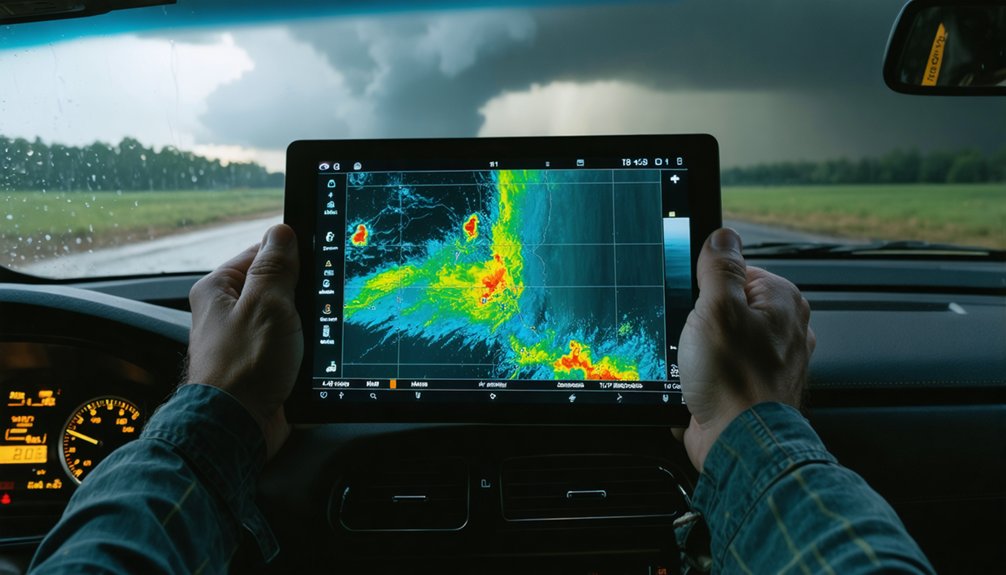
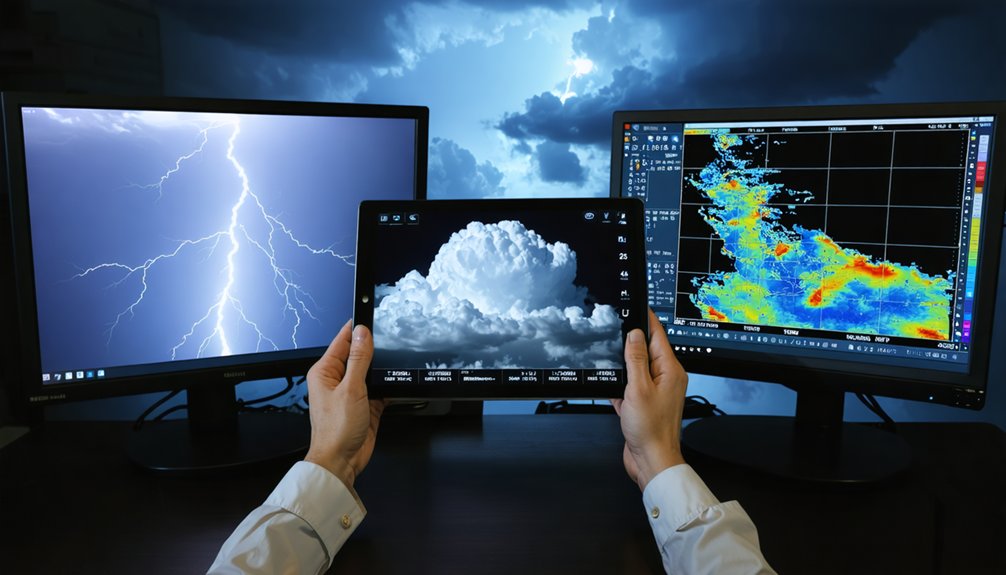
Real-time storm tracking data analysis is vital because it continuously corrects forecast errors as conditions shift, replacing assumptions with live intelligence. You’re working with 1.5 billion daily observations from Doppler radar, satellites, and 390,000+ ground stations, which sharpen landfall predictions and intensity updates before a storm hits. Without it, misallocated resources and inaccurate models compound financial and human losses. Stick around, and you’ll see exactly how this data transforms emergency response outcomes.
Key Takeaways
- Real-time storm data reduces forecast errors by continuously correcting storm positions using live observations from over 390,000 ground stations.
- AI-driven systems process 1.5 billion daily observations, enabling hyper-local forecasts at 0.67 km resolution that static data cannot achieve.
- Live tracking supports preemptive evacuations, giving emergency coordinators actionable intelligence before dangerous conditions deteriorate further.
- Real-time APIs position critical supplies based on current storm needs, reducing response times and minimizing resource waste.
- Inaccurate forecasts carry severe financial consequences, as misallocated resources and unplanned downtime can generate losses exceeding billions of dollars.
How Real-Time Storm Tracking Data Works
Real-time storm tracking pulls data from multiple sources simultaneously — Doppler radar, weather satellites, Hurricane Hunters, and a network of over 390,000 ground stations — ingesting roughly 75 billion terabytes daily.
This storm data collection feeds directly into predictive modeling systems like TRACK software and Horizon AI Global, which processes 1.5 billion observations daily.
You’re dealing with systems that synthesize pressure patterns, sea surface temperatures, wind behavior, and storm structure simultaneously.
Modern storm forecasting synthesizes pressure patterns, sea surface temperatures, wind behavior, and storm structure — all at once.
Four-dimensional model integration layers these variables across time, giving forecasters a dynamic, continuously updated picture.
Horizon AI HIRES pushes resolution down to 0.67 km, enabling hyper-local impact assessments.
Every data stream — balloon, aircraft, satellite, or radar — strengthens the model’s accuracy, letting you act on precise intelligence rather than broad estimates.
Why Forecast Accuracy Depends on Live Data
When you rely on live data, you dramatically cut forecast errors because real-time radar and observational inputs continuously correct model drift before it compounds.
You get sharper landfall predictions as TRACK software and systems like Horizon AI Global process 1.5 billion daily observations, outperforming legacy models like GFS and ECMWF on tracks up to nine days out.
AI then synthesizes over 100 global forecast models, giving you hyper-local precision that static or delayed data simply can’t deliver.
Live Data Reduces Errors
Live data feeds are the backbone of accurate storm forecasting, and without them, prediction models degrade rapidly.
Real-time ingestion of observations directly cuts forecast error, giving you sharper situational awareness when it matters most.
Live updates drive error reduction through four critical mechanisms:
- Continuous position correction — TRACK software detects storm features in weather models, adjusting track forecasts as conditions shift.
- Observation density — 390,000 ground stations supply constant data streams, eliminating gaps that distort model outputs.
- AI-driven synthesis — Horizon AI Global processes 1.5 billion daily observations, outperforming GFS and ECMWF models for tracks up to 9 days ahead.
- Rapid intensity updates — Doppler radar and Hurricane Hunters deliver real-time structural data, refining intensity predictions before landfall.
You get forecasts built on facts, not assumptions.
Real-Time Tracking Improves Predictions
Storm forecasting degrades fast without live data—models relying on outdated observations lose positional accuracy within hours as storm systems evolve.
You need continuous data integration to keep pace with shifting storm behavior. Horizon AI Global processes 1.5 billion observations daily, outperforming GFS and ECMWF models for tracks extending nine days ahead.
TRACK software detects storm features within weather models, directly cutting forecast errors. Precision radar captures real-time position, intensity, and movement, sharpening landfall predictions before conditions deteriorate.
AI synthesizes over 100 global forecast models, delivering hyper-local outputs you can act on immediately. Without this live pipeline, forecast drift compounds quickly, leaving emergency planners working from stale data.
Accurate, timely predictions aren’t a convenience—they’re the operational foundation that keeps you ahead of dangerous, fast-moving storm systems.
AI Enhances Forecast Precision
Forecast accuracy doesn’t hold without live data feeding the models behind it. AI algorithms process sensor networks and apply data assimilation techniques, pulling storm patterns from over 1.5 billion daily observations.
Machine learning drives model integration across 100+ global systems, sharpening predictive analytics at hyper-local scales.
Here’s what AI delivers for your storm awareness:
- Computational power runs weather simulations at 0.67 km resolution, exposing localized threats.
- Predictive analytics extend reliable track forecasts up to 9 days ahead, outperforming GFS and ECMWF.
- Data assimilation synthesizes satellite, radar, and aircraft inputs into unified risk assessment outputs.
- Machine learning continuously refines storm patterns, cutting forecast errors before conditions deteriorate.
You gain decision-ready intelligence, not delayed approximations.
How AI and Radar Are Reshaping Storm Prediction
When you examine today’s storm prediction landscape, you’ll find that AI systems like Horizon AI Global process 1.5 billion observations daily, outperforming traditional models like GFS and ECMWF for tracks up to 9 days ahead.
You can leverage radar technology that captures real-time precipitation, wind patterns, and storm structure, enabling precise landfall predictions through continuous position and intensity tracking.
Together, these tools synthesize data from over 100 global forecast models, delivering hyper-local predictions at resolutions as fine as 0.67 km.
AI-Powered Forecast Breakthroughs
As AI reshapes storm prediction, systems like Horizon AI Global now process 1.5 billion observations daily, outperforming legacy models like GFS and ECMWF for track forecasts extending up to nine days ahead.
Machine learning synthesizes over 100 forecast models, delivering hyper-local predictive analytics you can act on immediately.
Here’s what AI-driven data integration reveals:
- Storm Dynamics Mapping — Real-time analysis of shifting weather patterns at 0.67 km resolution
- Risk Assessment Precision — TRACK software reduces forecast errors by detecting critical storm features
- Multi-Model Synthesis — AI forecast models consolidate global datasets into actionable outputs
- Extended Forecast Windows — Predictive analytics pushes reliable storm tracking beyond standard nine-day thresholds
You’re no longer dependent on outdated systems—AI delivers the accuracy freedom demands.
Radar Revolutionizes Storm Prediction
Beyond AI-powered forecasting, radar technology has become the backbone of real-time storm prediction—monitoring precipitation, wind patterns, and storm structure simultaneously to deliver data you can act on immediately.
Modern storm visualization techniques transform raw radar feeds into actionable intelligence, letting you track a hurricane’s position, intensity, and movement with precision that older methods couldn’t achieve.
Effective data integration strategies combine Doppler radar, satellite imagery, and surface observations into unified operational frameworks.
You’re not working with isolated datasets—you’re accessing synthesized, layered information streams that sharpen landfall predictions and reduce critical forecast errors.
Tools like Rain Viewer deliver live storm updates, while high-resolution systems reach 0.67 km accuracy.
These capabilities mean you receive warnings faster, respond smarter, and retain the autonomy to make informed, life-protecting decisions before conditions deteriorate.
How Emergency Teams Use Real-Time Storm Data
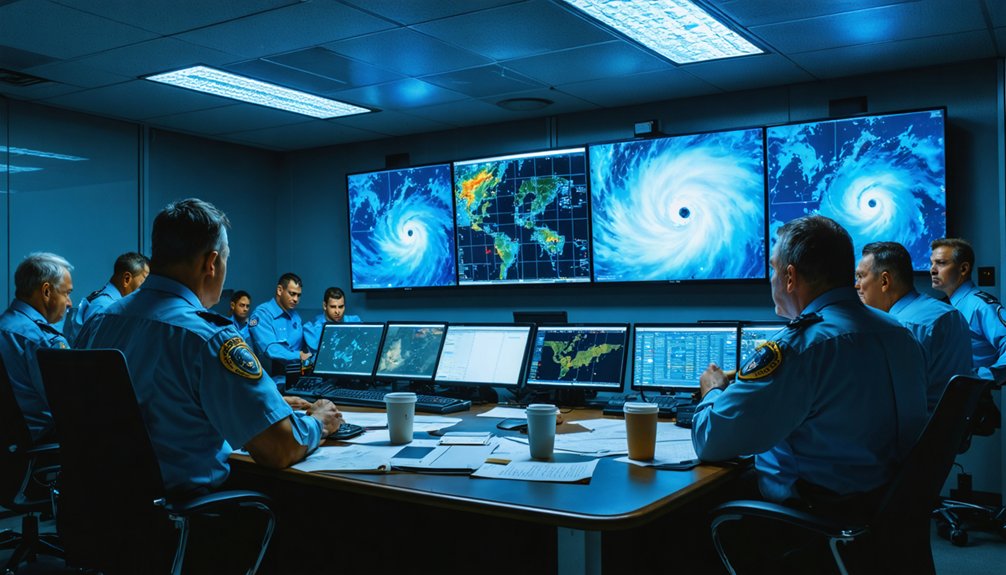
Real-time storm data transforms how emergency teams respond to rapidly evolving threats. Effective data utilization lets you act decisively, cutting response times and protecting communities.
Your emergency response framework becomes sharper when grounded in live intelligence.
Here’s how teams deploy real-time data operationally:
- Evacuation Planning – Radar tracks storm position and intensity, letting coordinators trigger evacuations before conditions deteriorate.
- Resource Allocation – APIs deliver billions of daily requests into ERP systems, positioning supplies where they’re needed most.
- Shelter Preparation – GIS layers weather data over location maps, identifying vulnerable zones requiring immediate attention.
- Search and Rescue – Post-storm radar guides teams through hazardous areas, accelerating recovery operations.
You’re not reacting blindly — you’re operating with precision-driven intelligence that keeps communities safer.
How Real-Time Storm Data Protects Lives on the Ground
When storms threaten populated areas, real-time data becomes the critical link between early warning and survival. You can’t execute effective evacuation strategies without precise, continuously updated storm positioning data.
GIS platforms blend live weather feeds with location intelligence, giving emergency coordinators actionable decision support down to the neighborhood level.
Radar-guided storm simulations let you anticipate dangerous conditions before they materialize, enabling proactive resource mobilization rather than reactive scrambling.
Disaster preparedness improves notably when agencies access near real-time imagery that tracks hurricane intensity and movement simultaneously.
Monitoring systems that detect pressure shifts, wind behavior, and sea surface temperatures give you the earliest possible warning window.
That window saves lives by converting raw atmospheric data into timely evacuations, shelter activations, and rescue pre-positioning—keeping communities free from preventable catastrophic loss.
What Inaccurate Storm Forecasts Cost Businesses and Insurers
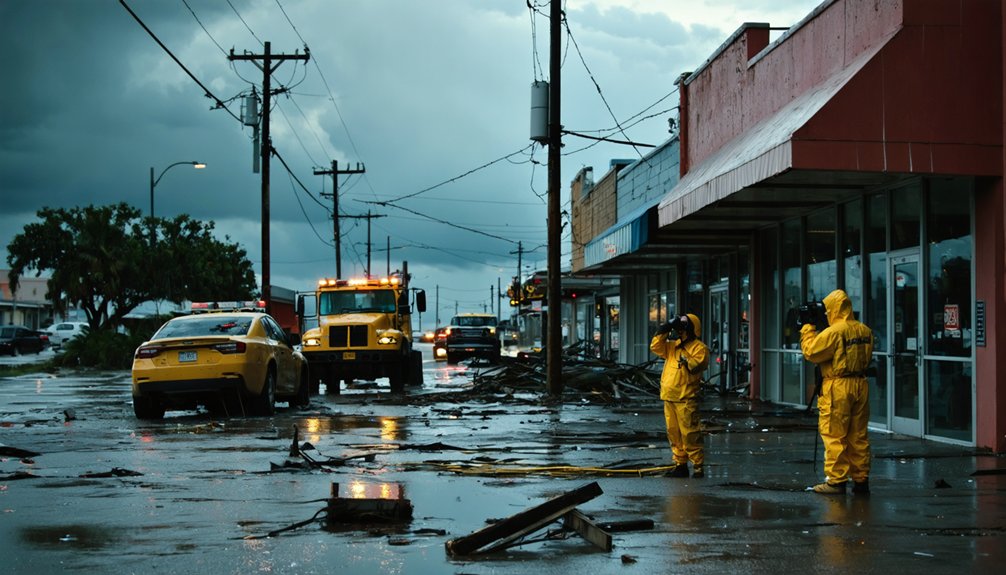
Inaccurate storm forecasts carry measurable financial consequences that ripple across industries and insurance markets. When forecasts miss the mark, you’re exposed to cascading business disruptions and inflated insurance payouts that drain resources fast.
Consider these four cost drivers:
- Unplanned downtime — Poor predictions force reactive shutdowns, disrupting logistics, energy, and city operations.
- Catastrophic insurance payouts — Superstorm Sandy triggered $25 billion in insurer losses, exposing critical tracking gaps.
- Misallocated resources — Without precise data, businesses deploy capital inefficiently, compounding financial losses.
- Model validation failures — Inaccurate forecasts undermine long-term risk evaluations, raising future premium costs.
Integrated weather intelligence and tools like TRACK directly reduce these vulnerabilities, giving you actionable data before storms dictate your losses.
Frequently Asked Questions
How Does Real-Time Storm Data Integrate With Existing ERP Business Systems?
You’ll leverage storm data integration via APIs delivering billions of daily requests directly into your ERP systems, enabling real-time decision-making. This boosts ERP efficiency by automating resource allocation, logistics adjustments, and operational responses to rapidly evolving storm conditions.
What Global Observation Stations Contribute to Daily Storm Tracking Data Collection?
You’re pulling storm prediction data from 390,000 global stations, satellites, radar technology, and aircraft. These observational networks deliver atmospheric pressure readings, satellite imagery, and weather patterns daily, ensuring data reliability across climate models for accurate tracking.
How Does GIS Technology Combine Weather and Location Data for Decisions?
GIS blends weather data with your location info, enabling spatial analytics and predictive modeling for real-time decision support. You’ll gain precise storm insights, empowering you to act independently, optimize evacuations, and mobilize resources efficiently without restrictions.
Can Real-Time Storm Tracking Data Improve School Closure Timing Decisions?
Yes, you can leverage real-time storm prediction data to optimize school closure timing. It strengthens emergency planning, enforces safety protocols, and sharpens decision-making by delivering precise, data-driven alerts that empower communities to act autonomously and protectively.
How Does Sea Surface Temperature Data Improve Post-Storm Analysis Accuracy?
Like a thermometer revealing hidden truths, sea temperature data sharpens your post-storm analysis accuracy. You’ll leverage NASA’s SPoRT project, comparing pre- and post-storm measurements to precisely quantify storm impact on oceanic conditions and validate forecast models.
References
- https://www.rainviewer.com/blog/hurricane-tracking-with-weather-radar.html
- https://research.reading.ac.uk/engagement-and-impact/storm-tracking/
- https://www.weathercompany.com/blog/storms-to-solutions-with-weather-data/
- https://climavision.com/blog/how-are-hurricanes-tracked-tools-and-tips-for-superior-coverage/
- https://weatherstack.com/why-is-weather-data-recorded
- https://www.esri.com/en-us/industries/earth-sciences/disciplines/gis-weather
- https://www.earthdata.nasa.gov/news/feature-articles/improving-hurricane-forecasts-near-real-time-imagery-data
- https://www.ametsoc.org/ams/about-ams/ams-statements/statements-of-the-ams-in-force/weather-analysis-and-forecasting2/