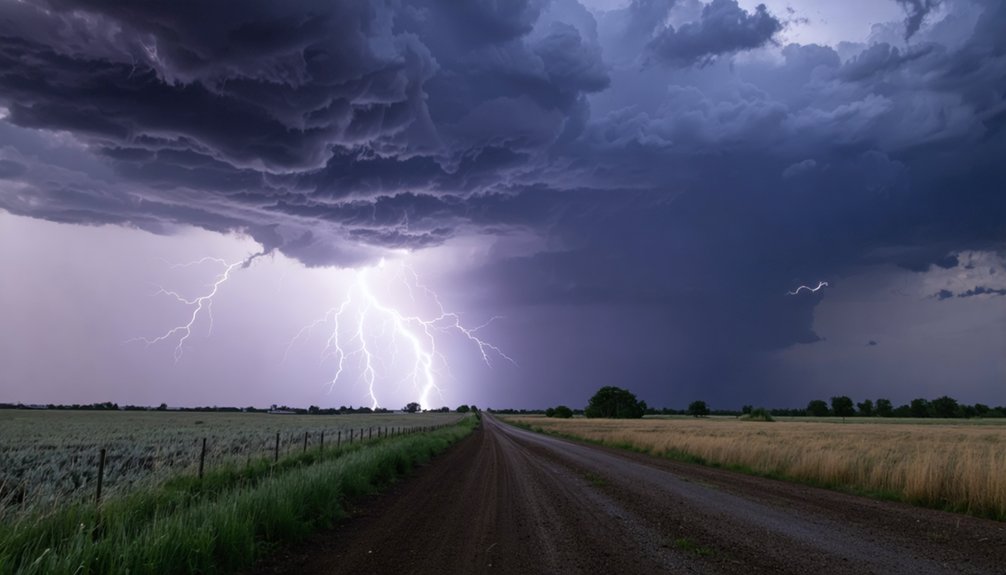
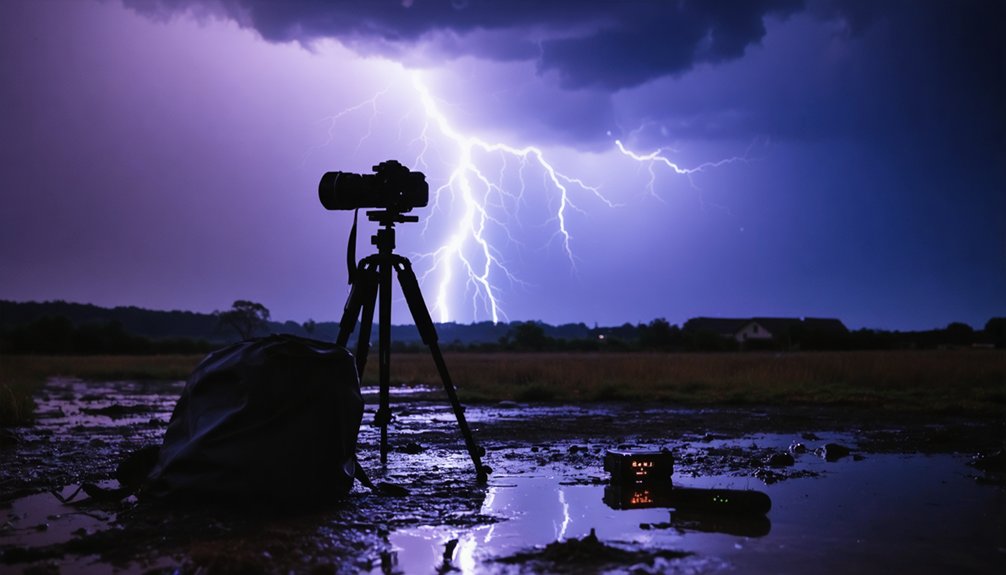
Safety is essential when photographing lightning because you’re dealing with a 200-300 millisecond discharge you can’t react to or outrun. Storms accelerate faster than your decision-making allows, and warning signs can appear milliseconds before a strike. Open fields, tall structures, and standing water dramatically increase your risk. You can replace equipment, but you can’t recover from a fatal strike. There’s far more you need to know before you set up that first shot.
Key Takeaways
- Lightning discharges in 200–300 milliseconds, making human reaction impossible, so proactive safety planning before storms arrive is essential.
- Storms can accelerate rapidly, eliminating escape windows within minutes and leaving no time for delayed decision-making.
- Open fields, tall structures, and standing water dramatically increase strike risk, making location awareness a critical safety factor.
- Equipment is replaceable; abandoning gear without hesitation during fast-closing storms keeps photographers alive for future opportunities.
- Staying safe at proper distances improves shot quality and ensures continued ability to photograph future storms long-term.
Why Lightning Photography Demands Serious Safety Planning
Lightning photography puts you directly in the path of one of nature’s most unpredictable electrical hazards, where a strike can occur with little warning and no second chance. You’re operating inside an active electrical storm zone, where conditions shift faster than your reaction time allows.
Lightning safety isn’t optional — it’s the foundation every shot depends on. Without deliberate storm preparedness, you surrender control to the storm itself. Strikes don’t follow predictable patterns, and distance from the visible strike zone doesn’t guarantee protection from ground current, side flash, or rapid storm movement.
Planning your position, shelter access, and exit route before the storm arrives keeps you in control. Your freedom to keep shooting future storms depends entirely on the decisions you make before this one gets dangerous.
Why Lightning Gives Photographers Almost No Reaction Time
A single lightning bolt completes its full discharge in roughly 200 to 300 milliseconds — far faster than the human nervous system can register danger and trigger movement. Lightning physics doesn’t negotiate. By the time you perceive a threat, the strike has already finished. Your instinct to run is irrelevant at that point.
Storm prediction tools give you radar data and general trajectories, but they can’t tell you which square foot gets hit next. Conditions shift faster than apps update. You can’t outrun a decision you haven’t made yet.
This is why your safety position must be chosen before the storm arrives — not during it. Reacting to lightning isn’t a realistic strategy. Positioning correctly in advance is the only one that actually protects you.
The Safest Places to Shoot Lightning Photography From
Since you can’t react fast enough to save yourself once a storm is on top of you, your only real option is to already be somewhere safe when it arrives. A fully enclosed building with plumbing or wiring offers the strongest protection.
If you’re working remote locations without building access, a hard-top vehicle with closed windows is your next best option.
Shooting through a window or from inside a vehicle still lets you capture quality images while keeping outdoor hazards at a distance. Avoid open fields, high ground, and anything tall nearby.
Standing water, metal fences, and power lines all extend the danger zone around a strike. Position yourself several miles from the storm core before it reaches you, not after.
How Far Should You Stand for Lightning Photography?
When positioning yourself for lightning photography, you should stay several miles from the storm’s core — the National Weather Service recommends keeping 6 to 8 miles away, though conditions may require distances up to 20 miles.
You shouldn’t stand in open fields, on high ground, or near tall structures, as these positions make you the most exposed object in the area.
If you’re unsure whether your position is safe, assume it isn’t and move farther back before setting up your equipment.
Recommended Safe Distance Range
Though lightning can strike several miles ahead of a storm’s core, many photographers don’t give distance nearly enough thought.
Effective photography planning and lightning safety depend on maintaining verified separation from the storm. Use these recommended distances as your baseline:
- Stay 5 to 20 miles from the storm core depending on storm intensity
- The National Weather Service recommends 6 to 8 miles as a practical minimum
- Avoid open fields where you become the tallest object in the area
- Never position yourself on high ground or exposed ridges
- Retreat immediately if conditions close in faster than anticipated
Respecting these ranges keeps you operational across multiple shoots. Compress that distance, and you’re gambling your safety against a single frame.
Avoiding High-Risk Positions
Distance alone doesn’t protect you if you’re standing in the wrong spot. Even at a safe distance, your position determines your actual risk level. Avoid open fields where you become the tallest object, eliminating natural ground cover and increasing strike probability. High ground amplifies your exposure significantly.
Stay away from metal fences, power lines, and radio antennas—all of which conduct current toward you. Standing water transfers ground current from nearby strikes, creating shock hazards at your feet.
Wildlife interference is another overlooked threat; animals fleeing the storm can disrupt your setup unexpectedly.
Prioritize equipment stability by choosing sheltered, flat ground that keeps your tripod secure without requiring repositioning during the storm. Every unnecessary movement extends your time in the exposure zone.
What Around You Makes a Lightning Strike Worse
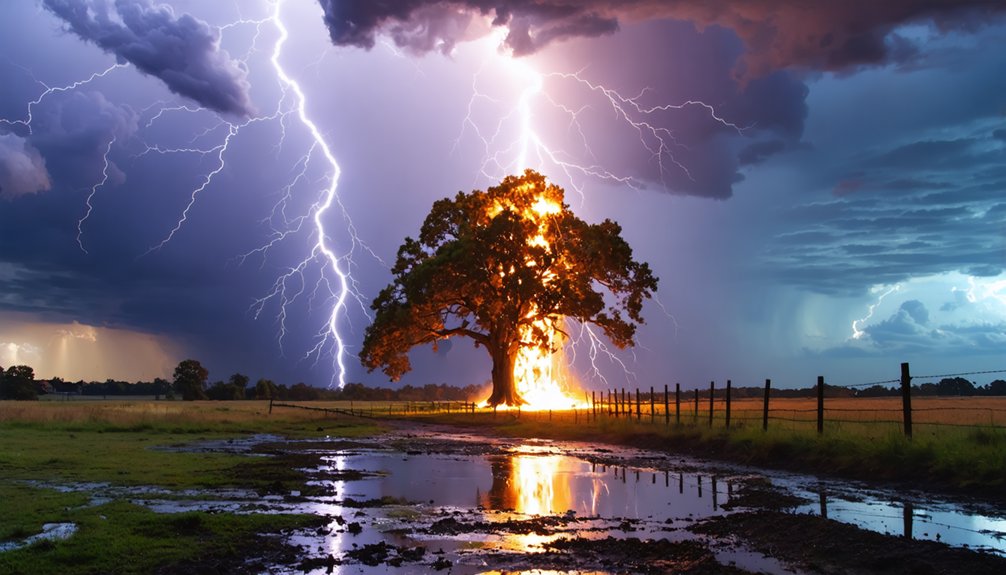
Certain environmental features around you can turn a nearby lightning strike into a direct or secondary threat. Ground reflections and nearby structures substantially amplify your risk. Watch for these specific hazards:
- Standing water conducts ground current from a nearby strike directly toward you
- Metal fences, railings, and poles carry electrical charge across long distances
- Tall trees attract strikes and spread dangerous ground current outward
- Power lines and radio antennas create secondary strike pathways near your position
- Open ridges and exposed fields make you the tallest object available to a strike
Avoid positioning yourself near any of these features, even when the storm appears distant. Conditions shift fast, and what seemed like a safe setup can become lethal within seconds. Your awareness of surroundings is non-negotiable.
Warning Signs You Need to Stop Shooting Right Now
Your body will tell you when the situation has turned critical—if you feel your hair standing on end, stop shooting immediately and move to shelter, because that sensation signals a dangerous buildup of electrical charge in the air around you.
Don’t wait to confirm the threat by watching the storm get closer; a rapidly approaching cell can cut your escape window to seconds.
Leave your gear and get out.
Hair Standing Up
When your hair stands on end during a storm shoot, stop what you’re doing and move to shelter immediately—this is a direct physical warning that electrical charge is building up around you.
Despite common lightning myths and storm myths suggesting you have time to react after seeing a strike, you don’t—charge buildup precedes the strike itself.
Recognize these critical warning signs alongside hair standing up:
- Skin tingling or buzzing sensation
- Metallic taste in your mouth
- Vision suddenly brightening or flickering
- Camera equipment behaving erratically
- A low humming sound from nearby objects
Leave your gear behind. Your freedom to photograph future storms depends entirely on walking away from this one.
No image justifies the alternative.
Storm Rapidly Approaching
A rapidly approaching storm compresses your decision window fast, and waiting for obvious danger means you’ve already waited too long. Even an experienced storm chaser respects one hard rule: when the storm closes ground faster than expected, you move immediately.
Weather unpredictability means conditions you assessed ten minutes ago no longer apply. A storm core can accelerate, shift direction, or intensify without warning. If lightning frequency increases, thunder lag shortens, or wind shifts sharply, those are tactical signals, not suggestions.
Don’t negotiate with the timeline. Leave your tripod, leave your gear if necessary, and get into a fully enclosed building or hard-top vehicle now. Every second you delay retrieving equipment is a second you’re not moving toward safety. Your life can’t be recovered the way footage can.
What to Do When a Storm Closes In Too Fast?
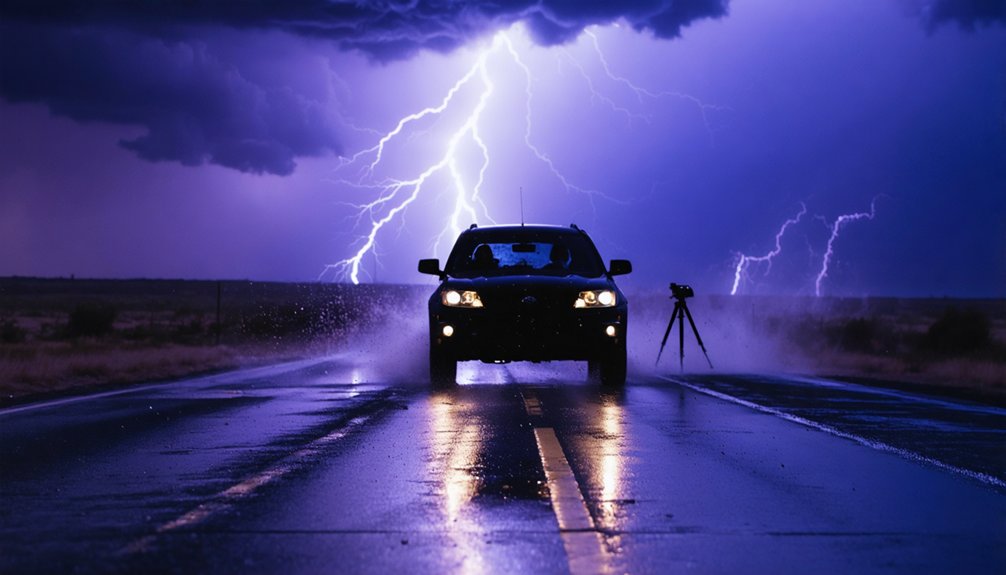
Sometimes a storm accelerates far faster than forecast, and you’ll need to act immediately rather than wait for conditions to worsen. Lightning safety depends on recognizing that storm unpredictability can eliminate your escape window within minutes.
When closure happens fast, execute these priorities:
- Move toward a fully enclosed building immediately — it’s your safest option
- Enter a hard-top vehicle with windows closed if no building is reachable
- Abandon your gear without hesitation — equipment is replaceable, you’re not
- Avoid open fields, high ground, tall trees, and metal structures during retreat
- Watch for hair standing on end, which signals immediate charge buildup nearby
Every second of delay increases your strike exposure. Act on the first warning sign, not the second.
Why Shooting Safely Produces Better Lightning Photos
Staying safe during lightning photography doesn’t just protect your life — it directly improves your results. When you position yourself at a safe distance, you gain a wider compositional view of the storm structure, giving you more usable frames. You’re not scrambling to escape — you’re focused, patient, and in control of your setup.
Weather unpredictability means panic kills shots. Shooting from indoors or a hard-top vehicle eliminates reactive movement, letting you properly configure your tripod and remote trigger. You stay locked on lightning behavior patterns instead of watching for threats.
Safe distances also give you time — time to read the storm, adjust exposure settings, and capture multiple events. Protecting yourself keeps you shooting future storms too, which no single rushed frame is ever worth sacrificing.
Frequently Asked Questions
Can Lightning Photography Be Done Safely During Daytime Storms?
Yes, you can photograph daytime lightning safely by prioritizing lightning safety and maintaining sharp storm awareness. Stay indoors or in a hard-top vehicle, keep 6–8 miles from the storm’s core, and avoid open fields.
Does Camera Equipment Attract Lightning Strikes During Outdoor Shooting?
Lightning strikes kill roughly 20 people annually in the U.S. Your camera equipment doesn’t directly attract lightning, but you’re the tallest object in open fields, making lightning safety critical—metal gear amplifies your overall risk considerably.
Is Lightning Photography Legal in All Outdoor Public Locations?
Legal restrictions vary by location, so you can’t assume public permissions cover all outdoor spots. Check local regulations before you shoot, as some parks, reserves, and restricted zones may require permits or prohibit photography entirely.
What Camera Settings Work Best for Capturing Lightning From Indoors?
Use manual mode, set ISO 100–400, aperture f/8, and a 10–30 second exposure. You’ll achieve indoor stability with a tripod and optimal focus at infinity—don’t let autofocus hunt during your shot.
Can Two Photographers Safely Shoot Lightning Together Outdoors?
Like two sailors sharing one lifeboat in a storm, you’re not safer together. For lightning safety in outdoor photography, you both face equal strike risk — maintain distance, seek hard-top shelter, and never let camaraderie override survival instincts.
References
- https://digital-photography-school.com/how-to-photograph-lightning-the-ultimate-guide/
- https://www.rmets.org/metmatters/lightning-photography-advice-award-winning-photographer
- https://www.youtube.com/watch?v=EUVy7M4JmX4
- https://nigelwaters.photography/blog/lightning-photography-tips/
- https://garyhartblog.com/2025/09/15/lightning-safety-for-photographers/
- https://www.jasonrweingart.com/blog/2014/12/20/how-to-photograph-lightning
- https://www.naturettl.com/lightning-photography-tips/
- https://www.nickulivieriphotography.com/blog/lightning/
- https://www.adobe.com/uk/creativecloud/photography/discover/lightning-and-storm-photography.html
- https://www.sony.co.uk/electronics/support/articles/00009481