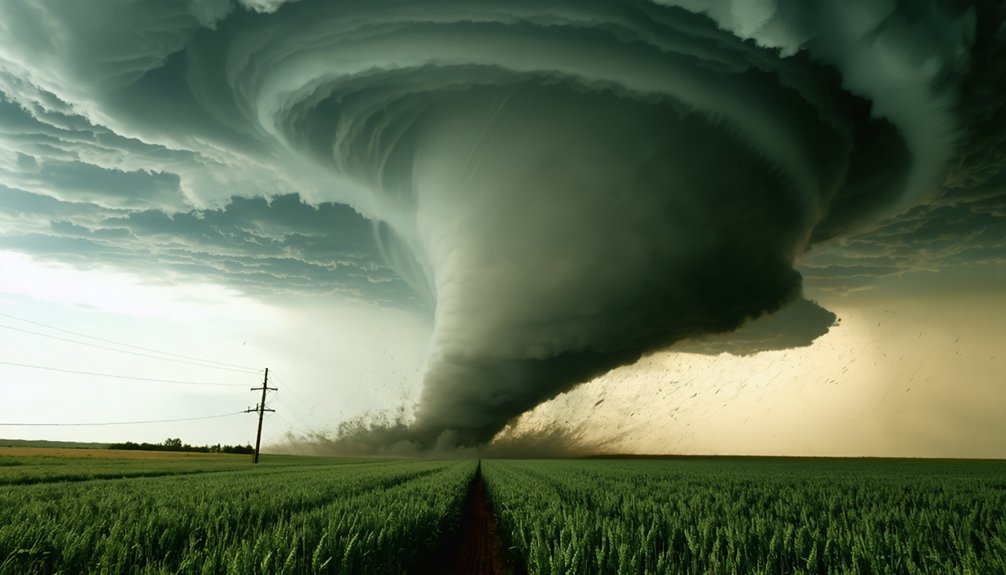
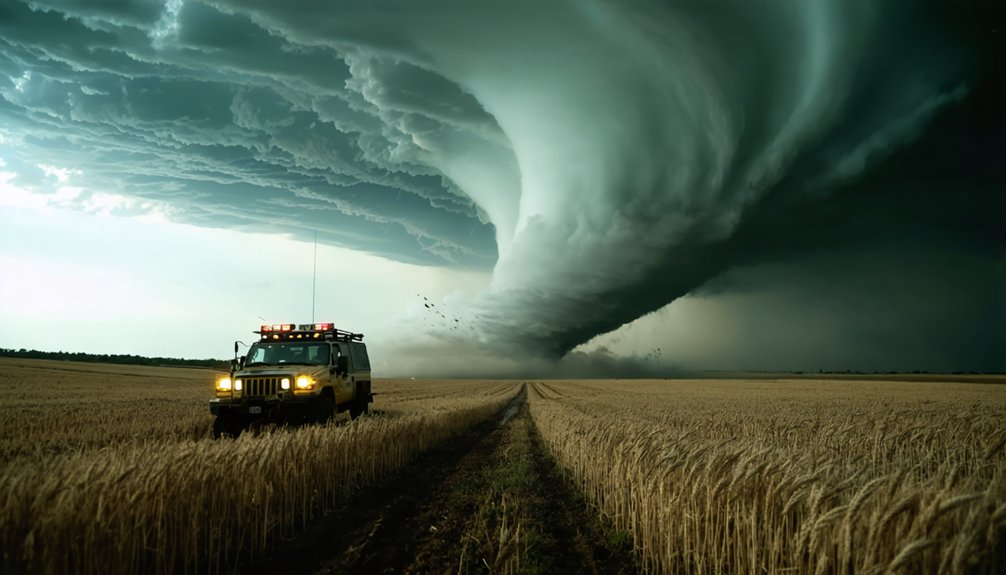
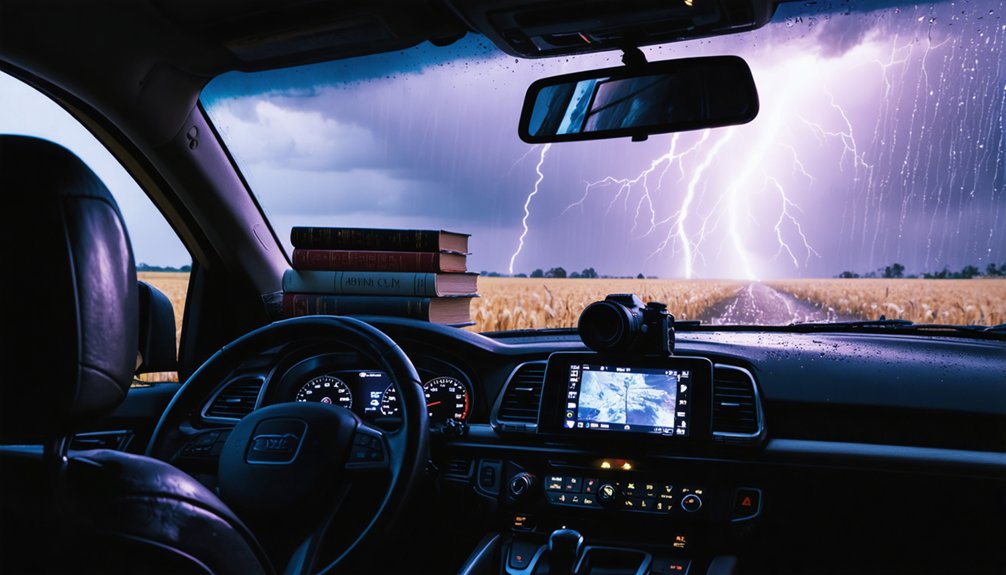
Storm chasing photography is essential for documentaries because you can’t convey nature’s raw power through radar screens alone. You need ground-level footage that captures what’s actually happening beneath the clouds—the wind-driven debris, the lightning strikes, and the mesocyclone’s rotation in real-time. This authentic visual evidence transforms scientific data into compelling storytelling that resonates emotionally with audiences. Professional storm chasers provide broadcast-quality content that’s commanded premium rates since 2002, proving viewers demand this irreplaceable perspective. The technical and artistic expertise required to capture these moments safely extends far beyond simply pointing a camera skyward.
Key Takeaways
- Storm photography provides ground-level verification of atmospheric conditions that radar technology cannot detect beneath cloud cover.
- Authentic storm footage commands premium licensing rates, enabling profitable businesses and Emmy-winning documentary collaborations since 2002.
- Artistic composition transforms meteorological events into emotionally resonant visual narratives that captivate documentary audiences beyond raw scientific data.
- Specialized equipment like weather-sealed cameras, ultra-wide lenses, and lightning triggers capture perspectives impossible through standard documentation methods.
- Real-time storm-level documentation reveals critical wind, precipitation, and mesocyclone details that transform radar estimates into confirmed visual evidence.
Ground-Level Verification That Radar Technology Cannot Provide
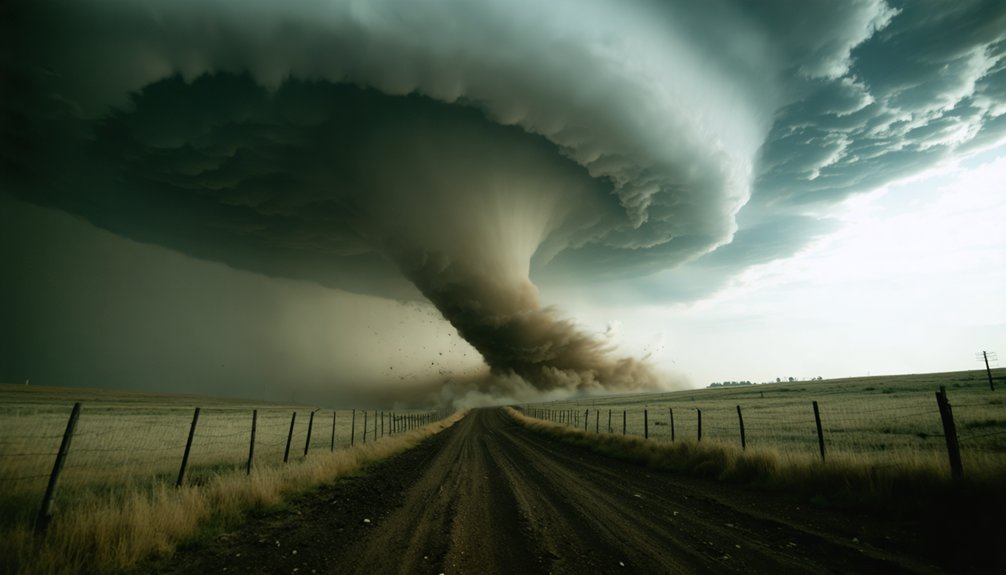
While radar technology revolutionized meteorology by detecting storms from miles away, it can’t tell forecasters what’s actually happening beneath the clouds. You need ground-level observers documenting the precise moment tornadoes form, capturing wall clouds rotating into funnels that radar can only estimate.
Storm photographers provide thorough atmospheric measurements through visual evidence—hail size verification, lightning strike patterns, and debris field documentation that validates radar signatures. Their real time weather analysis reveals wind direction shifts, precipitation type changes, and mesocyclone structure details invisible to remote sensing equipment.
When you’re positioned at storm level, you’re recording cloud-to-ground phenomena that radar reflectivity patterns simply can’t characterize. This ground truth verification transforms radar estimates into confirmed data, establishing what’s actually occurring in the atmosphere versus what technology assumes is happening.
Commercial Value and Media Distribution of Authentic Storm Footage
The ground-level documentation you capture doesn’t just verify radar data—it generates substantial revenue in the commercial media marketplace. Storm chasers like Dan Robinson and Martin Lisius have built profitable businesses licensing footage to Discovery, National Geographic, and major networks since 2002.
Your broadcast-quality content commands premium rates, with production companies actively seeking authentic tornado and severe weather footage for documentaries, films, and news broadcasts. Emmy-winning collaborations demonstrate the industry’s value recognition—Jeff Piotrowski’s 1994 “Day of Tornadoes” set the precedent.
However, protecting your assets requires legal risk mitigation strategies, as infringement losses exceed $1 million across fifteen years. Professional equipment upgrades and safety protocol considerations become justified investments when licensing offsets operational costs, transforming your passion into sustainable commercial work.
Artistic Vision Beyond Standard Weather Documentation
Storm photography transcends meteorological documentation when you shift your focus from data collection to compositional artistry. You’re not just recording atmospheric phenomena—you’re crafting visual narratives that create emotional resonance for viewers who’ll never witness these moments firsthand.
That backlit saucer-shaped supercell or striated cloud base becomes more than scientific evidence; it’s nature’s raw power frozen in time.
Your educational role as artist observer demands patience through chaos, waiting for that split-second when lightning pierces the perfect storm structure at sunset. Those unbelievable colors during monsoon collapses can’t be predicted or replicated. You’re chasing unpredictable beauty, transforming meteorological events into compelling time-lapses and stills that elevate documentary storytelling beyond standard weather footage.
This artistic approach captures freedom itself—nature’s untamed spectacle.
Specialized Equipment and Techniques for Capturing Severe Weather
When severe weather erupts on the horizon, your camera gear becomes the critical bridge between fleeting atmospheric drama and permanent visual record. You’ll need weather-sealed bodies like the Nikon Z9 or Sony A7S III that won’t fail when conditions turn hostile. Equipment portability matters—lightweight tripods like the Manfrotto MT055CXPRO3 deploy quickly despite punishing winds, while RAM Mounts secure GoPros to your vehicle for hands-free documentation.
Your operational procedures must account for rapidly changing light. Ultra-wide lenses such as the Tamron 15-30mm f/2.8 capture expansive supercells, while the Sigma 20mm f/1.4 Art handles low-light scenarios. Lightning triggers automate captures during electrical displays. Drones like the DJI Air 3S provide safe aerial perspectives without entering dangerous storm cores, giving you creative angles traditional ground shooting can’t achieve.
Balancing Documentation Goals With Life-Threatening Conditions
Having superior equipment means nothing if you’re not alive to use it. Prioritizing survival over artistic vision isn’t weakness—it’s wisdom. You’ll face split-second choices when storms turn violent, requiring you to abandon tempting shots for safer ground.
Maintaining emotional composure amidst chaos separates successful documentarians from casualties. When multiple tornadoes emerged within miles, seasoned chasers ran rather than filmed.
Staying calm in chaos distinguishes professional storm chasers from victims—sometimes survival means abandoning the shot and running.
Your survival strategy includes:
- Planning multiple escape routes before approaching any tornado
- Monitoring sudden directional changes through constant visual assessment
- Seeking immediate shelter when baseball-sized hail appears
- Maintaining quarter-mile safety margins even during active documentation
- Accepting that some opportunities must pass for better, safer moments
Real-time updates from your support team enable smart withdrawals. You’re chasing storms as art, where photography becomes the by-product—not the purpose worth dying for.
Frequently Asked Questions
How Did “Twister” Influence the Growth of Storm Chasing as a Profession?
You’d think a Hollywood blockbuster couldn’t spark real careers, yet *Twister* transformed storm chasing from hobbyist pursuit into legitimate profession. It inspired scientists studying weather pattern shifts and cloud formation dynamics, while attracting adventurers who monetized their passion through tours and footage.
What Post-Processing Software Do Storm Photographers Use for Broadcast-Quality Content?
You’ll find storm photographers rely on Adobe Lightroom and Photoshop for broadcast-quality work, utilizing histogram adjustments to balance dramatic skies and applying noise reduction techniques through DxO PhotoLab’s Deep Prime when capturing low-light lightning strikes and turbulent conditions.
How Do Storm Chasers Maintain Relationships With News Networks and Media Outlets?
You’ll cultivate rock-solid media partnerships by consistently delivering exclusive footage during peak events. Your content distribution strategies should prioritize reliable live streams, quick turnaround times, and maintaining professional networks that supply broadcast-quality material to news outlets year-round.
What Training Programs Exist for Aspiring Storm Chase Documentary Filmmakers?
You’ll find accredited meteorology programs provide foundational science, while hands-on storm chasing workshops offer real-world experience intercepting severe weather. These combine classroom theory with mentored chase days, teaching forecasting, positioning, safety protocols, and documentary production techniques you’ll need.
How Has Internet Accessibility Changed Storm Photography Communities Over Twenty Years?
You’ve witnessed internet accessibility transform storm photography from isolated shooters into vibrant networks. Social media engagement now connects you instantly with collaborators worldwide, while community collaboration has evolved from chance meetings to coordinated chases, shared knowledge, and collective artistic growth since 2002.