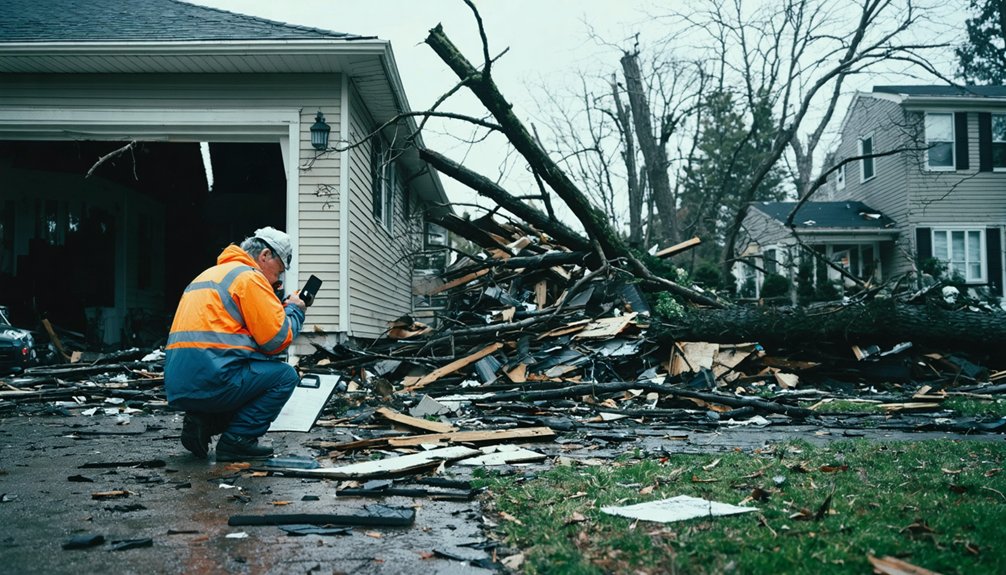
Achieving ideal safety and efficiency in emergency response requires you to address risk assessment, command structure, and data-driven performance monitoring simultaneously. You must prioritize hazards accurately, establish clear communication protocols, and position apparatus strategically to protect responders. Enforce SOPs through routine audits, track KPIs like response time and treatment success rates, and use trend analysis to eliminate systemic failures before they escalate. The sections ahead break down each critical component in precise, actionable detail.
Key Takeaways
- Accurate risk assessment and hazard prioritization form the foundation for effective emergency response and responder safety.
- Early command establishment, clear role assignment, and structured communication prevent scene chaos and resource mismanagement.
- Strategic apparatus positioning creates physical barriers, improves driver awareness, and reduces responder exposure to traffic hazards.
- Tracking KPIs like response time and treatment success rates enables agencies to identify weaknesses and improve performance.
- Shifting from reactive reporting to predictive trend analysis helps eliminate systemic failures before they cause preventable harm.
Why Emergency Response Failures Begin With Flawed Risk Assessment
When emergency response failures occur, flawed risk assessment is almost always the root cause. You can’t control what you haven’t correctly identified. Weak risk perception distorts your team’s understanding of actual threats, causing critical hazards to go unaddressed while resources concentrate on lower-priority concerns.
Effective hazard prioritization requires a disciplined three-step framework: identify the hazard, analyze the risk, and implement control measures. Skipping or rushing any step compromises the entire response.
Risk control then divides into avoidance, reduction, and transfer — each demanding deliberate, informed decisions.
Your agency’s freedom to operate safely depends on getting this process right before an incident escalates. Flawed assessment doesn’t just endanger responders; it undermines the entire response structure you’ve built to protect both your team and the public.
Build a Risk Control Framework That Actually Works
Accurate risk assessment gives you the foundation — but it only holds if you build the right control structure on top of it. Structure your risk controls across three tiers: avoidance, reduction, and transfer.
Risk assessment builds the foundation. What you construct on top of it determines whether that foundation holds.
Eliminate the hazard through engineering first — don’t default to training as your primary defense.
Administrative controls come next. Enforce standard operating procedures, conduct formal collision reviews, and build compliance into your operational culture. Resource allocation decisions must reflect actual hazard data, not assumption.
Community engagement strengthens your framework by surfacing local risks your internal assessments miss. Integrate stakeholder input into your safety planning cycle.
Finally, make your controls enforceable and reviewable. A framework that isn’t audited deteriorates. Treat continuous review as a non-negotiable operational requirement, not an administrative courtesy.
How Command and Communication Shape Scene Safety
Command and communication failures don’t just slow a response — they create conditions where responders get hurt. When command isn’t established early, incident staging breaks down, resources stack up in unsafe areas, and no one controls the perimeter effectively.
You need clear command structures before chaos sets in. Assign roles, define the safe work zone, and enforce it. Resource prioritization becomes impossible without accurate situational awareness — you can’t deploy what you can’t account for.
Communication isn’t just radio traffic. It’s teamwork, shared decision-making, and real-time hazard updates moving across the entire scene. When those channels work, responders stay coordinated and protected.
Build communication protocols into your standard operating procedures. A scene that communicates well is a scene that controls its own risk.
Position Apparatus and Equipment to Shield Responders
Good command and communication set the conditions for a controlled scene — but responder protection doesn’t stop there. You must position apparatus deliberately to shield your crew and work area from oncoming traffic.
Command and communication control the scene — but deliberate apparatus positioning is what protects the crew.
Place vehicles at an angle that deflects traffic away from the incident zone. Maintain a 50- to 100-foot buffer between your apparatus and the scene whenever conditions allow. Apparatus safety depends on creating a physical barrier that buys responders reaction time and reduces direct exposure.
Don’t underestimate responder visibility. High-visibility positioning, combined with activated warning lights, signals approaching drivers early.
Follow an open lane policy to keep traffic moving and minimize unnecessary lane closures.
Every positioning decision you make either increases or reduces your crew’s survivability. Choose deliberately.
Technology That Cuts Emergency Response Times
Positioning apparatus protects your crew on scene — but faster arrival means fewer minutes lost before care begins. Smart routing technology gives you real-time navigation that adapts to traffic, road conditions, and incident location instantly. You’re not guessing routes; you’re executing data-driven decisions.
Emergency vehicle preemption systems extend your advantage further. A GPS-based radio preemption system in Savannah cut response times by five to seven minutes on high-traffic corridors. Houston’s system reduced travel time by 16% to 23%. Each minute eliminated reduces incident-induced delay by 2% to 3%.
Real time alerts integrate with dispatch, keeping your team ahead of changing conditions. Deploy these systems, track their performance through defined KPIs, and treat response time reduction as a measurable, controllable operational outcome.
SOPs and Training That Prevent Repeat Incidents
When a collision occurs in your agency, you must treat it as a data point, not an isolated event—formal review of each incident exposes recurring operational risks that training and procedure can address.
You enforce standard operating procedures not as bureaucratic formality but as the mechanism that converts lessons learned into consistent field behavior.
Without both structured collision analysis and enforceable SOPs working together, your agency repeats the same preventable mistakes.
Collision Review And Analysis
How agencies respond to collisions after they occur determines whether those events become isolated failures or recurring patterns. You need a formal collision review process that examines contributing factors—vehicle maintenance gaps, scene lighting deficiencies, driver decisions, and positioning errors—without defaulting to blame.
Each review should produce actionable findings tied directly to SOP revisions or targeted retraining. Safety guidance consistently recommends using reporting systems like E.V.E.N.T. and NFFNMRS to support data-driven analysis across incidents.
When you track trends over time, patterns emerge that individual reviews miss. That intelligence lets you correct systemic risks before they repeat.
A structured review process doesn’t limit your operational freedom—it protects it by keeping responders on the road, not sidelined by preventable collisions.
Enforcing Standard Operating Procedures
Collision reviews only hold value if their findings translate into enforceable SOPs and structured retraining. Without standard compliance, identified risks repeat—and responders pay the price.
Build procedure consistency into your operations through three non-negotiable practices:
- Update SOPs immediately following any collision review that reveals a procedural gap—delayed revisions become forgotten ones.
- Mandate documented retraining for all personnel affected by identified risk patterns, not just those directly involved in incidents.
- Conduct routine SOP audits to verify field behavior matches written protocol before another incident forces your hand.
You control whether lessons become lasting change or bureaucratic paperwork. Enforce procedures with the same urgency you’d bring to an active scene. Compliance isn’t restriction—it’s the framework that keeps your team operational and alive.
Metrics That Expose Emergency Response Weak Points

Once you’ve standardized your procedures and training, you need measurable indicators to confirm they’re working. You should define KPIs—including response time, treatment success rates, and resource utilization rates—so you have objective benchmarks against which to measure operational performance.
From there, you collect and analyze safety trend data systematically, using reporting systems like NEMSIS and E.V.E.N.T. to surface recurring weak points before they produce preventable harm.
Key Performance Indicators Defined
When emergency response agencies lack measurable benchmarks, operational weak points stay hidden until they become critical failures. You can’t fix what you don’t measure. KPIs give your agency the data it needs to drive accountability and protect both responders and civilians.
Three KPIs your agency can’t ignore:
- Response time — Every delayed minute compounds harm; faster resource allocation saves lives your community trusts you to protect.
- Treatment success rates — These numbers reveal whether your protocols are actually working or quietly failing patients.
- Resource utilization rates — Wasted resources mean preventable gaps in community engagement and coverage.
Track these metrics consistently. Analyze trends through validated reporting systems. Let the data expose inefficiencies before those inefficiencies cost someone their life.
Data Collection And Analysis
Raw data without analysis is just noise—your agency needs structured collection systems to transform incident records into actionable intelligence. Platforms like NEMSIS, FIRST, E.V.E.N.T., and NFFNMRS give you standardized frameworks that protect data accuracy across collection points, reducing human error and inconsistency.
Once your data is clean, you can move beyond reactive reporting into trend forecasting—identifying patterns in response delays, equipment failures, or high-risk corridors before they become systemic failures. You’re not just documenting what happened; you’re predicting what’ll happen next.
Analyze your KPIs regularly, flag deviations immediately, and build feedback loops into your operations. This disciplined approach keeps your agency autonomous, evidence-driven, and positioned to eliminate weak points before they cost lives.
Frequently Asked Questions
How Do Budget Constraints Affect Emergency Response Safety Investments?
Funding challenges don’t excuse unsafe operations. You must prioritize equipment prioritization strategically—directing limited resources toward highest-risk hazard controls first, ensuring engineering-based protections precede administrative workarounds, and maintaining responder safety without bureaucratic overreach.
What Mental Health Resources Exist for Emergency Responders After Traumatic Incidents?
You’ll access peer support programs, counseling services, and critical incident stress debriefings after traumatic events. Don’t let mental health stigma prevent you from utilizing these resources—they’re essential tools that protect your long-term operational effectiveness and personal freedom.
How Do Rural Agencies Manage Safety With Fewer Personnel and Resources?
Like a frontier scout who relied on the land itself, you leverage community engagement and technology integration—GPS preemption, volunteer networks, and mutual aid—to multiply limited personnel, maintain situational awareness, and enforce safety protocols effectively.
What Legal Liabilities Do Responders Face When Safety Protocols Are Violated?
When you violate safety protocols, you’ll face serious liability risks including negligence claims, disciplinary action, and criminal exposure. Legal compliance isn’t optional—it’s your shield against lawsuits that can end careers and compromise operational freedom.
How Does Interagency Coordination Work During Multi-Jurisdictional Emergency Responses?
Hit the ground running: you’ll activate unified command, align interagency collaboration protocols, and execute clear communication strategies across jurisdictions. You’ll coordinate resources, share situational awareness, and maintain autonomous decision-making authority while ensuring seamless, efficient multi-agency operational integration.
References
- http://www.osha.gov/emergency-preparedness
- https://pmc.ncbi.nlm.nih.gov/articles/PMC11749675/
- https://www.sciopen.com/article/10.26599/SES.2025.9590007
- https://www.epsteam.com/the-importance-of-efficient-emergency-response-and-preparedness-training/
- https://www.ojp.gov/ncjrs/virtual-library/abstracts/protecting-emergency-responders-volume-iii-safety-management
- https://www.nvfc.org/wp-content/uploads/2015/09/EVSO-Guide-3rd-edition.pdf
- https://www.iaff.org/wp-content/uploads/EVSP/PDF_and_PP/Best-Practices.pdf
- https://rosap.ntl.bts.gov/view/dot/36986/dot_36986_DS1.pdf
- https://www.usfa.fema.gov/downloads/pdf/publications/ems-safety-practices.pdf